

Long, strange trip for Rebellion manager
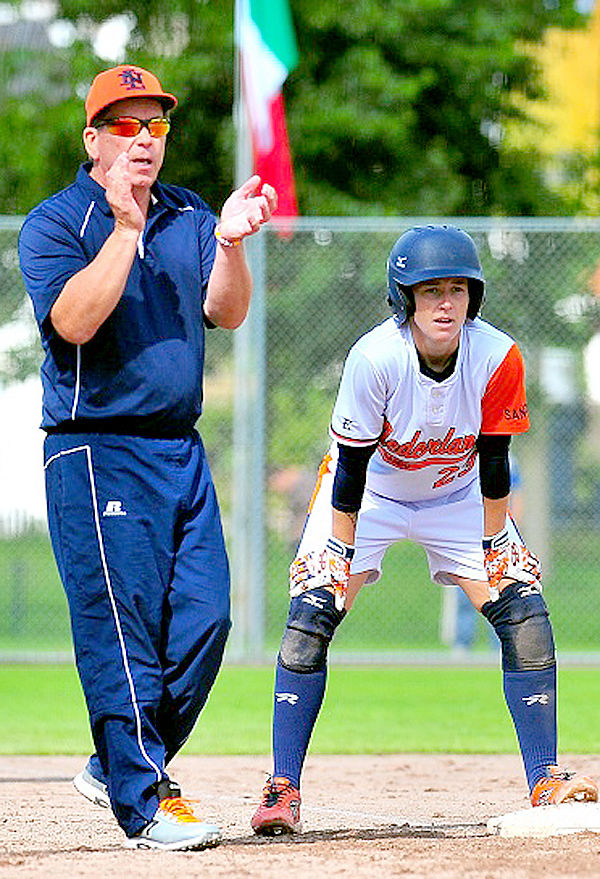
New Rebellion manager Craig Montvidas grew up in New Jersey, attended college in Connecticut and Arizona and has coached softball in several European countries.
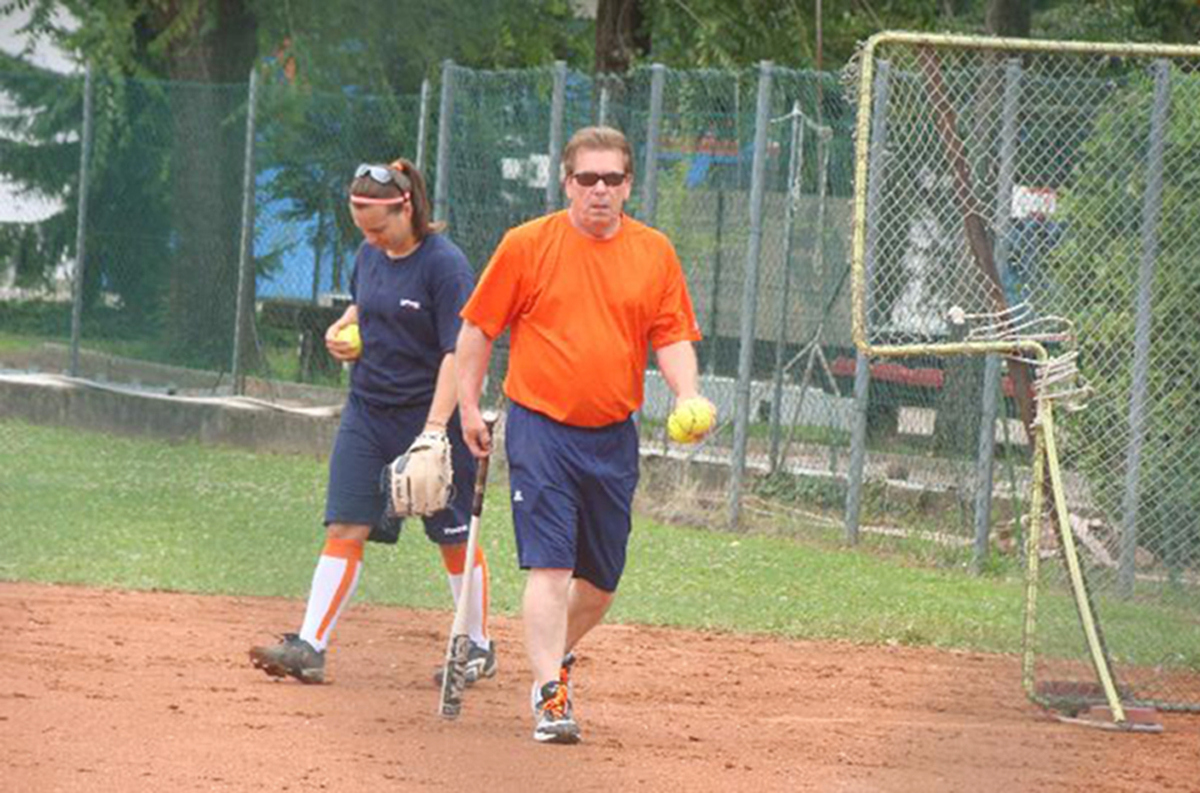
New Pennsylvania Rebellion manager Craig Montvidas also coaches the Netherlands National team.

Craig Montvidas
Had it not been for a delayed plane flight, Craig Montvidas might be spending this summer relaxing in the quaint Village of Voorthuizen, in the Dutch province of Gelderland.
Voorthuizen is in the Netherlands, about 500 kilometers northeast of Paris, a short plane ride west to London, and an hour’s drive to Amsterdam.
The village does not get much respect from Wikipedia, which describes it as slow-paced and advises people to “stay away.”
Montvidas won’t be there this summer because he will be spending at least four months in Washington as the new manager of the Pennsylvania Rebellion softball team.
Montvidas is the third manager in the National Pro Fastpitch team’s short history. The Rebellion begin their second season in May and Montvidas is charged to improve on last year’s 9-41 record and first-round playoff exit.
How’s he going to do it?
“I have no idea,” the 63-year-old joked.
Montvidas is nothing if not fearless. He had some interesting experiences in his life, including:
• working as a producer for NOS Television, which in January had its broadcast interrupted when a man carrying a fake gun got into the station.
• being sent into some dangerous places while working for NOS, including Iran, Yugoslavia and even Japan to cover an earthquake.
• nearly being killed in college when he was hit by a Cadillac while playing a game of pick-up football.
• having to carry a card in his pocket to get through airport security because he had each hip replaced.
• beginning work toward a baseball career in the United States but winding up the head coach of the Netherlands National Softball team.
Pretty exciting life for a Jersey Boy.
Montvidas grew up in Caldwell, N.J., about a half hour south of New York City, two if it’s at rush hour, and attended West Essex High School. He played on the school’s soccer team that lost it’s one and only match in the state final; was a 119-pound wide receiver and safety on the football team who wore a red (Do Not Hit) jersey normally reserved for quarterbacks because the coaching staff was afraid he might get hurt; ran track; played baseball; and was the point guard on the basketball team.
“I was fast. They couldn’t tackle me in football,” said Montvidas. “But basketball was my best sport.”
Montvidas was voted Best Athlete in the School in his senior year.
The basketball coaches noticed at Hartford and offered a scholarship. After one year, he transferred to the University of Arizona.
“I thought if I was going to have any future (in sports), it wasn’t going to be in basketball,” he said. “I wasn’t good enough. So for baseball, Arizona was the place to be.”
It almost was the last place Montvidas would be.
During a pick-up football game six days before classes began, Montvidas caught a pass, stepped into the road and was hit by a Cadillac. Since it was the late 1960s, this particular Cadillac had the large fins in the back, fortunate for Montvidas as they broke his fall.
“If I were a little shorter, I would have been run over. A little taller, I would have been broke in two,” he said.
He missed a semester, then transferred back to Hartford, where he graduated in 1974.
So, now what?
Easy, get a recommendation from Ron Fraser, the legendary baseball coach at the University of Miami (Fla.), contact as many leagues as possible and wait for offers. They came from a number of places, including Italy and Holland. He chose Holland.
“Maybe it had something to do with the language. I just felt more comfortable,” Montvidas said. “I thought it was going to be a one-time deal, play six or seven months and travel around Europe before coming back to the United States and finding a job. The first year went well and they asked me back. Two years turned into four and four into eight.”
While playing baseball in the Netherlands, Montvidas was asked to help coach softball and he enjoyed it. So much so, he stopped playing baseball and took up coaching softball.
Montvidas was named head coach of the Netherlands National Team following the Olympic Games in Atlanta in 1996 and stayed for three seasons.
In 2000, he moved to Greece where he led the Greek National Team for two seasons, followed by a five-year stay as head coach of the Great Britain National Team (2003-2007).
He returned to the Netherlands National Team and led it to three European championships.
Because Montvidas attended the annual softball coaches convention, he was in Las Vegas last December at the same time as Stu Williams, the owner of the Rebellion. Montvidas found through a friend the Rebellion needed a manager this summer and tried to set up a meeting.
But the two missed each other and the opportunity appeared lost when Williams left for the airport to catch a flight to London. The flight was delayed for five hours and the two were able to meet.
“What jumped out at me was his passion, his desire to win and concern for the athletes,” Montvidas said. “I really didn’t feel like I was interviewing for the job at that moment. It wasn’t something on my radar when I went out to the convention. When I came back home, my wife said, ‘Well, that’s nice.'”
It became nicer when the two sides agreed to a one-year deal. Montvidas brought two of his players from the Netherlands – pitcher Dagmar Bloeming and third baseman Virginie Anneveld – and still had much of the roster to assemble at the time of this interview. He and the Rebellion staff will be at the NPF draft April 1 with eight selections to make.
“I know the game of softball. I’ve built a really good library of teams we play internationally,” Montvidas said. “Now, I’m coming into a situation here where there are big-name players and I have to do my homework here on them.”
His vision of the Rebellion includes speed, pitching and smarts.
“Fast-pitch softball is dependent on pitching,” Montvidas said. “It’s dominating. We’ll try to find the best pitchers we can. Softball is run-prevention versus run-production. We’ve got to find a way to get one more run than the other team.” It’s the way he said it that makes you think he will.