

Governor’s chief of staff talks issues with O-R’s editorial board
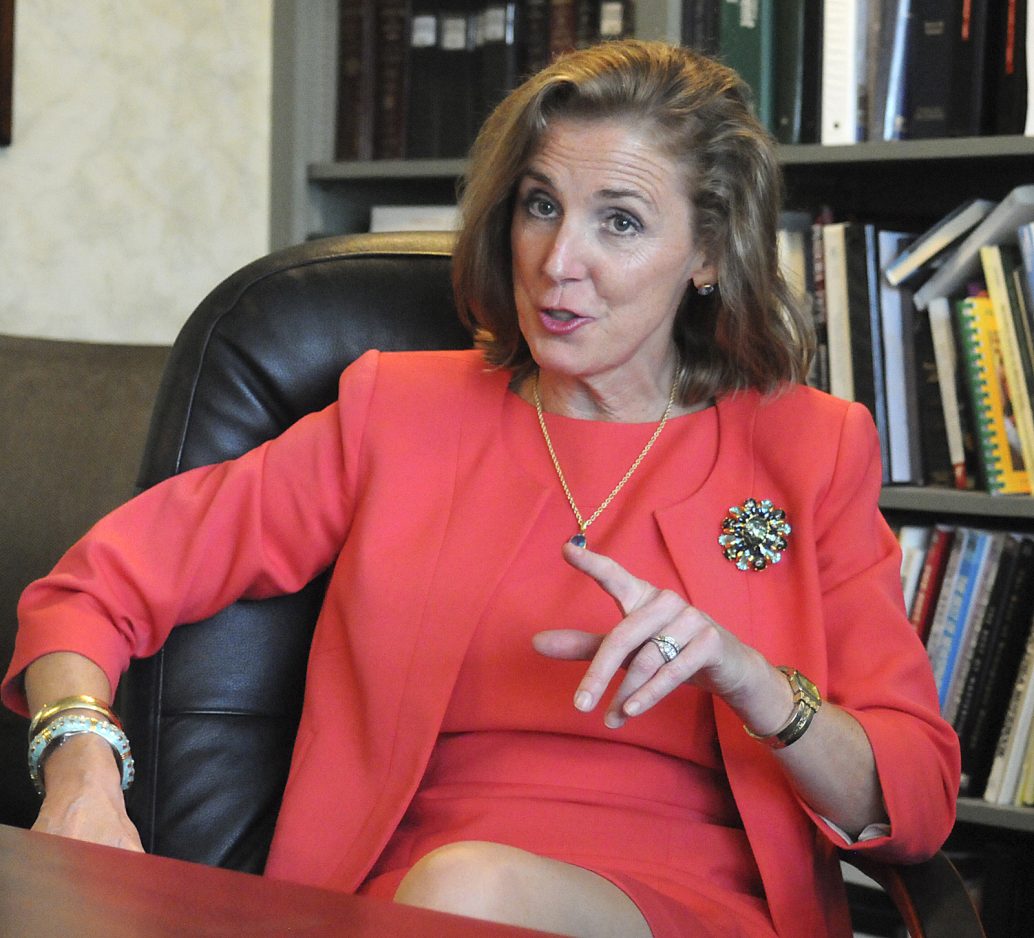
Kathleen McGinty, Gov. Tom Wolf's chief of staff, met with the Observer-Reporter editorial board Thursday to discuss the governor's proposed budget and other matters.
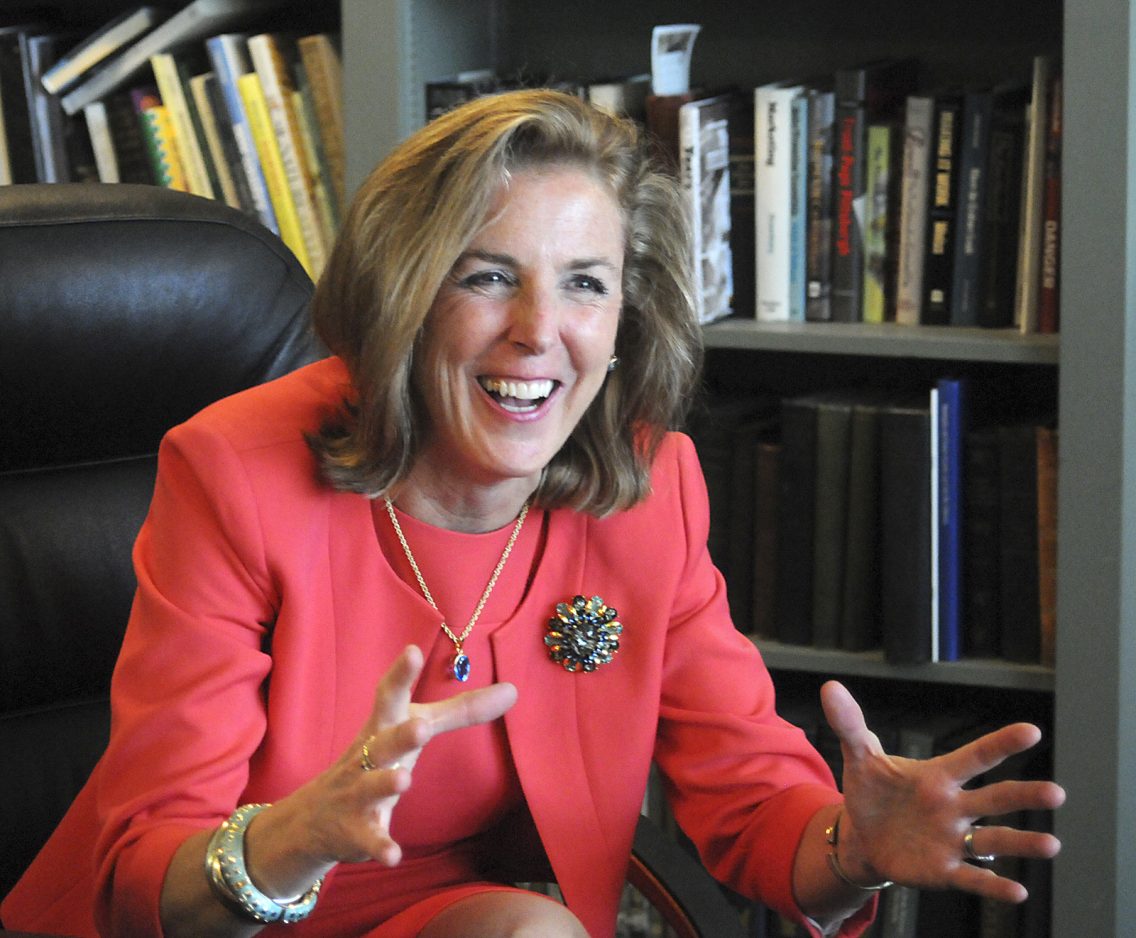
Kathleen McGinty, Gov. Tom Wolf’s chief of staff, met with the Observer-Reporter editorial board Thursday to discuss the governor’s proposed budget and other matters.
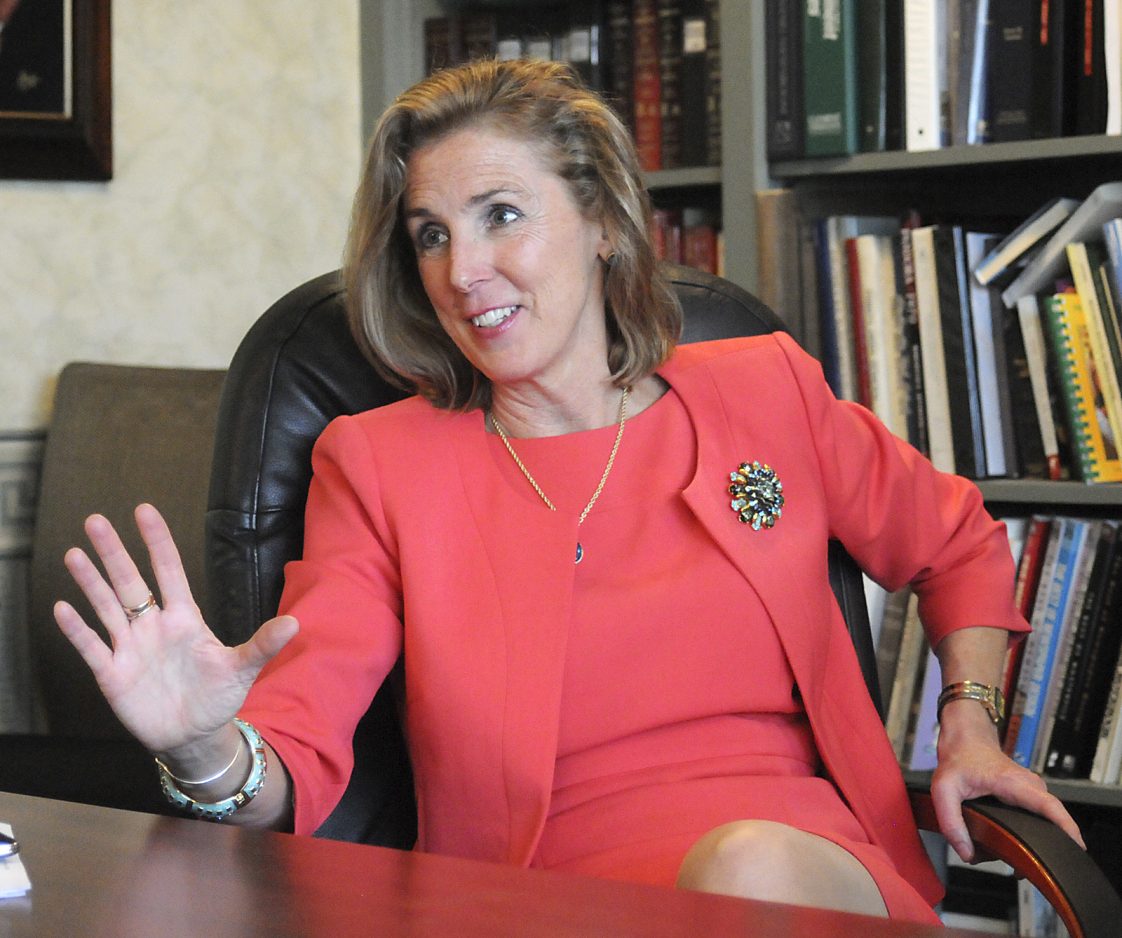
Kathleen McGinty, Gov. Tom Wolf’s chief of staff, met with the Observer-Reporter editorial board Thursday to discuss the governor’s proposed budget and other matters.
It’s been said the first year is always the hardest for Pennsylvania’s governors. That’s when the learning curve is the steepest, the toughest, most politically unpopular, decisions are made and, often, the polling numbers are at the worst.
”We’re having fun,” said Katie McGinty, a Democrat who competed with Wolf last spring for the party’s gubernatorial nomination, but has now taken on the role of one of Wolf’s top lieutenants and boosters. She touted such early-in-the-game achievements as expanding Medicaid and delivering a budget that is going to be hashed over in the weeks ahead in Harrisburg.
Wolf said it’s not likely the budget will be sewn up by the end of the fiscal year June 30, and McGinty emphasized the governor “is not going to attach some artificial value to June 30, but he’s not going to provide an excuse for those who aren’t doing their jobs.”
McGinty continued, “Lawmakers have had everything since March 11. For every day legislation doesn’t pass, school boards are deciding whether they have to raise taxes, people are missing out on property tax relief … If the Legislature doesn’t deliver, then they will have some explaining to do.”
One of the most talked-about aspects of Wolf’s proposed budget is a severance tax that would be placed on the natural gas industry. The possibility of a severance tax has generated anxiety in communities where drilling takes place because of concern the impact fees that flow to them under Act 13 would be curtailed or eliminated. However, McGinty said the impact fees would remain regardless of a severance tax.
”The governor does not want to touch a comma of the impact fees as it’s spelled out under Act 13,” she explained. “The availability and the use of the money will remain exactly the same.”
She also said Wolf remains a supporter of the Marcellus Shale industry: “The governor wants the industry to succeed.”
Wolf’s budget proposal also seeks to revamp the way public education is funded in the commonwealth, lowering property taxes and increasing sales and income taxes. To cite an example, McGinty said that, under Wolf’s plan, a household in Washington County’s Bethlehem-Center School District would see its property tax bill reduced by 92 percent. Along with this, “every district sees an increase in funding for their schools.”
Among other perennial issues in Harrisburg, McGinty said Wolf supports “modernizing” the state’s liquor and wine outlets, rather than privatizing them, and does not support moving state employees away from defined-benefit pensions to 401k plans because the cost of that transition would cost millions of dollars.
She also said the governor continued to stand behind Marcus Brown, his controversial pick to be the commissioner of the Pennsylvania State Police, and “didn’t want to second-guess the judgments” of embattled state Attorney General Kathleen Kane.
Along with being a gubernatorial candidate last year, McGinty previously served as the head of Pennsylvania’s Department of Environmental Protection under Gov. Ed Rendell and had been an adviser to Bill Clinton and Al Gore when they were president and vice president. Her decision to become Wolf’s chief of staff took some observers by surprise – She would have been a plausible Democratic candidate in 2016 for the U.S. Senate seat currently being held by Pat Toomey. But McGinty said her skills are more administrative than legislative.
”What I bring is an ability to handle issues, pulling people together and finding common ground,” she said.