

Weegee’s world
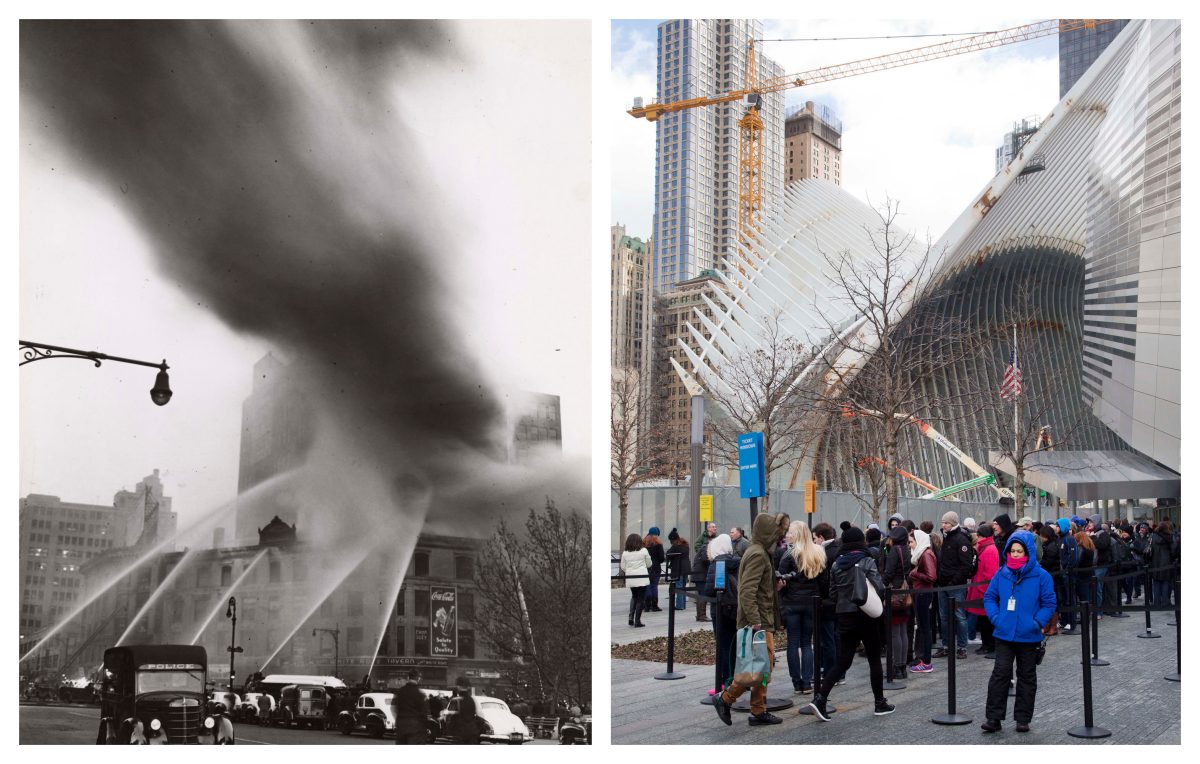
This combination shows the 1946 photo “Fire in a loft building” by Weegee at the intersection of Fulton and Greenwich streets in New York, and the same vantage point in March, with people lining up for the Sept. 11 Museum. In the background is the World Trade Center transportation hub under construction.

This combination shows the 1953 photo “The Ham n Egg” by Weegee, where a Starbucks now operates.
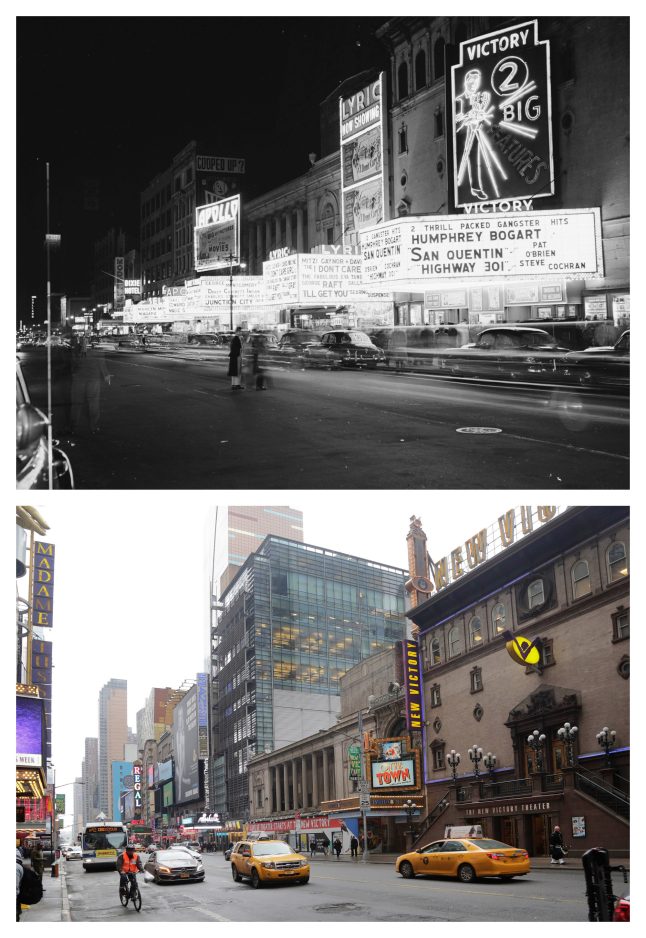
This combination shows the 1953 photo “Showing Tonite” of the theater marquee on 42nd Street in New York by Weegee, and the same vantage point in March.
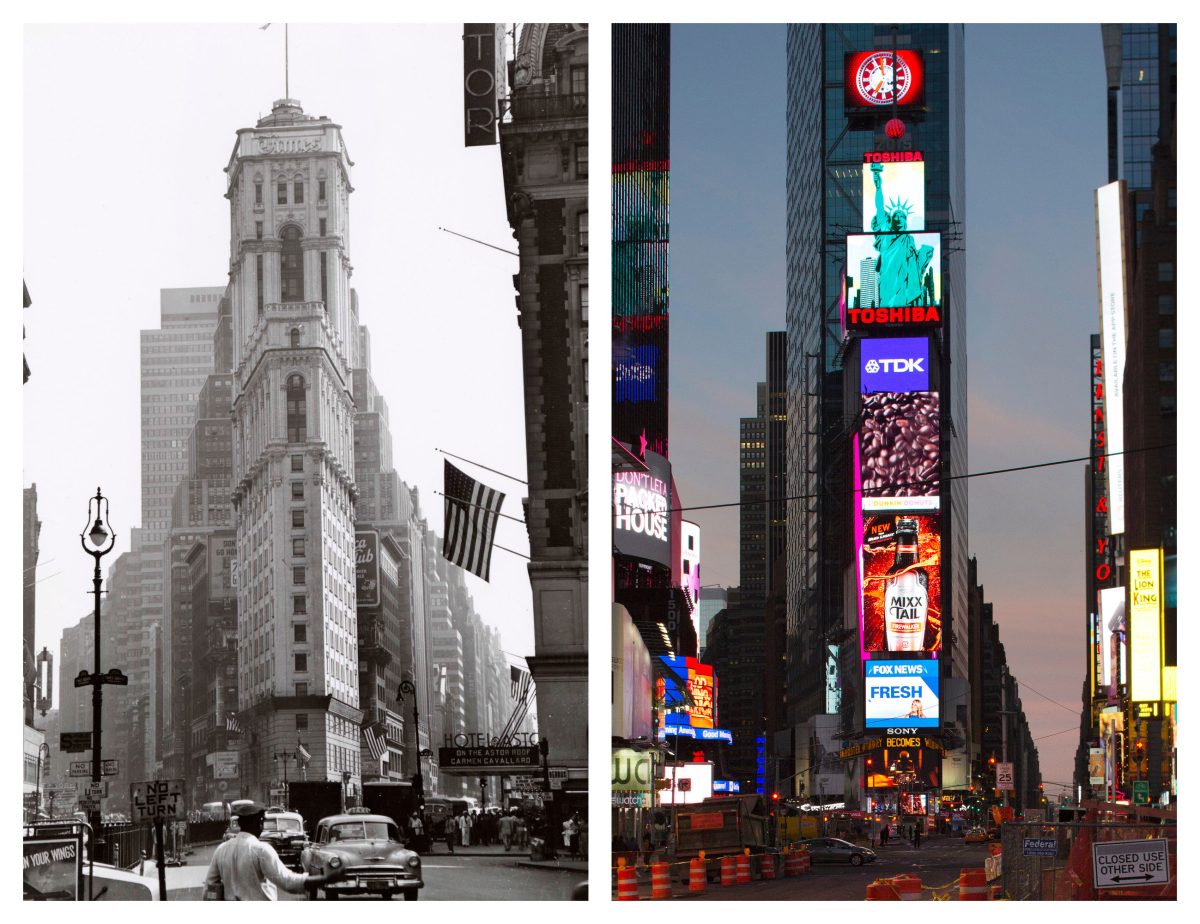
A 1952 photo of “The Times building” by Weegee, and how it looks today
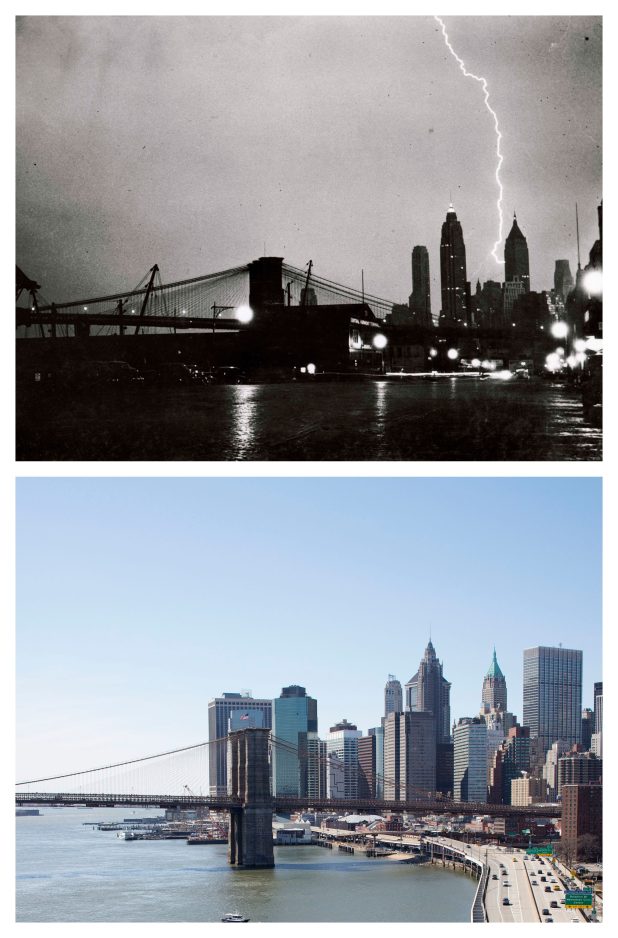
The July 27, 1940, photo “Striking Beauty” by Weegee and the same vantage point today show the lower Manhattan skyline near the Brooklyn Bridge.
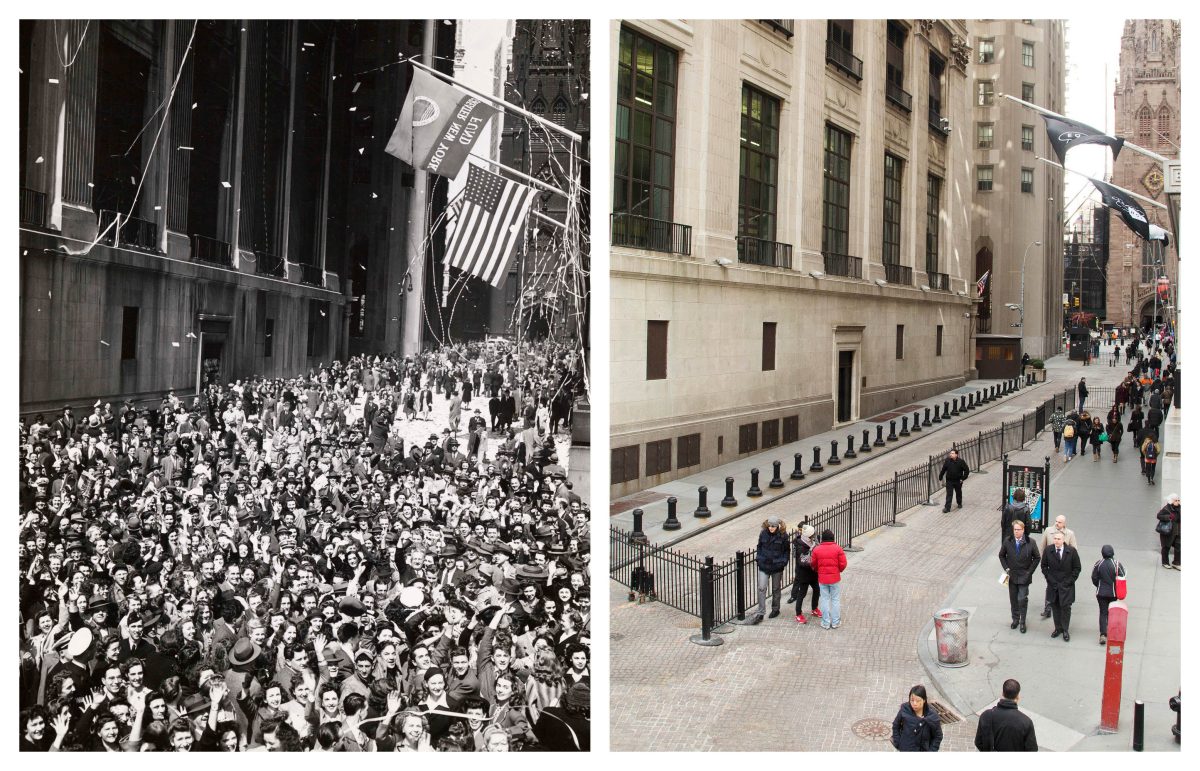
A crowd on Wall Street in the May 1945 photo “V-E Day” by Weegee, and the same vantage point today
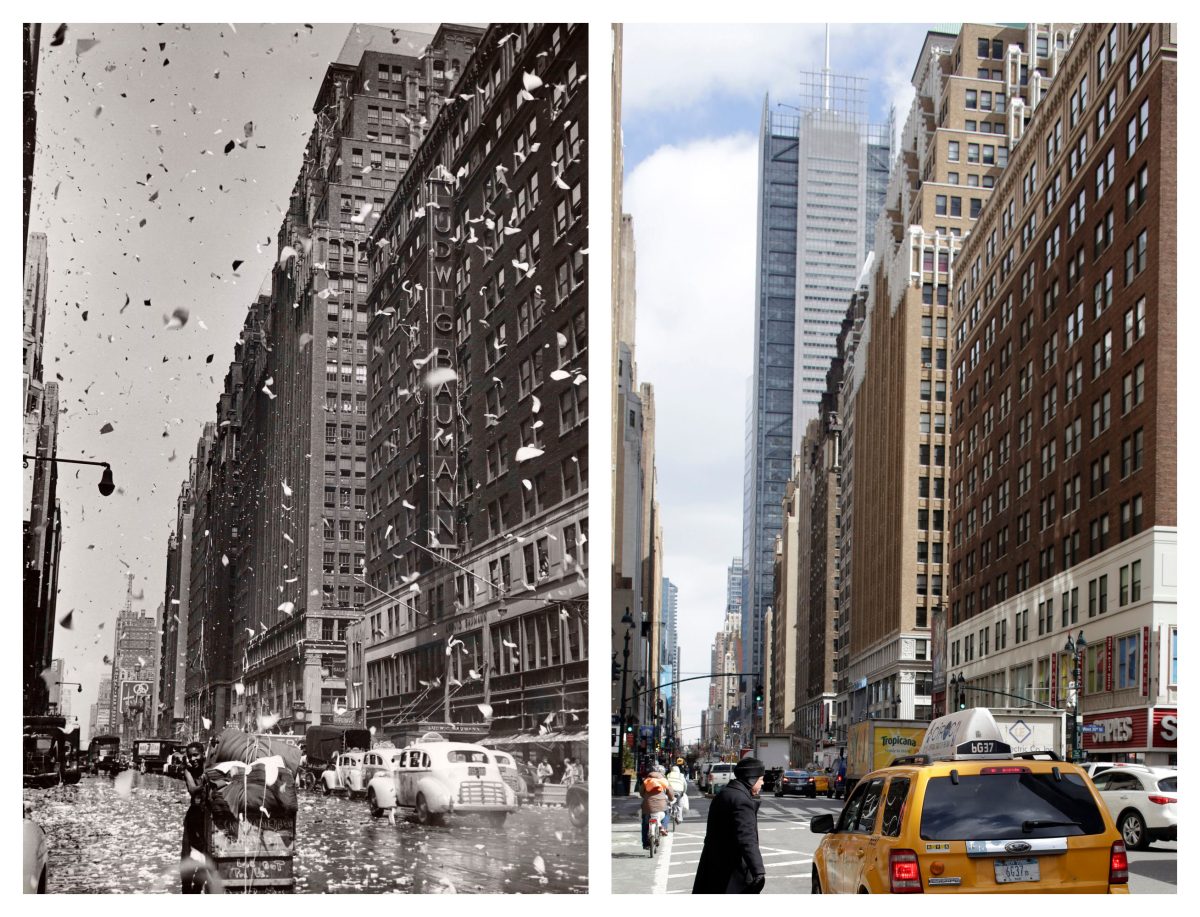
This combination shows the Aug. 10, 1945, photo “Celebration in the Garment District on Japanese offer to surrender” by Weegee, and how it looks today.
NEW YORK – A new book of photos by legendary photographer Weegee shows what industrialized, pre-gentrified New York looked like in the mid-20th century, before the city was crammed with towers and billboards.
Weegee, whose real name was Arthur Fellig, was famous for sensational but artfully composed black-and-white pictures of crime scenes, fires and other urban mayhem. “The Weegee Guide to New York” includes a few of those tabloid-worthy photos of bodies sprawled on the pavement. But most of the book’s images are of ordinary neighborhoods and streetscapes with low-rise buildings, bulky cars, empty skies and remarkably uncluttered public spaces.
A 1940 photo of Lower Manhattan, shot at night from across the river near the Brooklyn Bridge, is dominated by a mere three skyscrapers, a shocking contrast to the forest of towers now surrounding 1 World Trade.
A 1946 image shows a fire in a loft building at Fulton and Greenwich streets. The intersection would be unrecognizable to Weegee today: It’s the site of the 9/11 memorial and museum.
A 1952 picture shows the stately, pristine stone facade of One Times Square, where a spire on the roof is still used for the New Year’s Eve ball drop. Today, the building’s exterior is covered with billboards. But Weegee’s 1957 view of Times Square does show neon ads, including now-outmoded brands like Admiral TV appliances alongside still-familiar names like Budweiser.
Other photos, lined up with contemporary views of the same spot, are surprisingly unchanged – like a 1939 scene in Little Italy where small shops still line the sidewalks. A 1953 photo shows Humphrey Bogart on the marquee of the Victory movie theater, home now to the New Victory, which specializes in children’s entertainment.
The photos in the book are organized by neighborhood, with maps and locations for each, including which direction Weegee was facing when he took the picture. The information makes it easy to compare images with how the city looks today – either by walking around or by going on Google Street View.
“The classic New York skyline has changed dramatically since Weegee’s day, and the flurry of often mundane building construction over the last decades has obscured many of New York’s iconic skyscrapers,” said Philomena Mariani, director of publications at the International Center of Photography who compiled the book with another ICP staff member, Christopher George.
ICP owns 20,000 Weegee images, but for this book, Mariani said, “We were looking for pictures that showed something of New York’s built environment and public life,” including images of crowds gathered for celebrations and shoppers waiting for rationed goods.
Mariani said she hopes the book, published by Prestel, will get people thinking not only about “how different the urban landscape is physically,” but also about “the public life that existed through the mid-20th century that Weegee captured.”
Weegee died in 1968.