

Amtrak wreck shows safety still dependent on engineer
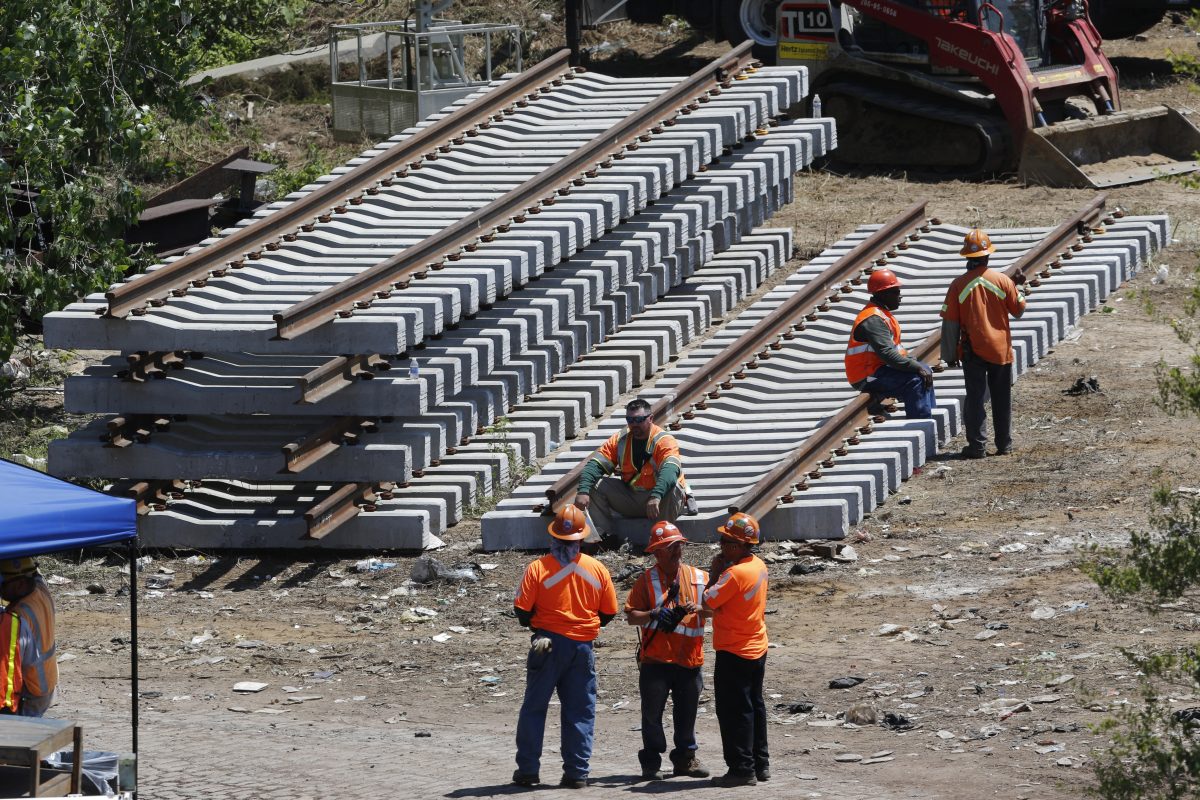
New rail lines are stacked up in an area near the site where a deadly train derailment occurred earlier in the week Friday in Philadelphia.
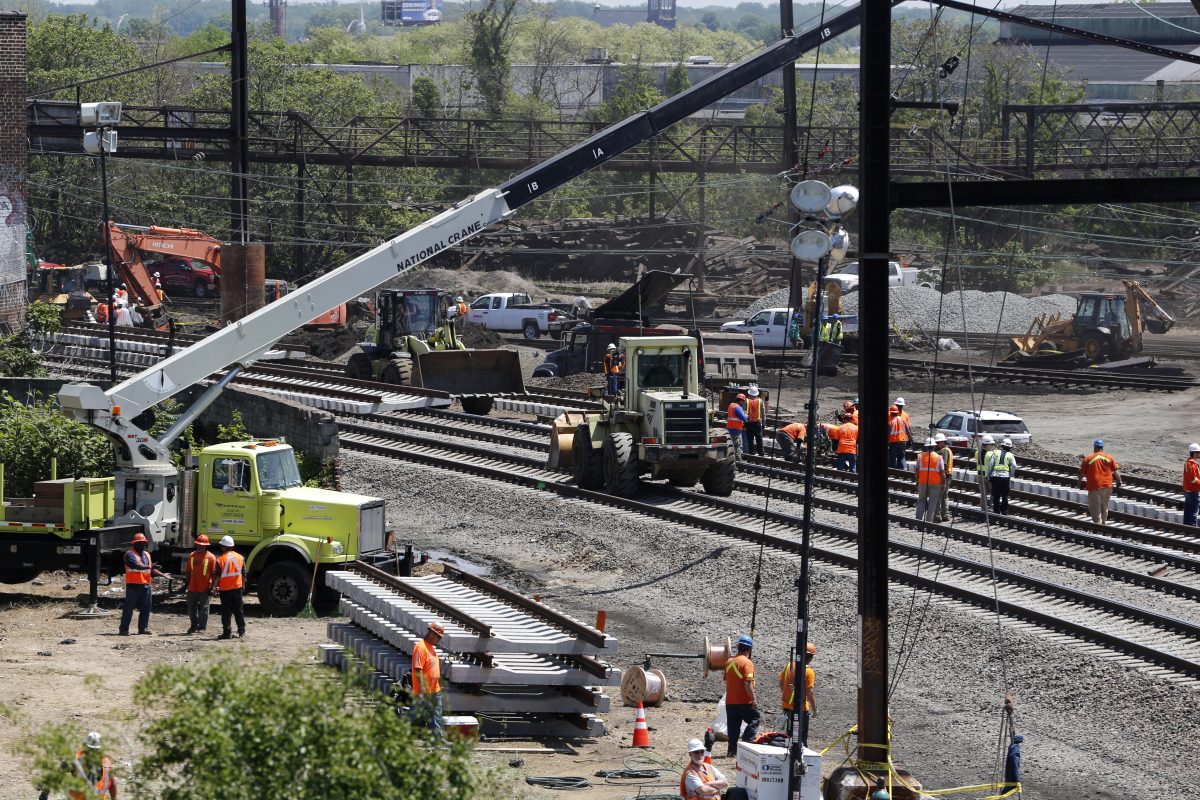
Workers labor on the site where a deadly train derailment occurred earlier in the week Friday in Philadelphia.
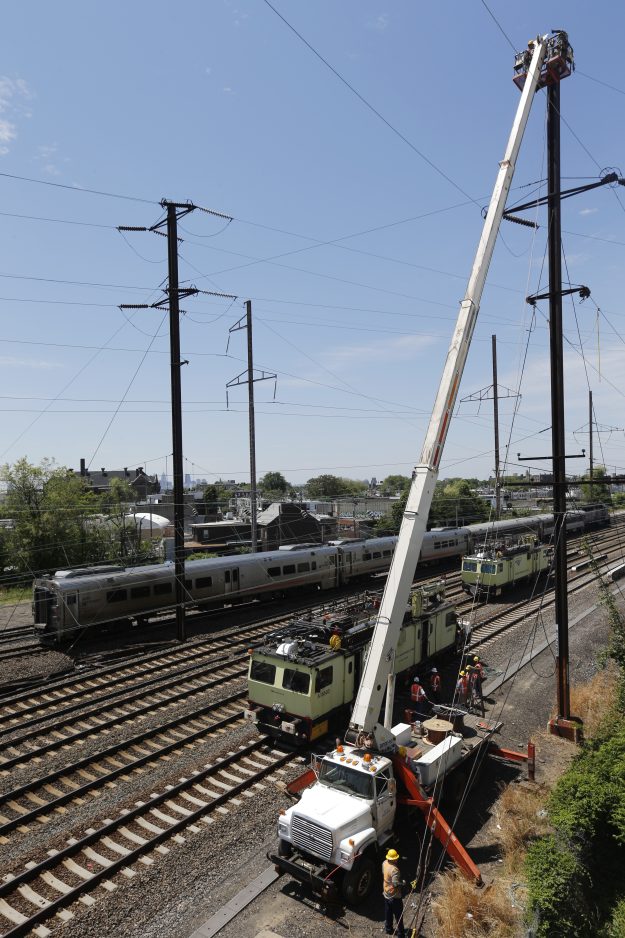
A New Jersey Transit train, back, rolls by as workers labor at the site where a deadly train derailment occurred earlier in the week Friday in Philadelphia.
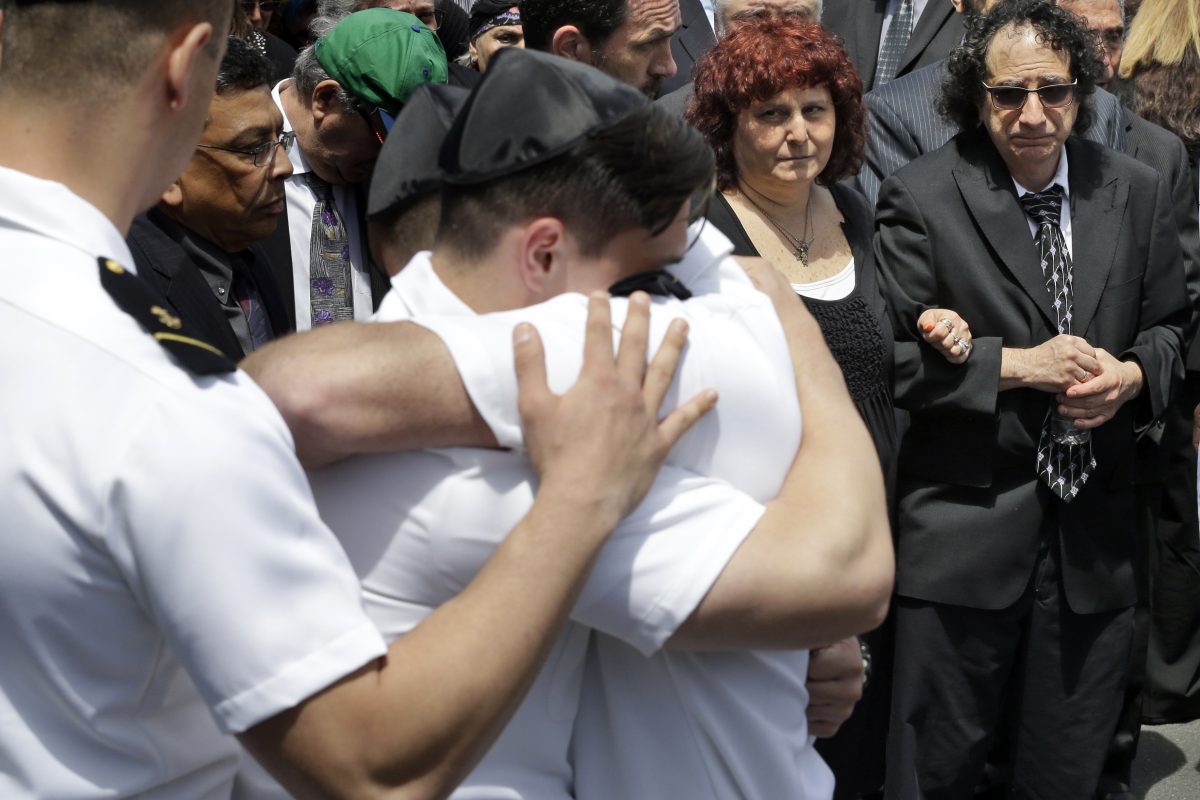
Howard and Susan Zemser, right, watch as midshipmen embrace during the funeral service for their son, U.S. Naval Academy midshipman Justin Zemser, Friday at Boulevard-Riverside-Hewlett Chapel in Hewlett, N.Y.
PHILADELPHIA – The deadly Amtrak wreck has made it clear that despite the train industry’s widespread use of electronic signals, sensors and warning systems, safety still sometimes comes down to the knowledge and experience of the engineer at the controls.
That’s true for the curve where the New York-bound train derailed, killing eight and injuring more than 200 in the deadliest U.S. train accident in nearly six years.
Instead of high-tech signals or automatic controls, engineers on that stretch of track have to rely on their familiarity with the route and a printed timetable they carry with them, not unlike engineers a century ago.
“We’re depending heavily on the human engineer to correctly obey and interpret the signals that he sees and also speed limits and other operating requirements,” said David B. Clarke, a railroad expert at the University of Tennessee.
In the minute before the derailment, the train accelerated from 70 mph to more than 100 mph, even though the curve where it came off the tracks has a maximum speed of 50 mph.
Experts said the engine would have been slowed down automatically if it had hit the maximum speed allowed on the line, but older cab-signal and train-control systems do not respond to localized speed restrictions.
The National Transportation Safety Board hopes 32-year-old engineer Brandon Bostian will shed some light on the moments before the crash when he submits to an interview. He has agreed to speak with investigators.
Investigators are also conducting drug tests and trying to determine whether the engineer was fatigued. Bostian’s lawyer has said he was not using drugs or alcohol.
Preliminary checks have not found any pre-existing problems with the train, the rail line or the signals.
Because of his experience, Bostian should have known the route, even if there’s not so much as a speed limit sign on the side of the tracks, said Howard Spier, a Miami-based lawyer who is a former president of the Academy of Rail Labor Attorneys.
“It’s engrained in them. He knew it,” Spier said. “I’m convinced he knew he was entering a speed-restrictive curve.”
The wreck raised questions about positive train control, a system that automatically brakes trains going too fast. It is installed on the tracks where the train derailed, but it had not been turned on because further testing was needed, Amtrak President Joseph Boardman said.
Boardman said this week that he intends to have the system running across Amtrak by the end of this year, as Congress mandated in 2008.
The system is already operating in other parts of the Northeast Corridor, the busy stretch of tracks between Boston and Washington – including for southbound trains in the same area.
The last wrecked railcars from the deadly accident were removed Friday as Amtrak prepares to resume service on the line next week.
Also Friday, the first funeral was held for one of those killed in the wreck. U.S. Naval Academy midshipman Justin Zemser, 20, was laid to rest on Long Island. About 150 classmates from the academy joined his family and students from his New York City high school.