

Judge: Prosecution met its burden of proof in bringing charges against police chief
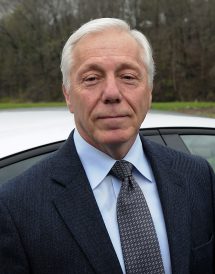
The prosecution’s evidence against former Cecil Township police Chief John Pushak is not tainted, Judge Gary Gilman ruled this week.
Pushak, charged with felony theft and failure to make required disposition of funds and a misdemeanor of misapplication of entrusted government property, pointed to a document he signed in February 2013 that any statements he made during an interview with an attorney hired by the township “cannot be used against you in any subsequent proceeding, nor can the fruits of any of your statements be used against you” in a criminal proceeding.
In a 17-page order dealing with the case, Gilman began by summarizing the background.
A private citizen reported in early January 2013 to Washington County District Attorney Gene Vittone that $2,000 was missing from Cecil Township Police Department and that Pushak had admitted to then-police Capt. Shawn Bukovinksy he took the money because of a gambling problem. Vittone and Chief Detective Jim McElhaney met privately that month with Bukovinsky, who denied knowing of the incidient.
Vittone then contacted Pushak “as a courtesy,” Gilman wrote, to let him know of the circumstances, relaying it appeared the citizen’s allegation could not be confirmed. Vittone offered the services of his staff to inventory the Cecil Police Department’s property room, which Pushak declined.
On Feb. 14, 2013, Pushak met with Bukovinsky and Cecil Township Manager Don Gennuso and handed over an envelope containing $5,000 he said needed to be placed in the township’s general fund.
The captain and manager then began to look into bank records for a federal property account and discovered withdrawals from it were made at automatic teller machines at area casinos.
They relayed this information to both Tom Casciola, township supervisor, and John Smith, solicitor, who directed that the other supervisors be informed.
The supervisors decided Feb. 20 to place Pushak on administrative leave and hire both an auditor and an attorney, Phillip Binotto, who specializes in employment law. The results of the examination of financial records, revealed in April 2013, “showed that (Pushak) had used the federal property account for his own personal purposes” but that Pushak had put the money back into the account. Binotto told Vittone he had met with Pushak and advised him of his legal rights but that Pushak admitted he had misused money from the account. Pushak resigned as police chief April 1, 2013, and Trooper David Bayer was apprised of the case 28 days later, receiving from McElhaney a copy of the detective’s police report, but not any document or summary regarding what Pushak told Binotto.
A question arose about whether the township would prosecute Pushak.
Bayer, the judge wrote, learned of Pushak’s statements to Binotto on May 1, 2013, and contacted the attorney in July “for the sole purpose of asking (Binotto) who gave him the authority to tell (Pushak) that he would not be prosecuted criminally. Attorney Binotto cut Trooper Bayer off before he asked this and declined to be interviewed because he did not want to jeopardize the case.”
Bayer obtained a search warrant from Judge John DiSalle to obtain the results of the audit, and determine if Pushak had a player’s card at The Meadows Racetrack and Casino.
At an interview in December 2013 at the Butler barracks, Pushak, who was no longer protected by his rights as a public employee, was told of his right to remain silent and his right to contact an attorney, but Bayer did not confront the former chief with information about an admission of guilt. Bayer filed a criminal complaint against Pushak in March 2014, but said he did not use Pushak’s statements to Binotto to support the criminal complaint.
In a pretrial motion filed last fall, Pushak claimed that Bayer must have had access to the statements he made to Binotto, but the prosecution, at a hearing in December, disagreed, saying the evidence on which it based the criminal charges arose from independent sources.
Gilman agreed, applying a U.S. Supreme Court case that found the 14th Amendment to the Constitution prohibits the use of statements in a criminal proceeding if they were made by a public employee being threatened with termination.
Gilman wrote that although “the court recognizes that more could have been done to prevent the appearance that the investigation was tainted … the court finds that the Commonwealth proved that the evidence it proposes to use is derived from legitimate sources wholly independent of Pushak’s statements to Binotto.”
The judge took note of Pushak handing over an envelope containing $5,000, acknowledging he had a gambling problem, and Bukovinsky and Gennuso discovering the ATM transactions at casinos.
“To the court’s knowledge, it is undisputed that (Pushak) had complete control over the account and was the only person with a debit card to withdraw and deposit funds,” Gilman wrote.
When Bayer interviewed Pushak at the Butler barracks, Pushak had resigned months before and therefore he could not fear termination, the judge wrote.
“Now that the court has ruled on this, we’re going to proceed to trial,” Deputy District Attorney Jerome Moschetta said Friday.
Pushak’s attorney, Thomas Brown, did not immediately return a call for comment Friday.
Bukovinsky is now the Cecil Township police chief. Pushak remains free on his own recognizance.