

School districts pave the way for tax increases
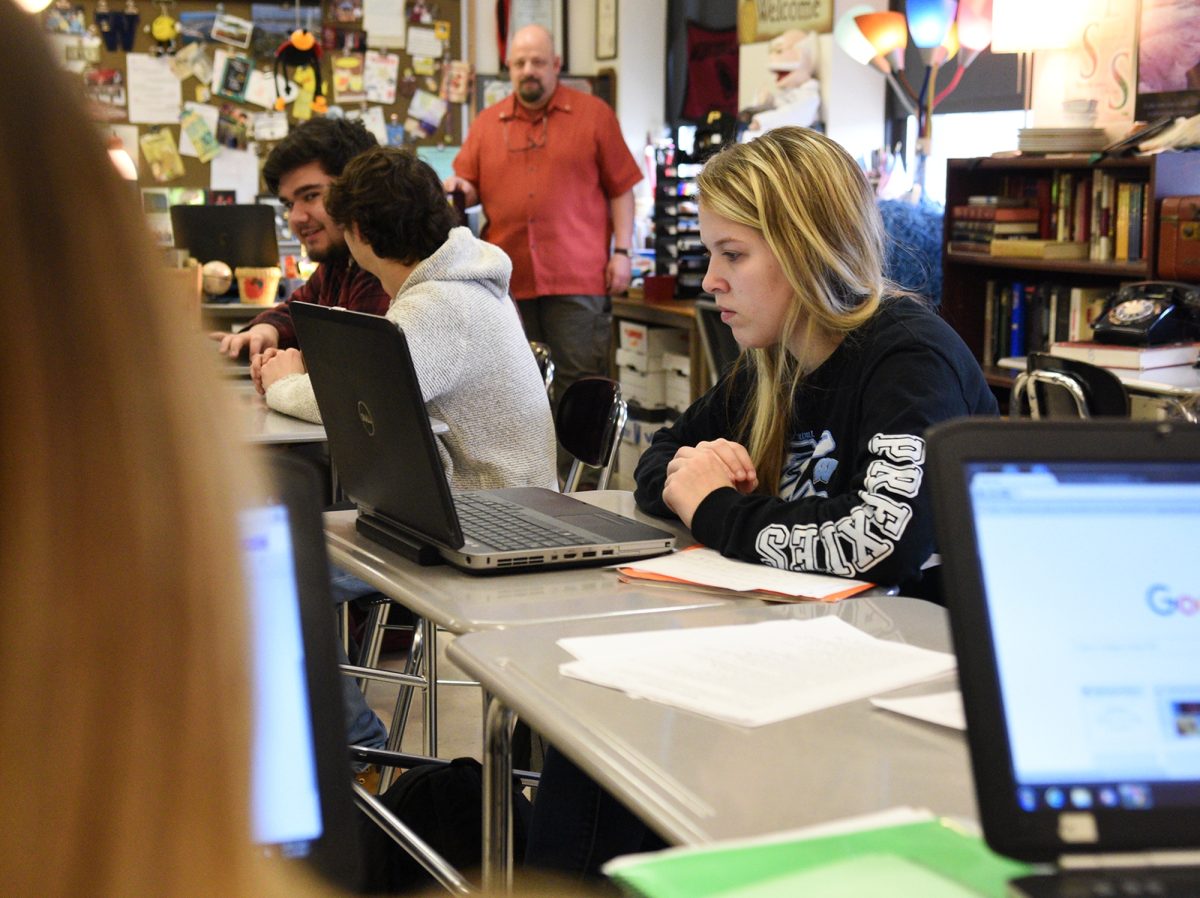
Student Morgan Bainer, right, works on a laptop during a class at Washington High School Thursday.
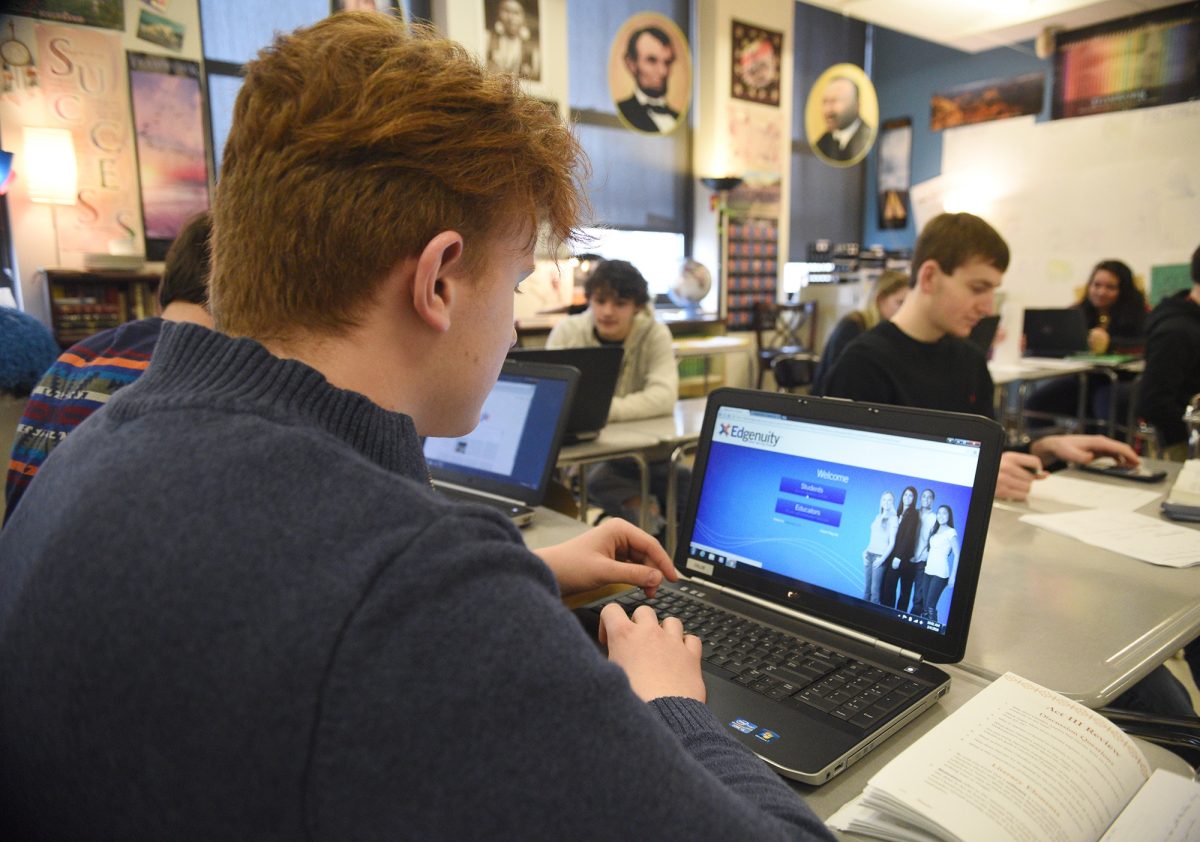
Student Nicholas Dubina, left, does homework during a computer lab at Washington High School Thursday.
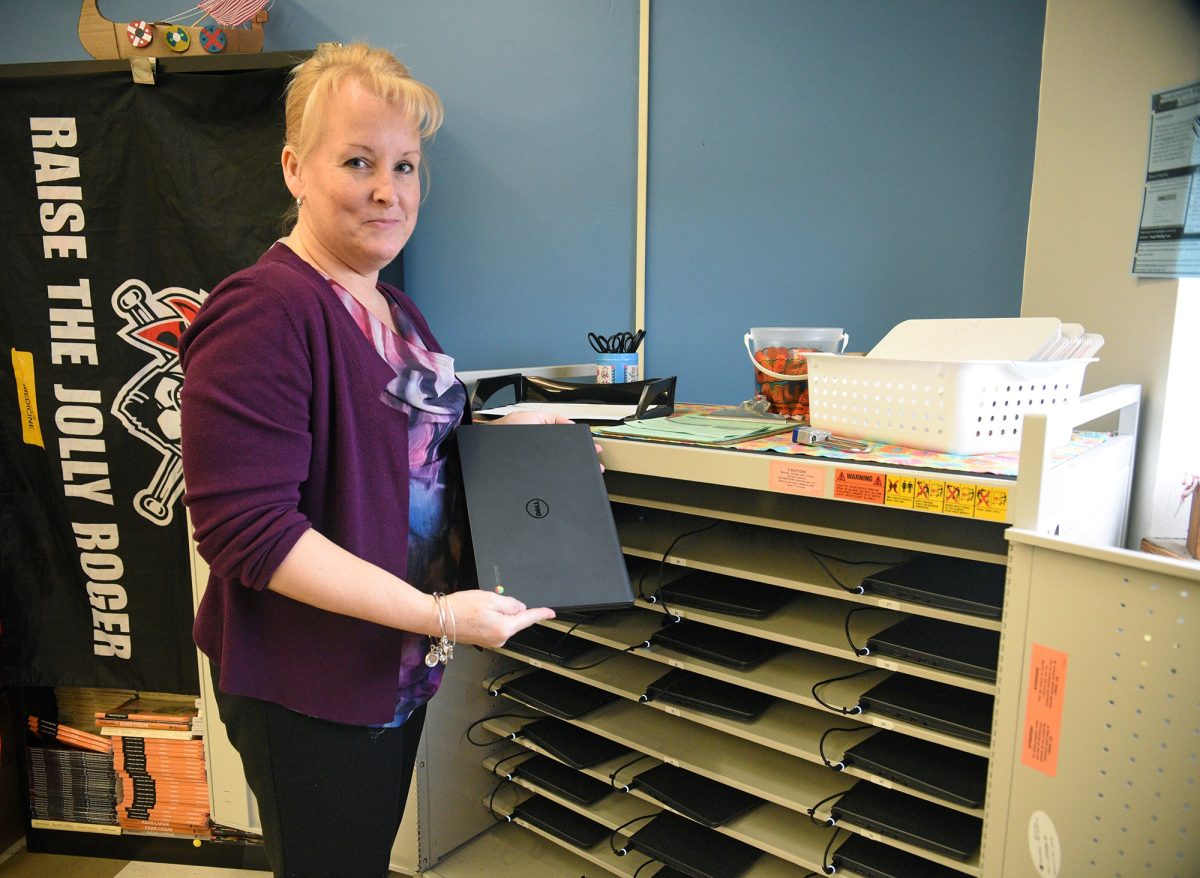
Jennifer Hiles, an English teacher at Washington High School, holds a very important tool for education, the laptop.
School district officials need more than mathematical expertise this year to put the pieces of their 2016-17 budgets in place.
“There’s a little bit of art to it in addition to the science,” Trinity Area School District business manager David Roussos said last week.
Many school districts across the state, including some in Washington and Greene counties, worked throughout January to prepare preliminary budgets for the 2016-17 school year minus a pivotal document that annually helps them estimate future revenue and expenditures – a state budget for the 2015-16 school year.
“This (lack of a state budget for seven months) is an unprecedented situation,” said Pennsylvania School Boards Association spokesman Steve Robinson. “It is a challenge for them.”
Given the uncertainty of state funding, many school districts approved preliminary budgets that give them flexibility going forward. As of late last week, more than half of the school districts in Pennsylvania – 265 of the 501 – approved preliminary budgets that allow them to increase property taxes to the allowable index. Of the 265, 170 submitted spending plans that ask the Pennsylvania Department of Education for permission to raise taxes above the index, according to data from the department.
Roussos had flexibility in mind when he put together Trinity Area’s $52.5 million preliminary spending plan that calls for an 8.335-mill tax increase.
“It gives us as many options as possible,” Roussos said. “It doesn’t mean we are going to increase (the tax rate to) 121 mills. That is as far up as we can.”
Trinity Area’s approach is being modeled by other districts across the state.
Districts last month received a portion of their state funding. They don’t know when they will receive more state money, another factor that figured into budget planning for 2016-17.
“It is a worst case (scenario budget),” Washington School District business manager Richard Mancini said of the district’s $27 million preliminary spending plan that contains a 5.5-mill increase.
Mancini said he budgeted for no additional state revenue for the next school year.
“Our best guess is flat revenue in ’16-’17,” Washington School Board President Jeffrey Fine said.
“The only increases I budgeted for in terms of subsidies are Social Security and PSERS (pension payments),” said Trinity Area’s Roussos. “PSERS (Public School Employees’ Retirement System) is the reason why we have had to increase our tax rate.”
Robinson said the PSBA is advising its members to take a conservative approach to budgeting.
“Once the (state) budget passes, districts can reopen their budgets and make adjustments,” Robinson said.
Charleroi Area School District business manager Crystal Zahand said their $24.1 million preliminary budget contains a 4.9-mill tax increase to the index. The school board also voted to apply to the Department of Education for a referendum exception because of anticipated increases to the district’s share of pension payments.
Board member Adele Hopkins said she is not planning to saddle taxpayers with the entire proposed increase when a final budget is adopted in June – the deadline for districts to approve their spending plans.
“Even if we get (approval for) the exception, we may not go for it,” Hopkins said.
To that end, district officials are continuing to whittle down the budget.
“The superintendent and I will be meeting with department heads and principals (to make cuts),” Zahand said. “The goal is to balance fiscal responsibility with high-quality programs.”
School districts in Greene County also have drafted preliminary budgets with flexibility in mind.
Two of the five districts have passed preliminary budgets that are requesting a tax increase above the index, although both have said it’s merely a precautionary move and that it’s too early to tell whether they’ll actually increase taxes.
Central Greene school officials built a 1.5-mill tax increase into the preliminary spending plan. Officials in the county’s largest district have said there is uncertainty over the potential loss of property tax revenue from coal following the closure of Emerald Mine in November.
Carmichaels Area board members also approved a preliminary budget with a potential tax increase above the 0.8-mill index. District business manager Amy Todd cautioned that a tax increase is not guaranteed.
School officials in West Greene, Jefferson-Morgan and Southeastern Greene are taking a different approach and have indicated they do not intend to raise taxes above the index.
West Greene Superintendent Thelma Szarell said the district should be able weather “another bruising state budget fight,” although the struggling coal industry eventually could take its toll.
“We are fortunate enough right now that we’re in good financial standing, and we have been,” Szarell said. “We weren’t always, but we are now.”
Greene County Bureau Chief Mike Jones contributed to this story.