

17-year cicadas to make a return
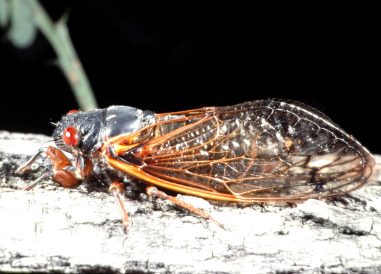
Soon, the air will be filled with the sweet sounds of spring – the laughter of children, the chirping of birds and the constant buzzing of the 17-year periodical cicadas.
Western Pennsylvania – especially Washington, Westmoreland and Fayette counties – will be experiencing a cicada invasion this year. These noisy insects emerge in massive numbers every 17 years, so the last time cicadas invaded the region was in 1999.
Although cicadas would typically be expected to appear at the end of May, the uncharacteristically warm weather could cause them to surface from their 17-year underground hibernation as early as April.
Chelsea Geist, a zoology and environmental science teacher at Canon-McMillan High School, said that cicadas can be found every year, but “every 17 years, that’s when the huge boom comes.”
There are actually two separate cicada life cycles. One cycle is responsible for the annual cicadas, but this year, the 17-year life cycle will be responsible for the massive influx in these insects.
In addition to the unique life cycles, cicadas also have an unusual type of metamorphosis.
“They go through something called ‘incomplete metamorphosis’, which means they go through a nymph stage,” Geist said.
In layman’s terms, a cicada comes out of its egg looking like a mini cicada. Instead of completely changing its appearance, a cicada will molt and grow larger during its lifetime.
When the 17-year cicadas emerge in this region, it has a positive impact on the environment. After a few weeks, these cicadas will begin to die.
When such a large amount of insects die, “not only is it enriching the soil, but it’s providing food for all of the animals that are there, too,” Geist said.
It doesn’t take an expert to know a bit about cicadas, though. Cicadas are notorious for their incessant noise.
“They’re well-known for their songs and intense sounds,” said Geist.
These infamous sounds are made by the male cicadas and the sounds can be quite loud.
“They have a hollow abdomen, which intensifies their sound,” Geist explained.
If they didn’t have hollow abdomens, the noise wouldn’t be as intense.
Though these noisy cicadas can get rather irritating, the singing should last no longer than three to four weeks. After that, the chorus of immense numbers of cicadas won’t be heard in the region for the next 17 years.
By Julia Felton
Junior, Canon-McMillans