

Eight years on, cancer drug repository hasn’t materialized
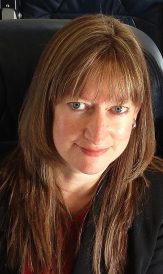
Michael Neal said pushing for a law to allow cancer patients like his wife to donate unopened medicine to patients who can’t afford the costly drugs was a way “to try and put a positive spin” on her terminal illness.
Sherrie Neal, who died recently at 49, lived with stage 4 neuroendocrine pancreatic cancer for another eight years after the law passed in 2008.
During that time, the program authorized in the law – designed to let patients donate unopened, unused cancer drugs to low-income patients who don’t have adequate insurance coverage – never materialized.
“We were pacified,” Michael Neal, 52, of Washington, said. “It was passed into law, and they did absolutely nothing to ensure it was promoted or actually helped people. That’s my gut feeling.”
Penn State Hershey Medical Center in Dauphin County is the only institution in the state that holds a license to participate in the program, according to the state Board of Pharmacy.
Since receiving the license to participate in the program in April 2015, “no drugs submitted to the Medical Center have met the program’s detailed criteria. Therefore, we are re-evaluating our participation,” spokesman Scott Gilbert said in an email.
Neal, who owns William G. Neal Funeral Homes Ltd., said he and others sympathetic to his proposal started to explore ways to get the repository created.
“We are actually strategizing as we speak as to what we’re going to do to get more publicity for this,” he said.
A petition on the website Change.org, which urges state government to “enact Senate Bill 638” – the legislation that authorizes the program – has gathered at least 385 signatures since it was posted in mid-May.
The lack of momentum for the the program doesn’t surprise Pat Eppel, chief executive officer of Pennsylvania Pharmacists Association in Harrisburg. The group was neutral about the plan when it was under consideration.
“While we admired the concept behind it, we thought that the uptake would be minimal,” she said.
Tim Solobay, who serves as state fire commissioner but was then a state House member, was one of two lawmakers to propose legislation authorizing the program. He said he understands the difficulties of establishing the program safely but is frustrated efforts to get the program running haven’t come to fruition.
“This ended up being far more complex than anybody thought going into it,” Solobay said.
Michael Neal began working with officials from American Cancer Society, Solobay and other lawmakers to push for the legislation early in Sherrie Neal’s 11-year battle with her illness.
He said he started on the project when his wife’s prescription was changed a day or two after she received $16,000 worth of drugs. The couple wanted to give the unused drugs to someone who could use them, but found there was no legal way to do so.
“I have spoken with people who have quietly done it, and they don’t care if they’re going to be arrested because they just care about the lives they’re trying to help,” Neal said.
Solobay introduced a bill in the House in 2006 mirroring one Rob Wonderling, then a Republican senator from Montgomery County, began pushing in his chamber the year before.
In 2007, when a new session started, the lawmakers reintroduced the bills. Wonderling’s won approval in both chambers, and Gov. Ed Rendell signed it in 2008.
The bill tasked the Board of Pharmacy with developing and overseeing it. The measure drafted by the board was adopted into law in November 2013.
It defines cancer drugs as a “prescription drug used to treat cancer or its side effects” or “a prescription drug used to treat the side effects of a prescription drug used to treat cancer or its side effects.”
Drugs that are dispensed must be in their original unit-dose packaging, which has to be sealed and unopened. Among other requirements, drugs accepted for the program must have at least six months left on their shelf life.
Patients also must sign a form showing they understand that the drugs were originally dispensed to someone else.
Even with these provisions, Eppel said pharmacists still might have concerns, including how the medicine was stored and who the original supplier was.
“We like to be very careful about that chain of command,” she said.
Erich Cushey has owned Curtis Pharmacy, which has stores in Claysville and Washington, for the past 10 years. He wasn’t familiar with the program until told about it by a reporter. He said it sounded to him like a way to “help the community” but had concerns that it would be hard to administer.
“Is that something we’re interested in? Yes,” he said. “There’s a lot of legalities.”