

Have you Met? Christine Gardner
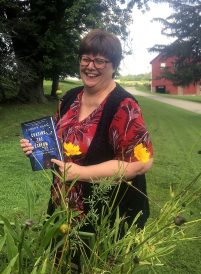
“Ilove the title,” Christine Gardner quips as she holds up her latest reading assignment book from President Judge Farley Toothman – “Chasing the Scream – the first and last days of the war on drugs.” Anyone who knows Gardner will recognize that big smile as her first line of offense against whatever problem that might come her way. The heroin epidemic sweeping Greene County and the rest of the nation is no laughing matter, but the joy to be found when a community unites to counteract the fear, pain and despair that ruins lives touched by addiction is what brought Gardner out of retirement and into the streets to join the revolution of recovery.
“If we’re going to solve this problem, it’s through grassroots community involvement,” she says. “Since we held our first town hall meeting in October, people have been activated and they’re in touch with each other. The community is involved because they know now they can do something about addiction. And we’re moving forward. This is only the beginning.”
It was standing room only in the courtroom last October, when 384 people came to the Greene County Courthouse, drawn by their concern about the epidemic that was bringing addiction and death into their lives. They came to ask what could be done, and Coalition for a Brighter Greene was formed. But the months of planning, perseverance and happy coincidences that brought Gardner out of retirement to help organize that meeting and move beyond into a more hopeful future is a story in itself.
After retiring in 2011 from a career managing economic development programs and business incubators in Greene County and elsewhere, Gardner still did occasional private consulting from her home. Three years ago, she and husband Rex were living on their 200-acre farm near Jefferson and traveling whenever the mood struck when the addiction epidemic came calling. Gardner’s organizing smarts and spiritual strength were about to be put to good use. “People knew if you want help planning something, call Chris,” she says.
When Bob Terry of Steps Inside, a group committed to bettering the services for addiction and recovery, heard about Gardner’s professional background and stopped to visit, “he said, ‘Chris, can you help us raise a little money? There are no recovery houses in Greene County.’ When Bob asked me, ‘are you tired of being retired? Are you ready to give back?’ I said yes.”
Gardner’s community roots run deep. As a child growing up in Fredericktown, “We didn’t know we were poor, but we were.” Her father, Fred Roselle, was a coal miner and she remembers the family stories of the Great Depression, but also that there were many faiths in the family and the community that worked together. “My grandma was Catholic, my mom Pentecostal and my dad Protestant, but when it was time to go to church, it didn’t matter to us which church we went to. For us it was all the same.”
After graduating Waynesburg College in 1984 with a teaching degree, Gardner got the job of her dreams at Faith Christian School in Washington. “But I had to pay back my college loans,” so she went to work for Community Action in 1987, learning to write grants and be a case worker in homeless housing and mortgage assistance programs. It gave her real insight into the problems the county still faces today, along with the passion to do something about it.
“That’s when Ronald Reagan de-institutionalized the mental health industry and people were put out on the street. We’ve never really solved that problem, except now they’re being held in prison, along with people with drug issues. The mines were idling then and we had workers in crisis like we have now. The drug of choice then was alcohol. Now it’s opioids and people are dying.”
Helping Terry and others who met regularly at Steps Inside open a recovery house for men and another for women brought Gardner in contact with an informal group of business owners, pastors, family members, law enforcement and elected officials who were tackling the thorny issue of drugs, death and lack of community services that compounded every problem. Meetings were held in churches, restaurants, offices and homes. The shame of addiction and incarceration began to fade as people told their stories of no recovery programs and the need for legal reintegration back into the community once recovery was achieved. Grieving parents came, including Lynn Bird, who lost two daughters in four months in 2013. With every meeting, there were more people and more ideas and more determination to make change happen.
“I helped organize a meeting of about 70 people from churches and families and we began meeting regularly,” Gardner says. “So many people have been personally touched by this epidemic. I don’t have children, but I lost a nephew to heroin. He was a straight A kid. It breaks your heart.”
Gardner’s involvement caught the eye of her old boss, Farley Toothman. She was the county development director and compliance officer, raising money for projects and reading contracts for compliance while Toothman served as county commissioner. Now as judge, Toothman saw the problems that drugs, especially heroin, were bringing to the legal system, from court cases to domestic relations to children being uprooted from their homes. Gardner was hired part time as “Tip staff” for the court, helping pull together crime statistics, death rates and other data linked to the drug arrests within the court system.
When Terry and George Blystone, members of Steps Inside, had a chance meeting on the street with Toothman, they told him they were having a hard time finding a place to hold a public meeting to talk about drugs, “Farley said ‘why not the courthouse?'” Blystone recalled. Gardner soon found herself helping set up the town hall meeting, bringing in experts to highlight the impact of drugs on the community.
“The energy after that meeting was incredible,” Gardner says. More serendipity was on the way when pastor Richard Berkey of Rolling Meadows Church of God, Waynesburg, joined the coalition and brought with him the documentary movie “Appalachian Dawn.” It told the story of the opioid epidemic in Manfield Kentucky and how the churches helped unify the community by working together, then marching against all odds to bring attention to the problem and help solve it.
The DVD was put in local libraries and shown by coalition members in granges, homes and in 25 churches county-wide. An estimated 1,200 people saw it, Gardner says. Plans to have a similar march in Greene County were spearheaded by Berkey and the meetings held at his church became the place where pastors, congregations and other coalition members met to make it happen.
As the group worked on the upcoming march, Gardner’s workload in the court was steadily increasing as new programs for addressing drug related problems were researched and set into action. On April 21, the commissioners voted to create a new full-time position to focus on drug issues, and Gardner was appointed.
“My official title is court assistant for community prevention and education. I call myself the court community liaison,” she says.
On May 14, 1,400 people turned out on a cold rainy day to march a mile from the airport to the fairgrounds, chanting “Greene County has had enough!” It was a day to share testimonies, pray and learn more about the epidemic, fueled here, as in Kentucky, by legal prescription drugs.
Four out of five heroin users started with taking prescription opioids found in home medicine cabinets, Gary Tennis, secretary of the Pennsylvania Department of Drug and Alcohol Prevention pointed out soberly.
Thanks to the months of effort that Gardner and the coalition had already put into prevention, recovery and accountability programs, help was on its way.
On June 24, the court system partnered with the county and Career Link to hold a first ever job “re-entry fair” at the Greene County Fairgrounds to help criminal defendants integrate back into the work force by expunging criminal records, obtaining drivers licenses and getting job training. “We had 35 employers there who were ready to hire, along with community resources that were available. Judge Toothman held court there that day for those who owed money on fines. That was a first, too, and we’ll be doing it again next year,” Gardner says.
Superintendents in all five school districts have made drug prevention part of the curriculum for third through ninth grades beginning with the 2016-17 school year, Gardner says. “We did the research. Life Skills Training is the number one program in the country for results, now we have it.”
Coalition for a Brighter Greene holds quarterly meetings at the courthouse to keep the momentum going. “Our input has reached state and federal levels and additional resources are being mounted, including private and corporate dollars. The next town hall meeting is October 6, and everyone is welcome.”