

Haute Route Amateur cyclists tackle the Pyrenees in a grueling race
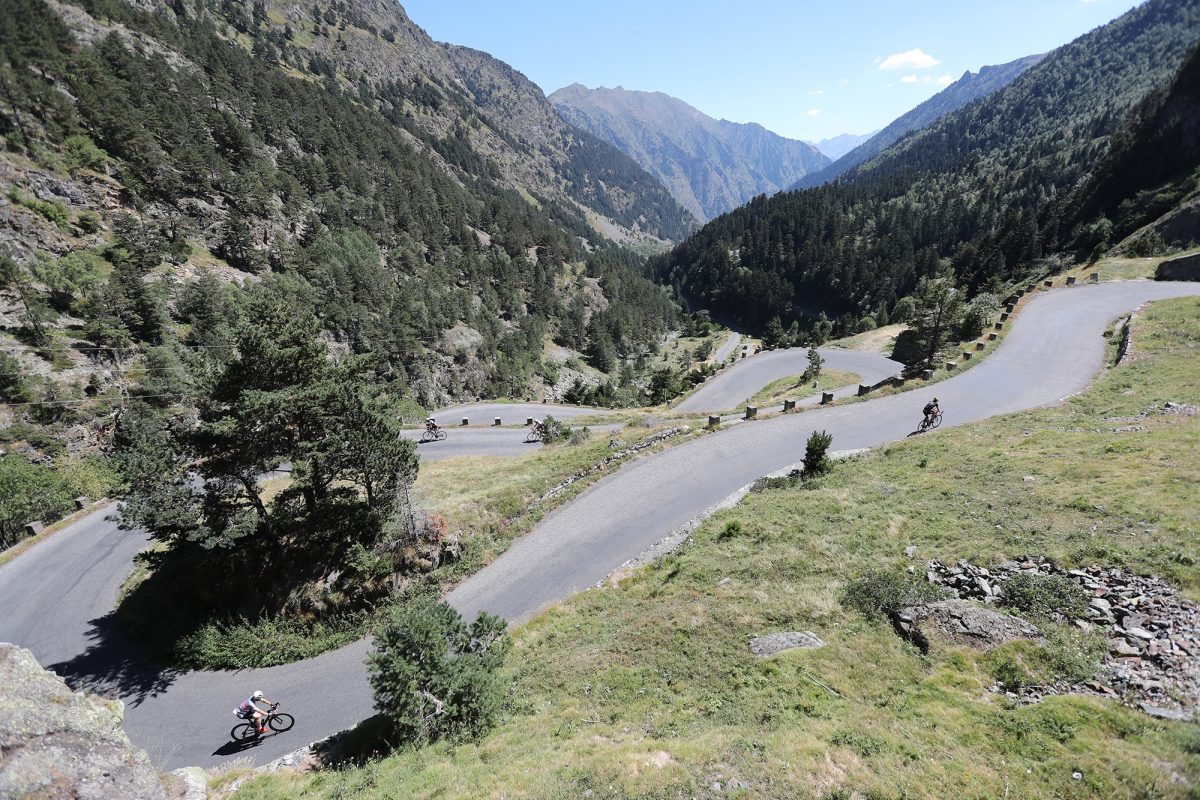
Cyclists make their way up the Cap de Long climb during the 2016 Haute Route Pyrenees timed cycling event in France. Some 400 cyclists participated in the event, which covered 500 miles in seven stages through the French Pyrenees from Anglet to Toulouse, with more than 60,000 feet of climbing.
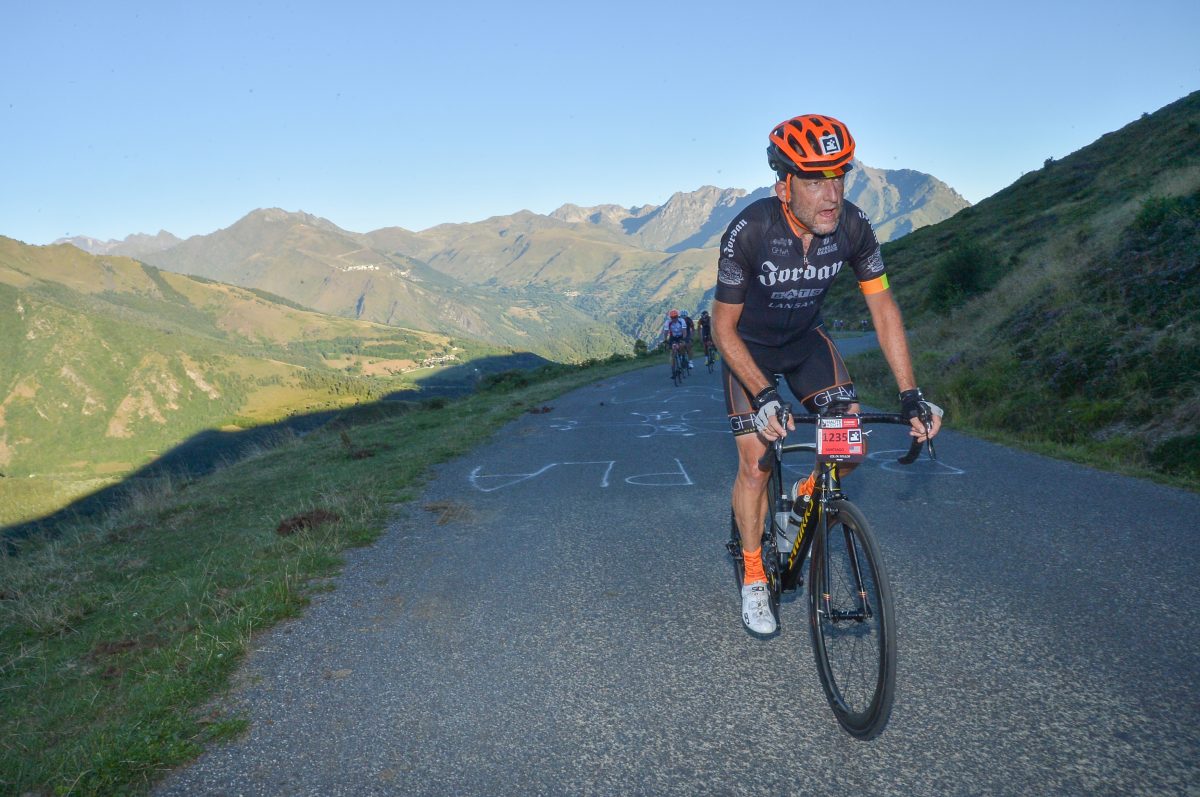
Santiago Lyon makes his way up a climb during the 2016 Haute Route Pyrenees cycling event in France.
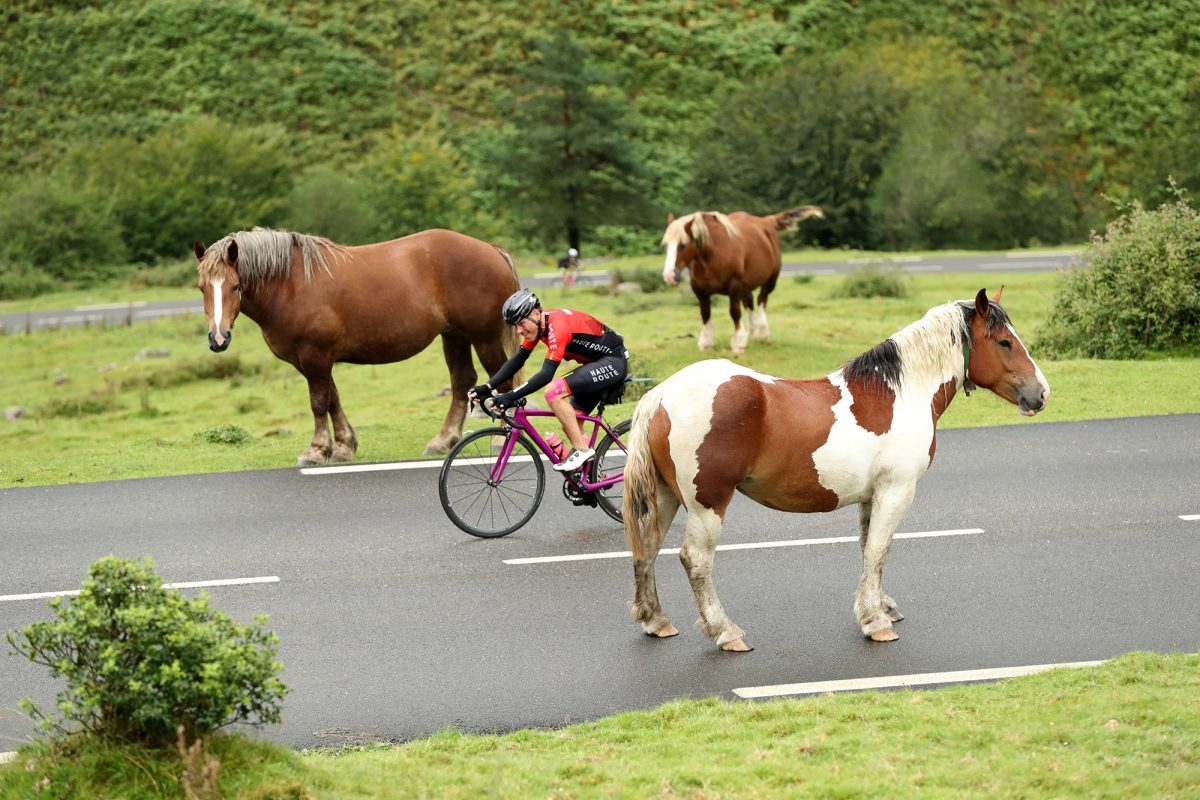
A cyclist makes his way between horses during the first day of the 2016 Haute Route Pyrenees cycling event in France.
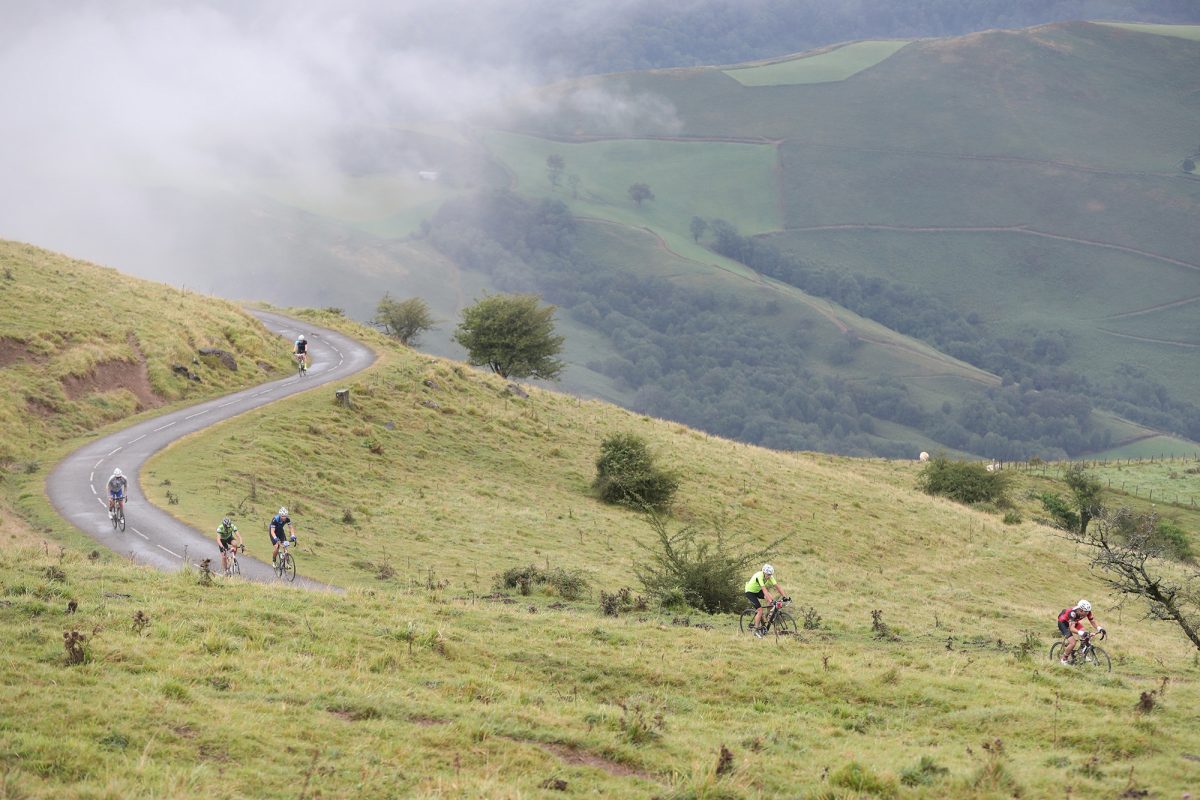
Cyclists make their way up the Col d’Ahusquy during the first day of the 2016 Haute Route Pyrenees cycling event.
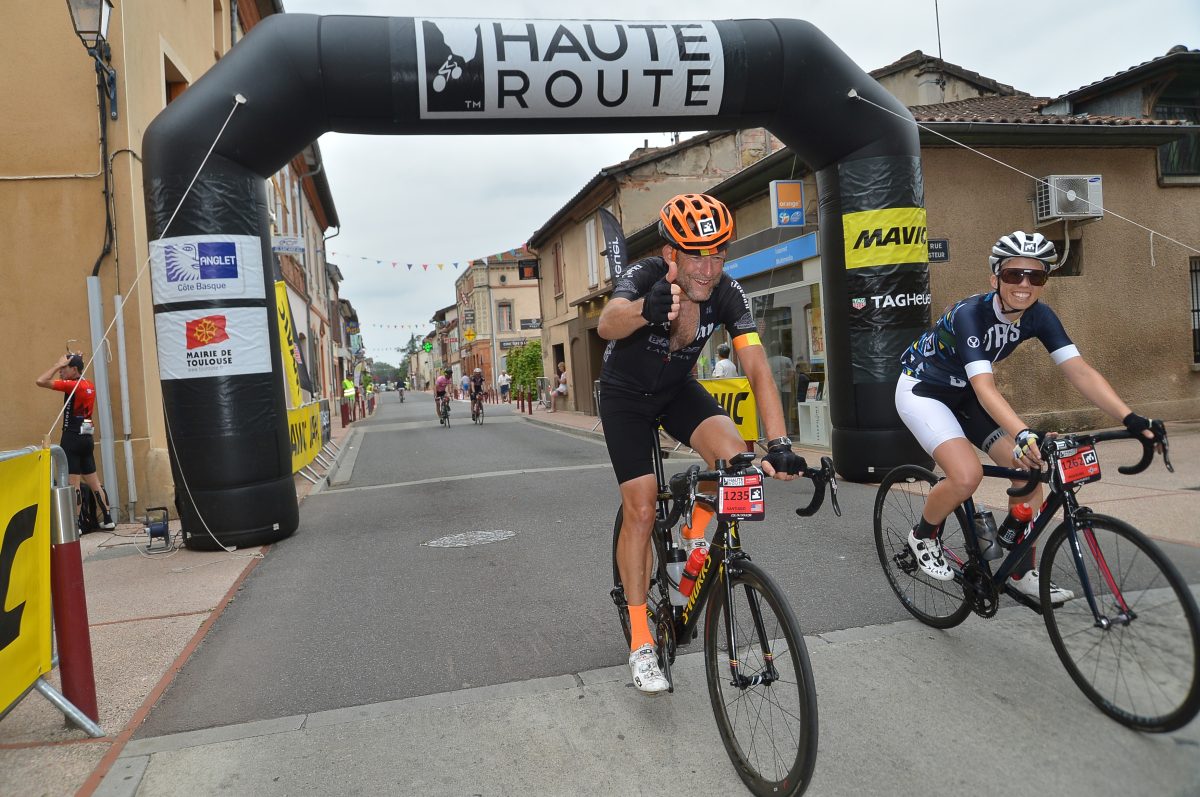
Santiago Lyon, left, crosses the finish line alongside fellow cyclist Ingeborg Dybdal Oie at the end of the 2016 Haute Route Pyrenees timed cycling event in Saint-Lys, France.
ANGLET, France – For many people, vacation means lying poolside or beachside, reading and relaxing. But for me, it meant biking through the French Pyrenees in a weeklong race, taking in the famous climbs of the Tour de France with 400 others.
It was agonizingly difficult, one steep, grueling mountain road after another. But it also was wonderful.
The event was part of the Haute Route series, billed as “the highest, toughest and most prestigious amateur cycling events in the world.” The events take place annually in the French Pyrenees, French Alps and Italian Dolomites. A U.S. event is planned for the Rocky Mountains in June 2017.
Haute Route events attract cycling-crazy folks from around the world of all ages and abilities. At the sharp end of the stick are aspiring or retired professionals, in the middle are fit cycling enthusiasts like me and at the bottom are people who signed up on a whim and may be regretting it. Some brave souls do all three European events, back to back, the so-called “triple crown.”
My August trip to southwestern France was a 50th birthday present from my wife. I met up for the race with a friend, Paul O’Donnell, also turning 50. Both of us race bikes regularly in the New York area and are, for our ages, very fit. This was to be a stiff test of our abilities: 500 miles with 65,000-plus feet of climbing. Each day we’d burn 4,000 to 5,000 calories.
The event began in Anglet in rainy weather. Then we hit the first major uphill of the day, the Col d’Ahusquy, a steep 8-mile ascent. I’d never been on a climb this long and difficult before, and found myself breathless and exhausted halfway up, wondering what I’d gotten myself into.
A quick pause and it was down the other side toward the day’s second and final climb, the Pierre St. Martin, a 10-mile climb through heavy fog, with visibility dropping to about 65 feet, a blessing because you couldn’t see the long series of switchbacks coming. It was quiet for long stretches but for the whirring of bikes and the riders’ breathing, with cowbells softly tinkling in the distance. A car or motorcycle engine would come and go, and then you could focus on your own engine again – heart, lungs, legs.
Day two saw four climbs, all hard and long, with the Col D’Aubisque the killer, on and on (and then on some more) for 10 miles. Exhausted, rationing water, stuffing down energy gels, controlling the breathing, I tried to focus. Sweat dripped into my eyes, stinging me onto another pedal stroke, and then another.
Some might call it suffering, but for me it was cleansing, liberating, nothing but effort and the road ahead. The mind? Circling the wheel, wondering what was to come. And then I passed a one-legged, one-handed man on his bike, also making his way up. He’s Christian Haettich, a regular, who lost his leg and hand in a traffic accident as an adolescent, and yet he’s chugging away on some of the toughest climbs in Europe.
At the top, the landscape was astonishing, massive mountains upholstered in green grass and trees like giant sleeping ogres. The Pyrenees, where Iberia smashes slowly into France.
Dropping down like a marble, through tunnels bored through the rock, we descended into the valley. Cows lie nonchalantly by the roadside, big metal bells around their necks, a few pigs, too, and some sheep, guarded by large mountain dogs. We were warned not to approach the sheep lest the dogs mistake us for wolves and attack, as had apparently happened in previous years.
And then to the base of the day’s final climb, the Col de Spandelles, just 6 miles long but with steeply graded ramps. Small groups of curious bystanders would form by the road, some clapping, some cheering us on.
We went through the legendary Tourmalet climb, scene of epic battles in Tour de France races. Drink, drink, sweat, sweat and drink some more. More switchbacks, focus, OK, half a mile to go, pushing a bit harder and onwards, up and then down through majestic scenery, but always keeping an eye on the clock. Each day had a time cut off and if you didn’t make it, you’d be eliminated from the timed event and escorted to the “broom wagon” for a ride to the finish. The next day you could continue at your own pace, no longer timed.
The final day was a mere 105 miles, just one major climb and then mostly downhill through rolling farmland into Toulouse. And then it was over. We got our participant medals, then celebrated with pizza, soft drinks and later in Toulouse, a beer or two.
Reflecting on the week, each day had seemed as punishing as the next, my whole body a slippery sinew of muscle turning and turning. But I’d gradually adjusted to the effort, the fitness kicking in. What seemed like misery in the moment felt like triumph looking back. But would I trade a beach vacation for a week of pushing uphill again?
Absolutely.