

Louis Panza Jr.
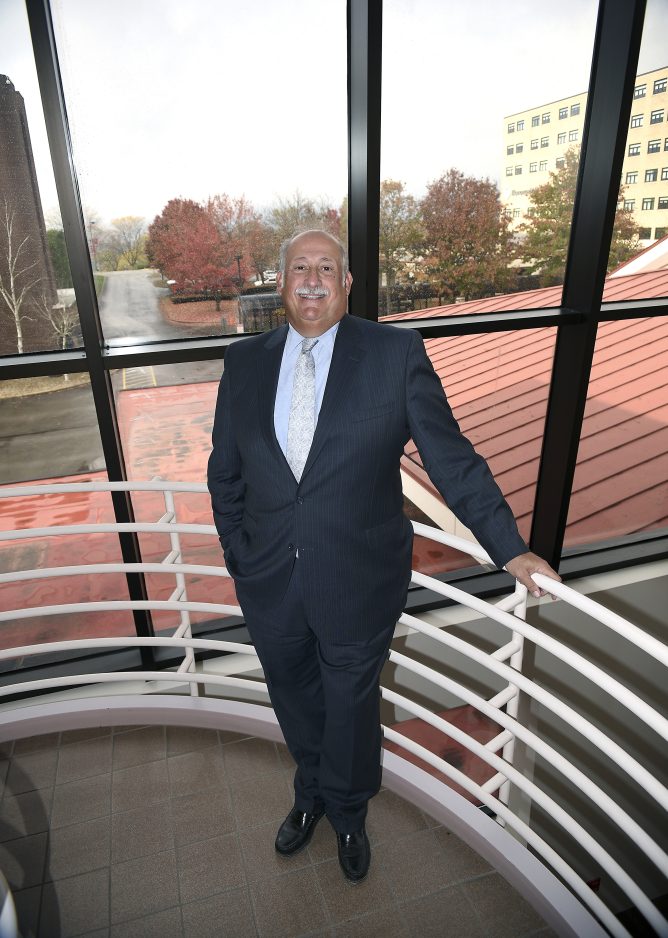
Celeste Van Kirk Louis Panza Jr.
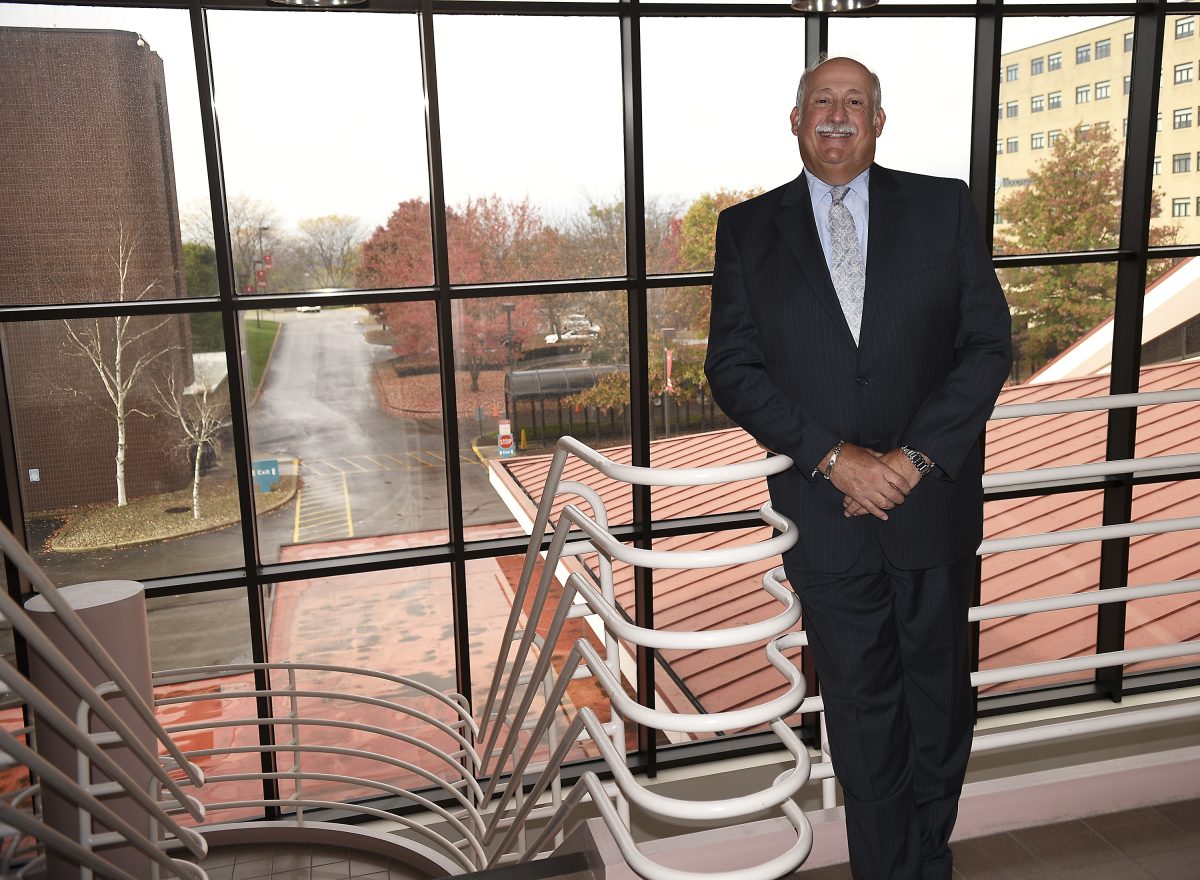
Celeste Van Kirk Louis Panza Jr.
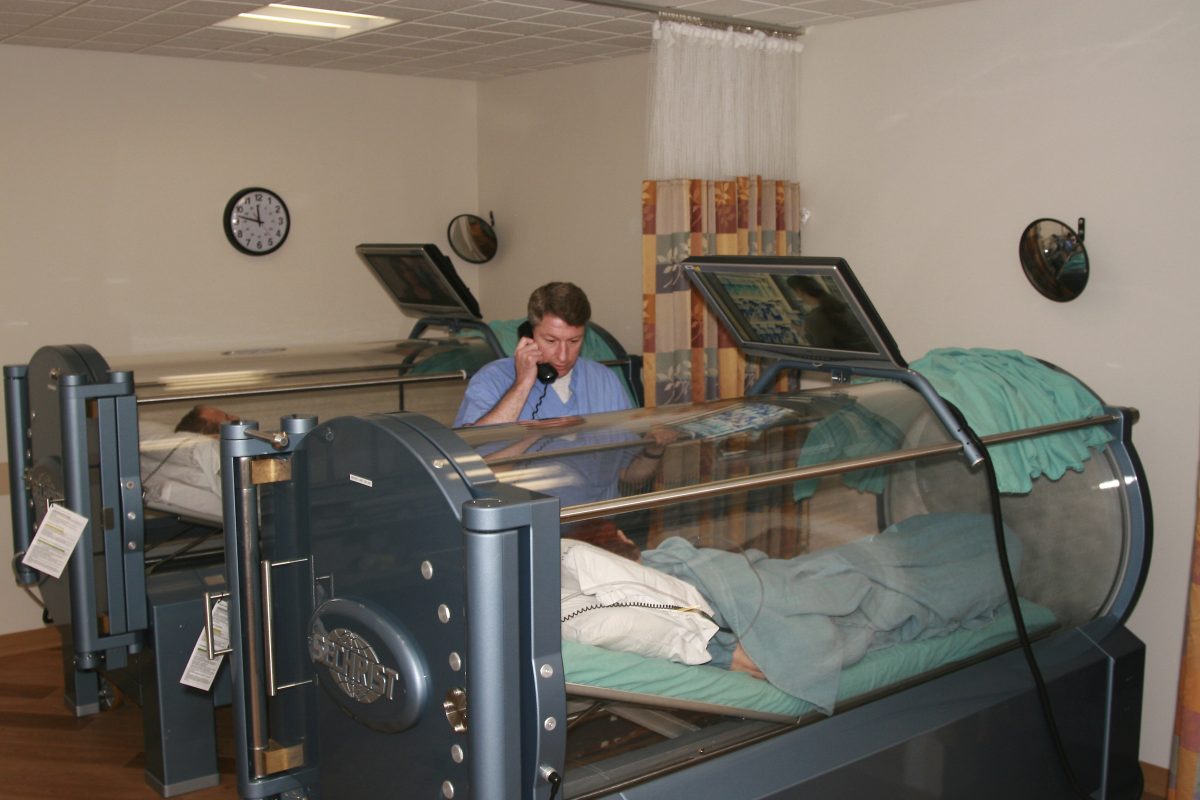
Courtesy Monongahela Valley Hospital The hyperbaric unit at Monongahela Valley Hospital is used in the fight of multiple types of conditions such as thermal burns, radiation injuries and stubborn wounds.
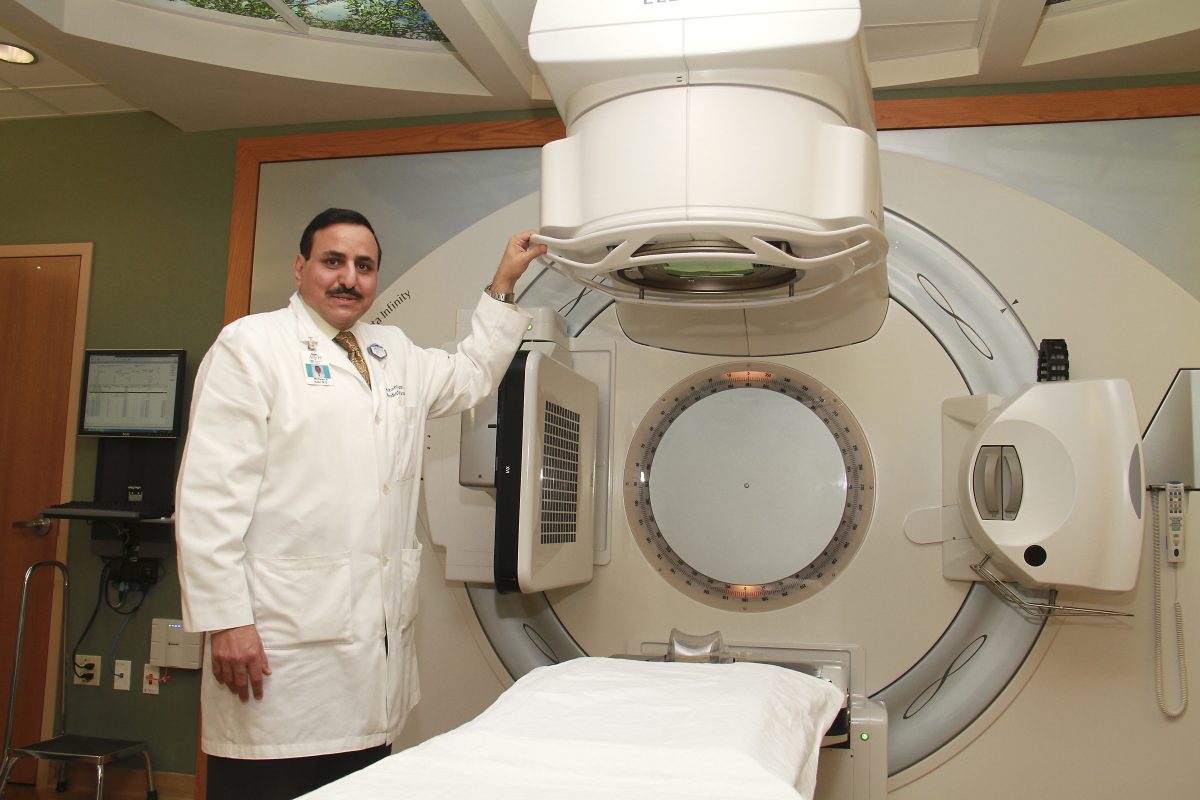
Courtesy Monongahela Valley Hospital Mohsen Issac, M.D., Monongahela Valley Hospital’s director of Radiation Oncology, is shown with the Hospital’s linear accelerator.
Talk with Mon Valley Hospital CEO Louis Panza and its clear he prefers to point the spotlight on the hospital rather than himself. He will gladly talk about his amazing staff or the latest state-of-the art equipment installed.
“I look at Mon Valley Hospital, at some of the things our doctors, nurses and staff do for our patients – I’m just the lucky guy who gets to work with them. The real heroes are the people taking care of patients — from housekeeping and maintenance to dietary, to nurses, doctors and ancillary staff,” Panza says.
He’s been CEO for the hospital since 2004.
About 10 years ago, he started the “Caught you Caring,” program. From time to time, he sets out boxes and slips of paper that employees can note when they see their co-workers being kind to patients and each other. “I’ve got boxes and boxes of stories” – including employees who offer rides to other employees during snow storms, take their lunch hour to pray with a patient or give a patient a ride home after discharge when there is no else to pick them up.
The relationship the patient has with the hospital staff is key. “That relationship where you help teach them what to watch for, how to take their meds when they get home – those relationships are so critical to having a successful outcome of that care,” Panza points out.
Healthcare has many rankings; there are a few distinctions he’s most proud to have in the past two years: Johns Hopkins Armstrong Medical Institute ranked Mon Valley Hospital a Top 3 Hospital in the United States; Health Grades placed Mon Valley Hospital in the top five percent in the nation for outstanding patient experience, and the hospital received the Women’s Health Choice Award as one of America’s Best Hospitals.
“Some hospitals may have a superb niche in a very narrow area. These are more global ratings of overall care that take into account infection rates, re-admission rates, mortality rates and patient satisfaction,” he explains.
His philosophy at the hospital: “Treat everyone as if they were your mother. It’s a very simple rule that I have. I appreciate that in health care there are multitudes of manuals and policies, and we need those. For me, when there is an issue I say to the staff, ‘If that was your mother, could we have done a better job?'”
The 32-year healthcare industry veteran can trace some valuable character traits back to his own parents.
The Aspinwall native is the youngest of three brothers. “We were children of parents who lived through the Depression. Our parents instilled in us that you have to work hard and earn a living,” Panza says. His father, the late Louis Panza Sr., set the example. Panza remembers his dad, as an outstanding accountant, business man and schoolboard director who put his college career on hold for his military service and later finished his degree in night school. Having learned the value of a dollar from his father, Panza used his talent and love for music to work his way through undergraduate and graduate school at Duquesne University. He remembers that time fondly.
“It was a great way to make a living while in college. I enjoyed the people I worked with and meeting others in the business,” he says, recalling his days as a studio drummer and a member of various bands that performed professionally.
And his mom, whether volunteering at school or mending marching band uniforms, taught the boys at an early age to give back.
Panza and his wife, Cheryl, have raised four children between them and he hopes he’s passed on those same values of compassion, humility and hard work.
A business major in college with a concentration in accounting, Panza spent the first 24 years of his career on the accounting side of healthcare, starting as an auditor with Arthur Andersen & Co. His first client assignment was in healthcare and he was quickly labeled as a healthcare auditor. During his four years with Arthur Andersen, he traveled the country and saw firsthand the struggles small hospitals were having.
He joined Mon Valley Hospital in 1984 as controller, not long after it was established through the merger of two smaller hospitals, Charleroi Monesson Hospital and Monongahela Memorial in 1976.
“Mr. Lombardi was truly a visionary,” Panza says, referring to Anthony Lombardi, the first CEO of Mon Valley Hospital who led the hospital merger. “That’s one of the things that attracted me to Mon Valley Hospital – seeing a progressive community saying that together they would be better than separate, and that’s tough at times for people. Mr. Lombardi worked very hard to convince the two communities that the best thing they could do was to combine into one big, strong hospital. When I saw that dedication to the task I thought, ‘I want to go work there,'” Panza says.
A year later in 1985, he became chief financial officer, where he remained for the next 20 years until the retirement of Lombardi. Panza is only the second CEO of Mon Valley Hospital.
In an area that has seen the closure of 15 hospitals in nearly 15 years, it’s his task to keep the regional hospital well positioned for the future. “A hospital just because it’s a hospital doesn’t get to stay forever,” Panza warns. “When you are dealing with so many unknowns – whether it’s federal re-imbursement rules, insurance companies with their changing rules, you are always concerned about your hospital because so much is not in your control.”
Despite the numbers, he said he’s comfortable with what Mon Valley Hospital is doing and how they are doing it. “You have to stay current with technology, have a staff dedicated to taking care of patients and a board that understands their fiduciary obligation. You can’t do everything, but you have to the right things.”
Some of those right things are part of the hospital’s second master facility plan, started four-and-half years ago and now in the last phase aiming to provide services in the most efficient and effective manner, Panza says. To stay current with technology, the hospital has added four new operating rooms in addition the existing eight, a new hyperbaric chamber for wound care and a new state-of-the art linear accelerator – one of the most advanced in the country and only the 15th delivered to the United States from Germany.
Panza becomes animated when talking about the capability of this new machine in the treatment of cancer. “It allows us to do some very, very complex radiation treatment. The new piece of equipment required a new vault for the room with six-foot thick concrete walls. It’s that powerful.”
The plan also encompassed the opening of Rostraver Imaging in Rostraver Township, a new outpatient center with state-of- the-art MRI and CT equipment.
Within the hospital, improvements include replacement of all of the elevators in the hospital, a two-year project, and a patient-centered improvement: updating the heating and cooling systems to give patients control over the temperature in their rooms.
It all comes back to how you would treat your mom.