

Strange fruits
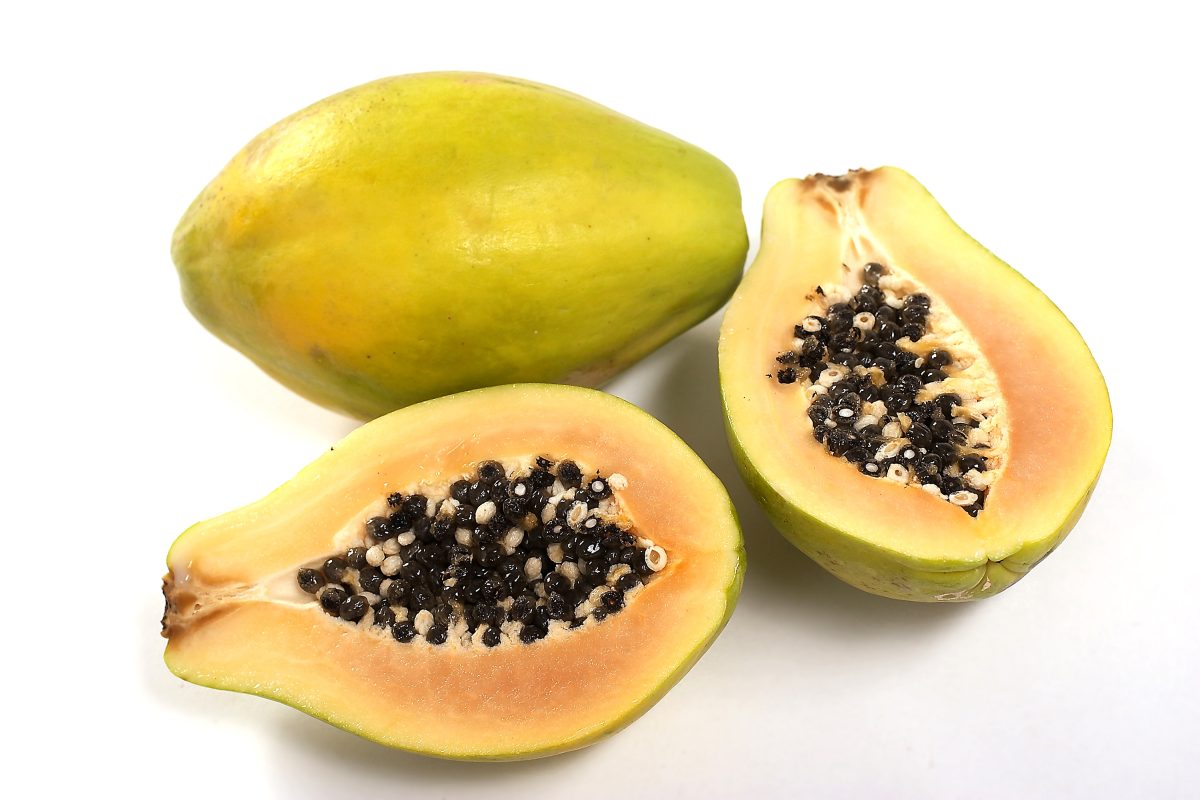
Ripe pawpaws only last for a few days at room temperature, and just a week in the refrigerator.
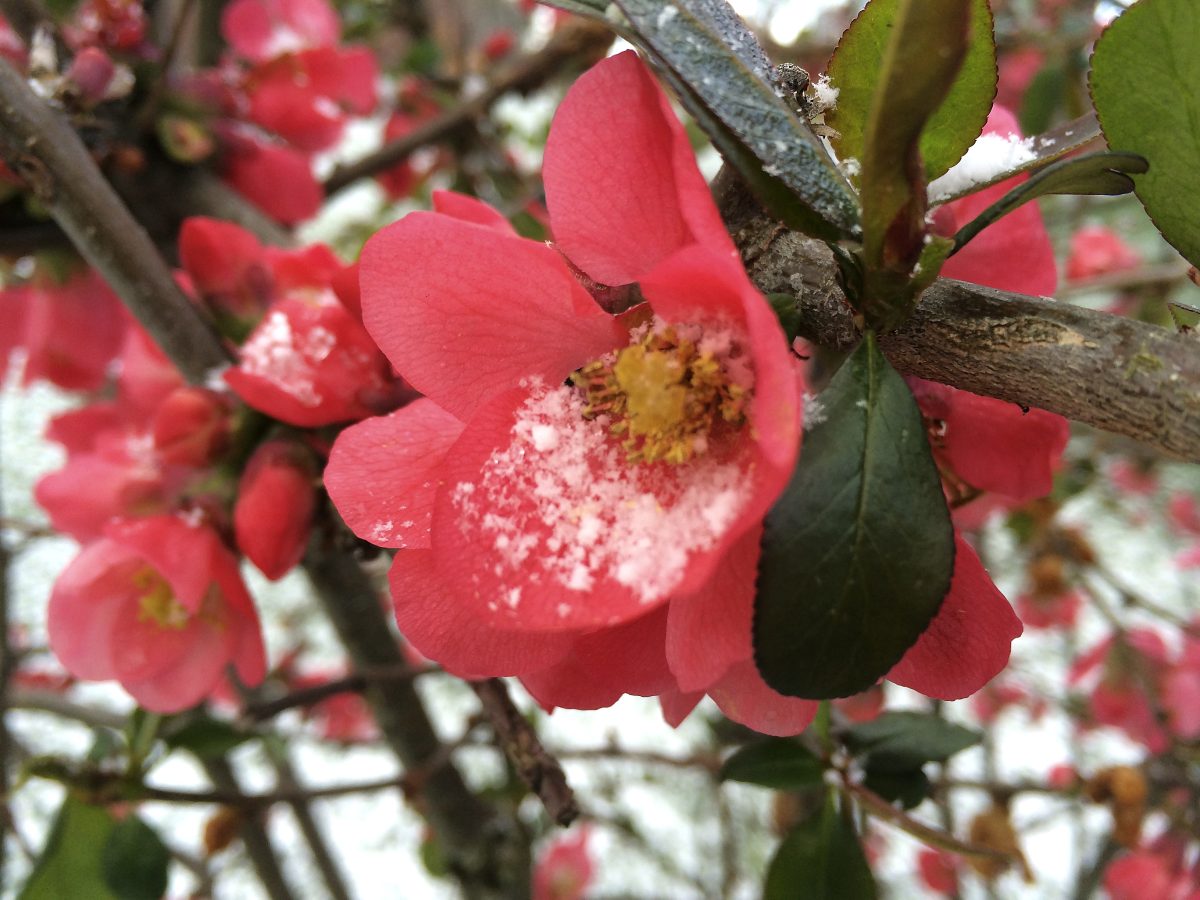
Quince blossoms in winter
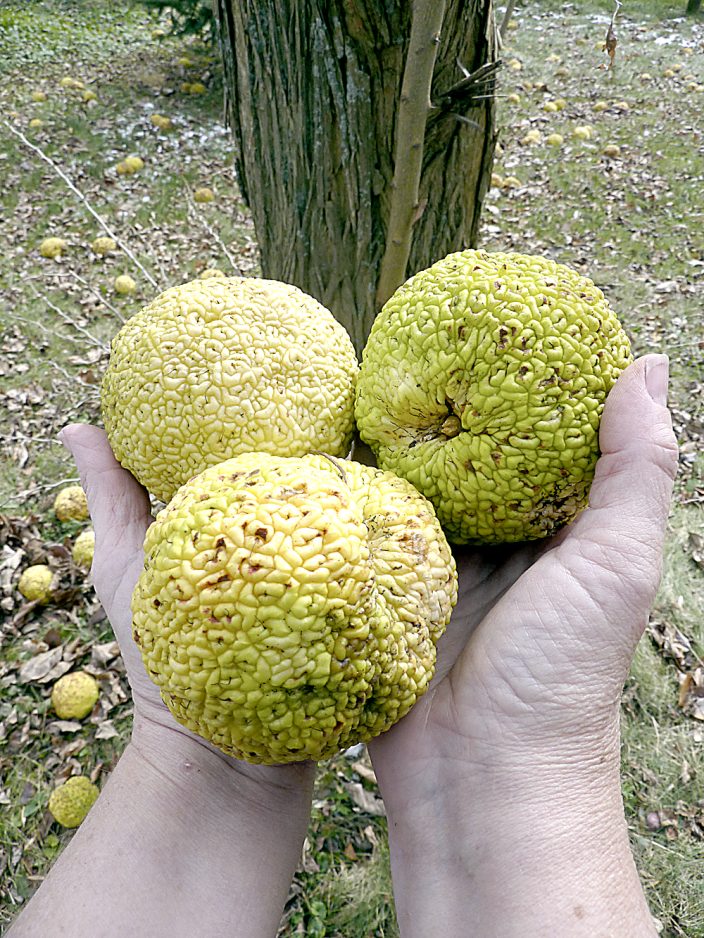
Osage oranges, also known as monkey balls, litter the ground in the late fall.
A delight that lasts from mid-summer through autumn is fresh, local fruit. If the weather cooperates, trees produce an abundance of apples, pears, peaches and quinces.
Wait – exactly what is that last one on the list?
Quince looks like a really big, yellow apple. Cut it open and the flesh, even when at peak ripeness, is spongy. The core is as tight as a fist, really hard to slice, and it holds myriad seeds that appear identical to those of an apple.
Under its genus and species, one learns that, like apples and pears, it is a member of the rose family. Be prepared to pucker, though – quince in the raw is known for its sour disposition, but when cooked with sweeteners, its flavor blooms.
Quinces, and information about the fruit, were abundant at the farmers’ market in Washington, conveniently located across South Main Street from the Observer-Reporter.
Audrey Wagers, 83, now retired from Applecrest Orchards, Washington, discussed the produce she was selling. “Everybody calls her ‘The Apple Lady,’ ” says her daughter, Jill Wagers Craig, who is no fan of the quince. “They were always too ugly for me.”
Although an ornamental quince bush will grow little fruits, Wagers says commercial quinces grow on a tree. “I never heard of anybody just cooking them,” she says. “Somebody bought quince and she mixed ’em with apple. They’re a different thing. You don’t see them as much because people don’t make jelly the way they used to.”
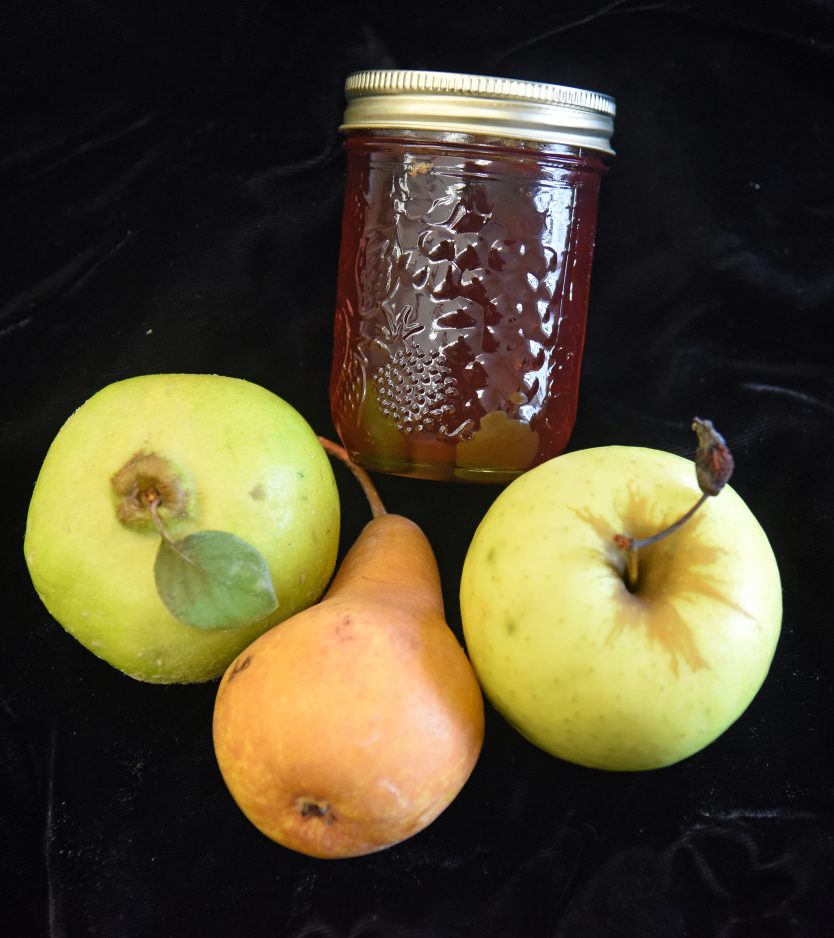
Jelly maker Susan Carl, also known as Spreads by Susan of Avella, sells rosy jars of quince jelly made from the fruit of her own trees.
Carl’s list of ingredients on the jelly jar lid shows that she adds pectin to quince jelly. The color is natural – the only other ingredients are quince juice and sugar.
If you buy or grow quince, what do you do with it? The quince is a fruit full of surprises.
The first time I purchased quinces from Applecrest Orchards, I took them home, placed the four of them on the kitchen counter and left town. I was so surprised to return home after a long weekend and find the kitchen sweetly scented. The next day, I started reading about quinces and found out that the foursome was responsible for the fruity fragrance.
Clean one and cook it on the stove top, I decided.
Rinse a quince and feel its fuzziness. The fur was almost invisible, but very apparent to the touch. I wondered if my quince had gone bad and was growing mildew, but an internet article let me know this is normal. Cut quince, like most apples, seems to turn brown quickly, so I boiled some water and tossed the slices – fuzzy peel and all – into a saucepan with a sugar substitute. The fuzz doesn’t withstand the heat and cooks away. Unlike Carl’s quince jelly, mine was yellowish, like a chunky applesauce. Maybe I should have boiled it longer, but I was eager to taste the result.
Quince has been described as having “hints of pineapple, guava and spice.” Lacking this type of finely-tuned palate, I’d simply describe it as pleasant, but almost indistinguishable from that of an apple. A neighbor who tried my quince-apple pie was surprised to find there were two fruits tucked into the crust.
The quince may be the easiest route to making a spread. Quince contains large amounts of natural pectin and it jells by itself.
For the pie, I mixed dollops of stewed quince mixed with raw apples. I’ll credit it with keeping the juices from boiling over in the oven. Cooked quince, sprinkled with cinnamon, was also delicious by itself or mixed with plain yogurt or cooked oatmeal. It’s nice to dress up the mundane with a touch of the exotic.
Oh, sage, what can one do with these things?
“Some scientists believe that Osage oranges were a regular part of the diet of mammals who lived thousands of years ago, making it an ecological anachronism,” wrote staff writer Karen Mansfield in a 2013 Observer-Reporter story.
And what might those mammals have been? Try wooly mammoths, mastodons and giant sloths.
Folklore says to scatter them – also known as hedge apples or monkey balls – in garages or basements as an insect repellent, but the concentration required to keep bugs away is far more than what would be present in a single sphere.
Mansfield told us that Indians used the wood from Osage orange trees to make durable bows. Pioneers found the trees would grow in extreme conditions, and they planted them as hedge rows to contain livestock. The thorny trees were like a living, barbed wire fence.
How do you like them (hedge) apples? A few that ornamented the newsroom before a photo shoot emitted a pleasant, citrusy aroma – until they turned brown. Frown. What a letdown.
Pawpaw pudding, anyone?
Jennifer Huffman of Lewis Center, Ohio, was inspired to whip up pawpaw pudding from wild trees growing in her neighborhood the day after she attended the annual Pawpaw Festival in Albany, Ohio, near Athens, in September. The golden-brown pudding resembled pumpkin in appearance, but the flavor was nothing like squash – it was tangy and tropical. Native to the United States, the pawpaw is the northernmost member of the Custard Apple family. An Associated Press story says the creamy fruit “tastes much like banana, with hints of pineapple, avocado, vanilla and mango.” Plant two different varieties for cross-pollination, which is accomplished by not birds, not bees, but flies. The somewhat elongated fruit yellows as it ripens, and its seeds are large, like flattened buckeyes. An Appalachian folk song hearkens to putting pawpaws in a basket or a pocket “way down yonder in the pawpaw patch.”