

Uptick of ticks threatens people, pets
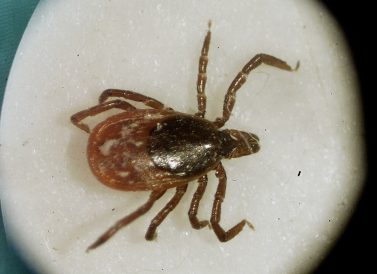
There is an uptick of ticks, and it’s not just a warm-winter phenomenon.
“There’s been a tremendous increase in the number of ticks we’re seeing, and it probably started last summer,” said Dr. Julie Iverson, a veterinarian at East Maiden Animal Clinic in Washington.
“We’re seeing at least two cases of Lyme disease a week. Before, we were seeing ticks but not so much Lyme.”
The deer tick, or black-legged tick, is the culprit here. It is a carrier of the infectious disease, which causes rash, fever and fatigue in humans that, if untreated, could result in more serious symptoms. Ticks also are a threat to dogs, but generally not cats. Deer are considered primary carriers, although Iverson said “pretty much any wildlife” – including cats – can be carriers of a variety of ticks.
An Observer-Reporter staffer this week removed a total of five from her two canines.
Ticks not only do disgusting things, they are disgusting things. They are arachnids, a class of creatures that includes spiders, scorpions and mites.
Pennsylvania has a large deer population and a lot of forested land, a perfect cocktail for Lyme disease. Deer and ticks coexist in the woods.
The Keystone State, as a result, has had the nation’s highest Lyme disease rate for a number of years. It had more than 12,000 human cases in 2016, according to the Centers for Disease Control and Prevention. The runner-up, New York, had about 4,000 – one-third as many.
These burgeoning Pennsylvania figures also are due in part to a greater awareness of the disease, with more people taking themselves or pets in for testing. Lyme disease has been detected in all of the state’s 67 counties.
Iverson said this winter’s wet, warm conditions have been factors in the regional increase of Lyme cases, but said “ticks are still here in winter. People should still be using flea and tick prevention throughout the winter.”
“And, apparently from what I’m hearing, there is an upswing in Lyme disease in people too.”
Although Lyme disease has been prevalent in the state for a number of years, Iverson pointed out that it arrived here later than in other regions. Lyme initially gained notoriety in New England in the late 1980s before spreading to the west.
“It slowly marched across eastern Pennsylvania over to Harrisburg,” Iverson said. “Now we’re seeing it. It also is coming from the west, from Ohio.”
The state Department of Health advises people to take the following preventive measures against Lyme disease: Wear long pants and long sleeves, use the insect repellent DEET and seek immediate treatment if you detect a bite.
If a tick is attached to your skin, the health department says: use fine-point tweezers or a tick removal tool; grasp closely to the skin; pull gently; wash the area with soap, water and antiseptic. This applies to people and pets.
“People should be aware that ticks are out there,” Iverson said. “They can treat their pets with topicals, orals, a tick collar. There is a Lyme vaccine for dogs.
“There are some very good and effective ways to prevent tick infestation.”