

New treatments can save pets, but at a price
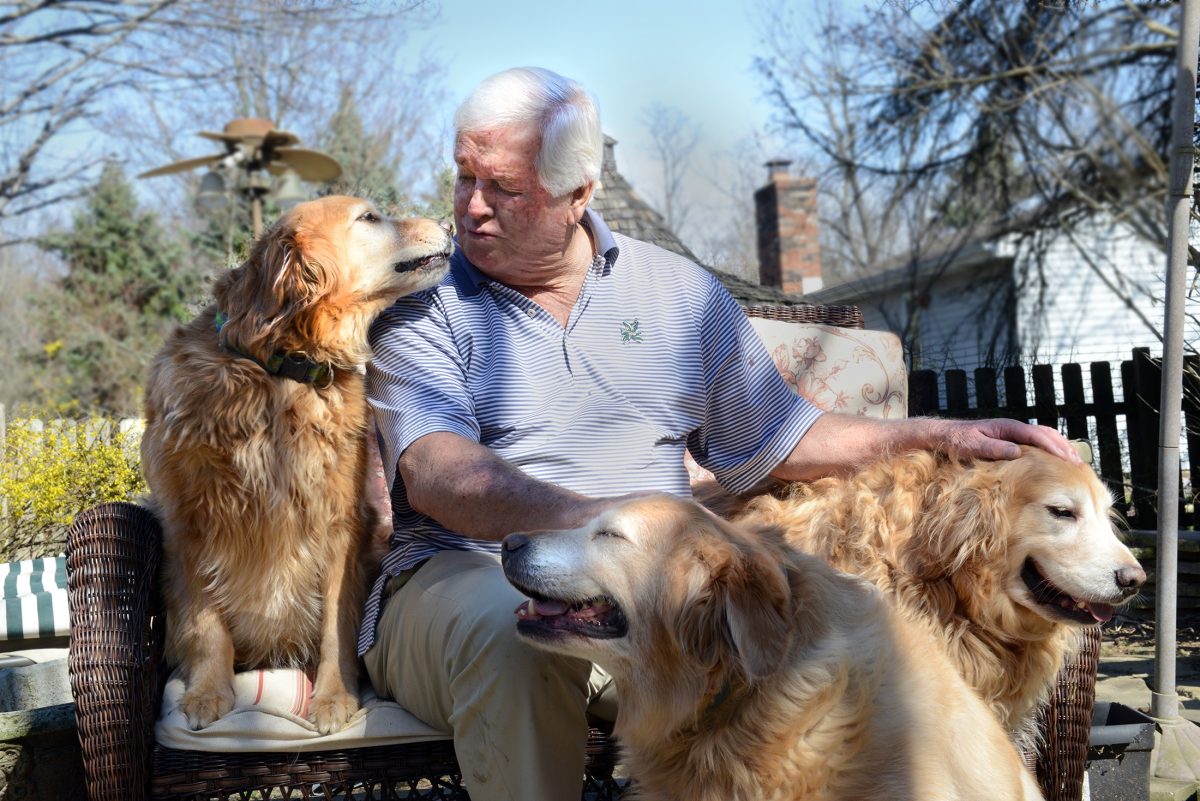
Dick Jeffers of Venetia shares an early spring morning with his golden retrievers McKenzie, Montana and Madison. McKenzie, on the left, was the runt of her litter and was not expected to survive. She lived with help from neighbor and local veterinarian Dr. Brad Charmichael.

Dick Jeffers of Venetia enjoys a warm springlike morning with his golden retrievers McKenzie, Montana and Madison. All three dogs are offspring of Sedona, the Jeffers’ pet who underwent extensive veterinary treatment for a brain tumor.
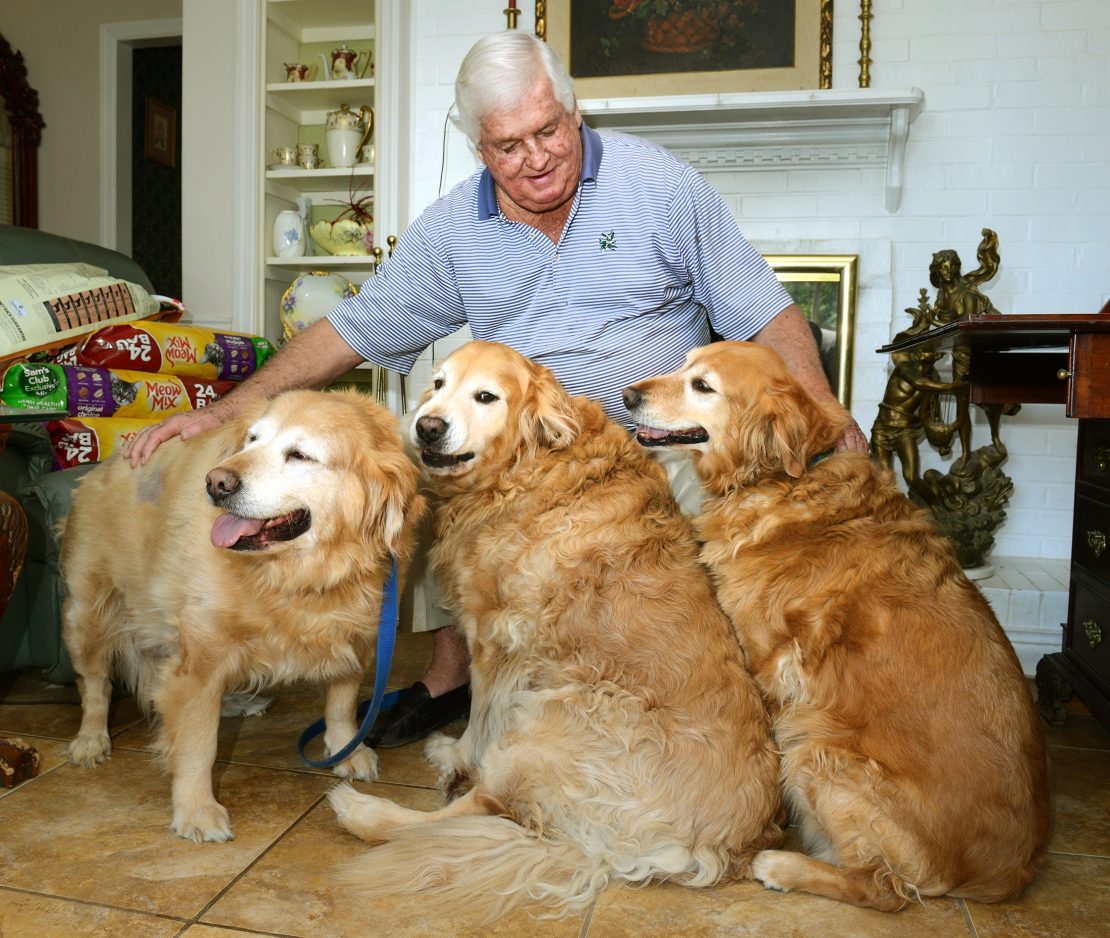
Dick Jeffers of Venetia prepares his golden retrievers McKenzie, Montana and Madison for their daily outing to McDonald’s. Customers at the local restaurant are accustomed to seeing Dick and the dogs there each morning.

Dick Jeffers of Venetia enjoys a warm spring morning with his golden retrievers McKenzie, Montana and Madison. All three dogs are offspring of Sedona, the Jeffers’ pet who survived a brain tumor with extensive veterinary treatment.
In late October, my wife and I noticed something unusual about one of our cats.
Clarence, a gray, domestic shorthair who was almost 12, didn’t seem quite his usual self. He quit greeting us at the bedroom door when we got up in the morning. He wasn’t eating as much and appeared to be losing weight. And when he wasn’t snoozing, which was getting to be most of the time, he was making tracks to his water bowl.
Clarence went to the veterinarian, with my wife and I assuming he had a urinary tract infection that could be subdued with antibiotics.
We were wrong – Clarence had kidney disease. And it was at an advanced stage.
We gave him subcutaneous fluids for 10 days, to no avail, and Clarence was put to sleep at the end of this regime, his decline happening with dizzying speed. But we were initially presented with another option – an intensive “hospitalization” that would have amounted to a desperate, Hail Mary bid to extend his life. The cost? An estimate in the neighborhood of $2,000.
My wife and I are far from the first people who have pondered draining a savings account or straining a credit card in order to extend a beloved pet’s life. Just as there has been a profusion of procedures and treatments that can combat conditions that would have once doomed or disabled humans, veterinarians now have a similar arsenal at their disposal for dogs, cats and other creatures.
As recently as 20 or 30 years ago, the most common advice a veterinarian would have given when confronted with a dog or cat with cancer or a malfunctioning kidney was to minimize their suffering and usher them to Rainbow Bridge. Now, bone marrow transplants, radiation and chemotherapy can be deployed for pets suffering from cancer, stents can be inserted for animals with heart disease, and surgery can repair torn ligaments and degenerative conditions like arthritis.
Indeed, veterinary medicine has proven to be a booming field in the 21st century. The number of veterinarians has doubled over the last two decades, even as the number of doctors has increased by just 40 percent.
But with the growth in veterinary medicine and the tools its practitioners have at their disposal, there are questions about just how much people should reasonably spend on keeping a pet alive. When there are so many other needs that confront individuals and families, from paying the rent to saving for retirement, should pet owners fork over thousands of dollars to thwart what until very recently has been the natural course of events?
The willingness of people to open their wallets if their pets are in peril showcases the changing nature of the relationship humans have to their pets, according to David Grimm, an online editor for the magazine Science and the author of “Citizen Canine: Our Evolving Relationship with Cats and Dogs.” Our feline and canine friends once served almost exclusively utilitarian purposes, he pointed out – cats chased down and killed rodents that threatened crops and food supplies, while dogs assisted in the hunt for prey, corralling other animals like cows or sheep or served as reliable protectors of home and hearth. When a dog or cat was declining, and no longer able to pull its weight, there would not have been extraordinary measures taken to keep it alive.
Now, in many cases, dogs and cats are simply household habitues with whom we share a sentimental bond. They are there to receive our affection and provide us with amusement. Sure, an indoor cat might pounce on a mouse every once in a great while, but, for the most part, their primary function is to leap up on our laps and be cuddly after a long day at the office.
They have become, in a sense, family members.
“We don’t view our pets in property terms,” Grimm explained. And, as with family members, sometimes no expense is spared when it comes to forestalling their demise.
“I talked to people who spent $20,000,” Grimm said. “I’ve heard about people who have sold their car or gone into debt.”
Caring for Georgia, a pit bull owned by the family of Dana Shiller, chairwoman of the English department at Washington & Jefferson College, proved to be costly. Before Georgia died last week of cancer, Shiller and her husband had paid for two ligament surgeries. Then, when the diagnosis of mast cell disease that spread to Georgia’s lymph nodes came in the fall, they opted for chemotherapy. As a result, the dog was able to enjoy playing, taking walks and eating meals.
The chemo “cost a small fortune, and we are not wealthy,” Shiller said. Her family is also part of the overwhelming majority that does not have pet insurance, which is a benefit now being offered by big companies like Yahoo, Hewlett-Packard and IKEA.
“My husband has had to cut back on his retirement account contributions, and we are contributing very little to our kids’ college funds right now,” she said. But Georgia was “a wonderful dog, and we have never doubted our decision to try to keep her alive longer. Without chemo, her life expectancy would have been about three months.”
South Franklin Township resident Kari McCormick confessed to once spending $128 to care for a duck that expired a mere 90 minutes later. Living on a farm with many animals, she and her mother, Marilyn McCormick, once spent $7,500 to repair two cruciate ligaments in the back legs of Maddie, a black labrador mix. What was the rationale? McCormick said her mother decided that she didn’t take vacations, didn’t gamble, had few other indulgences, and “If I want to get my dog fixed, I will. If it had cost $10,000, I would have spent it.”
Without children of their own, Dick Jeffers and his wife, Donna, have felt that their dogs are like children. The Peters couple spent about $27,000 for treatments for one of their golden retrievers that had a brain tumor. They were told it would put off Sedona’s death by two years, and they ended up getting that plus an additional nine months before she died last November.
“It’s not to say that Sedona was a favorite of ours, but she was very popular with the neighbors,” Jeffers recalled.
As the demand for specialized care for pets has blossomed, more facilities are opening to offer these services. The Pittsburgh Veterinary Specialty and Emergency Center on Camp Horne Road in Pittsburgh is where Jeffers took his dog for his treatments. They are due to open a satellite office in North Strabane Township. University Veterinary Specialists in Peters Township offers treatments for cancer, canine rehabilitation, a behaviorist who can treat aggression, anxiety and obsessive-compulsive disorders, and colonoscopies.
Discovering a pet is severely ill can be a time of heightened emotion. When broaching the subject of costly treatments, veterinarians are trained to be as neutral as possible when discussing available options with a pet’s owners.
“With advances in care, there comes a price tag to it,” said George Seiler, an adjunct professor in the animal and nutritional sciences program at West Virginia University. “A vet’s job is to give these options, and pet owners can decide if it is something they want done.”
Seiler added, “There’s just more now that can be done.”
But even as their human owners can pay to add more days to a pet’s life, Grimm thinks they have to keep in mind a dog or cat or any other animal that is not spending its days on the street or in a shelter has been the beneficiary of tremendous luck.
“You’ve already saved that animal’s life,” he said. “Think about what you’ve already done.”