

Notice: Undefined variable: paywall_console_msg in /usr/web/cs-washington.ogdennews.com/wp-content/themes/News_Core_2023_WashCluster/includes/single/single_post_meta_query.php on line 71
Notice: Undefined offset: 0 in /usr/web/cs-washington.ogdennews.com/wp-content/themes/News_Core_2023_WashCluster/single.php on line 18
Notice: Trying to get property 'cat_ID' of non-object in /usr/web/cs-washington.ogdennews.com/wp-content/themes/News_Core_2023_WashCluster/single.php on line 18
Educating students with autism
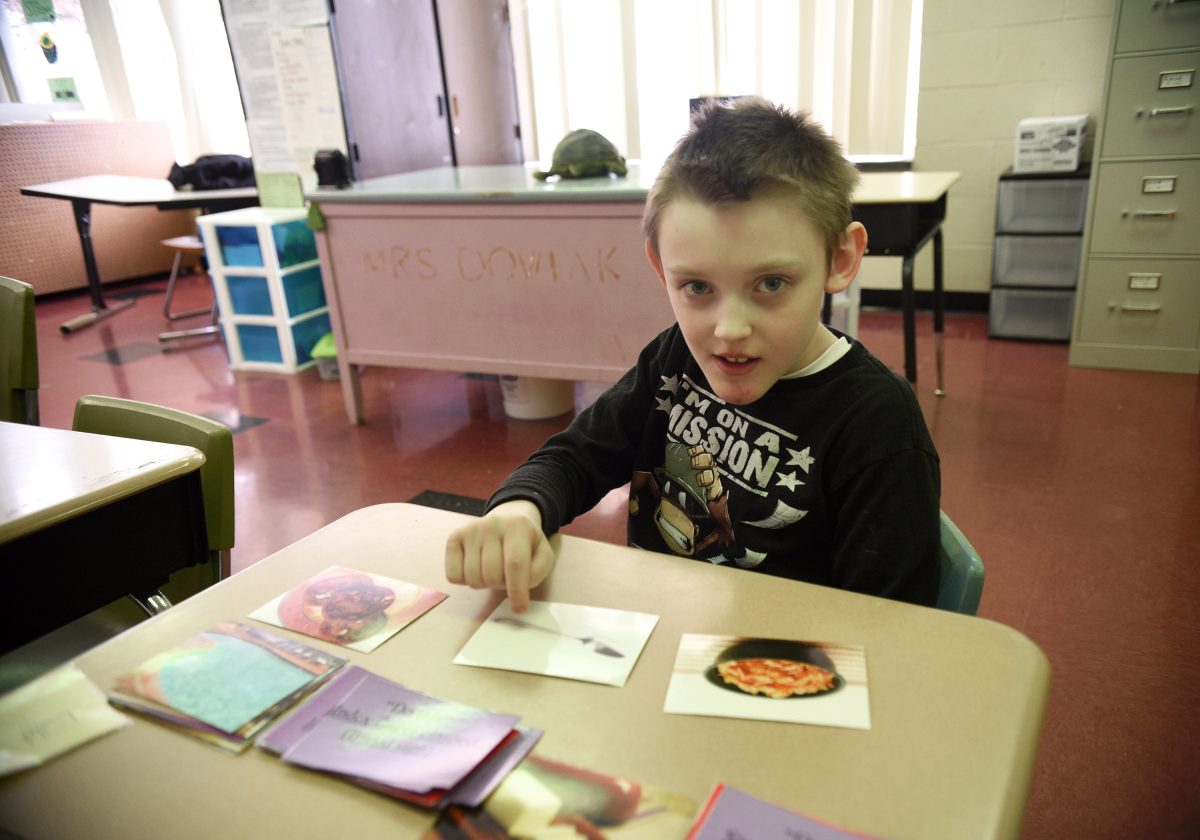
Student Brandon Horvath during an intensive teaching session with Tiana Brophy.
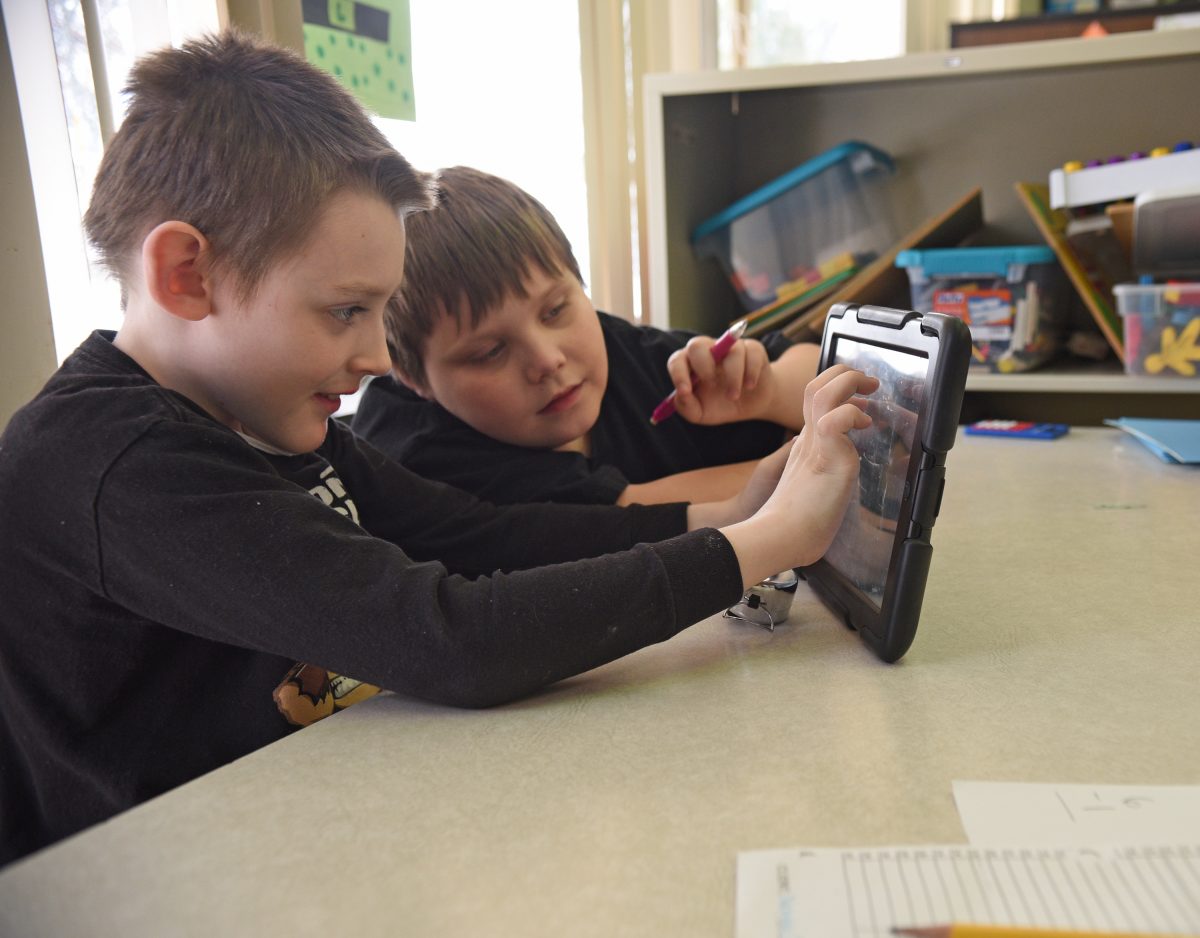
Students Brandon Horvath, left, and Nicholas Deuesenberry work together on a project using an iPad during class.
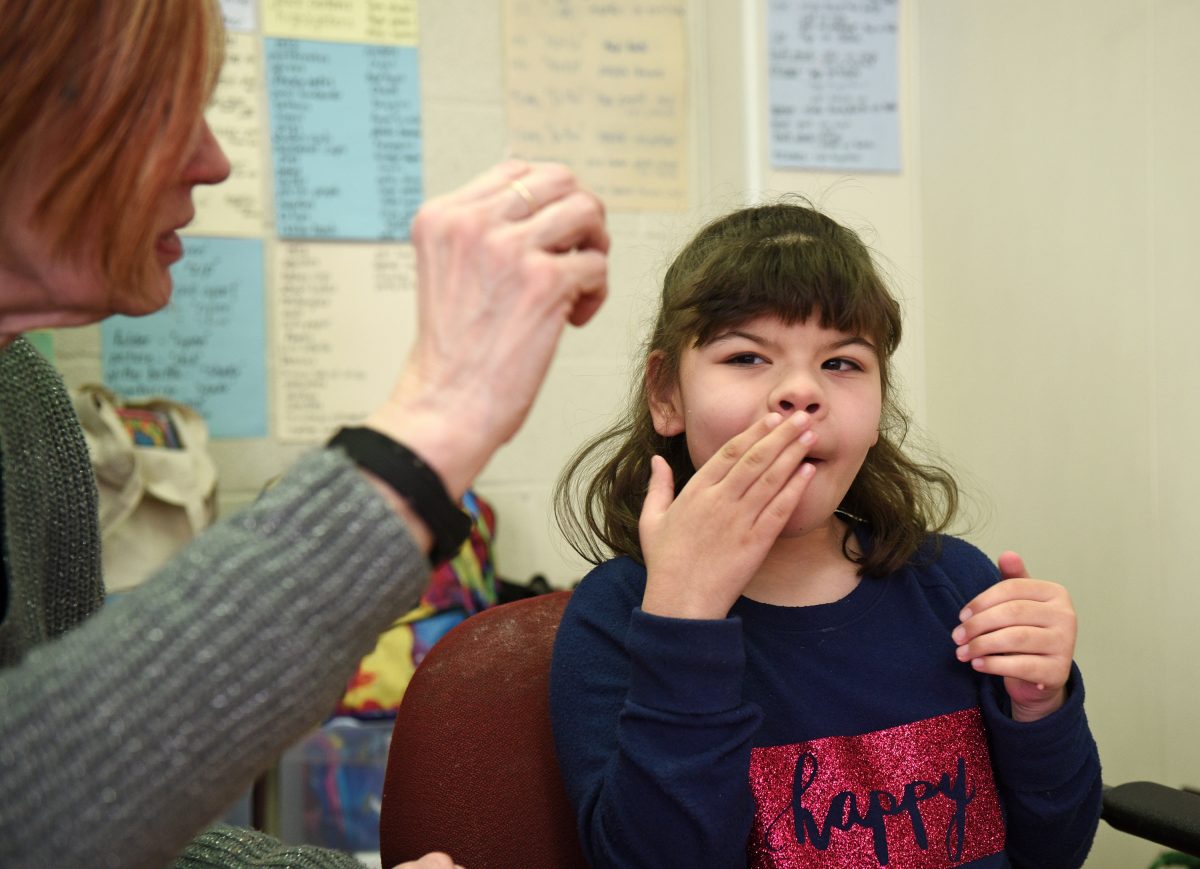
Instructor Patty Bish holds a piece of candy and student Ella Baer taps her mouth to make the sign for candy.
Notice: Undefined offset: 0 in /usr/web/cs-washington.ogdennews.com/wp-content/themes/News_Core_2023_WashCluster/includes/single/strategically_placed_photos_article.php on line 412
Notice: Trying to get property 'term_id' of non-object in /usr/web/cs-washington.ogdennews.com/wp-content/themes/News_Core_2023_WashCluster/includes/single/strategically_placed_photos_article.php on line 412
Tiana Brophy’s classroom at Washington Park Elementary School has young, energetic students. Brandon Horvath, a fourth-grader, greets today’s classroom visitors with a bright smile, but that’s not always the case. Brandon and his classmates have all been diagnosed with Autism Spectrum Disorders (ASD), a group of complex neurological developmental disabilities that are characterized by problems with communication, social interaction and patterns of interest and behavior. So how do you go about teaching students when it’s difficult to communicate with them?
“Verbal skills are one of the biggest struggles for students with autism,” says Brophy, whose classroom includes autistic students in grades four through six from several school districts. “In order to be successful in school and in life in general, you have to be able to express yourself, ask questions, get your needs and wants known.”
That’s why communication is the primary subject here and technology has become instrumental in helping students to develop those skills. “We have some students in here who are non-verbal who use an iPad with Touch Chat,” Brophy explains. “We use a combination of that and we’re teaching them sign language. You can’t teach reading, math and spelling until the kids can communicate more effectively.”
The number of students being diagnosed within ASD is increasing and school districts are continually facing the challenges of how to best serve them. Intermediate Unit 1, which provides support to local school districts in Washington, Greene and Fayette counties, has specialized staff in the area of autism. “A lot of people see these kids and think they must be really challenging to work with,” says Stephanie Slavick, a member of IU1’s Autism/Behavior Training and Consultation staff. “But the reason they have these behaviors is because they didn’t have these means of communicating. Our strategies are changing and how we’re teaching those students communication is changing, so that they can function in our general education classes and in the grocery store and in jobs as adults.”
Services can vary based on the school district and the student’s needs, but all Pennsylvania districts are required to use evidenced based teaching strategies. Students are evaluated and teachers and staff design an individualized education plan based on what level of support each student requires. “There is not a one size fits all approach to help them,” Slavick says. “Programming needs to be unique to serve each student’s needs. In the same class you can have a student with autism who is gifted but struggles with aspects of communication. You can have another student who is non-verbal and struggles with all aspects of daily living. Teachers always need to bring their ‘A’ game.”
Brophy admits her job can be difficult at times, but she wouldn’t do anything else. “We just got a really encouraging note from one of our student’s mothers,” she says with a smile. “We’ve been working on the sign for ‘candy’ and she did it at home after dinner the other night. It’s really life-changing for these students to be able to tell their parents something like what they want to eat. It makes it fun for me to be a teacher because I see them learning and growing.”
She says she’s also learned that it’s important to make instruction fun for students with autism. She spends 80 percent of the time reinforcing skills they already know and 20 percent teaching new skills. All of it comes with positive reinforcement like smiles, high fives, games and other rewards. “It works like magic,” adds Brophy. “Students who always wanted to avoid you and be off by themselves will just come up and want to be right beside you.”
Another important skill students with autism learn is imitation. “All learning is through imitation, but that doesn’t come automatically to these students,” Brophy says. “We work on getting them to do that and then you see the students learning. In a typical day, we’ll work on verbal skills and that’s the most important thing.” Part of that includes labeling items in students’ environments like desks, books and backpacks. This is something we do subconsciously in our brains every day, but something that does not come naturally to someone with autism. Once they start making these connections, Brophy says it aids in reading comprehension and communication.
Many people do not realize behavior is a form of communication. “A child with autism is not misbehaving because he wants to or because he needs ‘disciplined better’ as we’ve often heard said,” explains Slavick. “He is trying to make sense of the world, to communicate something to the world and he may not have the words to express this.”
She says when you teach a child to ask for something he wants or needs, he or she is no longer forced to have inappropriate behaviors to get wants and needs fulfilled. “That child now has the skills and power to make things happen for himself.”
Slavick often hears people remark that it takes a special person to work with students with autism, but she believes what makes those teachers special is their willingness to go above and beyond because they want the best for their students. She relays the story of one teacher who recently had a non-verbal student who would scream or cry anytime he was asked to do something. She was at a loss for how to reach him. “He now comes to the table happy and willing to learn and is starting to sign for items he wants,” says Slavick. “Talk about life changing … who wouldn’t love this job when you have rewards like that?”