

Grounded by federal sequester
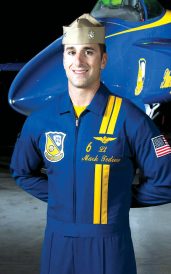
For Charleroi native Mark Tedrow, the much-maligned federal government sequester has very real consequences: It means what could be the penultimate achievement of his career has been stopped in midair.
Getting the news “was like a shot to the chest,” said F-18 pilot Tedrow. “Just getting punched in the gut kinda thing.”
Tedrow, 31, is a Navy lieutenant and the No. 6 pilot in the Blue Angels, a squadron of fighter jets famous for their high-flying aerobatic stunts seen at air shows and sporting events throughout the country. All winter long he was at a training center in California preparing for his inaugural season flying with the world-renowned airmen, only to find out recently they’ve been grounded.
Budget cuts have caused the Department of Defense to scrap the entire 2013 season, which means Tedrow is left on the tarmac – at least for now.
“It took a couple of days to sink in,” Tedrow said. “I was pretty heartbroken. You put in so much work, blood, sweat and tears into a season and then you’re told its not going to happen.”
As one of the elite group of specialty pilots in the world’s premier fighting force, simply making it into the Blue Angels wasn’t easy. In addition, the group works in which members move upward from the No. 7 slot, so advancing takes experience.
Last year, Tedrow spent the summer flying season as the No. 7 pilot, which meant he paid his dues by flying celebrities and media personalities in promotional flights and acting as narrator on the ground while his squadmates flew overhead. His advancement this past autumn to the No. 6 spot meant that this summer he was slated to debut as the “opposing solo” position in the Angels’ flying formation.
“The way it’s going down, we’re grounded through the rest of the season through the middle of November,” Tedrow said.
Although they’re grounded, the Blue Angels still get some air time. But austerity restrictions keep them limited to a minimum 11-hour-per-month training regimen that has been mandated for nearly all Navy squadrons that are not actively training for combat service.
Tedrow said that compared to the regimen that the Blue Angels’ pilots are used to, these basic proficiency flights are far from ideal. The team spent 10 weeks over the winter at a base in El Centro, Calif., where they spent 60 hours a week training rigorously and preparing for the extreme conditions pilots deal with when flying demonstration maneuvers.
During training “we fly six days a week, two to three hours per day,” Tedrow said. “It’s a lot of hard work to be a demonstration pilot. It’s disappointing to put in all that hard work and then be told at the end that the season is over. It all feels to me like a bit of a waste.”
For any pilot, going from 240 hours to 11 hours of flying a month can be disconcerting. But for a precision jet pilot performing the aerobatics the Blue Angels pull off, the fiscal restraint means that an entire year of training has been wasted.
“People don’t realize we don’t wear G-suits,” Tedrow said. “In the formations we fly, that’s probably the hardest workout you’ll ever do in your life. The G-forces we pull in a ‘Hick’ maneuver, you’re struggling just to maintain consciousness. That maneuver requires us to flex every muscle in our entire body.
“It’s a struggle, I kid you not.”
The Blue Angels have been ordered not to practice anything demonstration-related. The Navy has allowed the pilots to maintain their current slot positions next year, which means Tedrow would potentially get an extra year in his No. 6 position. But it also means any chances of him moving up to No. 5 have been put on hold for a year.
“A lot of things on this team are handed down from year to year,” Tedrow said. “As much as we write things down and train through manuals, you can only learn this job from the person who did it the year before you.”
For Tedrow, who dreamed of flying with the squadron since he graduated in 2000 from Charleroi Area High School and enrolled in the Naval Acadamy, the year without the experience means his professional aspirations are on hold.
While he understands the reasoning behind the Department of Defense cuts, but he thinks the Blue Angels suffer more from a public relations problem than wasteful spending.
“When it comes down to it, our budget is miniscule,” Tedrow said. “I know $14 million sounds like a lot, but when it comes down to DOD contracts, it’s a drop in the bucket.”
In exchange for that $14 million, Tedrow said the Blue Angels and the likewise-grounded Air Force Thunderbirds bring in $350 million to local economies in the form of money earned at regional air shows. In addition to the air show industry, vendors, workers and event planners could all be affected by the grounding.
Like many Navy and Air Force pilots all over the country, he was left wondering whether there was another way.
“I understand (flight) hours equate to money when you’re burning jet fuel and have maintenance,” Tedrow said. “But it’s such a tough situation right now.”