

New law requires pets to have shelter in cold weather
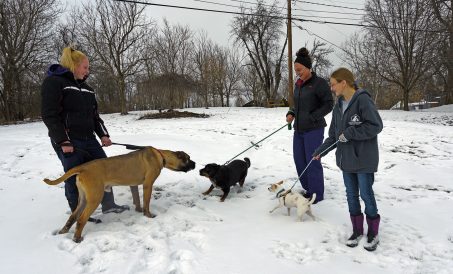
This weather isn’t fit for man, woman or most beasts.
Fending off single-digit temperatures and subzero wind chills can be hazardous – even life-threatening – for humans even if they lay on the layers. But dealing with the elements isn’t so elementary for dogs, despite all their hair and fur and, in some instances, breeding. And, even though they can handle the chill for a longer period than people, canines should not be out there for an extended stretch.
“In conditions like this, no warm-blooded creature should be outside – not even a mouse. And it’s going to get worse,” Kym Secreet, animal control officer for several Washington County municipalities, said Thursday afternoon.
Secreet, of Houston-based Animal Control Services Inc., was speaking as Mother Nature began to transform the region into northern Manitoba, topped with a frigid Friday. More miserably cold days are ahead, too, according to meteorologists.
Her urgent message: Bring that pet you love, bring all pets, inside. It’s for their well-being, and it’s the law.
She was referring, legally, to Libre’s Law, which has been in effect in Pennsylvania since late August. It mandates a dog on a leash cannot be left outside for longer than 30 minutes if the temperature is below 32 degrees or above 90. Secreet said an animal can live outside in a penned area, but must have adequate shelter and a supply of water that is not frozen.
The law, she reminded, has teeth that are at least as sharp as those possessed by Libre, a Lancaster County puppy that was rescued from abuse in 2016. A violator could end up in jail.
“I’d tell people to abide by the law because if they don’t, they could be facing a felony,” Secreet said. “If you leave an animal outside and are found guilty, you would have a criminal record.”
Doug Grimes, police chief in Peters Township, said his department receives phone calls about pets being left outside in extreme conditions, but most occur in hot weather. He said his department investigates animal incidents and violators face varying degrees of penalties.
“This would be like any investigation because it’s a crime,” he said. “We question the homeowner or pet owner and determine what charges are most appropriate. The penalty ranges from a summary offense to a felony of the third degree.”
Grimes pointed out animal owners once kept “dogs outside all the time. That now happens less and less. People have to be aware of the law and look out for the safety of the animal.”
Kelly Proudfit, executive director of Washington Area Humane Society, did not immediately return phone calls seeking comment on the issue. The Humane Society of Greene County was closed Thursday.
Animal safety is Secreet’s chief domain, and she is concerned because the calls she receives “are really prevalent. They’re way above what I thought they would be. I thought the new law was advertised enough that people would pay attention. But people are still leaving animals out.”
One issue, she said, is a lack of funding limits the number of humane officials who can be “hired to enforce the new law, whether it’s winter or summer.” There are just three humane officials in Washington County, Secreet said.
But what really irks her is that some people call authorities after an animal has been left out for a few days, or call late at night after a facility has closed.
“The best way to help an animal,” Secreet said, “is to call when you see something. Call when you know there’s a violation of the law.”