

New St. George Antiochian Orthodox Church opens: for Monongahela parish, today is Christmas
Celeste Van Kirk/Observer-Reporter
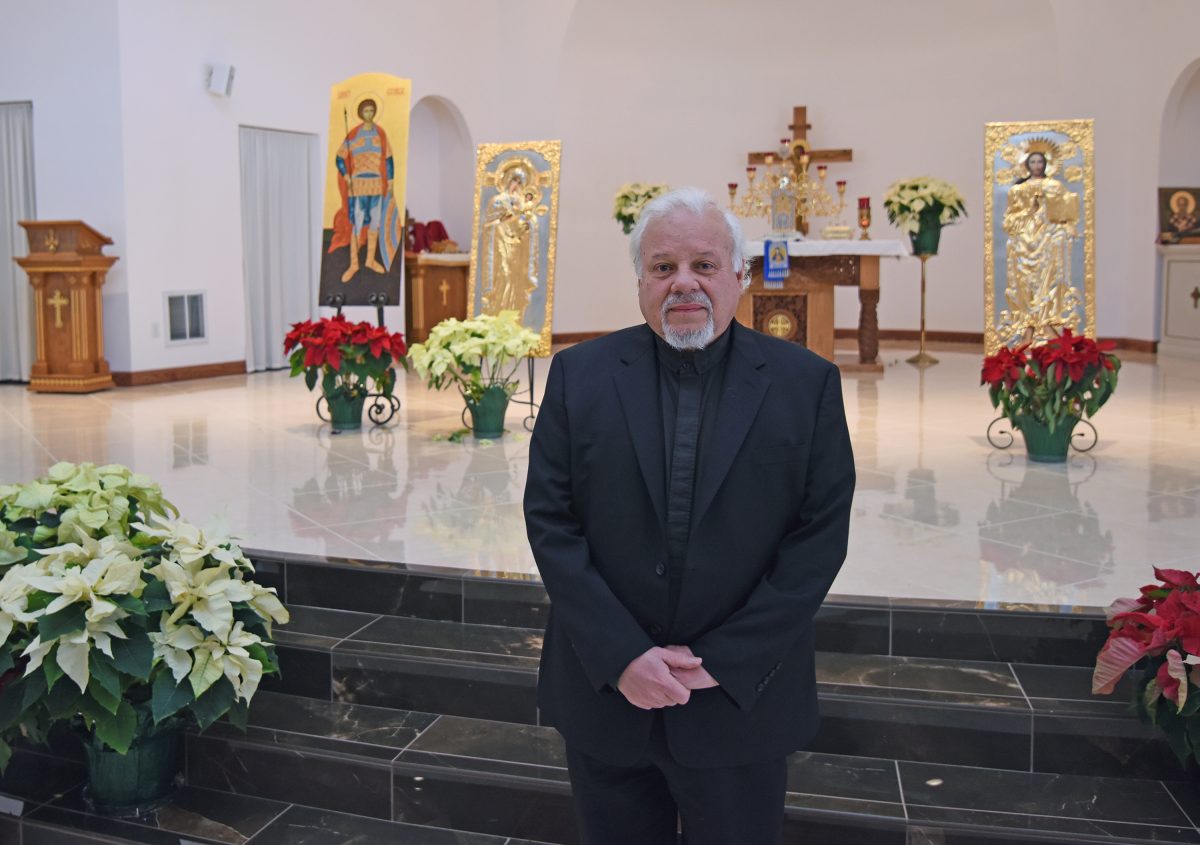
Father Jason DelVitto stands inside the newly built sanctuary at St. George Antiochian Orthodox Church.
Celeste Van Kirk/Observer-Reporter
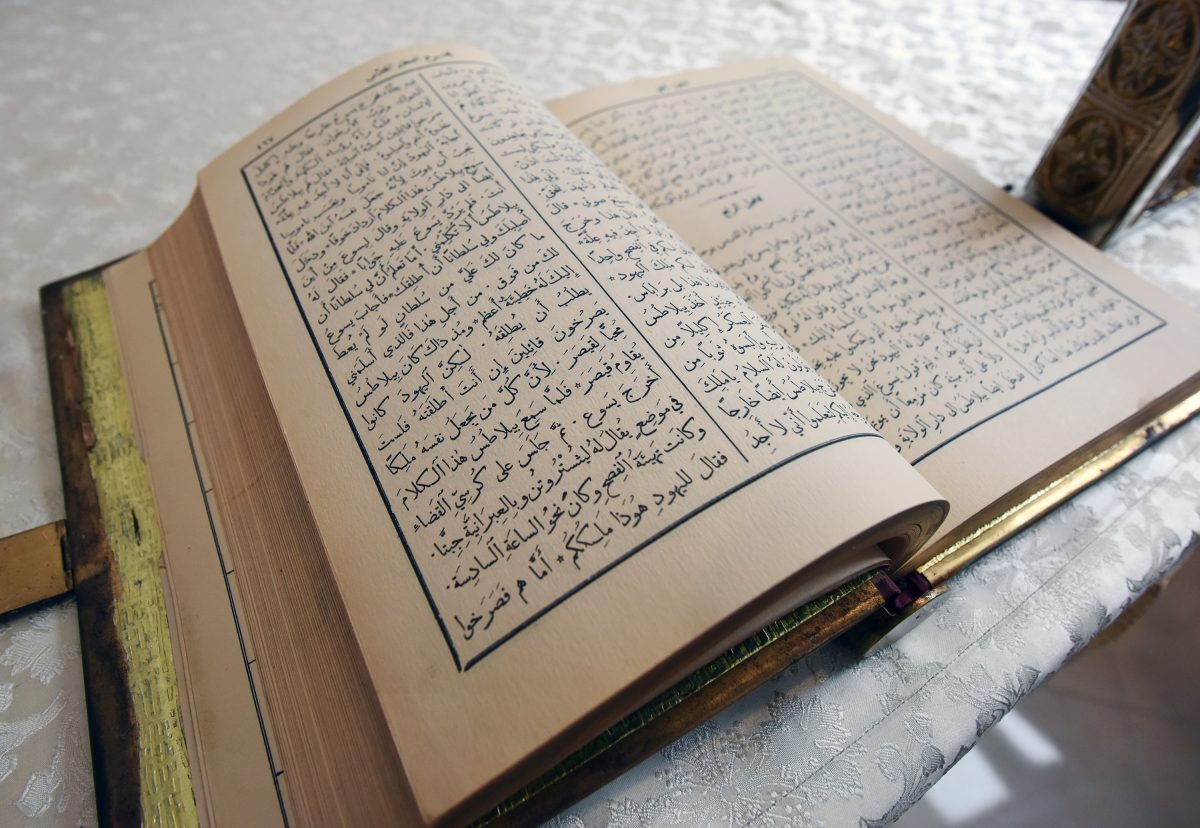
An old Bible written in Arabic is pictured at St. George Antiochian Orthodox Church.
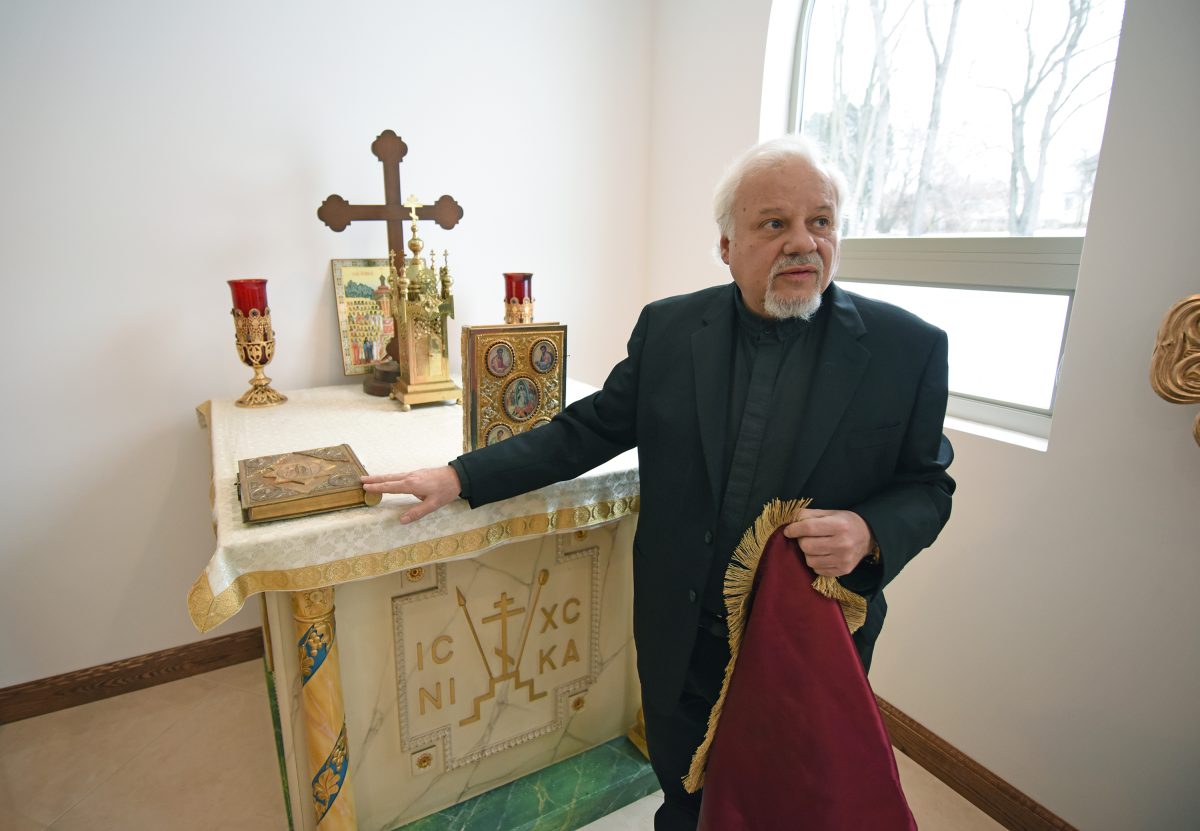
Father Jason DelVitto talks about the old Bibles at St. George Orthodox Church.
Celeste Van Kirk/Observer-Reporter
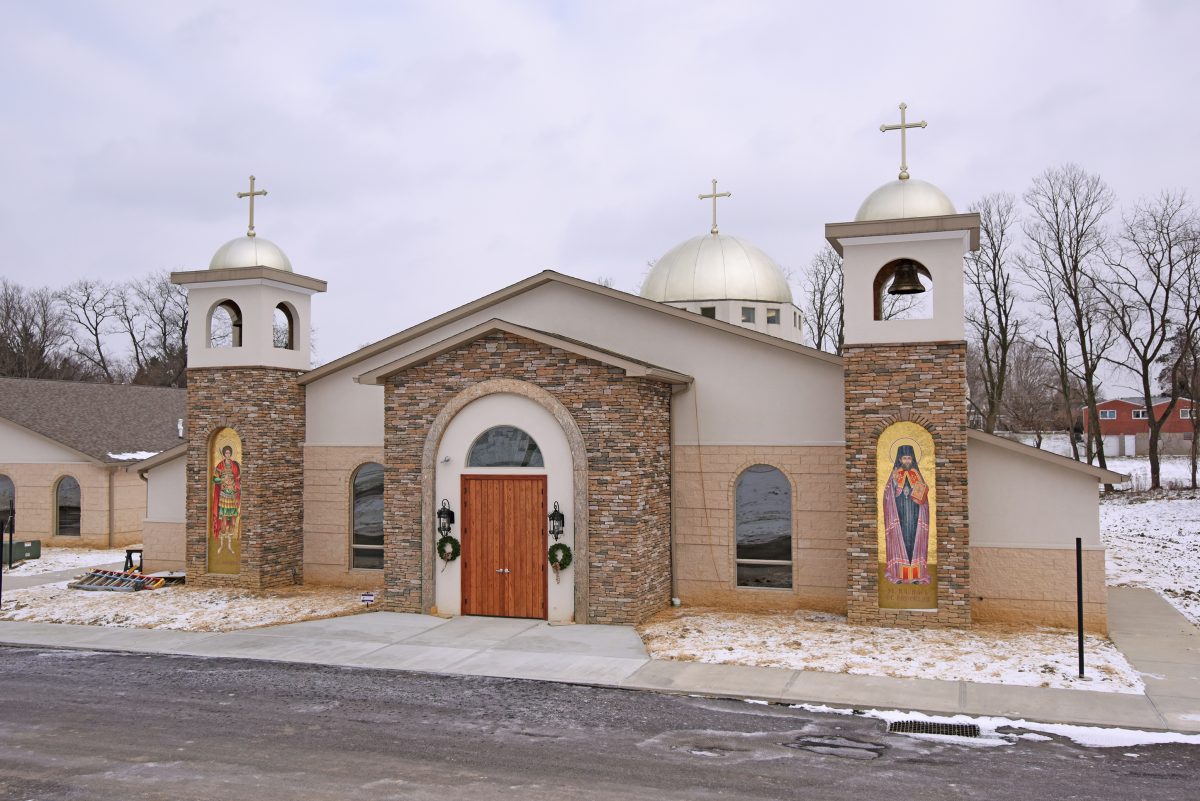
St. George Antiochian Orthodox Church of Bridgeville built a new sanctuary on their cemetery property along Washington Pike in South Fayette Township.
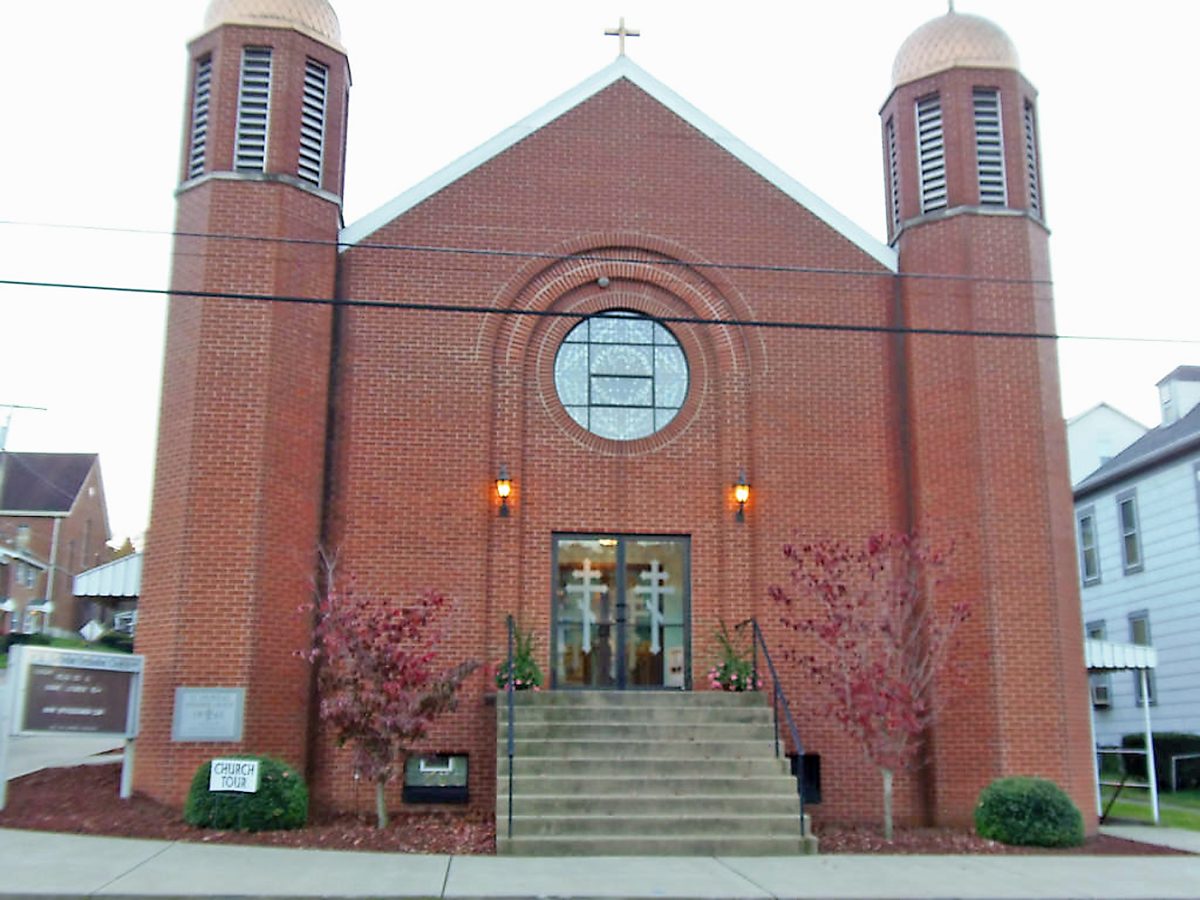
St. Nicholas Orthodox Church in Monongahela
Courtesy of St. Nicholas Orthodox Church
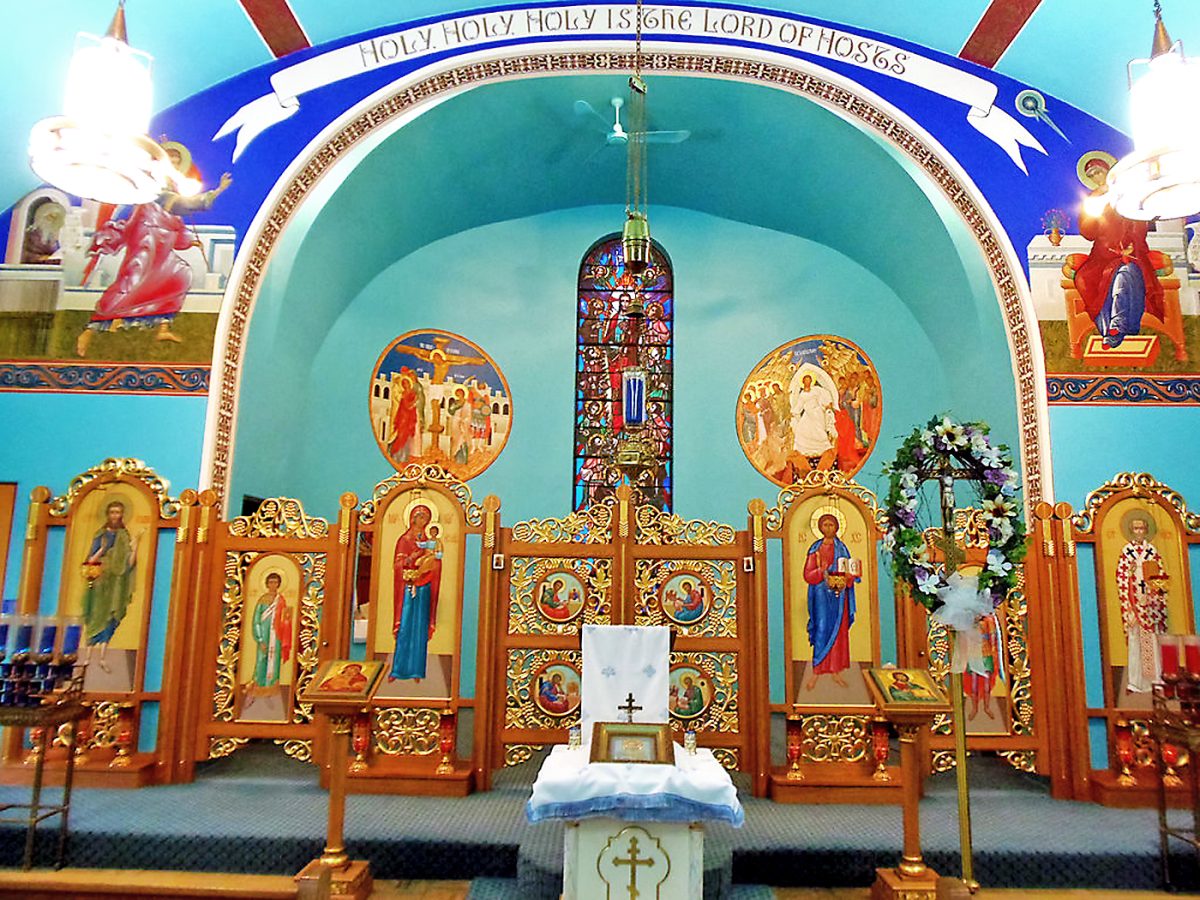
An interior view of St. Nicholas Orthodox Church in Monongahela
Many people view the onset of the Christmas season in conjunction with Thanksgiving Day and its four-day holiday weekend.
This past Thanksgiving held a special meaning for members of St. George Antiochian Orthodox Church, because it marked the first Divine Liturgy in their newly built sanctuary in South Fayette Township.
The congregation had outgrown its longtime home on Dewey Avenue in Bridgeville, and its building project came to fruition in late November.
“When it’s totally complete, this whole area will be icons,” said Father Jason DelVitto, pastor of the St. George congregation, while standing atop the steps at the altar focal point.
St. George still has a Bridgeville address, but is now located at 3230 Washington Pike, next to the parish cemetery, the land for which was purchased in 1935.
The name “Antiochian” harks back to its origins early in New Testament history when the Apostle Paul and his helper, Barnabas, in 42 A.D. founded a church that had St. Peter as its first prelate. According to the website of the Antiochian Orthodox Christian Archdiocese, Antioch-on-the-Orontes was the most important city of the ancient Roman province of Greater Syria.
The church at Antioch was one of five ancient Patriarchates, or places overseen by a bishop of the early Christian Church, along with Alexandria, Egypt; Constantinople, now Istanbul, Turkey; Jerusalem and Rome.
In Antioch, the followers of Jesus Christ were first called “Christians,” according to the New Testament Book of the Acts of the Apostles 11:26.
Orthodox, or Eastern Christianity based in Constantinople, split from Roman, or Western Christianity, in what is known as the “Great Schism” of 1054, and churches diverged.
People from the “Old World” who emigrated to the United States centuries later brought their faith with them and established worship centers along ethnic lines.
St. George Antiochian Orthodox Church has a New Testament printed in Arabic, and cantors sometimes lead the worshippers in Arabic hymns. On particular days, there are readings in Arabic. Most of the liturgy, however, is celebrated in English.
Members have more recently arrived from both war-torn Syria and Iraq. Some have returned to their homelands, DelVitto said.
“You will still see the nationalistic, ethnic elements in many parishes,” he continued. “But it’s all blended in, and it all works well. We all commune together, and we’re all one faith.”
Freestanding icons will be incorporated into an iconostasis, a wall of religious paintings that will separate the nave of the church from the sanctuary.
The interior of the off-white dome will be “written” with iconography of the life of Christ, including his mother, Mary, and liturgists of the Church, the parables of Jesus and the miracles of Jesus as reported in the Gospels. Because of their spiritual significance, icons are not said to be painted but “written” as a spiritual act that prayerfully communicates art to the beholder.
A centrally located mosaic, front and center on the floor, represents Byzantine style as interpreted by an Italian craftsman.
Exterior mosaics depict St. George, martyred namesake of the congregation, and St. Raphael of Brooklyn, the first Orthodox Christian bishop consecrated on American soil.
A date for a consecration ceremony at St. George has not been set.
Today is Christmas Day under the Julian calendar, which predated the most commonly used system of marking time worldwide, known as the Gregorian calendar.
DelVitto said the Antiochian Orthodox leader Metropolitan Philip, in a directive, placed the celebration of the Nativity Dec. 25, but some Orthodox congregations in the tri-state area continue to mark Christmas Jan. 7.
Those who have transitioned to Dec. 25 have clear memories of a Jan. 7 observance.
Paul Petro, 84, of Donora, former first assistant district attorney of Washington County, and his brother, Dr. Dimitri Petro, are the sons of Orthodox Christians from Macedonia and Albania, nations that are part of the European Balkan peninsula. They are lifelong members of St. Nicholas Russian Orthodox Church in Donora, where Dimitri Petro is choir director.
Paul Petro recalled that a few decades ago, a bishop allowed his congregation to vote on whether to celebrate Christmas Dec. 25 or Jan. 7.
“My wife didn’t particularly like the change,” he said. As might be expected of an attorney, he argued his position.
“I could never get excited about that. There is no absolute certainty as to the exact date of Christ’s birth,” Petro said, explaining he views it as “a matter of convenience for relatives who might have to travel a great distance. We ended up celebrating both Christmases on the twenty-fifth and the seventh.”
The Very Rev. Dr. Edward Pehanich, 58, has been pastor for the past 12 years of “sister” Carpatho-Russian Orthodox churches that have a unique arrangement. St. Nicholas at 314 Sixth St., Monongahela, celebrates Christmas Eve and Christmas Jan. 6 and 7, respectively, while St. Nicholas at Jacobs Creek, Westmoreland County, focuses its worship on the December dates.
The trend to shift the date of Christmas to December occurred about 30 years ago, Pehanich said, and in congregations that preferred the traditional Orthodox date, litigation and hard feelings at times resulted.
“You can’t force people to change things,” Pehanich said.
When Pehanich was growing up near Scranton, Lackawanna County, so many families celebrated Christmas Jan. 7 that the public schools closed that day.
Congregations do not celebrate Christmas twice during a liturgical year, but families certainly can.
While growing up, the boy who would become “Father Ed” would spend Dec. 25 at his Roman Catholic grandfather’s home.
“I grew up with Jan. 7,” Pehanich said. “But it is different in America. Our people have to be back at school, and when it falls on a weekday, you’re losing a day of work or losing a day of school.”
The St. Nicholas, Monongahela, congregation decorated its sanctuary Dec. 30 in the waning days of the “Nativity fast,” which allows no meat or dairy products for 40 days.
“It is very much like Lent before Easter,” Pehanich said. Before Christmas, the sanctuary is decorated in purple, which is the color of repentance and preparation, another similarity to Lent.
“In America, people celebrate for an entire month, weeks and weeks beforehand. We prepare for a month, and we celebrate for a week afterward.”