

Unions protest as Supreme Court hears case that could deal a blow to labor
Holly Tonini/Observer-Reporter
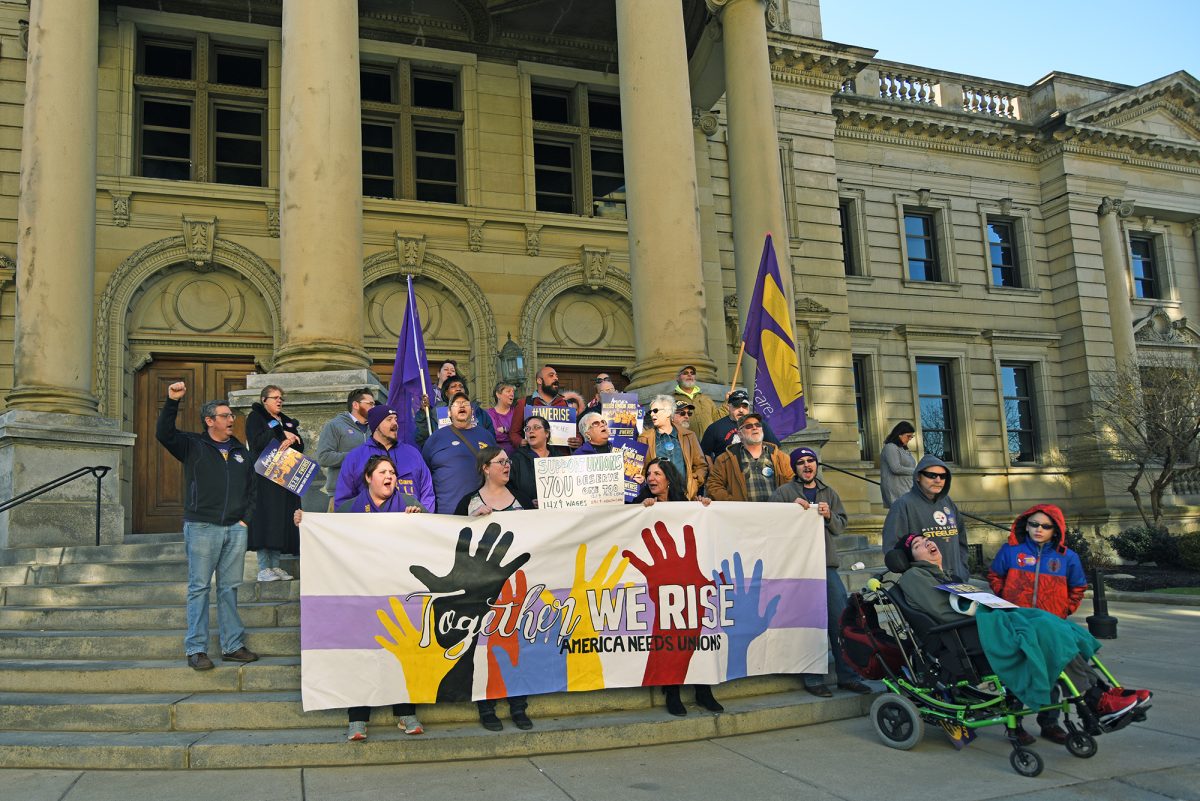
Union members and supporters rally together Monday for Rise Up Day of Action at Washington County Courthouse.
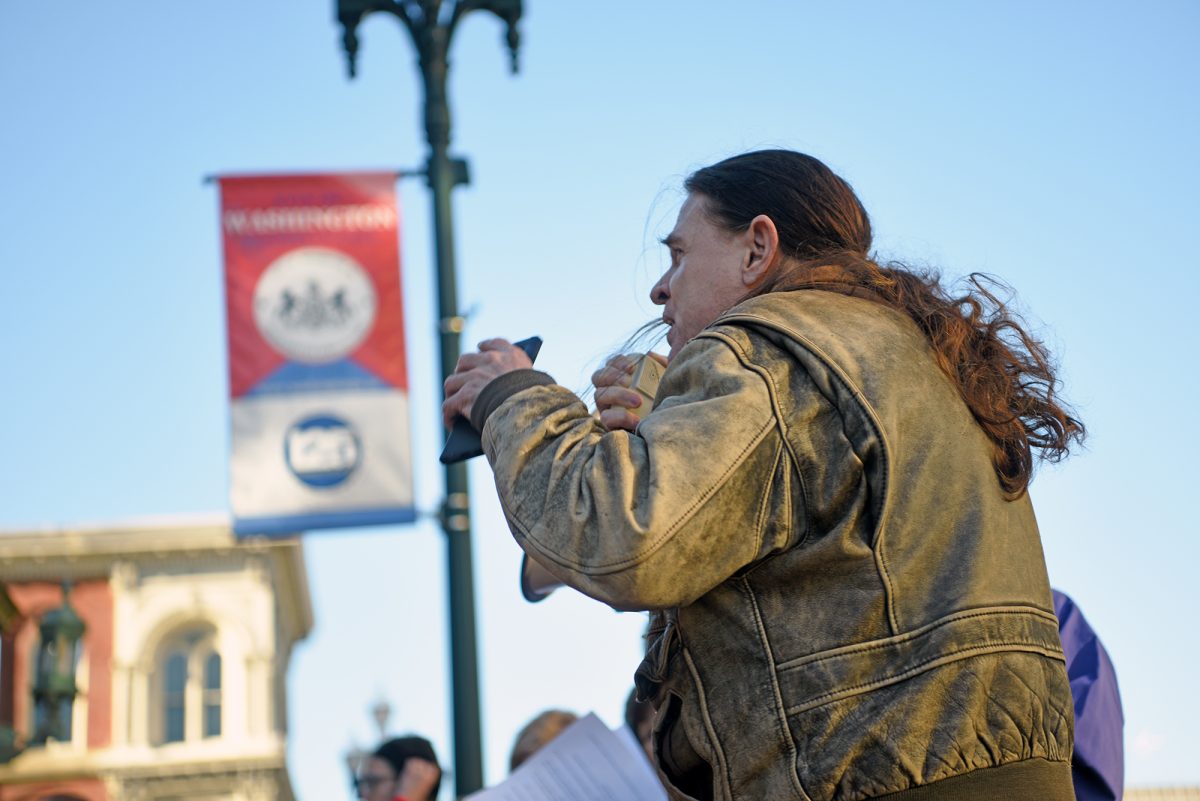
John Harvey, a labor activist from PIttsburgh, yells, “Get out and vote!” to those in attendance at the Rise Up Day of Action rally at the Washington County Courthouse
Holly Tonini/Observer-Reporter
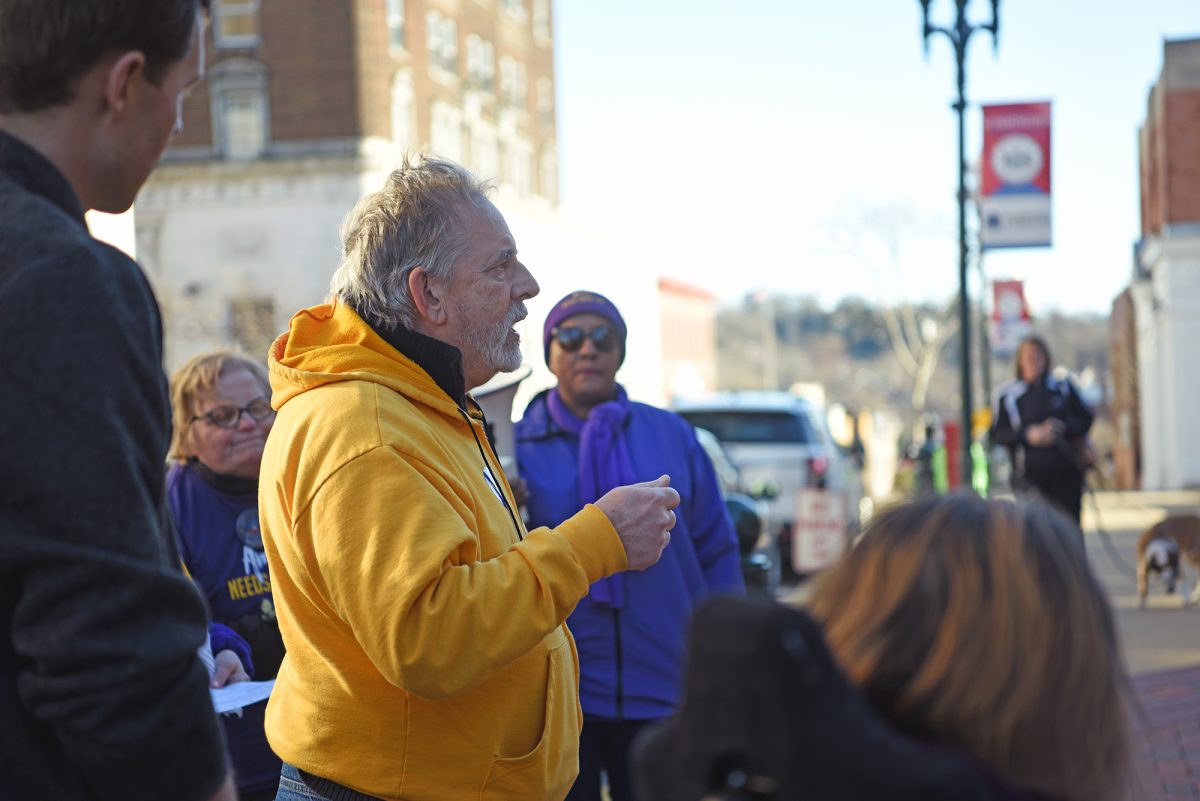
Wayne Watson, president of Washington and Greene Labor Council, speaks Monday about the importance of voting for the correct candidate.
Holly Tonini/Observer-Reporter
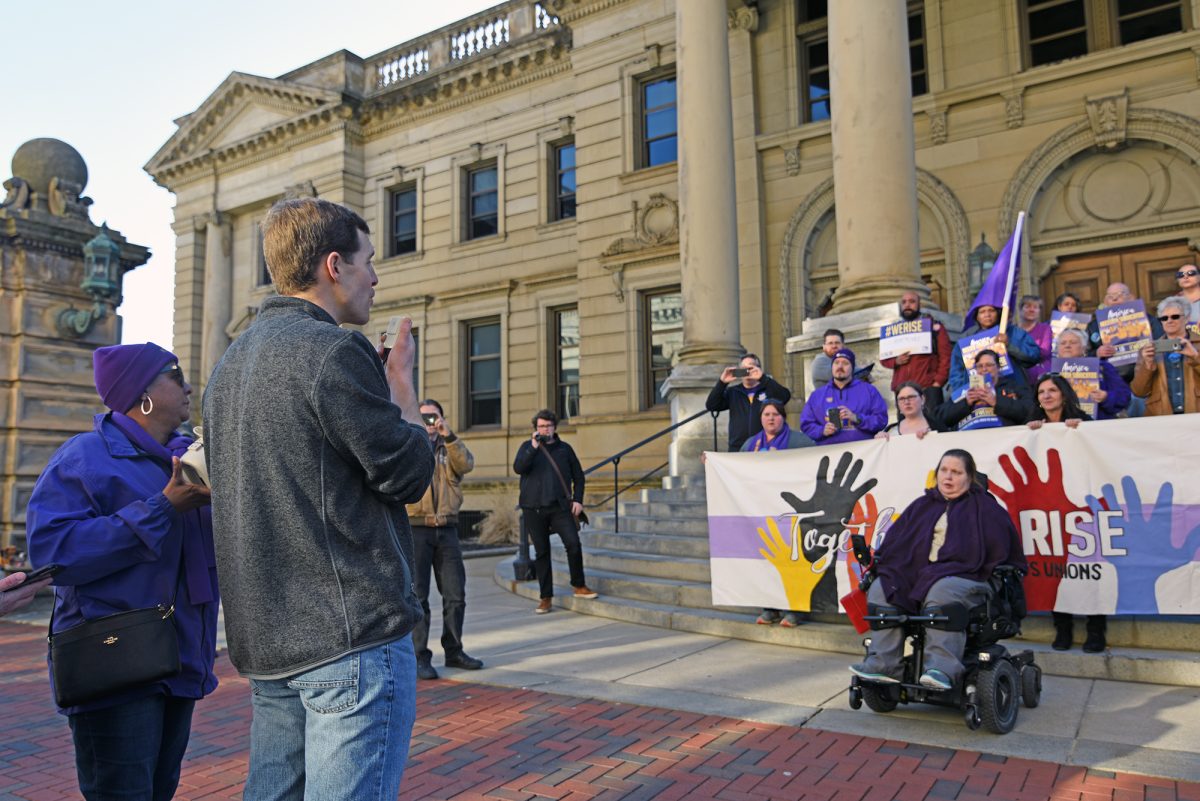
Conor Lamb, 18th district candidate, speaks to those rallying Monday at Washington County Courthouse during the Rise Up Day of Action.
Washington was one of hundreds of locations Monday where union members and their supporters protested as the U.S. Supreme Court was in a position to deal a hefty blow to organized labor.
A crowd of about 40 people gathered in the chilly shadow of the county courthouse during a protest organized by the Service Employees International Union. SEIU said the demonstration was one of more than 300 nationwide that day, when justices heard arguments in an Illinois state worker’s lawsuit which could reverse more than four decades of case law affecting the relations between public-sector unions and the people they represent.
“It’s not an attack just on union workers,” said Wayne Watson, president of the Washington-Greene Labor Council of the American Federation of Labor and Congress of Industrial Organizations, after he addressed the throng. “It’s an attack on all workers, because nonunion workers garner all of the benefits that we have, not out of the goodness of the employers’ hearts, (but) to keep the unions out of their facilities.”
A 1977 Supreme Court ruling drew a distinction between unions’ collective bargaining efforts and their political activities. That decision has meant government employees who are represented by unions – but opt not to join – can be required to pay what are commonly called “agency fees” to cover collective bargaining costs.
In his lawsuit against American Federation of State, County and Municipal Employees, Council 31, Mark Janus argues the First Amendment should allow him not to contribute to the labor union.
Janus and allied political and business interests are asking the court to reverse its 1977 decision. In one amicus brief, the Cato Institute, a libertarian think tank, and the National Federal of Independent Business Small Business Legal Center call that ruling a “badly reasoned anomaly of this First Amendment jurisprudence.”
“Public-sector union agency fees force nonconsenting, nonunion members to subsidize unions’ political point of view,” the brief continues.
The Supreme Court last revisited the question raised by Janus in a similar case almost two years ago. With one seat left vacant by the death of conservative justice Antonin Scalia only weeks earlier, the court split 4-4. President Donald Trump appointed fellow Republican Neil Gorsuch to replace Scalia last year.
Unions and their supporters worry an unfavorable decision could further curb the already-diminished power of labor groups to advocate for workers.
The U.S. Bureau of Labor Statistics put total union members at 14.7 million – or 10.7 percent of the workforce – last year. By comparison, in 1983, the first year for which comparable data was available, there were 17.7 million union members, or more than 20 percent of all workers.
Meanwhile, anti-union laws are becoming more common. Kentucky and Missouri passed right to work laws last year. Those two states brought the total number of states to do so to 28, plus the U.S. territory Guam.
“This is a political attack, and an attempt by the plaintiffs to rewrite 40 years of precedent and undermine basic fairness to make it harder for teachers, nurses and other working people to do their jobs,” said David Broderic, a spokesman for Pennsylvania State Education Association, of the Janus case.
Broderic said the teachers union has about 181,000 members statewide, with some 5,000 more people who pay “fair share” fees for representation. He said the union “would take a financial hit” if Janus wins.
“We have a lot of confidence in the services that we provide members, and because the services and benefits are so good, we’re hoping that people who currently pay fair share fees will join PSEA as full members,” he added.