

‘Let’s Talk’ brings issues about guns, school safety to light
Holly Tonini/Observer-Reporter
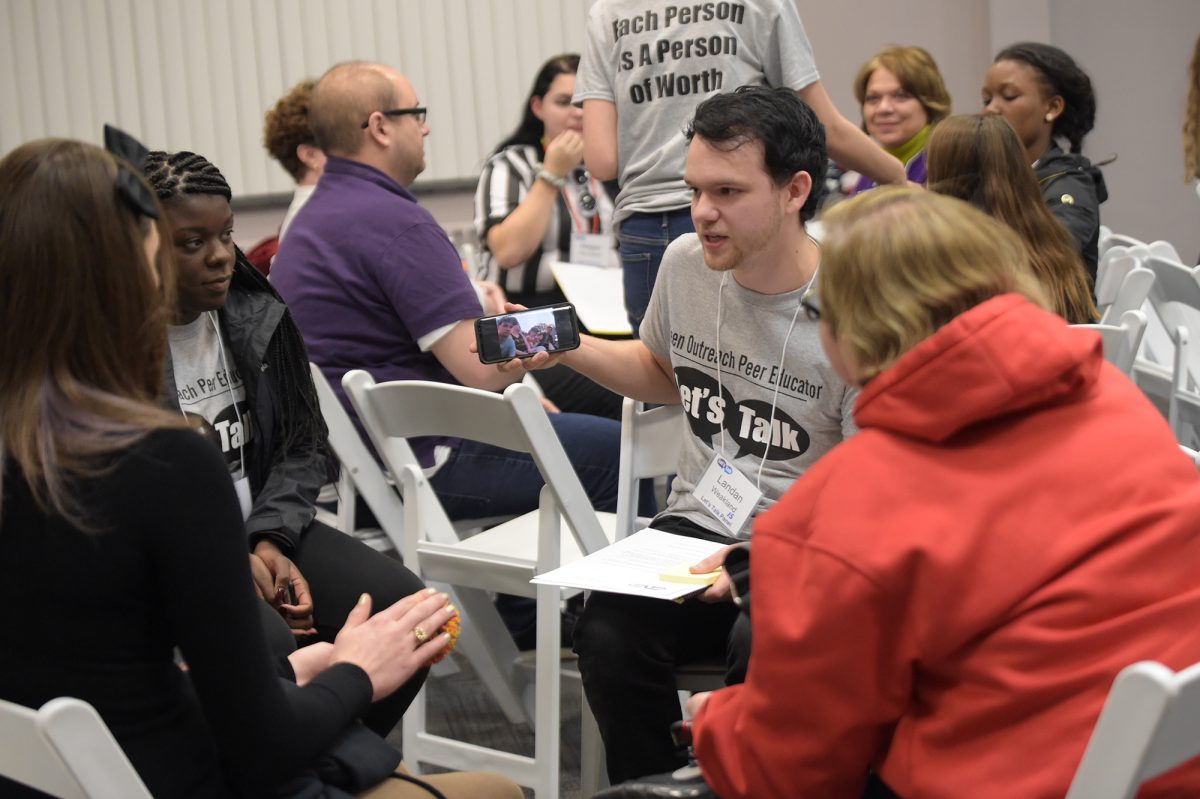
Landan Weakland, a peer educator, shows a photo on his phone to introduce himself to others as a way to break the ice before heavy discussions on how to keep schools safe.
Holly Tonini/Observer-Reporter
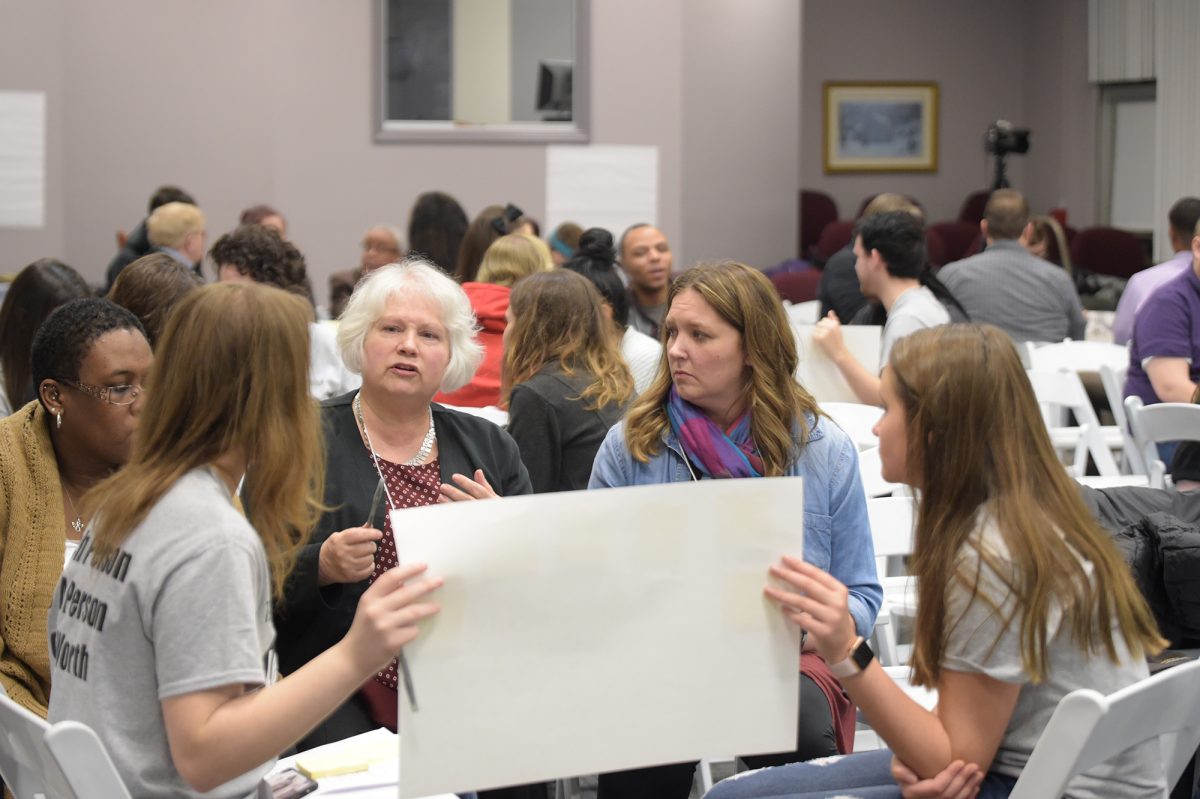
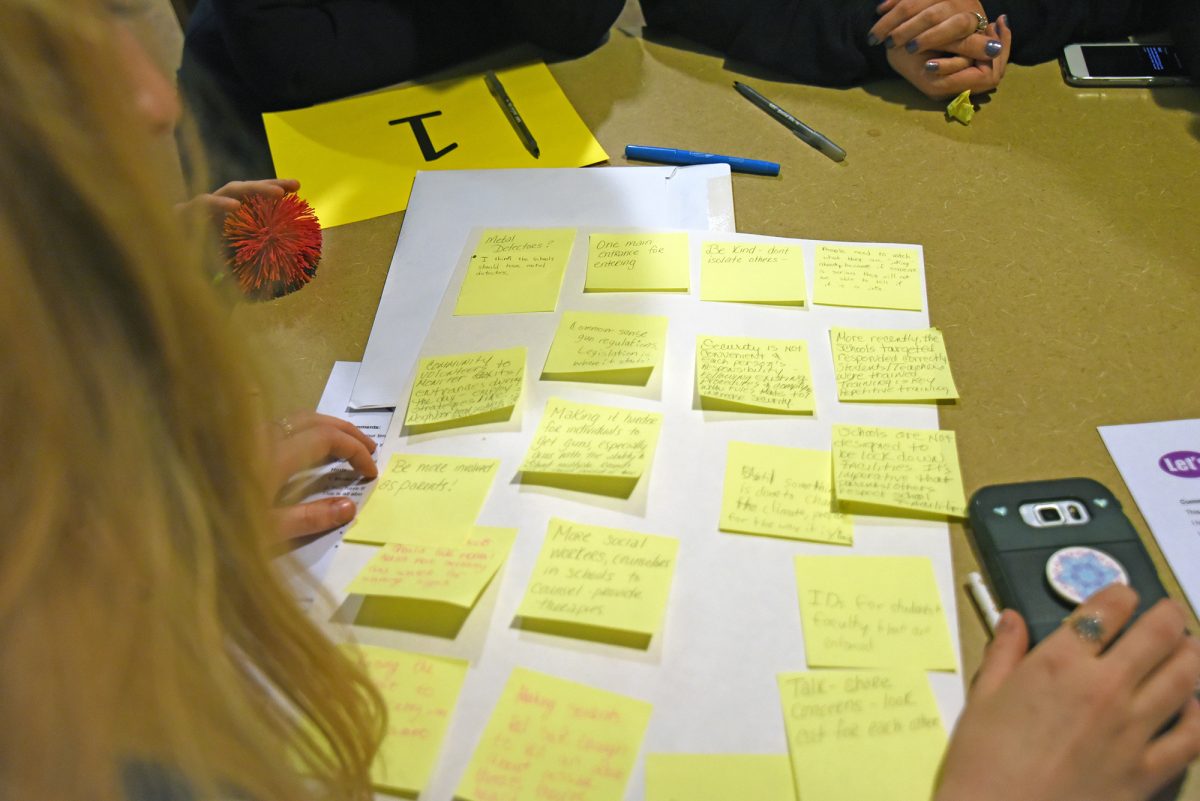
Groups gathered all around the room to discuss ideas on how to keep schools safe.
Holly Tonini/Observer-Reporter
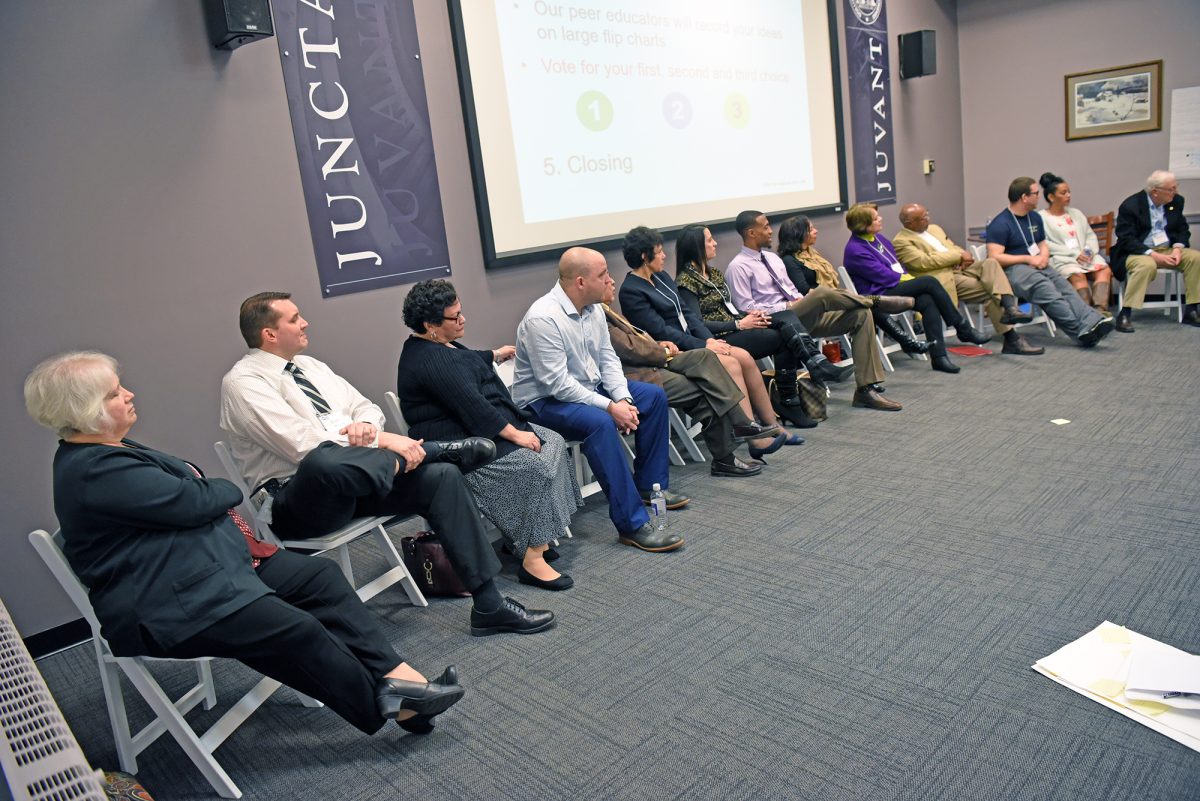
Educators, attorneys, counselors, law enforcement representatives and religious leaders made up a panel of experts at Let’s Talk, where the topic of the night was school safety.
Holly Tonini/Observer-Reporter
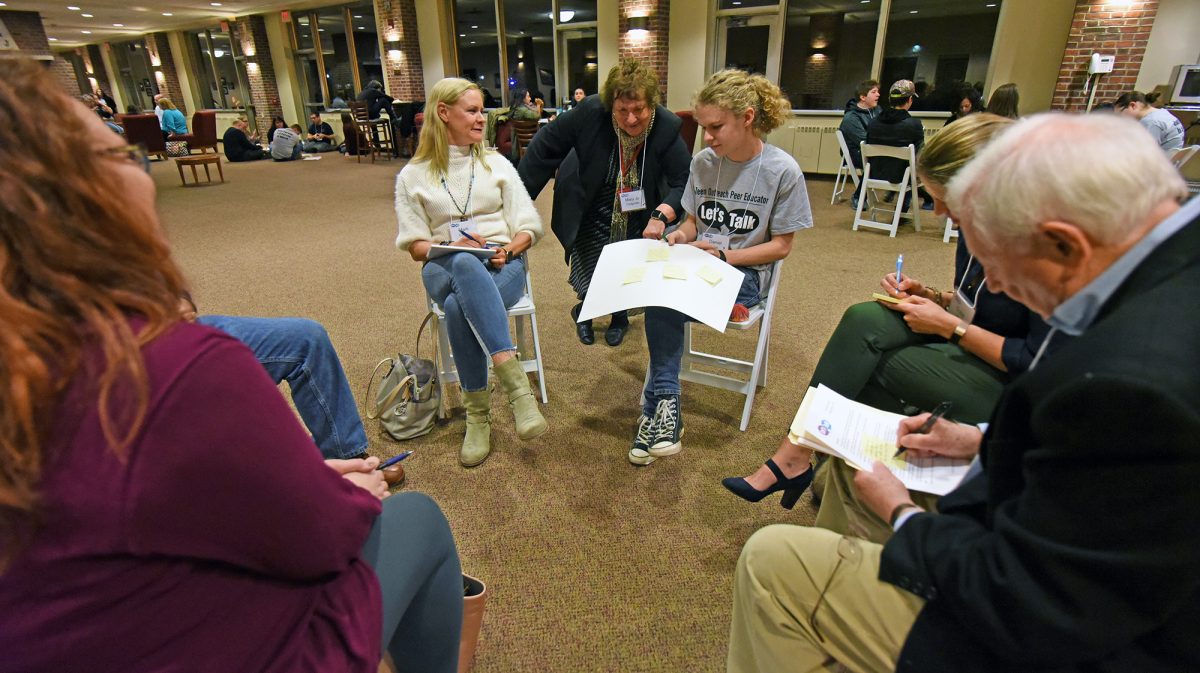
Dr. Mary Jo Podgurski, center, facilitator of the Let’s Talk Community Event, stops to see what ideas a group of peer educators, adults and local experts have come up with regarding school safety.
Wellness and meditation classes.
Allowing teachers to have a panic button in their classrooms.
More-involved school counselors.
Metal detectors.
These were some of the ideas that were exchanged at a wide-ranging discussion on school safety Thursday night at Washington & Jefferson College. Sponsored by Washington Health System’s Teen Outreach program, it featured some of the teenage peer educators overseen by Mary Jo Podgurski, who directs the program and is an Observer-Reporter columnist, as well as a panel that included retired school administrators, counselors and law enforcement officials.
Podgurski explained at the outset she wanted to “depoliticize” perhaps one of the most heated and politicized of issues on the country’s agenda, particularly in the wake of the shooting at Marjory Stoneman Douglas High School in Parkland, Fla., that left 14 students and three staff members dead. The peer educators in the program split off into groups with the participating adults, and came back in the second part of the event to talk about their suggestions and offer additional insights on how potentially lethal violence within schools can be curbed.
“We’ll have civil discourse, something that we don’t have a lot of in the culture,” Podgurski said. Similar discussions about race, gender and disability have been sponsored by Washington Health System’s Teen Outreach under the banner of “Let’s Talk.”
Podgurski said talks about hot-button issues like school safety and guns offer a way to hash over feelings in an accepting atmosphere.
“This validates kids, and makes them feel less isolated. I want the kids to feel validated.”
Of all the suggestions that were offered, no one believed that arming schoolteachers was feasible, despite the idea being pushed by some gun-rights advocates and President Trump.
“There’s no magic bullet here,” said Rod Maze, a peer educator alumnus and veteran of the U.S. Army and National Guard who lives in Washington. “It’s a combination of things. But it’s not going to be putting guns in schools.”
Maze also pointed out that, having been in countries where students attend schools guarded by men in body armor holding assault rifles, “that’s not what I want to see our children growing up in.”
Holly Tonini/Observer-Reporter
Holly Tonini/Observer-Reporter
Peer educators, panel members and other adults broke down into several small groups at the Let’s Talk Community Event to brainstorm what they thought might help keep schools safe.
Michael Matthews, a pastor at First Baptist Church in Claysville, decried the sense of tribalism that has permeated American society, and people “who call anything ‘fake news’ if they don’t want to believe it.” He also said the role of guns should not be ignored.
“It’s not Xboxes that are walking into schools and shooting people, it’s guns,” he said.
Social media has added fuel to the fire, according to Megan L. Faust, a Washington County assistant district attorney who handles juvenile cases.
As adults have found, students can bully and taunt one another from a safe distance on Facebook or Twitter, and Faust explained that it breeds negativity.
“Social media is a big problem,” she said. “It can be a positive, but right now it’s a negative.”
In fact, Roberta DiLorenzo, the retired superintendent of the Washington School District, said more adults need to practice positivity, “and model it for our kids.”
“Until we have that, that is the root cause of all the problems we’re having in our country today.”