

Rabbi: ‘Any differences can be overlooked’
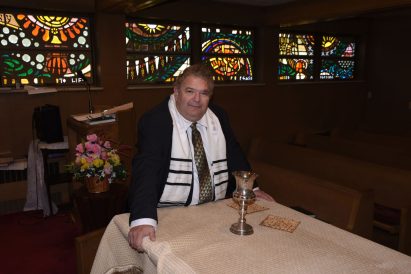
Rabbi David Novitsky of Beth Israel congregation likes to be inclusive.
“Any differences can be overlooked,” he said from his synagogue on North Avenue, Washington.
During what is the most holy time in Christianity – the Lenten season – Novitsky is preparing for Jewish Passover, to be celebrated from March 30 to April 7.
Passover, or Pesach, commemorates the emancipation of the Israelites from slavery in ancient Egypt. Pesach is observed by avoiding leaven, and highlighted by the Seder meal that includes four cups of wine, eating matzah and bitter herbs, and retelling the story of the Exodus.
Before the congregation’s annual Community Passover Seder on March 31, though, Novitsky will take part in a Seder dinner sponsored by Washington & Jefferson’s Newman Club, an organization for Catholic students and those interested in the Catholic faith. He will lead attendees through the Haggadah, the book that facilitates the retelling the story of the Exodus and guides participants through the ritual-rich Seder meal, highlighting the similarities between Judaism and Christianity.
“Two principles of Judaism are also seen in Christianity,” said Novitsky. “We believe in the coming of the Messiah … and we believe in a final resurrection. God will resurrect both the body and soul of all loved ones after the Messiah comes.”
Novitsky believes, as do some other scholars and faith leaders, that the Last Supper – in Christianity, the last meal Jesus shared with his Disciples – was actually a Seder meal, citing, among other things, the eating of matzah or unleavened bread and the drinking of wine. In the Bible’s Gospel of Mark, Jesus prepared for the Last Supper on the “first day of unleavened bread, when they sacrificed the Passover lamb.”
“Many people don’t realize the similarities between Judaism and Christianity,” Novitsky said.
Meghan Larsen-Reidy, director of campus ministry at W&J, said the Seder with the Newman Club is an opportunity to examine both faiths and see how they are similar in some ways and different in others.
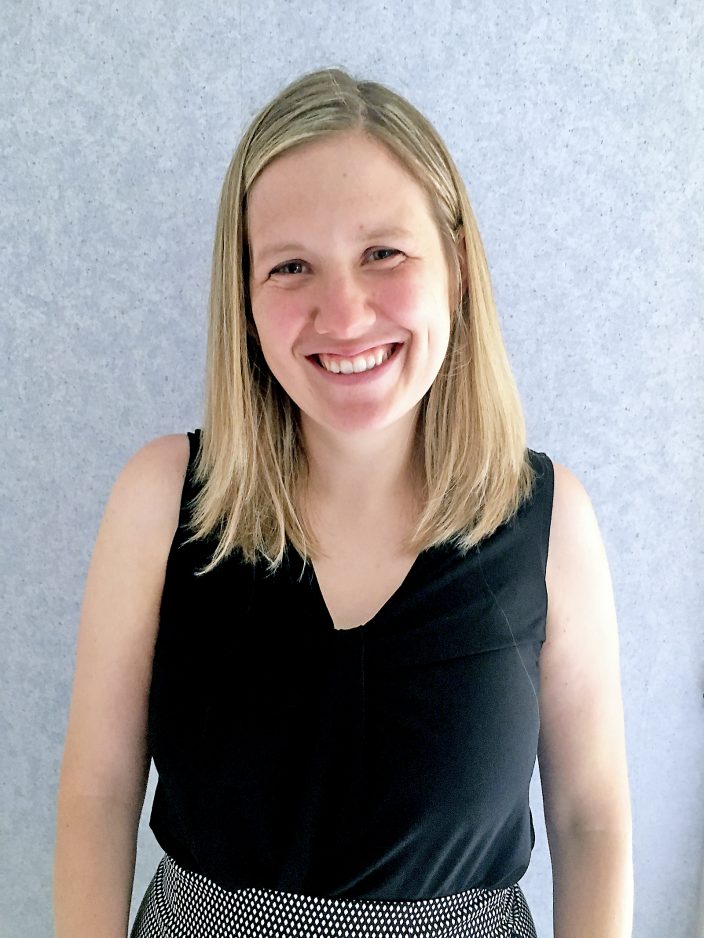
Meghan Larsen-Reidy is campus minister for the Diocese of Pittsburgh.
“I think it’s really important for faiths to come together on things that are important to them,” said Larsen-Reidy, who is employed by the Catholic Diocese of Pittsburgh. “This is a good kind of merging of two faiths together.”
The Seder will be held at 6 p.m. Wednesday at the Newman Center, 1 S. College St., Washington, on the second floor of the Trades & Labor building. Seder offerings and a full meal will be provided.
W&J students, faculty and staff are encouraged to attend, but the public is welcome. Larsen-Reidy asked that anyone interested in attending RSVP to mlarsenreidy@diopitt.org.
In addition to elements like the paschal lamb, bitter herbs, matzah and wine, and avoiding Chametz – food made from wheat, barley, rye, oats or spelt that has come into contact with water and been allowed to rise – the Passover Seder meal includes many elements that are geared toward children, like hiding the afikoman, or matzah, and having them ask questions.
“It’s meant to keep the kids interested in the holiday,” said Novitsky. “Children are very important. I know this town. Many places of worship have a problem getting young people. Without children, there is no future.”
Though Passover is celebrated by those of the Jewish faith, Novitsky said that it’s important to remember it represents the Exodus of Jews and others out of Egypt.
“Some other nationalities followed them,” he said. “God ultimately redeems everyone. The future world will be made of all people, all faiths. All nations shall come to worship God in Jerusalem.”