

15 years of the Waynesburg Sheep & Fiber Festival
Greene County’s rolling hills have been sheep country since the first settlers arrived to clear the land in the early 1800s. The market has had its ups and downs, but old farm families and a new generation of producers have tailored their flocks to 21st century tastes for fine fiber and good eating.
And what better way to celebrate that history and educate the public about what it takes to go from sheep to shawl to dinner table than to throw a party?
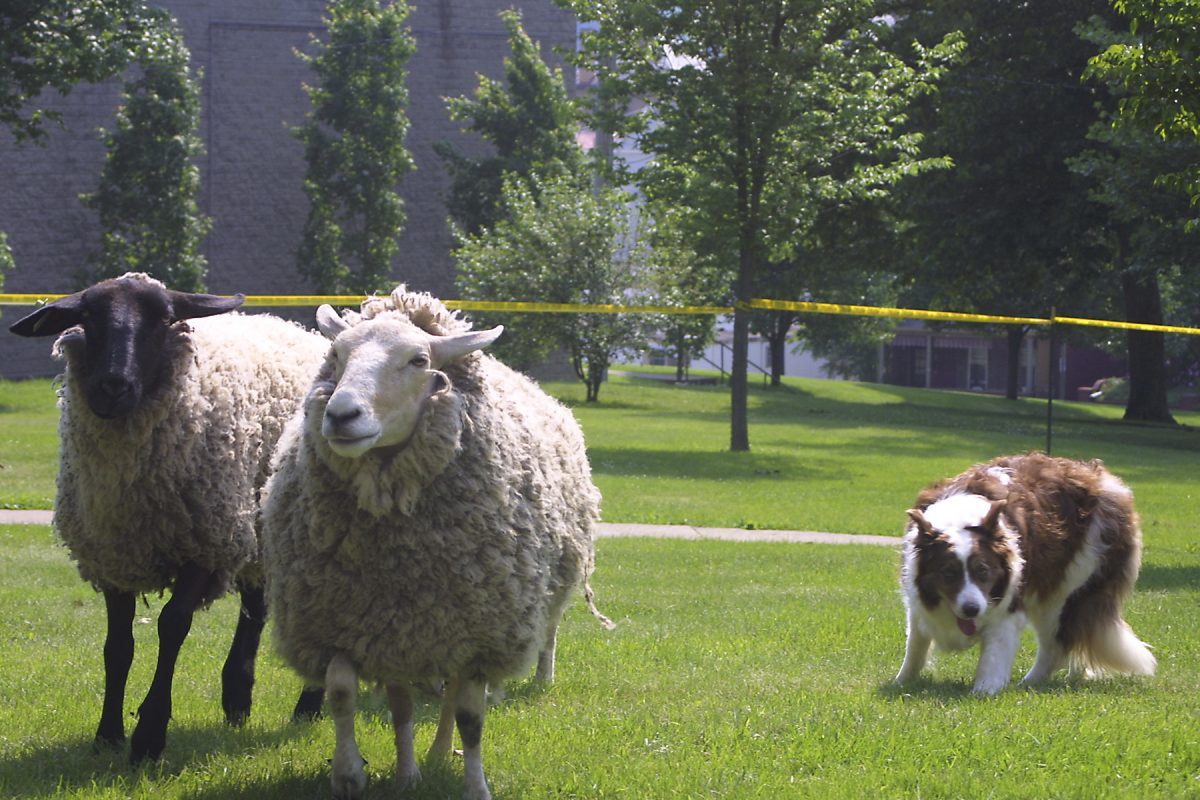
By the third weekend in May, the 15th annual Sheep and Fiber Festival will be underway at the Greene County Fairgrounds with breed pavilions, lamb samplings, live music and vendors busy spinning, weaving and selling their wares. Dogs will herd, sheep will be shorn and shawls will be woven in friendly competition by regional weaver guilds. Fiber art, from sweaters and wall hangings to lacy whatnots and felted critters are judged and displayed, along with a juried photography exhibit of all things country. Plus, kids of all ages can try their hand at making something. Think you might want to drop spindle, weave or knit? Stop by the Maker Space and learn from a pro. Spend an afternoon browsing a rainbow of yarn for just the right hue for that sweater you have in mind. Make sure you buy enough – this is hand spun, hand dyed and hard to recreate.
It’s been 15 years since I first found Blaker Ridge Road, a few country miles from Waynesburg. Now, I’m returning on a cold February afternoon to visit Janet Blaker Mawhinney on her family farm and talk to her about sheep, fiber and the festival she helped create. I met the Mawhinney ewes and their lambs when I drew them for the first Sheep and Fiber Festival T-shirt of 2003. The view from the farm is as spectacular as I remembered, breathtaking drops to the valleys below, a finely maintained 19th century farmhouse and scores of sheep, 100 in all, in wool coats against a winter sky.
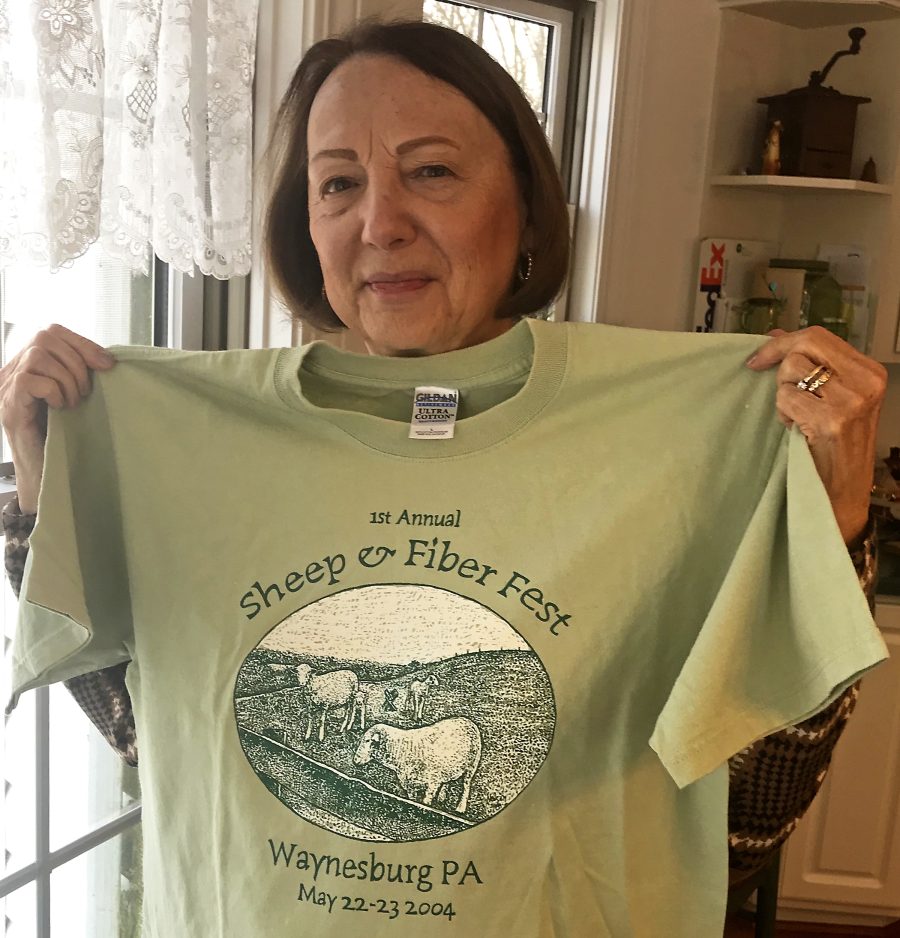
Janet Mawinney poses with the first year’s promotional shirt that featured her flock of Dorsets.
In the kitchen, Mawhinney held up that first shirt and grinned, “I have one for every year.”
Outside the window, another generation of ewes stood in the field that’s on the shirt, waiting for feeding time. In a box by the kitchen door, two tiny lambs waited for their bottle. Husband Mike would soon be riding his all terrain vehicle to the barn where February’s lambs were being born. He might return with another tiny triplet to be nurtured until strong enough to rejoin the flock.
At Blaker Ridge Farm, tending sheep has been going on like this since 1812.
Greene and Washington counties were once the leading producers of wool in the nation, famous for their flocks of finely fleeced Merinos. Thomas Jefferson cracked the Spanish monopoly by importing these prized animals to the United States at a time when taking them from Spain was a crime punishable by death. History does not report how Jefferson dodged that bullet, but Merino wool soon became an economic driver in the hills of Western Pennsylvania, from Hoovers Run to Oak Forest to Blaker Ridge. By 1835, there were cash crop flocks on every farm.
The Civil War brought a boom – wool was used for Union military wear and there was a wool mill in every town and village.
Dorset sheep, known for being good mothers and producing both meat and medium grade wool, became popular locally, thanks to J.L. Henderson of Washington County, who imported them to the area in 1887. If a farmer could keep alive those triplets that Dorsets sometimes produced, there was a better profit to be made. Sheep continued to be a good investment into the 20th century, but when America switched to synthetic fibers for everything from upholstery to socks after World War II, the bottom fell out of the market. Many farmers switched to beef cattle but some stuck it out. Wool, although expensive to process commercially, has a niche market that appreciates its superior natural qualities.
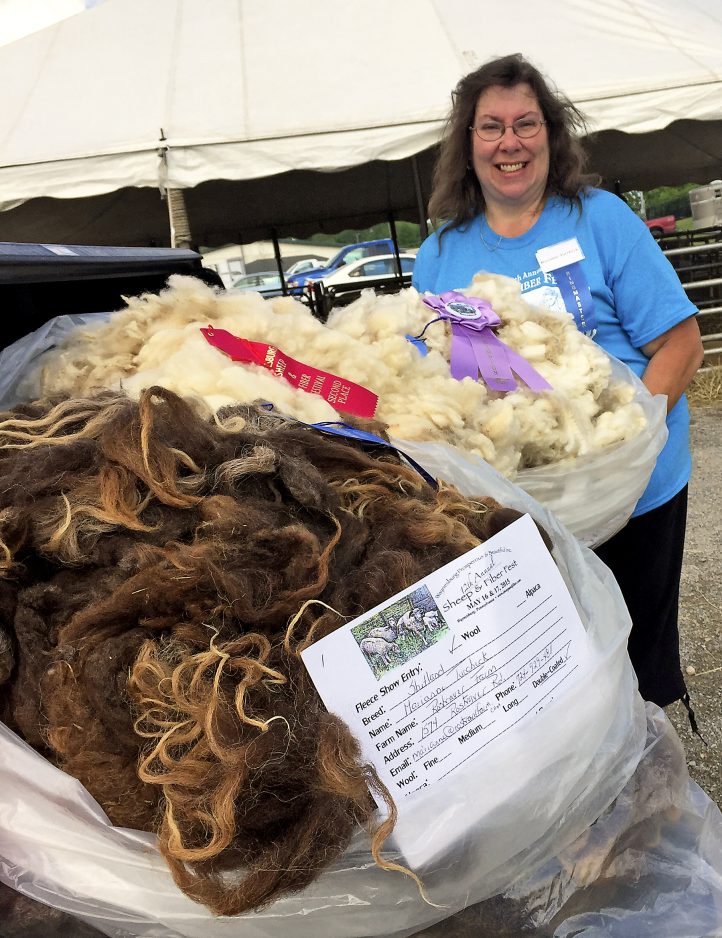
Marianne Turcheck of Rostraver Farm shows off her prize-winning fleece.
“Sixty percent of wool production today goes to the military for uniforms because it’s fire resistant and wicks moisture,” Mawhinney says.
Fine fashion wise, America’s Winter Olympic teams were wearing American grown, woolen hats, gloves and sweaters designed by Ralph Lauren for the opening and closing ceremonies in Pyeongchang, South Korea, this year.
In the 1980s, America’s taste for lamb was growing as producers learned to soften the flavor through specialized feed and breeding practices. The days of ruining American taste buds by serving mutton, as was often the case in Greene County when thrashing crews had to be fed, was officially over.
Keith Martin of Lippencott left stock brokering in 1989 and turned his talents to growing the kind of lamb that chefs across the nation would soon be buying from his Elysian Fields farm. Working with natural fibers had begun to make a comeback and some farmers were raising sheep for specialty wools. Things were starting to look up.
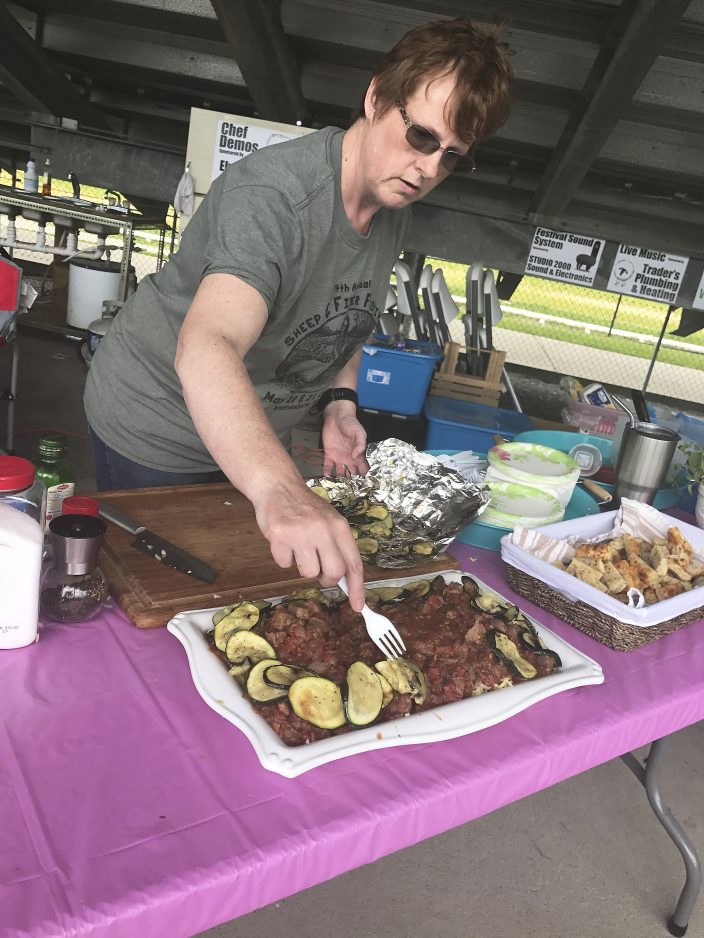
The tastiest part of the weekend is the free samples of the Elysian Farm lamb, donated by Keith Martin and cooked up by local chefs.
In 2001, Waynesburg Prosperous and Beautiful Inc., a nonprofit inspired by the state’s PA Downtown Center program, decided to showcase the educational, cultural and historical aspects of the county’s sheep farming heritage with a street festival. The recruitment call went out and a new generation of local shepherds, including the Mawhinneys, went to work. The Penn State Extension office pitched in, as did the 4-H Market Lamb club. Business owners and artists like myself joined the committee, bringing ideas, talent and the volunteer time it would take to make the festival happen. Sponsors were found, grants and donations were asked for and received. Two years and many meetings later, the Sheep and Fiber Festival committee shut down High Street and brought history to life for a wooly throwback weekend. After nearly 100 years absence, sheep were back in town!
There were dogs herding flocks in the college park that was once the town commons. A historical documentary about sheep farming was shown at the Opera House and pens of specialized breeds, including two alpacas – the newest fiber craze – were sandwiched between weavers, spinners and yarn venders on the street. A cooking contest brought out the chefs and Mawhinney’s pet project, a lamb cookbook was for sale, along with the T-shirts.
The next year there were more vendors, more demonstrations and bigger crowds. Word was getting out.
“We were on High Street for three years and by then we’d grown so large we moved to the fairgrounds,” Mawhinney says. The cooking contests became cooking demos, offering free gourmand samples of Elysian Fields lamb to festivalgoers. “Keith donates the lamb we use every year. It’s delicious.”
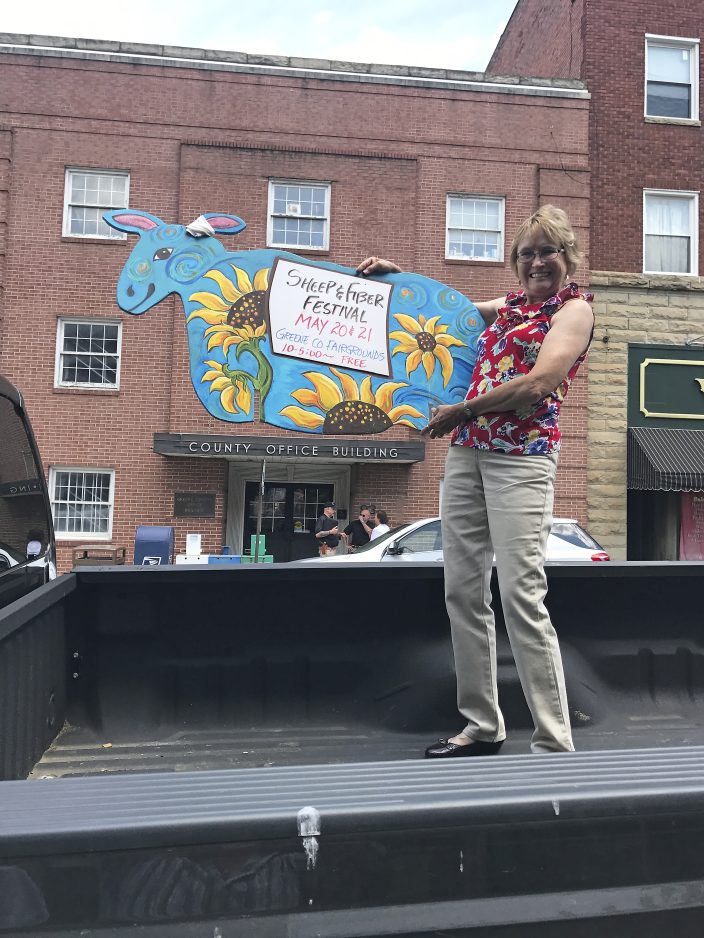
Lena Galing of Lippencot Alpacas rounds up sheep signs that will be used to highlight the festival.
That first festival caused Phil and Lena Galing to give up raising beef and switch to alpacas. “I saw those two alpacas and just fell in love with them! Phil did the math and we realized we could make a better profit with them than cattle. The next year we brought our own girls to the festival and the year after that we joined the committee,” Lena says.
Lippencott Alpacas and its Farm Store have become an extension of the festival’s mission to teach fiber arts and offers natural fiber products, workshops and seminars for 21st century farming practices throughout the year. When the first planning meeting of January is held in the basement of the PNC Bank on High Street, the Galings are there, along with most of the old guard and some of the new, getting ready for the show.
Keep your eyes peeled as May arrives on a float of wildflowers – a flock of brightly painted plywood sheep will begin appearing in front of stores on High Street and elsewhere around the county. You can sponsor one yourself, repaint it if you wish, and put it out to let everyone know that the 15th annual Sheep and Fiber Festival is coming May 19-20. This year’s T-shirt features Ralph Adamson and a flock of freshly shorn ewes walking along the driveway of Adamson Farm on Oak Forest Road.
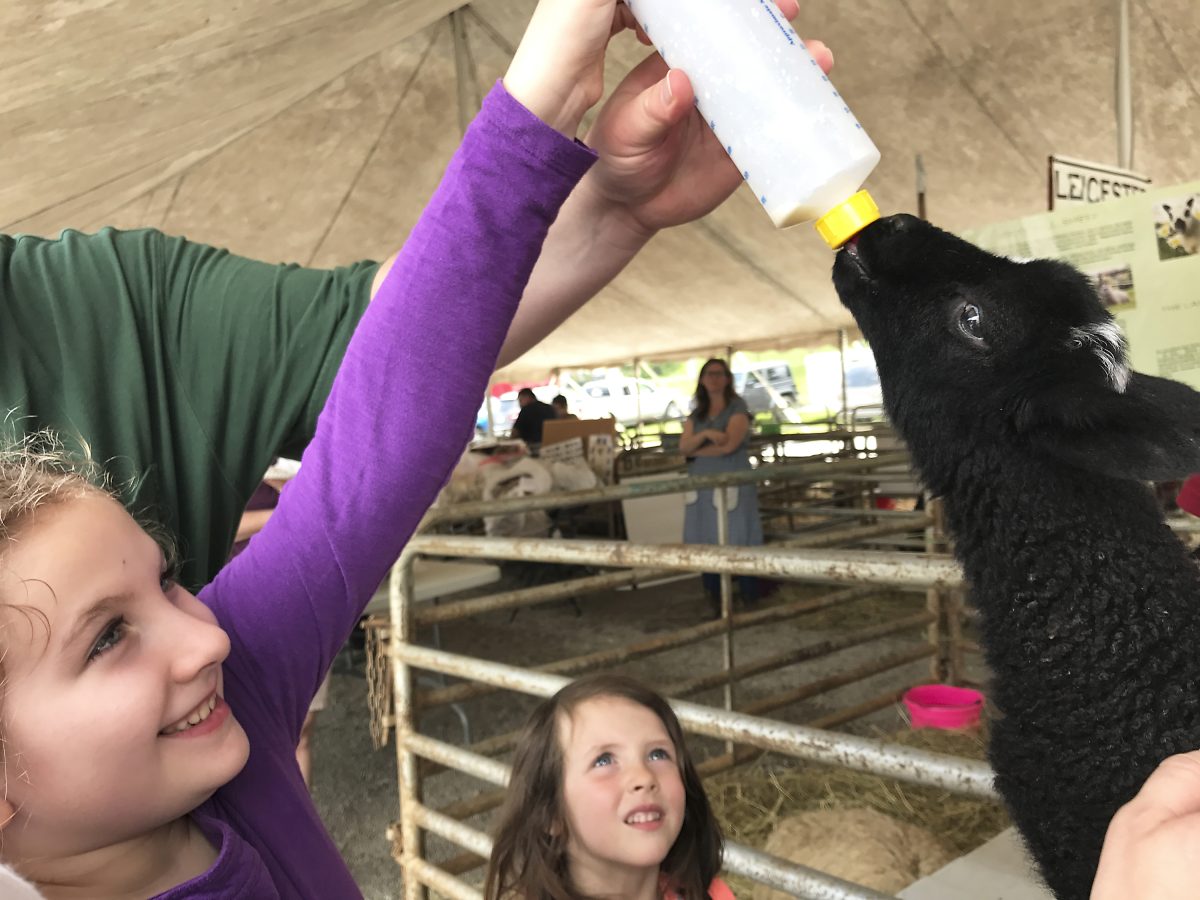
Bottle feeding baby sheep is just one of the many hands-on things to do at the kid-friendly festival.
Grab your knitting needles, round up your own little flock of lambs and bring them to the Greene County Fairgrounds to see and do. This is a weekend you don’t want to miss.