

Libraries adapt to changing needs in Washington and Greene counties
Scott Beveridge/Observer-Reporter
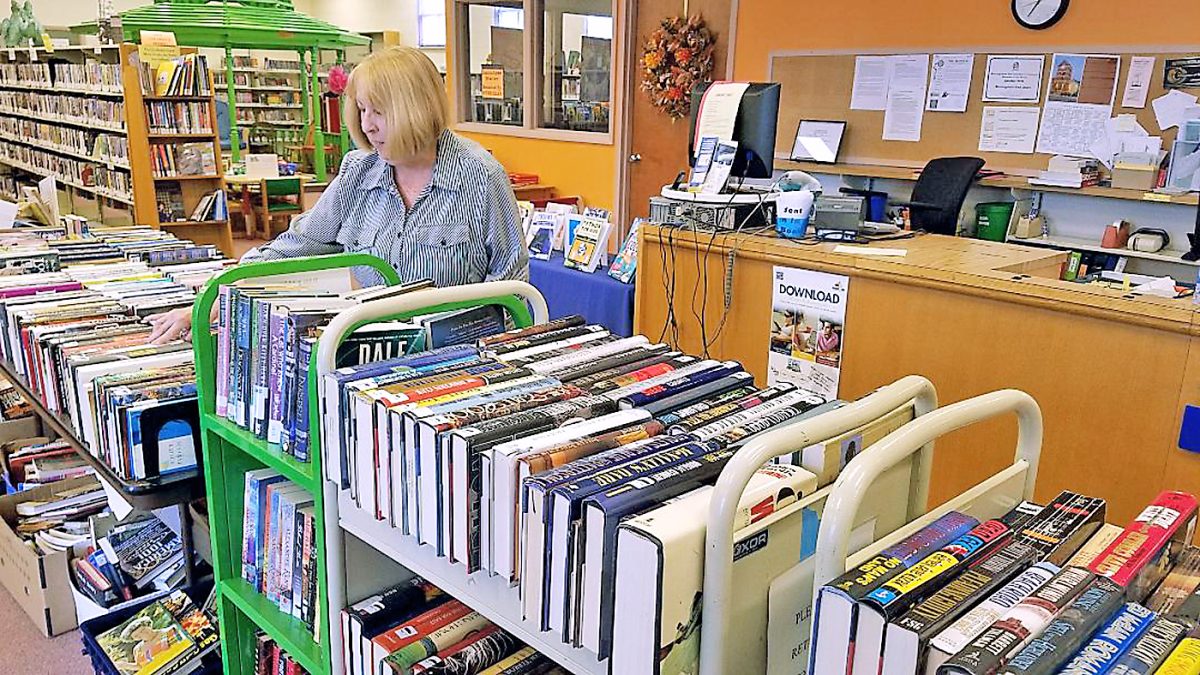
Monongahela Area Public Library clerk Andrea Moreschi sorts through some of the thousands of books on sale as the library weeded out its collection in early April.
Trista Thurston/Observer-Reporter
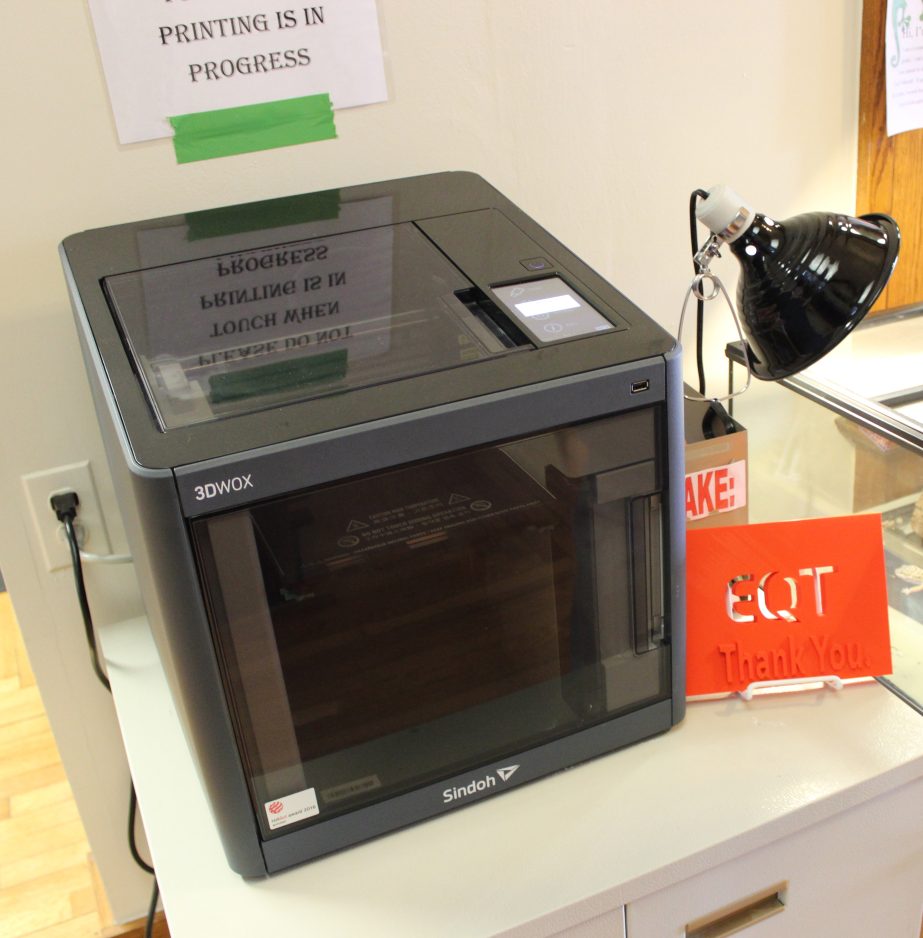
EQT sponsored the purchase of a 3D printer and materials at Flenniken Public Library in Carmichaels.
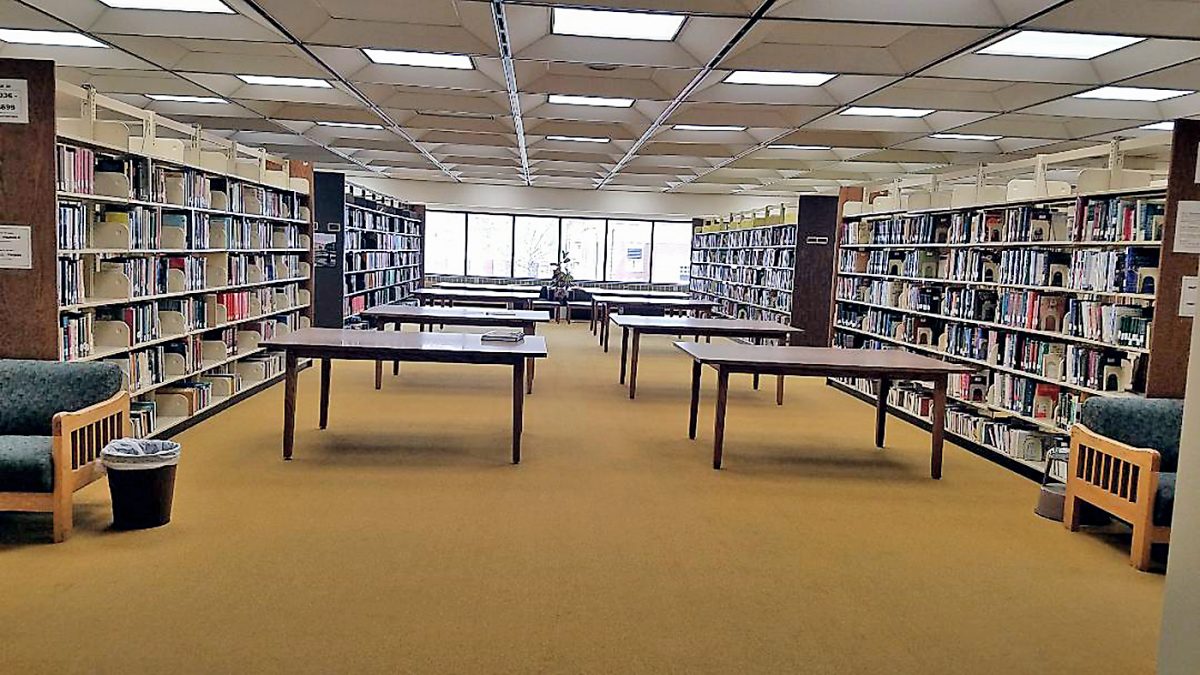
This room in the Louis L. Manderino Library on the campus of California University of Pennsylvania was void of patrons on a recent afternoon.
The Washington & Jefferson College library staff is concentrating on a new initiative known as information literacy to better help students connect to appropriate research sources they need in the classroom.
“It’s about how to pick the best information out of a sea of information,” said Ronalee Ciocco, director of W&J’s U. Grant Miller Library.
“Now, there is information overload,” Ciocco said.
Adapting to filtering through online resources is one of many challenges facing college and local libraries in Washington and Greene counties in an era when so much information is available on the web while many hard-copy books collect dust on their shelves.
Rea Andrew Redd, director of Eberly Library at Waynesburg University, said the purpose of libraries in today’s era has not changed.
“We’re still a repository of things you can’t find on the internet,” he said. “I think libraries are forever going to be that way.”
What has changed, though, are the needs of the patrons and how libraries meet them. Much of their reference materials are digital, and the university makes ample use of the interlibrary loan system.
“We still have some old journals that were from the founding of the college,” Redd said.
Finding a balance
The balance is between innovation and preservation.
Monongahela Area Public Library has cleared thousands of books from its shelves, using them to hold a book sale in past weeks to make room for new arrivals.
“We only pull books that haven’t circulated in the past five years,” Monongahela library Director Amy Rieger said.
“There are people of the mentality that books are so precious that you should never throw them out,” she added. “We are a library, not a museum.”
It becomes especially risky, she said, to provide outdated books on science and medicine that could lead a reader down an incorrect path.
“If we didn’t weed, we couldn’t grow,” she said.
In rural Greene County, libraries still serve a valuable purpose. Kathy McClure, executive director at Eva K. Bowlby Library in Waynesburg, said many residents with unreliable internet access still depend on physical materials or wireless access at the library.
“Libraries are not losing relevance. We’re probably more relevant now than we ever were here,” she said.
Though the library has weeded out books for years, the past three years have been more extensive, eliminating an entire stack in both the children’s section and adult offerings.
“We realize the library is much more than a warehouse for physical material,” McClure said.
Several spaces have been reconfigured, and McClure has even bigger dreams: an addition. The library currently has unused garage space McClure would love to see renovated into a two-story addition. The hope is for more common space.
The library is trying to balance between having a complete collection and having enough room for people to congregate and work.
W&J’s library parted last year with its vinyl record collection as it prepares this summer to redesign its interior, which dates to the 1960s.
For instance, there are not enough electrical outlets in the library to meet the demand from students and staff needing to recharge their smartphones, tablets and laptop computers, Ciocco said.
The redesign will create a “more open floor plan” where students can collaborate on projects, she said. The college also wants to create study spaces where students can work together.
“It’s not going to replace books,” Ciocco said.
The construction project also will enlarge the library’s archival room, which contains “unique holdings,” she said.
The valuable archives, which include documents bearing the signatures of George Washington and Thomas Jefferson, are secured in a temperature-controlled, bunker-like room in the basement.
Imagination space
Citizens Library in Washington is similarly removing some books from its shelves to make room for other “community needs,” according to executive director Diane Ambrose.
“We’re actually in the process of applying for grants to repurpose our nonfiction area into an imagination space,” she said.
Kathy Pienkowski, circulation services manager for Citizens Library, said its collection includes about 46,000 nonfiction books, and just 4,700 of them circulated last year. Ambrose called it a “major national trend” that nonfiction books are being replaced by community spaces, with computers and other digital devices people can use.
“Our plan is to keep a core collection of nonfiction, but we plan to use it for community programming and learning interaction spaces,” she said. “It’s not just about getting rid of books, but about responding to national trends and what the community needs.”
The imagination space, Ambrose said, will include programs and digital devices the library already uses, like video recorders for people to make YouTube blogs or to practice for job interviews. It will also house a scanner people have used for scanning historical documents. It will even have a keyboard for music and voice recording practice.
“When people became familiar with the internet as technology has become more prominent in people’s lives, we’ve had to change with that,” Ambrose said.
Flenniken Public Library in Carmichaels is rethinking what a library can offer with Chromebooks, tablets, virtual reality headsets and a 3D printer for patrons. Executive director Nicole Mitchell said STEM is increasingly important, and libraries need to evaluate the needs of the community.
“We’re building our base slowly. I’d like to see more kids realize that we have more than just books,” Mitchell said. “There’s just so much here if people would just walk in the door and see that it’s here and it’s free.”
EQT sponsored the purchase of the 3D printer and materials, which is free for any patron to use, along with two children’s computers preloaded with activities.
“If it’s one thing small libraries are good at, it’s doing a lot with little funds,” she said.
Coding classes, makerspaces, tutoring, workshops and hosting a 4-H engineering and robotics club are just some ways Mitchell said libraries can help supplement what kids are learning in school. And when nearby Carmichaels Area School District dropped elementary art classes, Mitchell said the library started offering “crafternoons” for kids after school.
“Libraries are not quiet anymore,” Mitchell said, a sentiment McClure agreed with. “Learning is loud.”
Meanwhile, California University of Pennsylvania began the process of trimming its book collection more than a decade ago at its Louis L. Manderino Library. The move was designed to create more office space in the library.
The destruction of books at Cal U.’s library was partly due to a huge dip in circulation, largely because students were using the internet for research. Students there checked out 93,199 reference materials in the 2000-01 term, but the number dropped to 51,731 the next year.
Current information about the Cal U. library’s operations was not immediately available. Cal U. spokeswoman Christine Kindl said she didn’t “have anyone available to speak to this topic.”
“Under the law, we are obligated to provide public records through the Right-to-Know process, but I’m not aware of any obligation to provide interview subjects,” Kindl said.
On a recent April afternoon there were about a dozen patrons, about half of whom were at its bank of computers in the large, four-story building. A young woman was sitting at a large row of desks with her nose in her smartphone. No one was examining the books on row after row of shelves, many of which were half empty.
The state System of Higher Education, to which Cal U. belongs, has been working for some time to meet student demands by digitizing publications, state system spokesman Kenn Marshall said.
“What they do with hard copies is up to them,” Marshall said.
Staff writer Katie Anderson contributed to this report.