

Beyond the Border: Cumberland, Md.
Courtesy Allegany County Tourism, Mountain Maryland
Courtesy Allegany County Tourism, Mountain Maryland
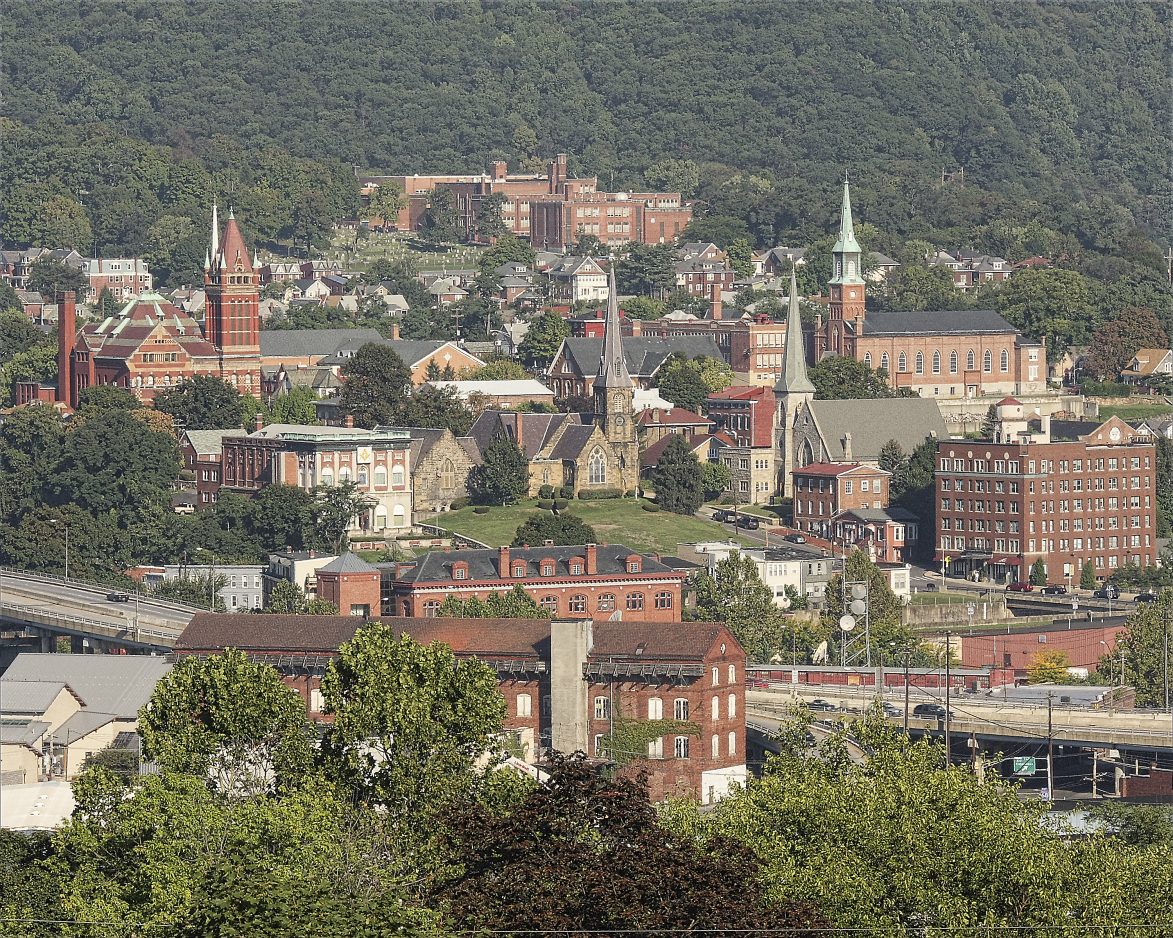
Cumberland, once the second-largest city in Maryland, sits in a valley surrounded the Allegheny Mountains.
Jeff Rhodes grew up near Cumberland, Md., a picturesque Potomac River town nestled in a valley and encircled and dwarfed by the Allegheny Mountains. Peaks and valleys would be a geographic designation for the region, but also would serve as a metaphor for the place traditionally known as the “Queen City.”
“We have a lot of attractions and history,” says Rhodes, the city administrator who discussed the peaks at length.
Cumberland started as a key location along the Cumberland Road, a post-Revolutionary War passage through the mountains that also is known as Route 40 and the National Road. Development of the C&O Canal and the rise of railroads made the city more of a transportation hub over time. For roughly a century, 1840 to 1940, Cumberland grew precipitously, becoming the second largest city in Maryland, behind Baltimore. It hit a population high of 39,483 in 1940, boosted by heavy industries PPG, Allegany Munitions and Celanese. Peak times, indeed.
Courtesy Allegany County Tourism, Mountain Maryland
Courtesy Allegany County Tourism, Mountain Maryland
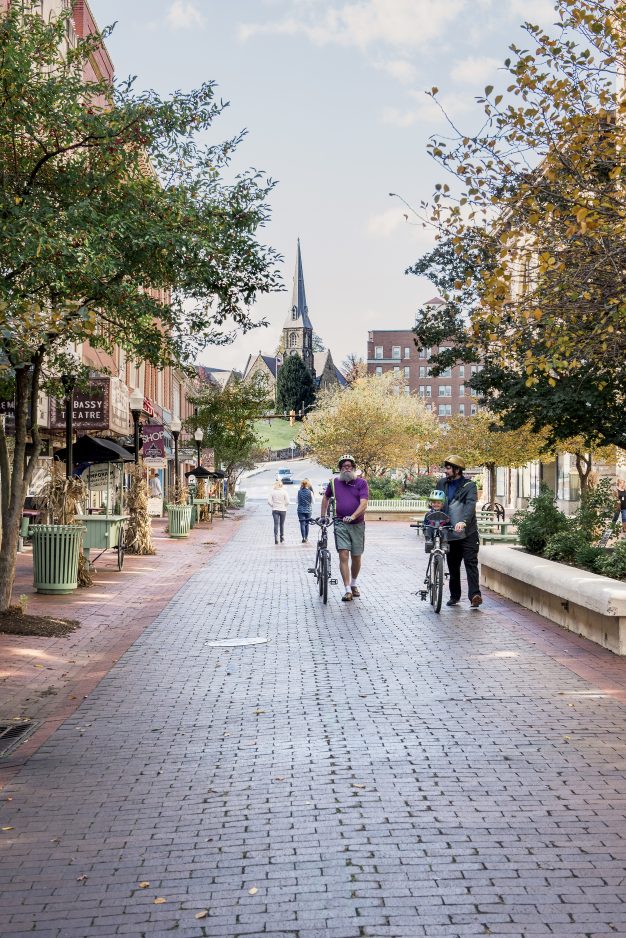
Hiking and biking are favorite pastimes outside Cumberland, and downtown as well.
All three of those operations, however, closed and relocated following World War II, sparking a population decline that continues today. The coup de grace came in 1987, when Goodyear Tire and Rubber Co. shuttered its massive Kelly Springfield Tire plant, costing nearly 1,700 people – 5 percent of the city’s workforce – their jobs.
A lengthy downward spiral followed, with the city hitting a nadir of sorts in 2015 when the online publication 24/7 Wall Street posted an article titled “America’s Poorest Towns, State by State.” The New York City-based outlet listed the municipality in each state with the lowest median household income. Cumberland – at $30,962 – finished last in Maryland, a state that had the highest median income nationally. The Queen City also had a high poverty rate of 15.9 percent.
That was a deep valley, to be sure, but through a blend of dedicated revitalization, an emphasis on tourism and plain old city charm, a peak appears to be rising. Cumberland, seat of Allegany County, a 120-mile jaunt from Pittsburgh, is a city of scenic structures with towering churches, refurbished housing and a vibrant downtown brimming with civic festivals and events.
Courtesy Western Maryland Scenic Railroad
Courtesy Western Maryland Scenic Railroad
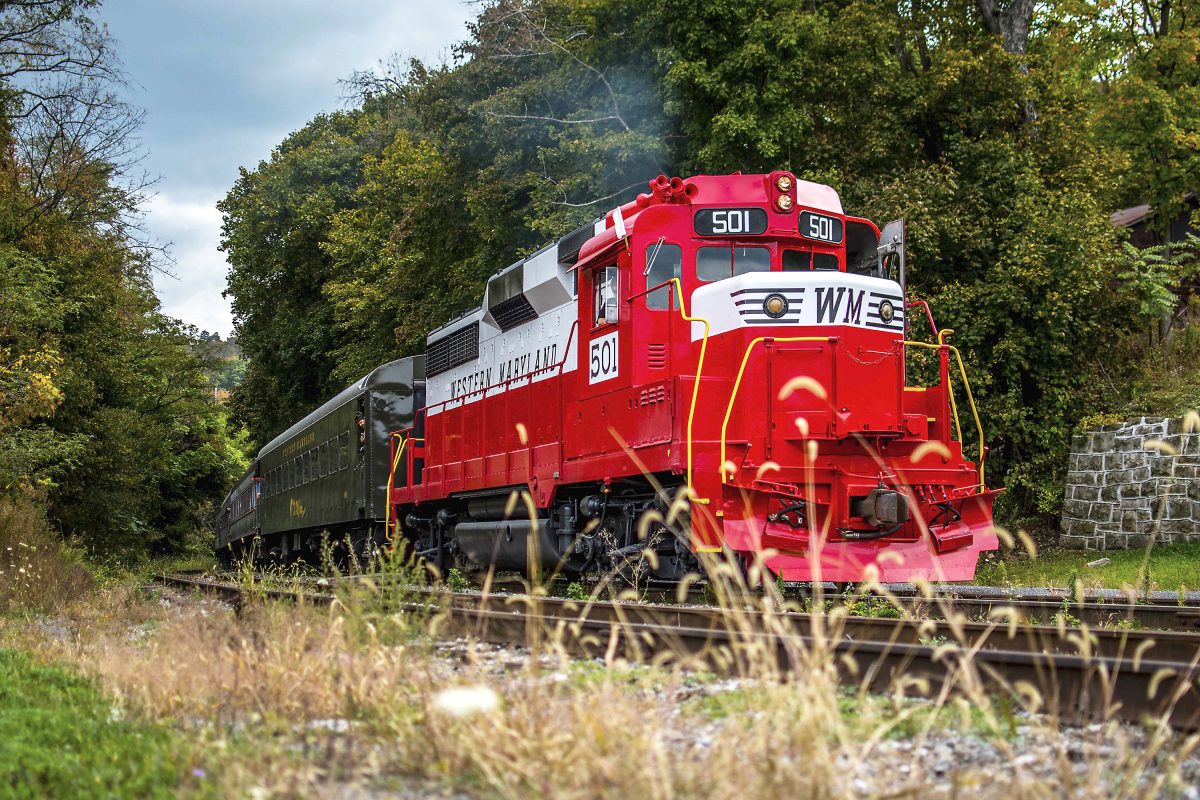
A Western Maryland Scenic Railroad ride, by steam of diesel locomotive, runs from Cumberland to Frostburg and back.
“Cumberland’s streetscape is larger that the ones you see in cities many times this size,” Rhodes says.
Downtown features an impressive arts and entertainment district and Canal Place, a Heritage Area that was created at the intersection of the railroad, C&O Canal Towpath and Great Allegheny Passage, a 150-mile-long rail trail that connects to Pittsburgh.
You can ride a diesel locomotive train to Frostburg, about 10 miles to the west, on the Western Maryland Scenic Railroad. And you could tour a replica canal boat or visit any of several museums.
Into kayaking and/or canoeing? Those are options on the North Branch of the Potomac, which snakes into the center, or several miles to the south in Paw Paw, W.Va.
Courtesy Allegany County Tourism, Mountain Maryland
Courtesy Allegany County Tourism, Mountain Maryland
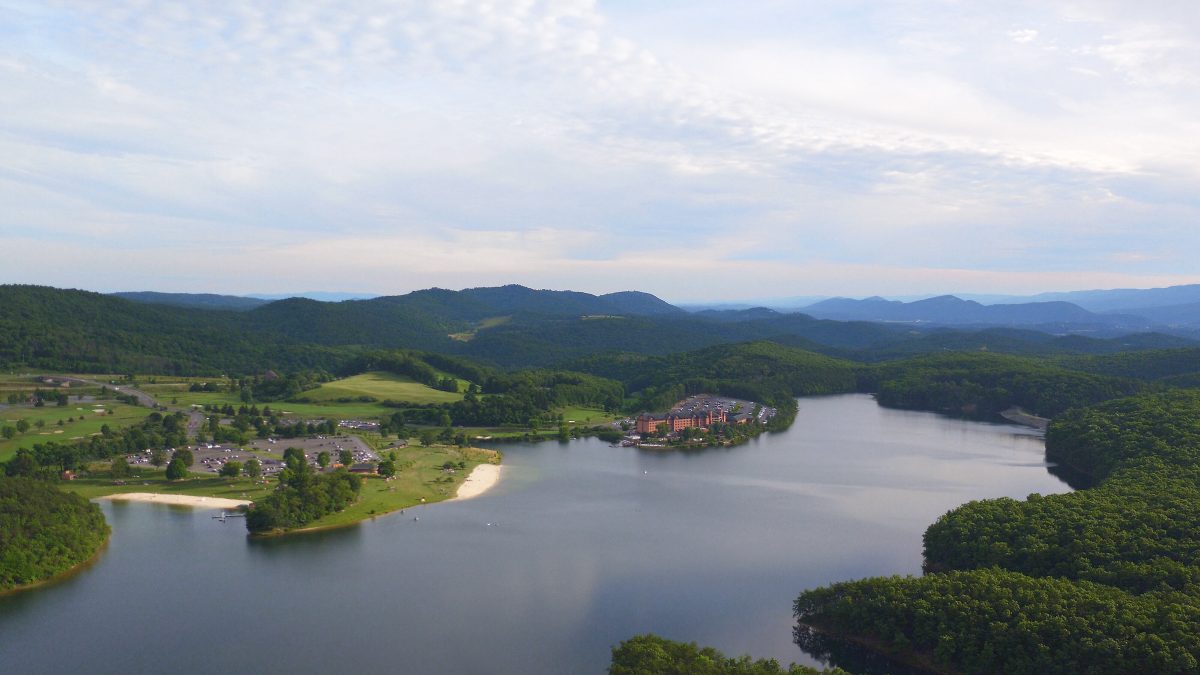
Recreational opportunities abound on 243-acre Lake Habeeb near Rocky Gap Casino Resort.
Entertainment is not limited to the city proper. Take I-68, which cuts through Cumberland, about six miles to the east to Rocky Gap Casino Resort and Rocky Gap State Park. There is more biking and hiking, and more canoeing and kayaking on 243-acre Lake Habeeb. Rocky Gap has a golf course and lodging, as well.
“Cumberland’s location is great. It’s equidistant to Pittsburgh, Baltimore and Washington, D.C.,” says Rhodes, who is correct on that – each city is a two-hour commute away. “There is a lot to see and do here.”
Rhodes, who serves under Mayor Brian K. Grim, acknowledges the tough times, but is optimistic about what appears to be ahead for this region that is slightly south of central Pennsylvania.
“Cumberland has gone from having a heavy industrial base to one that has a lighter manufacturing base,” he says. “It was once a big commercial center and is still a commerce center for the area. We’ve heard stories about how people from Baltimore used to come here to an old shoe store. As a kid, I remember this was a city to come to.”