

Local charities welcome donations from former caregiver
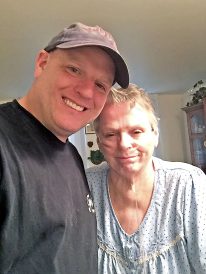
After his mother died in January, James Markley found himself in a position that may be familiar to other former caregivers: staring at heaping piles of her possessions around his Washington home and wondering what to do with them.
“I was a mama’s boy, I can admit that,” Markley said. “I loved my mom more than anything … I was amazingly sad and overwhelmed by the amount of stuff she’d left behind.”
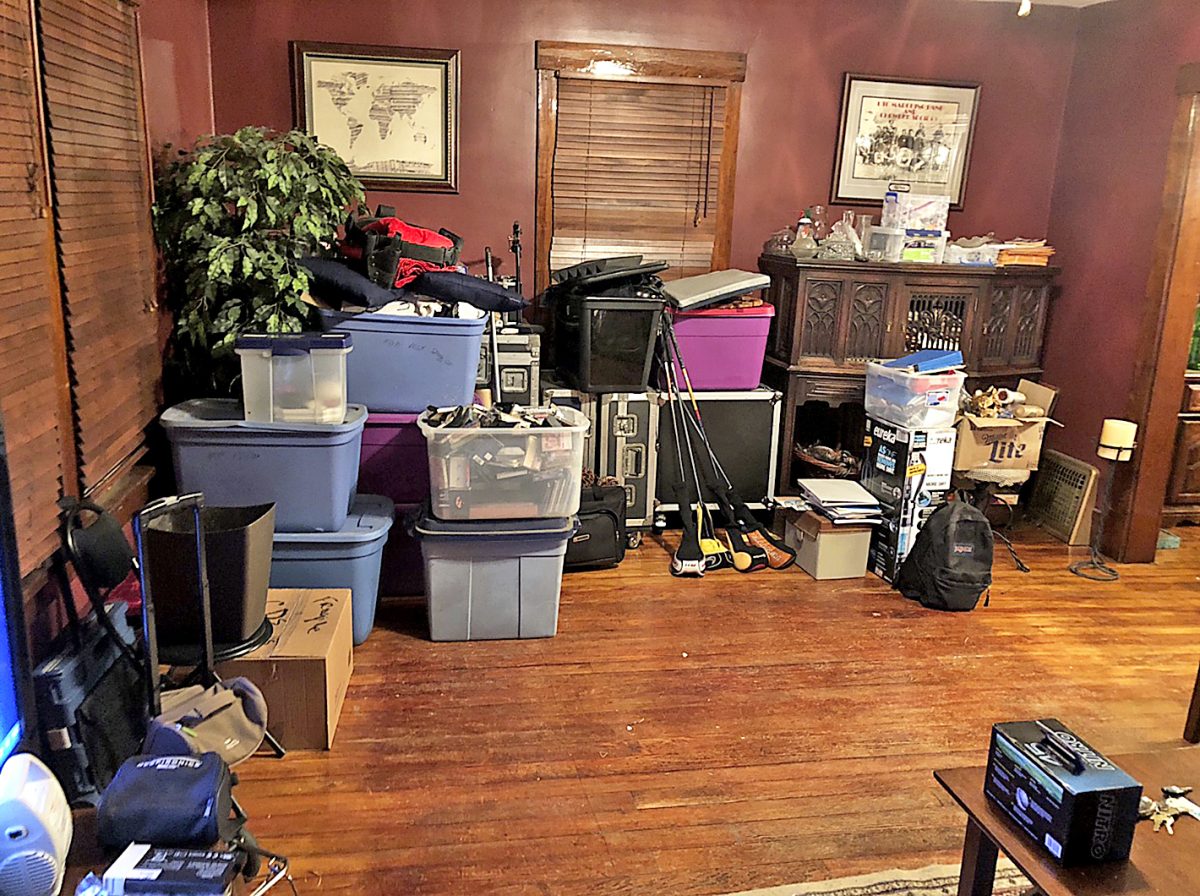
Photo courtesy of James Markley
Photo courtesy of James Markley
Since James Markley began his donation process, the pile of his mother’s possessions has dwindled considerably but still crowds a wall in his living room.
Markley’s living room was stacked floor-to-ceiling with belongings his mother, Martha, had brought with her when she had moved in with him a month before succumbing to complications from chronic obstructive pulmonary disease. After she died, Markley and his sister also moved the contents of two storage units his mother had rented.
Along with mass quantities of medical supplies Martha had accumulated throughout her two-decade career as a nurse and her own illness, she left behind an eclectic collection of items from a lifetime of purchases. An avid crocheter, Martha possessed about 150 balls of yarn when she died. She also had been a lover of music, especially opera, and owned hundreds of CDs.
“When someone passes away, you instinctively want to keep everything,” Markley said.
But ultimately, Markley decided against doing so. Instead, he has spent the last few months combing through his mother’s belongings and sorting them to be donated to local charities and organizations.
Markley began by transporting his mother’s clothes, shoes and purses to Goodwill, a process that required more than 30 trips – she had never been able to resist a sale. He donated boxes stacked high with office supplies to the LeMoyne Community Center and Head Start, two youth centers based near Washington. He also gave laundry equipment and a vacuum cleaner to Washington’s branch of Domestic Violence Services of Southwestern Pennsylvania, since he has learned through his career as a patrolman with the city’s police department that victims often don’t have time to grab such things when fleeing their abusers.
Markley filled a large storage bin with medical supplies, like Ace bandages and rolled gauze from his mother’s nursing stash for the Salvation Army. She also left behind about 75 unused cannula oxygen tubes, which he donated, along with her canes, to Transitional Paths to Independent Living, an organization in Washington that provides services to people with disabilities.
But Markley said he is most proud of his work with the Western Pennsylvania Wounded Warriors, which helped him donate Martha’s barely-used motorized wheelchair to a former Army medic in Washington who had lost his foot and lower leg.
And he isn’t done yet – there remain a number of foundations in Washington he would like to see benefit from the possessions his mother left behind.
Markley said his charitable operation helped him heal after his mother’s death, and he encourages other former caregivers to embark on a similar mission.
“When you’re actively working on something and keeping busy, you don’t have time to be sad,” he said.
In Charleroi, Diversified Human Services Inc., welcomes donated incontinence supplies, like rubber gloves, disposable bed pads and adult disposable underwear. The agency serves about 250 consumers who fall anywhere from 200 to 300 percent below the poverty line. Over half of this number are not eligible to receive Medicaid reimbursement for the purchase of such products, said Christy Gereshenski, the supervisor for in-home services.
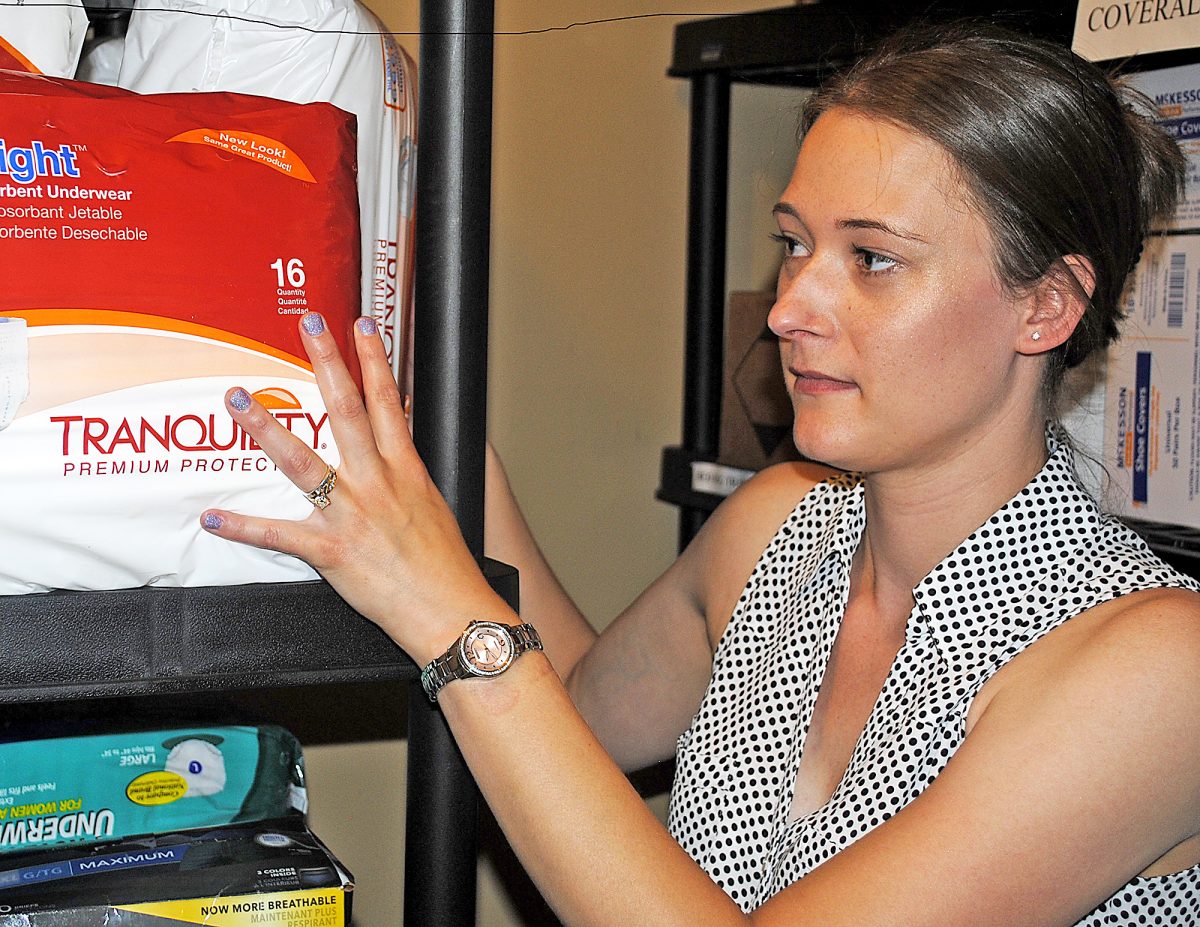
Courtesy of Chris Buckley, Southwestern Pennsylvania Human Services
Courtesy of Chris Buckley, Southwestern Pennsylvania Human Services
Christy Gereshenski straightens a pack of adult disposable underwear in a storage closet adjacent to her office in Charleroi.
With one box of disposable underwear retailing for about $20, costs can add up fast. Gereshenski has seen some individuals rely on unhygienic alternatives when faced with the additional cost of food, medicine and bill payments.
The Caregivers Support Program at Southwestern Pennsylvania Area Agency on Aging also accepts donated incontinence supplies, as well as gently used walkers, canes and wheelchairs. This Charleroi-based program provides assistance to those who care for older individuals or adult relatives with disabilities and welcomes donations of nutritional protein shakes such as Ensure and Boost if they have not been opened and are unexpired.
To donate to DHS, call 724-489-1100 and dial option 2, or drop off supplies at 300 Chamber Plaza No. 301, Charleroi. Reach the Caregivers Support Program to discuss donations at 724-489-8080.