

Monessen council grills official about funding agreement
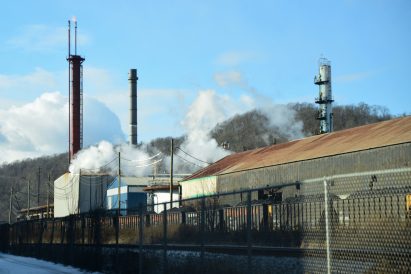
MONESSEN – During a meeting where Monessen officials offered thanks for donations to pay the electric bills to keep the city’s Christmas lights on, council members also expressed frustration they weren’t kept in the loop about how $300,000 from a consent decree was going to be spent.
The decree deals with air pollution violations from the ArcelorMittal coke plant in the city. It was reached between the plant, the state Department of Environmental Protection, U.S. Environmental Protection Agency and PennEnvironment, a citizens’ group that sued over pollution.
Monessen council members said they were told the $300,000 was to be equally split between the city, Carroll Township and Donora; however, Philip Koch, executive director of the Community Foundation of Westmoreland County, said officials were misinformed about how the money would be used.
“If you read the decree that I just submitted, it says we are to provide grants to nonprofit organizations, school districts or municipalities in those three communities,” he said. “Nowhere does it say that the money is to be split equally. It says that the $300,000 can be used throughout Monessen, Donora and Carroll Township.”
The 2017 decree named the CFWC as the administrator of the funds. Koch said plans were to use the money to replace older, high-emission vehicles with low-emission, hybrid or electric ones and/or build infrastructures such as charging stations.
Council President Anthony Orzechowski said at the Tuesday meeting no one discussed how the money was going to be used with Monessen officials.
“At what point in time did you make that decision and why didn’t you tell the municipalities about it?” said Orzechowski. “I have a problem with you making the rules as we go along. Our police cars are falling part. I don’t want you messing with our money. The city needs the money right now.”
Councilman David Feehan said he was also disappointed Monessen wasn’t kept informed throughout the process.
“The consent decree was dated Nov. 30, 2017, and you guys received the money in February of this year. The first I heard about it was at the (state Department of Community and Economic Development) meeting. The lack of communication on your end baffles me. We never heard about it except for an external entity, which technically had nothing to do with it,” said Feehan.
Koch apologized for the breakdown in communication and promised to take up the council’s concerns with PennEnvironment.
“If you want me to change the course, I can go back to PennEnvironment and talk about your strategy,” he said. “If they are comfortable with it, then we can come back and accept your grant application and you can be on your way, if that’s what you really want. Again, we are just trying to find a way to maximize the amount of money you can get for these green projects.”
Feehan said the council wants to read the decree more carefully before making a decision.
“We want to work together to look at all of the options for improving the green environment in Monessen,” said Feehan. “We aren’t locked into any one approach. We just want to have a better channel of communication. In the future, we want to have a monthly meeting with CFWC to get updates.”
Koch said his agency had been mulling over two different options for using the settlement money.
“We had to make a decision whether we should take that $300,000 and use it right now or see if there’s another strategy for making a greater impact in the future,” he said. “The thought was, instead of rushing into distributing the $300,000 throughout the three communities and only having that money take us so far, why not take a pause and apply for state and federal grants as a way to leverage that $300,000 for a larger amount? A lot of those grants require a match. So, our strategy is to apply for some of these grants to maximize this money.”
The consent decree, announced in December 2017, covers violations over the prior three years. ArcelorMittal also agreed to improve its monitoring procedures and establish a citizen complaint hotline.
The plant restarted in 2014, following a five-year “hot idle” period. Environmental officials contended there were indications of combustion problems and other emission violations almost immediately after the restart.
The DEP and the EPA jointly pursued the enforcement case. PennEnvironment filed a citizen suit against ArcelorMittal in the fall of 2015 and participated in the negotiations.
The PennEnvironment suit alleged ArcelorMittal has at times failed to operate the desulfurization plant to remove hydrogen sulfide from the coke oven gas.
ArcelorMittal is required to run the desulfurization plant when making coke, according to its operating permit.
The initial court filing contains numerous citizen complaints made to the DEP regarding noxious odors coming from the plant from April 2014 through September 2015. One citizen complaint said the odor, which others described as a combination of rotten eggs and burned rubber, was a 20 on a scale of 1 to 10.
The DEP and the EPA will each receive half of the assessed $1.5 million civil penalty for violations at the plant. The additional $300,000 was through a separate agreement with PennEnvironment to fund a community environmental project advanced by the organization.