

Gaming board holds hearing for proposed mini-casino in Westmoreland County
Amy Fauth/For the Observer-Reporter
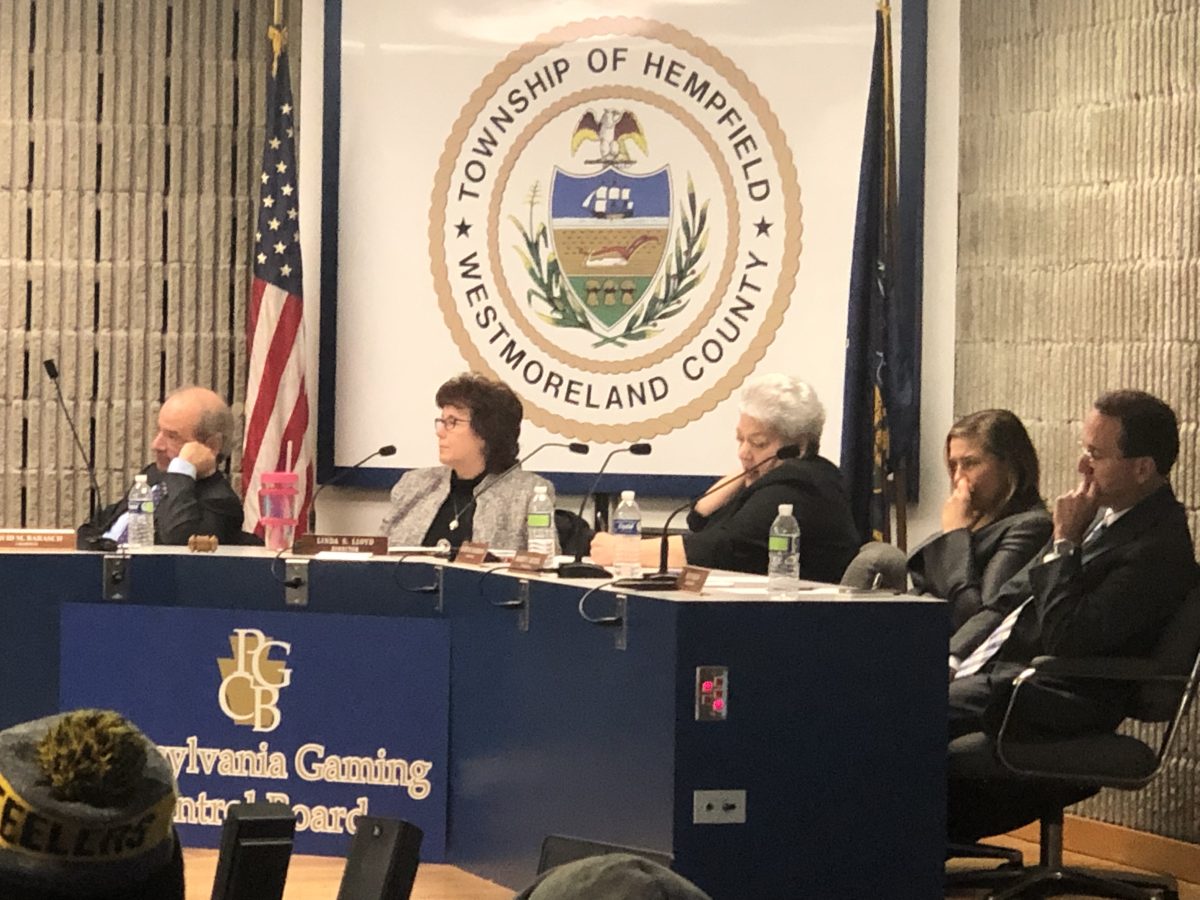
Pennsylvania Gaming Control Board members listened to testimony from representatives from Cordish Companies/Stadium Casinos LLC, elected officials, community groups and residents on the license for a proposed mini-casino at Westmoreland Mall.
Amy Fauth/For the Observer-Reporter
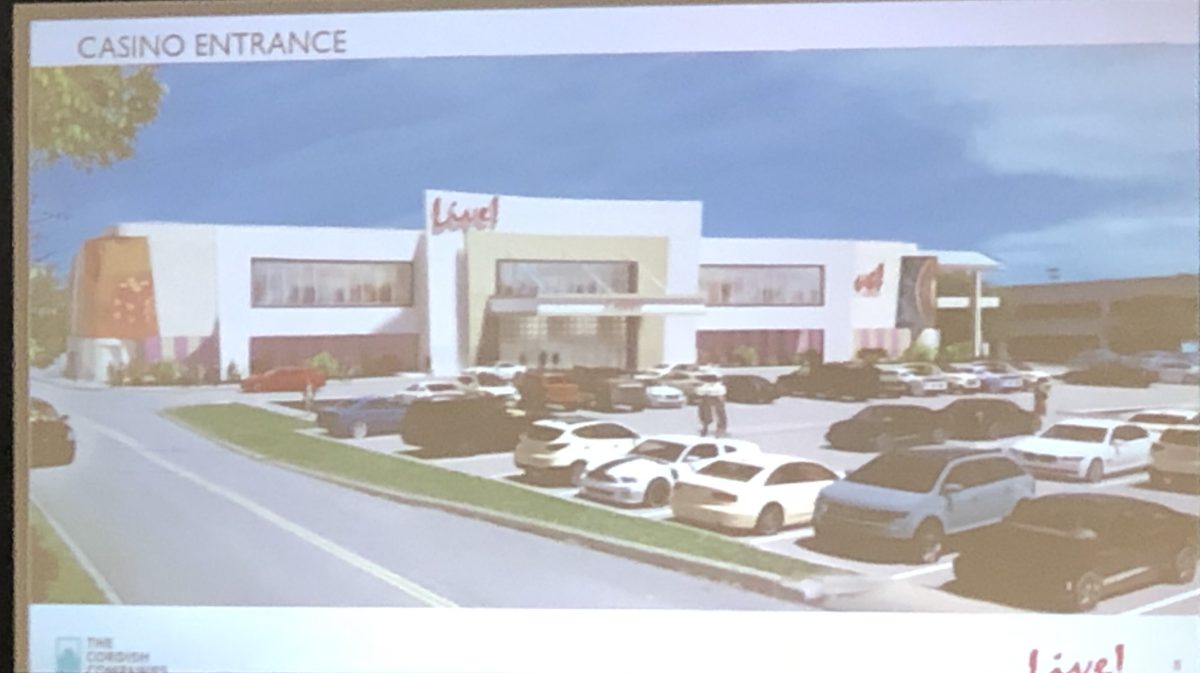
Although developer Cordish Companies released very little information preceding Wednesday’s hearing before the Gaming Control Board, their presentation included more specific details, including this artist’s rendering of the 2,500-square-foot mini-casino proposed for the former Bon-Ton store at Westmoreland Mall in Hempfield Township.
Amy Fauth/For the Observer-Reporter
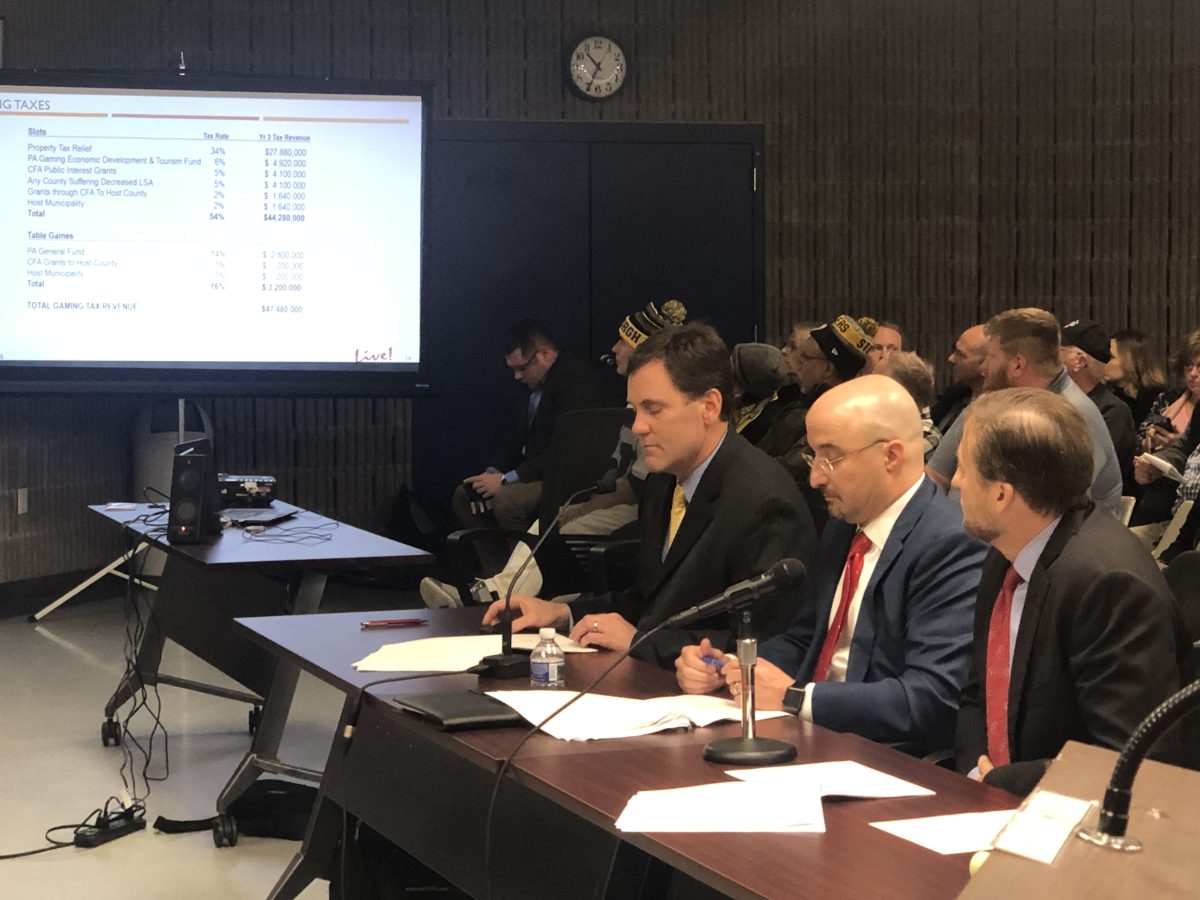
Travis Lamb, Rob Norton and Joe Weinberg from Cordish Companies, operators of Stadium Casino LLC, developers of the proposed mini-casino at Westmoreland Mall, gave testimony to the Pennsylvania Gaming Control Board at a public hearing held Wednesday at the Hempfield Township Municipal Building.
Representatives from Cordish Companies (Stadium Casinos LLC) had released little information on a proposed mini-casino at Westmoreland Mall, but on Wednesday offered a 45-minute summary of their plans
Travis Lamb, CFO of Cordish Gaming, said the private, family-owned company aims to create “a complete entertainment destination” at the mall.
“(It) will be inclusive of great gaming, entertainment, dining and shopping experiences that will excite the customer base,” he said during a hearing before the state’s Gaming Control Board at the Hempfield Municipal Building.
Lamb said another one of the company’s projects, Maryland Live! Casino, was built into Maryland’s largest retail mall and welcomes 18 million visitors every year. Lamb said there’s a lot of synergy between the two projects, although the Maryland development was new construction, while this development will require retrofitting the mini-casino into the existing former Bon-Ton store.
The company acquired the 100,000-square-foot store at the south end of mall and intends to build a two-story development, with the casino located on the main floor. Lamb said it will include 750 slot machines and table games on that level. Major casino functions, such as the casino cage, warehouse space, player’s club and promotion space, will also be located on the main floor.
Lamb said they also anticipate having a 2,500-square-foot food and beverage area and a two-story feature bar that will provide a “wow experience” for customers. In addition to the secured main entrance, Lamb said he anticipates a second secured connection entrance to the mall, at least temporarily.
“We develop first-class facilities,” said Lamb. “I expect a continuation of that with this Westmoreland Mall project.”
He said the development will be a sports entertainment complex, with games such as shuffleboard and other participatory games.
Lamb said the final design could also incorporate a high-energy nightlife area.
According to the presentation, the budget for the project is about $131 million, but not all of that would flow directly into economic impact of the community. Company officials estimated about $81 million of direct output to the state and the local communities. Based on figures from similar casino markets, Cordish expects an additional $7 million windfall for the local community, including the benefits realized from all of the jobs – both through construction and ongoing employment.
The company expects a one-time $123 million economic impact to Westmoreland County during the development phase. Initially, the company forecasted about 710 full-time jobs in constructing the new casino, with earnings of $43 million. Officials said the company is committed to using local contractors and hiring local people to work at the casino.
While Hempfield Township officials have publicly stated their support of the mini-casino, Supervisor Doug Weimer said he has concerns and hopes the gaming board considers that before making its decision.
His main concern is public safety and security since Hempfield doesn’t have its own police force and relies on state police. He also is concerned that additional traffic could lead to more vehicle accidents, putting stress on shrinking volunteer fire departments who respond to such incidents.
“I am here to ask and confirm that the Pennsylvania Gaming Control Board has seriously considered a few factors on how a Category Four casino license would affect the nature of a municipality such as Hempfield Township, Westmoreland County,” Weimer said.
Officials from Cordish said the casino would work closely not only with mall security, but also police to ensure that it is a safe environment.
Chad Amond, president and CEO of the Westmoreland County Chamber of Commerce, and Michael Egan of Westmoreland Mall also spoke, lending their support.
Gregg Neavin, executive director of a community group called Coalition for a Better Westmoreland, along with several individuals from Murrysville and Trafford, voiced concerns.
Neavin explained that casinos prey on the vulnerable and asked that the license be denied.
Linda Dupill of Murrysville said she was disappointed by the process, including the scheduling of the hearing at 10 a.m. during a weekday in the midst of the Christmas season. She questioned whether others would have come to speak out against the casino if the hearing had been held at a different time.
She said a referendum should have been considered to determine if voters want the casino.
In addition to those who spoke in person, the gaming board received six written statements – four in support and two against the proposal.
For those unable to attend the hearing, the presentation made by Cordish and a video of the entire hearing are available on the gaming board’s website at www.gamingcontrolboard.pa.gov.