

Prominent downtown Uniontown building emptying out amid escalating disrepair
Mike Tony/For the Observer-Reporter
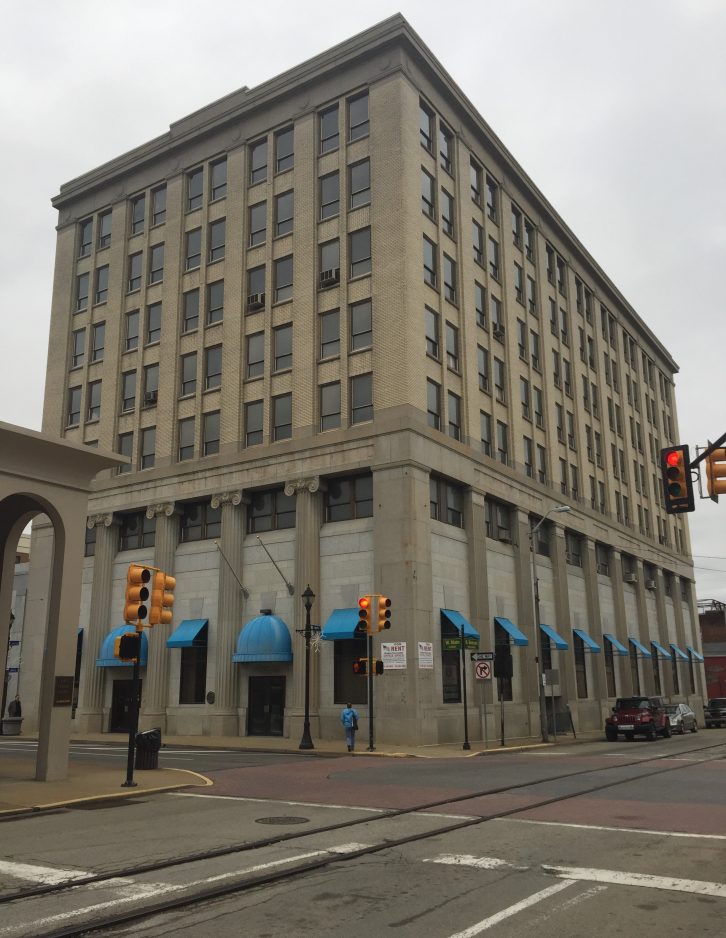
The number of tenants at the bank building at 2 W. Main St. in downtown Uniontown is dwindling down toward zero following safety and operational concerns amid imposed and threatened utility shut-offs in recent months. Tenants say the building’s owner, Royal Sumatra Holding Co., has abandoned the building and not communicated with tenants about its future.
Mike Tony/For the Observer-Reporter
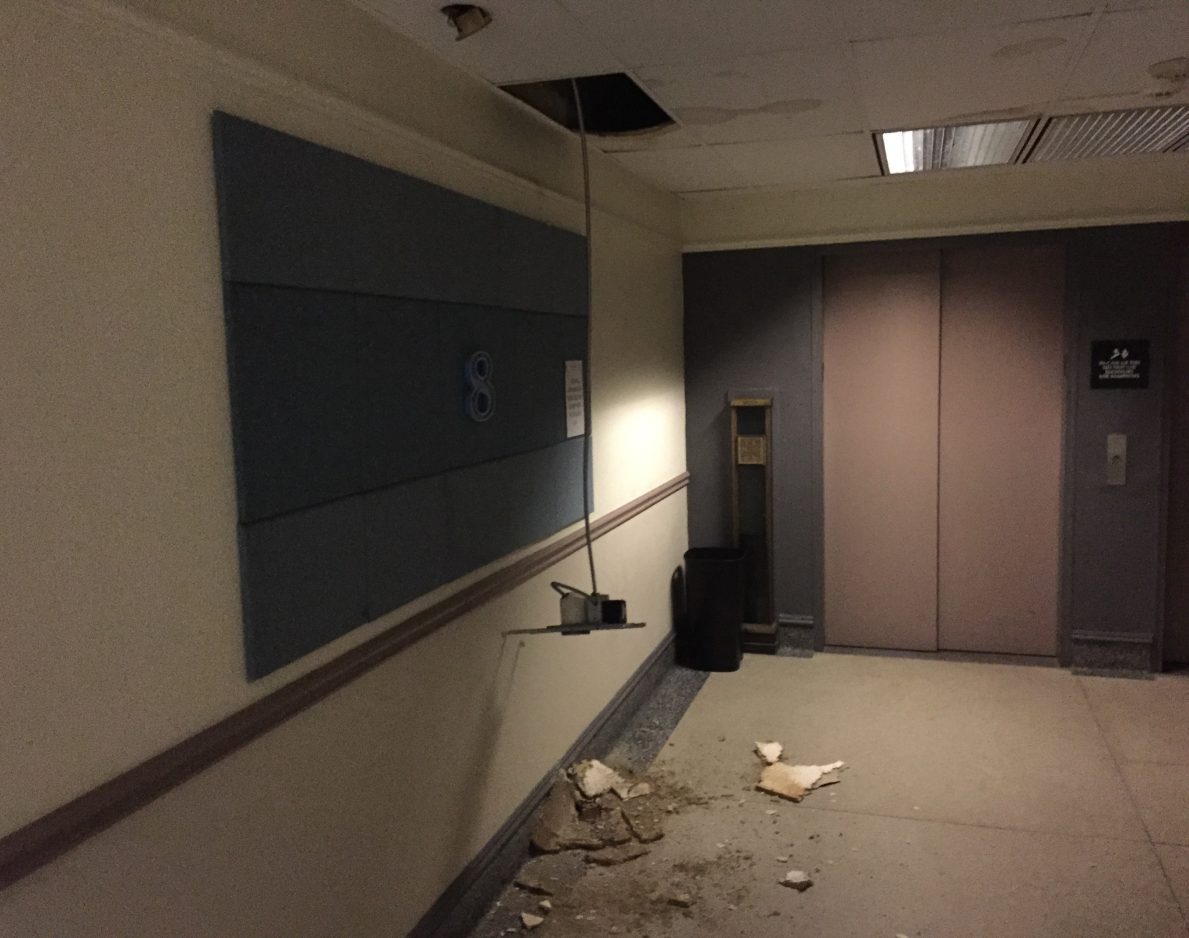
Building disrepair is evident just outside the elevator on the top floor at the bank building at 2 W. Main St. in Uniontown and every floor below.
Mike Tony/For the Observer-Reporter
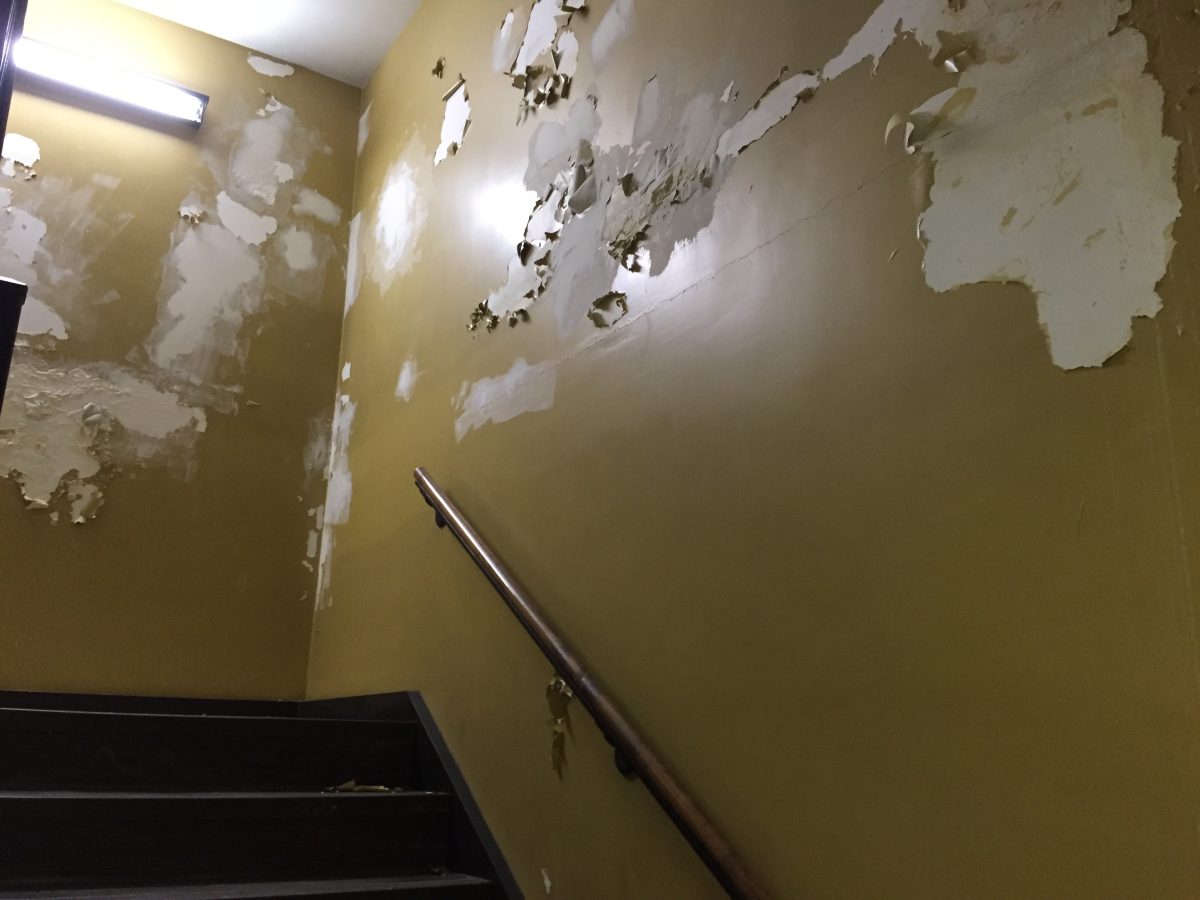
The walls in an upper-floor stairwell inside the bank building at 2 W. Main St. in downtown Uniontown are indicative of the dilapidation evident on every floor of the building, which former tenants say was abandoned by its owner, Royal Sumatra Holding Company.
Mike Tony/For the Observer-Reporter
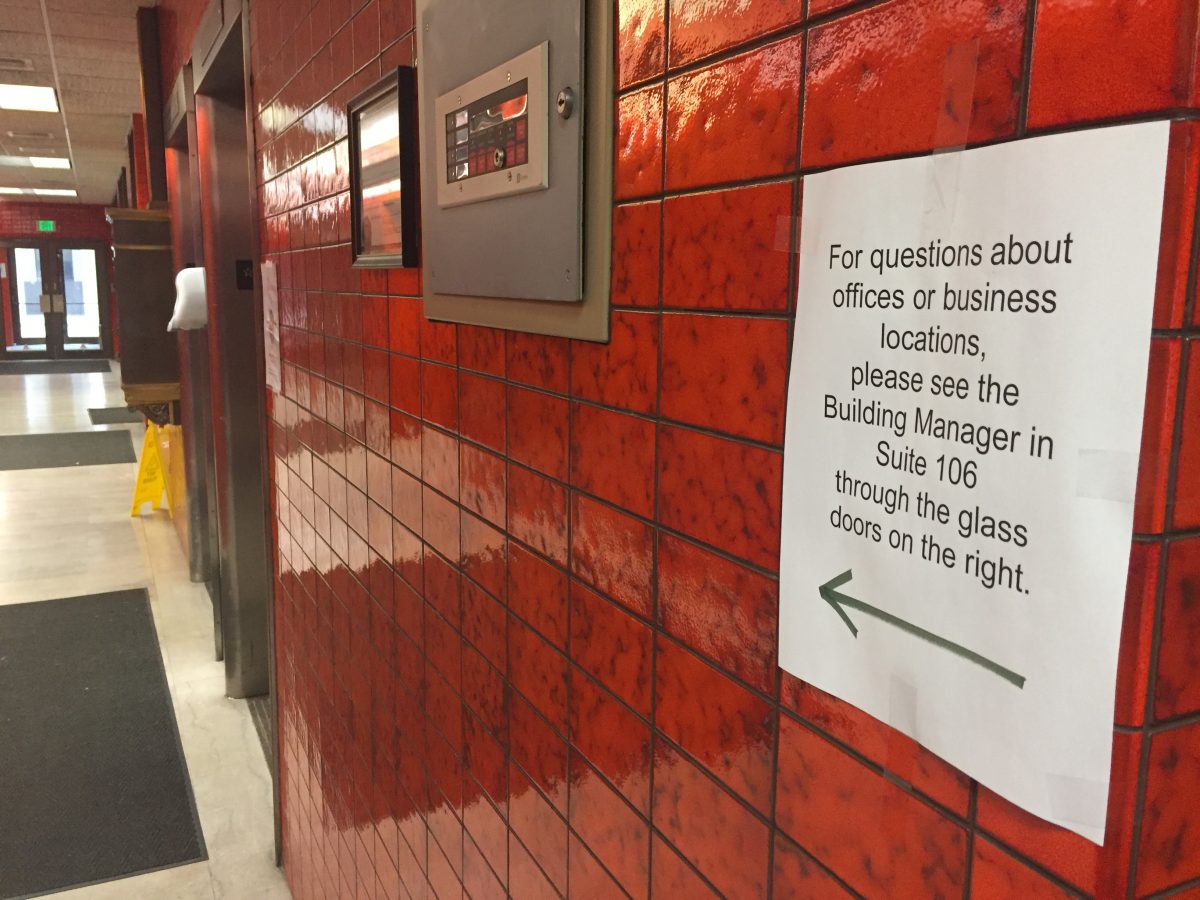
A sheet of paper taped to a first-floor wall inside the bank building at 2 W. Main St. in Uniontown advises those with questions about offices or business locations to see the building manager. But multiple former tenants reported not being able to get in touch with the building manager in recent weeks and said that the building’s owner, Royal Sumatra Holding Company, has abandoned the building.
A building that has stood as a staple of downtown Uniontown for generations is emptying out, having fallen into disrepair and allegedly abandoned by the building’s owner.
What has been known as the First Niagara Bank building and previously the National City Bank building and Gallatin National Bank building at 2 W. Main St. and once teemed with tenants is dwindling down to none.
Several former tenants said that safety and operational concerns amid imposed and threatened utility shut-offs in recent months have driven them out of the building, which is owned by Royal Sumatra Holding Company LLC. The building is down to less than five tenants on the first floor as move-outs continue.
Gas service was shut off in the building in August and electric service has been more recently shut off for every floor except the first, according to former and current tenants. Multiple former tenants reported not being able to get in touch with building management in recent months, even though a sheet of paper taped to a first-floor wall advises those with questions about offices or business locations to see the building manager.
A glass-encased list of tenants on the first floor lists more than 35, but most have long since moved out of the building.
“The building is clearly at risk,” said Dr. Richard Kaplan, who stopped seeing patients at his physical medicine and rehabilitation practice there at the end of November, moving to Cherry Tree Lane after heating service on Kaplan’s floor effectively stopped. “What if a pipe bursts?”
The building’s upper floors feature hallways with exposed wires, ceiling tiles crumbled on floors and flyers posted naming tenants who have moved to other locations in the Uniontown area like Dr. Kaplan and Transitional Employment Consultants (TEC).
Kaplan and other former tenants worry about the building’s parking area and sidewalk being unaccounted for due to apparent abandonment, as well as no signs of supervision inside the building, which according to the Fayette County Assessment Office spans nearly 130,000 square feet and was built in 1930.
Royal Sumatra Holding Company received a $1.5 million loan in 2007 from National City Bank, which assigned documents connected with the loan in 2009 to First Niagara Funding LLC. In 2016, First Niagara merged into KeyBank National Association.
In June 2018, KeyBank filed a complaint for confession of judgment in the Fayette County Court of Common Pleas totaling approximately $1.6 million against Royal Sumatra Holding Company, alleging that Royal Sumatra defaulted on the 2007 loan that matured in July 2017 and hadn’t been repaid. KeyBank’s complaint was also filed against Sunlee Holding Company and Philip H. Lee, chairman and CEO of Royal Sumatra. Lee and Sunlee Holding Company had guaranteed repayment of Royal Sumatra’s loan obligations, according to signed commercial guaranty agreements included by KeyBank in its complaint.
The promissory note contained a confession of judgment provision allowing the lender, then National City Bank, to enter a judgment against Royal Sumatra without advance notice.
A confession of judgment is a written agreement, signed by the defendant, that accepts the liability and amount of damages that was agreed on and forfeits the defendant’s rights to dispute a claim in the future, designed to circumvent normal court proceedings and avoid a lengthy legal process, according to Investopedia.
That judgment entry notice listed Royal Sumatra as having two addresses, one in Sun Valley, California, and another at 2 W. Main St., with Sunlee Holding Company and Lee sharing the same Sun Valley address and an additional address listed for Lee in nearby Porter Ranch, California.
A 10-day shutoff notice from Columbia Gas of Pennsylvania in June 2018 indicated that Royal Sumatra was nearly $14,000 behind in past due gas service payments.
Also in June 2018, a letter from the Pittsburgh-based law firm of Buchanan Ingersoll & Rooney representing KeyBank instructed tenants to pay rents and all other money owed to Royal Sumatra directly to KeyBank, noting that Royal Sumatra’s right to collect rents had terminated due to a default. KeyBank noted in the same hand-delivered correspondence that KeyBank had not taken possession of the property and was not responsible for property maintenance or repair.
Nine days later, KeyBank addressed tenants again, rescinding the rent demand and instructing tenants to continue making payments to Royal Sumatra.
Neither Royal Sumatra nor attorneys for KeyBank could be reached for comment. A phone number listed for Royal Sumatra has been disconnected, and the facilities management suite inside the building has been empty.
The confession of judgment states that KeyBank may foreclose upon or seize the property following the entry of judgment.
“If that building gets shuttered and has no occupancy, that’d just be devastating,” Kaplan said.