

Terry Necciai is working to preserve Monongahela’s past while keeping an eye on its future
Observer-Reporter
Observer-Reporter
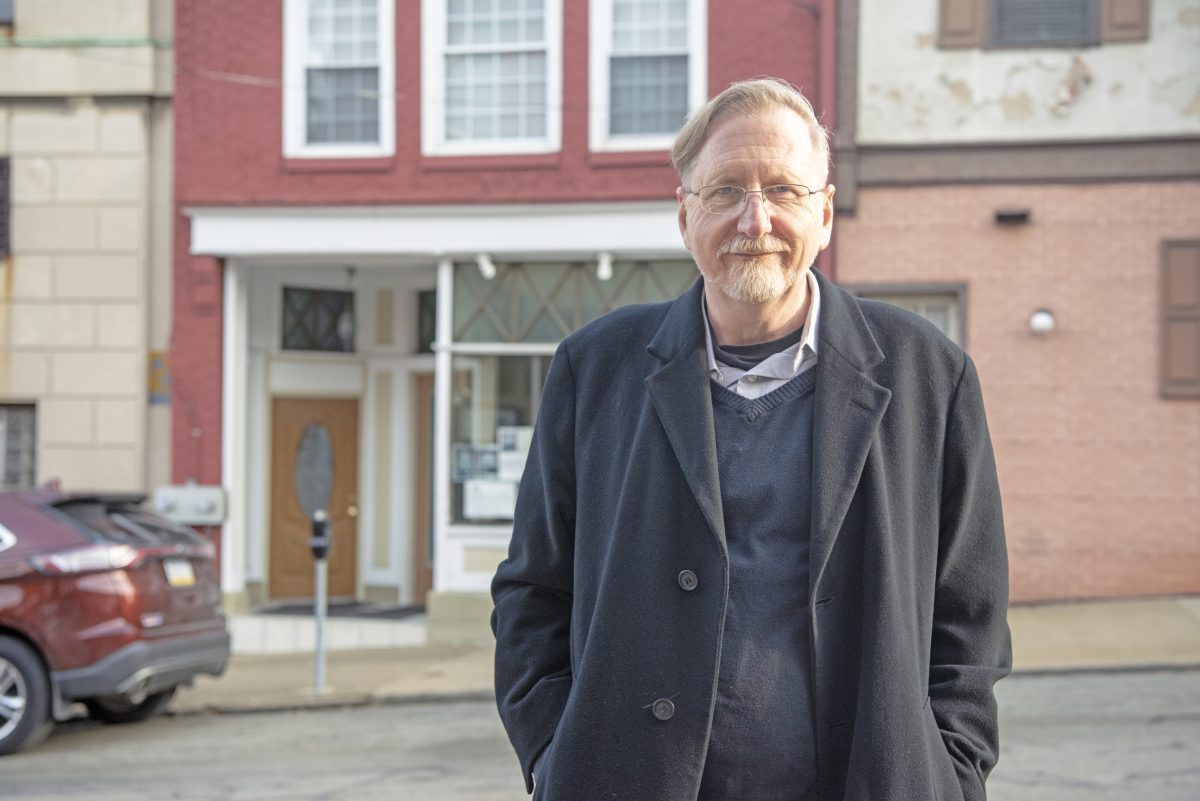
Terry Necciai is executive director of the Monongahela Main Street Program.
Forty years ago, Terry Necciai was studying architecture in Pittsburgh. But when he’d return to his native Monongahela, he got a firsthand lesson on the ravages that years of aggressive urban renewal work were visiting on his hometown.
“I watched an awful lot of Monongahela disappear while I was studying architecture,” Necciai says. “During the five years (of the program) that I was at Carnegie Mellon, I’d come home on the weekends and whole blocks were disappearing.”
Now, Necciai donates his time as the executive director of the Monongahela Main Street Program, a nonprofit formed with the intention of making the historic downtown the commercial and social center of the river city of some 4,200 people.
The 63-year-old preservation architect likes to call it the community’s “living room.”
“The reason it has these cornices is, that’s the same as the crown molding in your living room,” he explains. “The sky is your ceiling, but if you knock out (pieces), it looks like a bunch of teeth are missing. But really, your room doesn’t have any shape.”
Holly Tonini
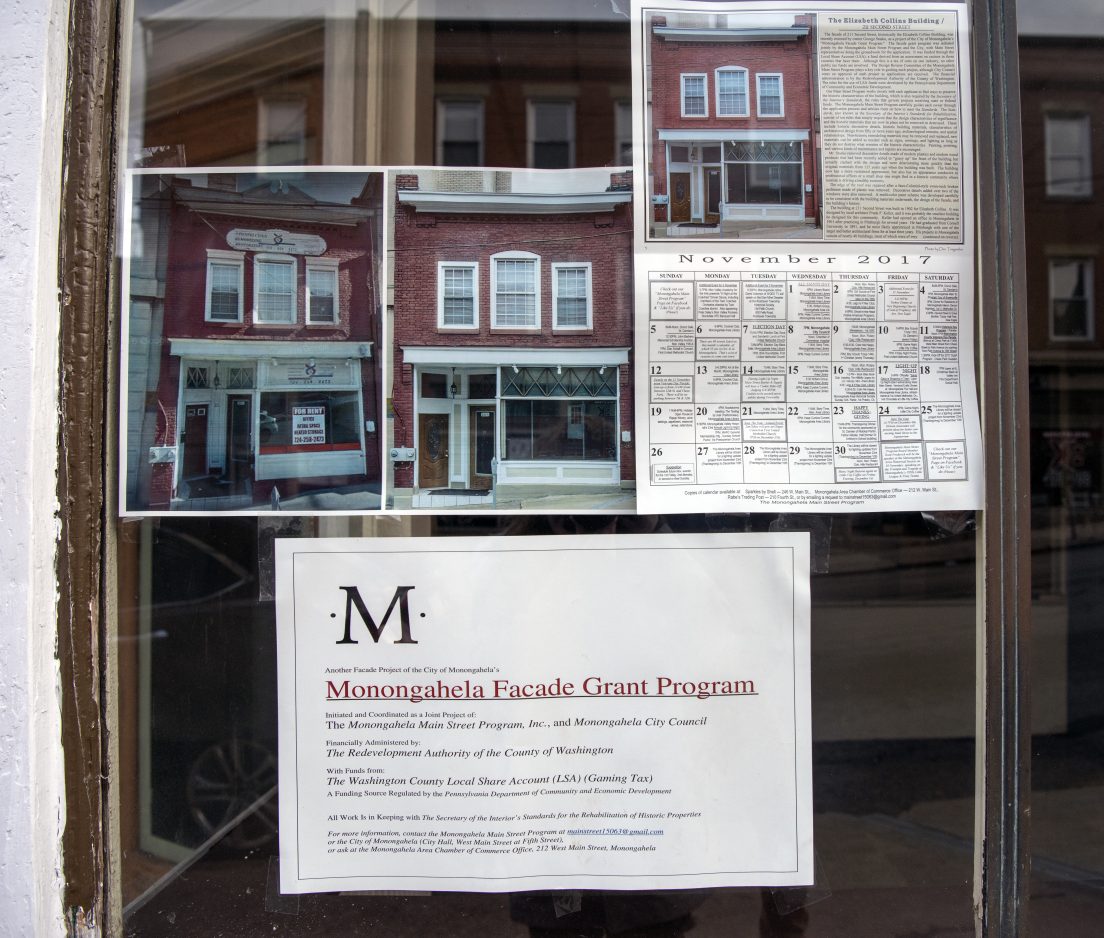
Before and after photos, as well as a certificate for the Monongahela Main Street Program, hang in the window of a building that was one granted a portion of grant money to re-facade.
Toward that end, the group administers a façade grant program, funded through a $65,000 allotment of local slots revenue the group received late in 2015 with the help of the city. Building owners who participate can use the money for the renovations. They can receive funds to cover one-third of their costs of sprucing up the edifices, capped at $5,000.
“It makes the town look so much nicer if people utilize it,” says Dorothea Pemberton, director of the Monongahela Area of Chamber of Commerce and president of the Main Street board.
Just off Main, George Stasko used funds from the program to complete renovations on the front of his 116-year-old building in 2017. The renovations to the storefront, known by the name of its first owner, Elizabeth Collins, involved removing recent plastic and wood touches to emphasize the original design.
Stasko acted as his own contractor, and the grant helped pay for materials.
“The building now has a more restrained appearance, but also has an appearance conducive to professional offices or a small shop one might find in a historic community where tourism is driving a healthy economy,” Necciai wrote in the November 2017 newsletter for the group.
The group’s monthly bulletins come with a calendar of local events, and contain thorough descriptions of local buildings and their history.
Necciai discussed how the city’s past fits into the group’s mission during a recent interview at Little City Coffee on Main Street, which he biked to from his home nearby.
“This town is coming alive. But back in the ’80s, this would have only been my wildest dream,” he says, “because we had a top-down city government. We had a chamber (of commerce) that I didn’t think was going to listen to somebody in his 20s. All that has changed.”
In 1970, Monongahela’s government had received $3 million – equivalent to about $20 million today – in federal grant money to raze eight acres of the old river town. Demolition continued into the 1980s. Information from that period is harder to piece together, but Necciai says the city probably obtained more money to continue its program.
The original plan was supposed to culminate in a shopping mall, but that aspect came unglued and left empty space. For example, the site of the local McDonald’s used to contain 20 different storefronts. The middle of the fast food restaurant’s parking lot used to be a movie house.
The frenzy of razing claimed much of the work of John Blythe, the famed architect who left his mark all over the city when he rebuilt it in the 1870s.
The program was aimed at remaking the river city in the model of the suburbs like Bethel Park, which metastasized on former countryside following World War II. Necciai heartily agreed when asked if it’s fair to compare the strategy to making a kiwi into an orange.
Later in the lengthy interview, Necciai said, “We have 52 historic storefront buildings left. We lost 60 buildings. And eight acres was the plan for demolition. They lost a couple court battles, so there’s a couple spots that they didn’t demolish. And then they kept going and doing more projects after that.”
Holly Tonini
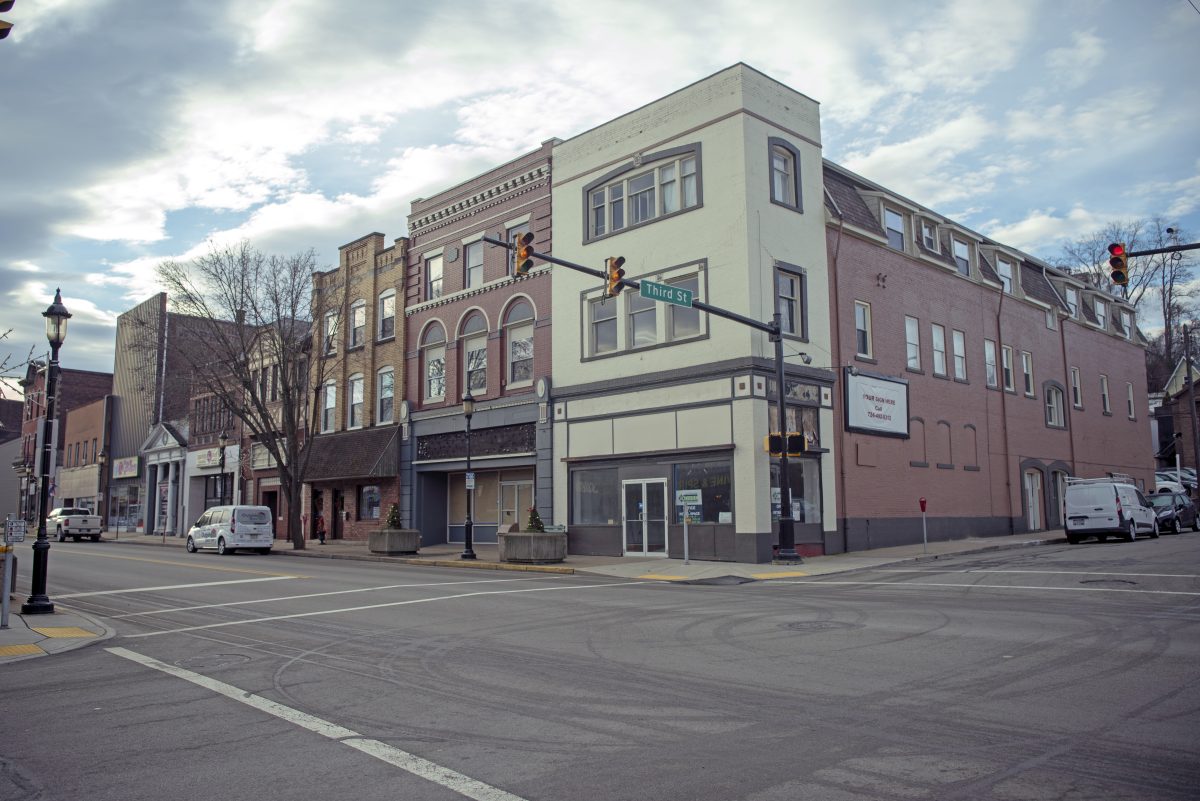
Two buildings that were given a new face thanks to help from the Monongahela Main Street Program
In the 1980s, visiting state officials told people in the city about the newfangled main street model of development, which treats development as requiring a “four-point approach” – organization, promotion, design and economic restructuring.
That idea didn’t catch on with local officials at the time, but a tidal shift in sensibilities over the ensuing decades has changed that.
As we tour the city’s downtown, Necciai stops frequently to chat with passersby or visit businesses on the way down the few blocks to the old McCrory Five and Dime. The chamber bought the space a year ago and now shares it with the Main Street group.
Pemberton says the ties with the community are crucial to the group, which gets help from almost 20 regular volunteers.
“Both in the businesses and community, we’re engaged together,” she says. “And that’s how we’re keeping our town the wonderful community that it is.”
Holly Tonini
Holly Tonini
Holly Tonini/Observer-Reporter
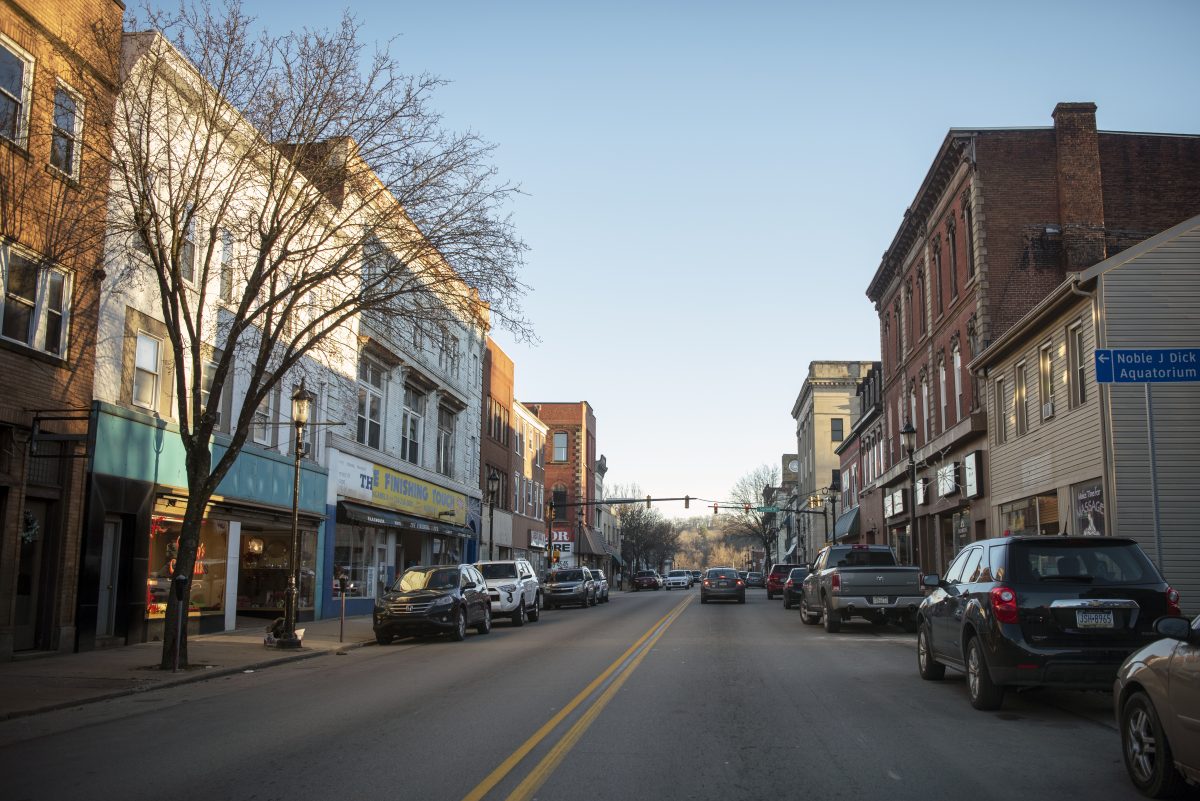
A view of Main Street in Monongahela
That support was on display in November, when some 20 people came out to present the group’s application to the Local Share Account Board, which makes recommendations for awards of the slot money. The supporters held a banner with photographs of city buildings to show off the town.
Of the $107,000 the group was seeking, $80,000 was earmarked for a program that would help to defray building owners’ costs of repairing buildings and attracting new developers to the downtown. Several other smaller projects were also part of the application.
The group wasn’t among those the board ultimately picked.
But Necciai is still optimistic. He says the population seems to be stabilizing following censuses that have shown losses every decade since the 1950s.
“It’s really coming to life,” Necciai says. “And it’s too bad that we lost so much of the architectural character downtown, but the half that’s still there is still pretty good.”