

Greene County churches lead mission trips to Haiti
You’ll use the old rubble of past lives to build anew, rebuild the foundations from out of your past. You’ll be known as those who can fix anything, restore old ruins, rebuild and renovate, make the community livable again. – Isaiah 58:12
Anyone who’s tried to extricate a tree stump knows that the bigger they are, the harder they haul.
“Here, you’d just bring in a machine, and in two minutes, you’d have this thing out of the ground,” Bridget Vilenica said regarding such a situation facing someone in her hometown of Clarksville, or just about anywhere in Western Pennsylvania.
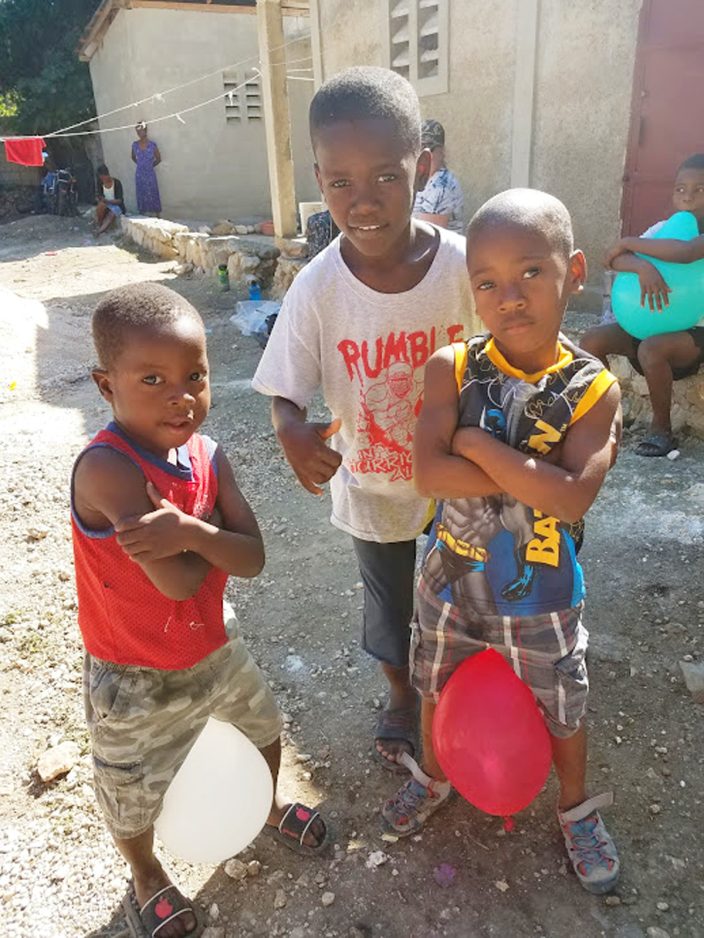
Haiti children 1
Children of Grand Goâve
In Haiti, they have a guy.
“There’s always a guy who does something,” Waynesburg resident Jonathan Johnson explained, based on his observations during his three mission trips to the Caribbean nation.
On the latest excursion, the group with which he and Vilenica, who is the Observer-Reporter’s circulation director, traveled encountered a massive hunk of wood right smack in the middle of the construction site for a new children’s tutoring and activity pavilion.
“So the guy shows up, and he’s probably like a 65-year-old man with a machete, a dull machete. And I’m thinking, it’s going to take like 18 hours for him to chop that thing up,” Johnson recalled. “It’s not like you can run to Lowe’s. It’s not like you can go find a truck that’s going to pull this out of the ground. No, we’ve just got to get it done.”
Within half an hour, the might of many Haitians and Americans working side by side had the stump out of the way and the pavilion’s floor ready for a coat of concrete.
Help for Haiti
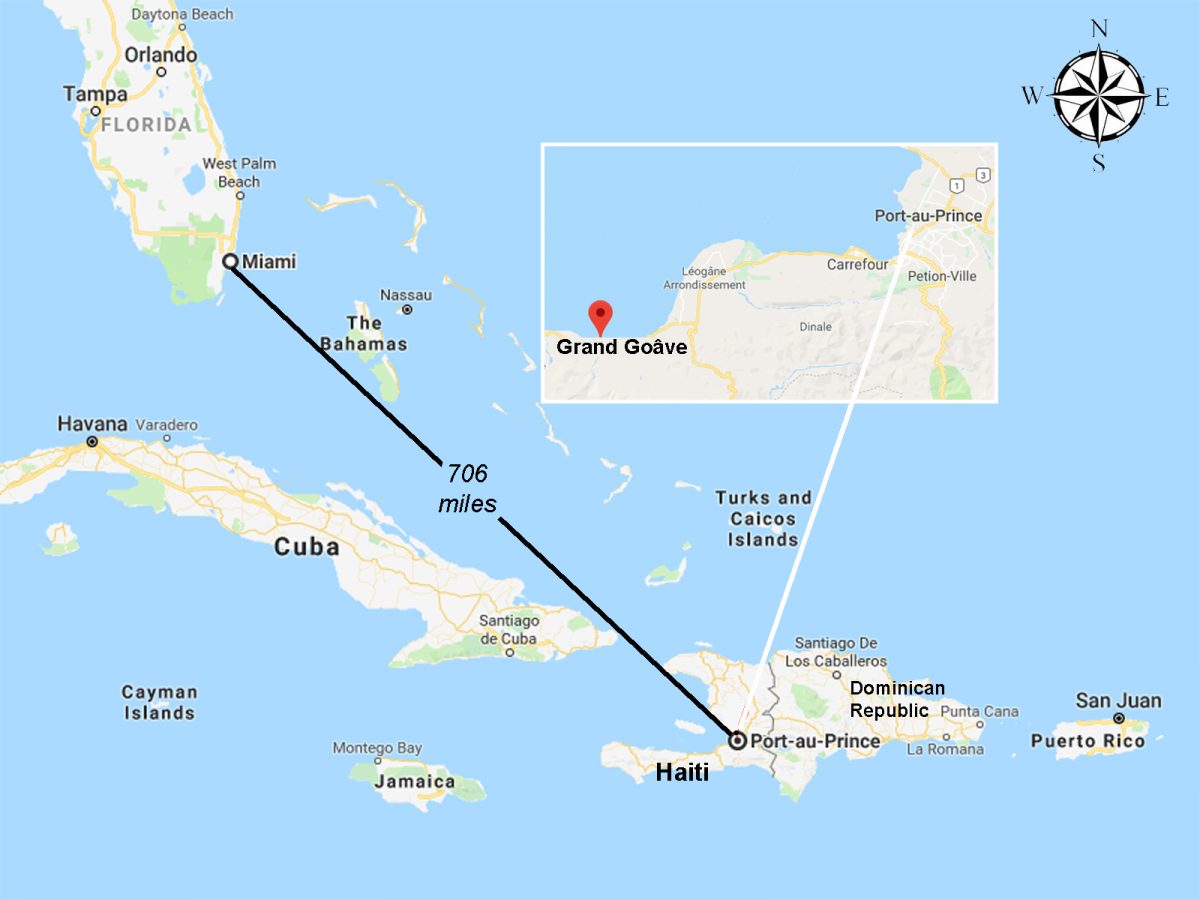
Although Pittsburgh and Haiti’s capital of Port-au-Prince are less than 1,600 miles apart, the cities represent polar opposites in terms of viability. One is at the epicenter of advancements in technology, while the other is at the heart of a country that long has been synonymous with destitution.
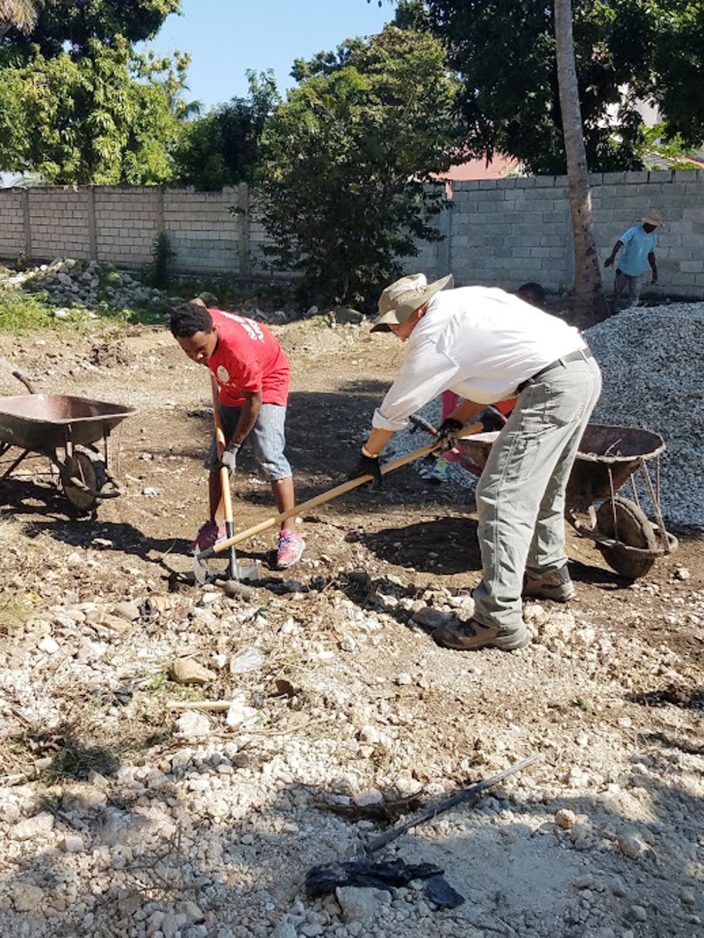
At work in Grand Goâve
That’s with good reason. An estimated 59 percent of Haitians, about 6 million, live below the poverty line, according to the World Bank. And 2.5 million of them earn less than $1.25 per day.
Haitians also are subject to what seems like a disproportionate share of natural disasters, including the 2010 earthquake and aftershocks that killed an estimated 220,000.
Attempting to help the 1.5 million who were left homeless, the American Baptist Churches of Pennsylvania and Delaware sent its first mission team to Haiti in early 2011.
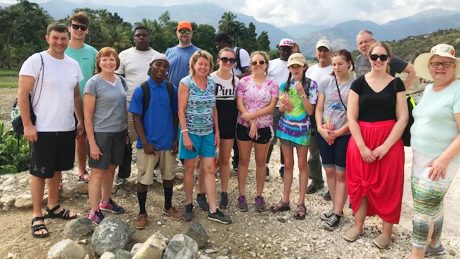
Since then, two affiliated Greene County churches – Jefferson Baptist in Jefferson Borough and First Baptist in Waynesburg – have led annual trips. This year’s took place Jan. 31 through Feb. 6, with 13 participants staying the entire week.
Traveling by road from Port-au-Prince to the group’s destination in the seaside commune of Grand Goâve takes about two hours, far less than on the first of Valenica’s five trips.
“The infrastructure has improved greatly,” she observed.
Thanks to Houses for Haiti, the name for the mission group, the infrastructure of Grand Goâve continues to improve, as well. In addition to the children’s pavilion, the list of projects includes seven homes, a well to provide fresh water, bathhouse, sports court and warehouse for local fishermen.
Among those who were able to move into new homes was a man named Joseph.
“Joseph was one of the main workers for us on our last trip,” Johnson said. “So it was heartfelt for many people in the group, because we really grew to care about Joseph, and we were able to give him a home this time. And he worked right alongside us.”
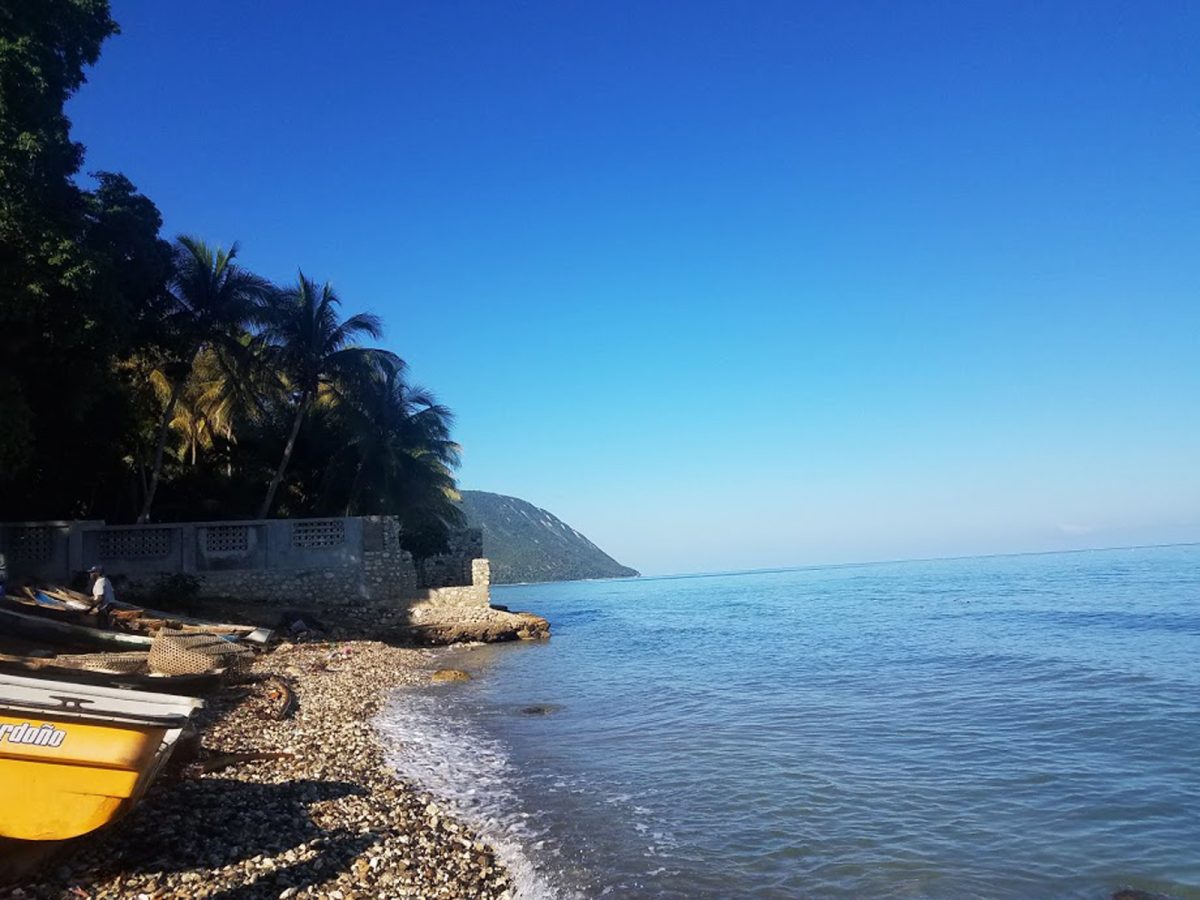
Grand Goâve is along the coast of the marine channel Canal de la Gonave, in Haiti’s southwestern peninsula.
Johnson likes to emphasize the sense of camaraderie that he felt gained momentum during the latest visit.
“My biggest takeaway was how I felt that sense of, we’re doing this together now. And it’s because we’ve been consistent. We’ve gone back to the same places and work with a lot of the same folks,” he said. “Whatever biases or misconceptions on probably both ends has started to fade away, and we’re just people working toward a good end, collectively.”
Doing so in Haiti, to reiterate, rarely involves what the typical American would expect. Consider the use of a “mixer” for cement.
“I was worried that they wouldn’t be able to get it into the compound,” Vilenica said, as she’d anticipated the unwieldy size of the vehicular version. “Again, the mixer was a guy.”
The process also was unconventional, by American standards.
“They actually mix the cement right on the ground. They pour all the sand on the ground,” Vilenica explained. “They put some gravel inside of it, and they add a little bit of cement.”
Others in attendance assisted by bringing water by bucket from a well about 50 yards away.
“The manual labor is intensive, to say the least,” Vilenica asserted. “And the well didn’t exactly run dry, but the water started to get scarce. So they had to go down to the ocean, get it out of the ocean and climb up a cliff with these buckets.
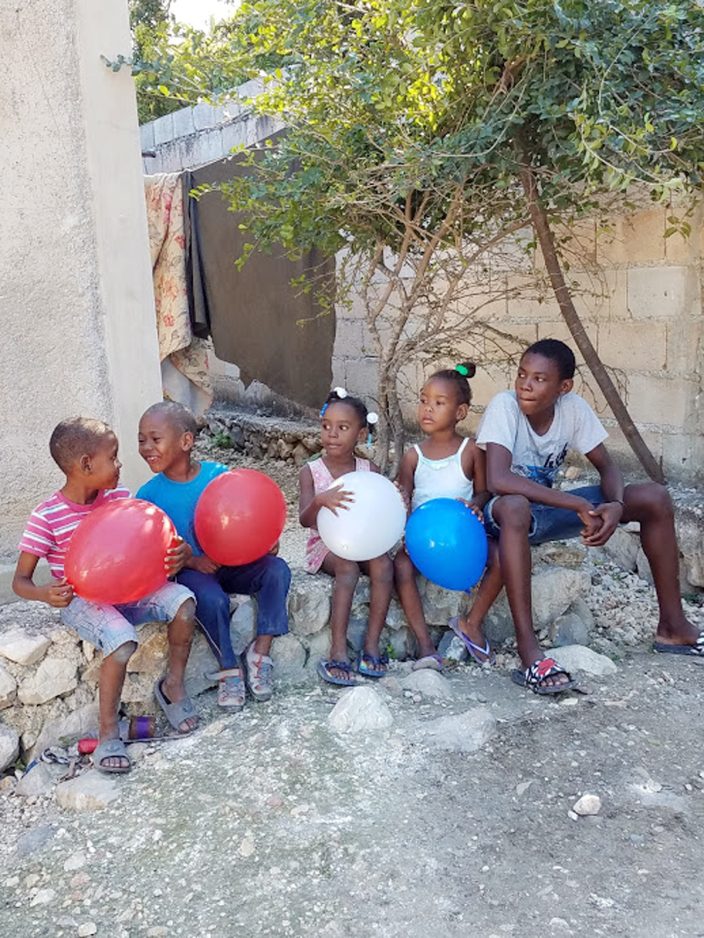
More children of Grand Goâve
“Everything is just that much harder in Haiti.”
Hope for Haiti
Johnson wants to help change that circumstance for the better, of course, and in a meaningful and sustainable manner. Houses for Haiti’s approach is modeled somewhat after Habitat for Humanity, he explained, with the goal of employing men on a regular basis to help build homes.
“Then they would have some sort of income to have an appreciable difference in their lives and in the community,” he said. “The more dollars that we can bring into a small community like Grand Goâve, the whole community benefits.”
And he considers such an approach as benefiting the country as a whole.
“I want to be able to put as much money as possible in Haitians’ pockets, because I know that’s ultimately what’s going to help the country to thrive, not to just throw money at a problem,” Johnson said. “I want them to become self-sustaining. I want to help raise the opportunities to work.
“That was one of the things that struck me the first year we were down there,” he continued. “There was this misconception, I think, that somehow Haitians don’t want to work. And that’s not it, at all. There’s no work for Haitians to have.”
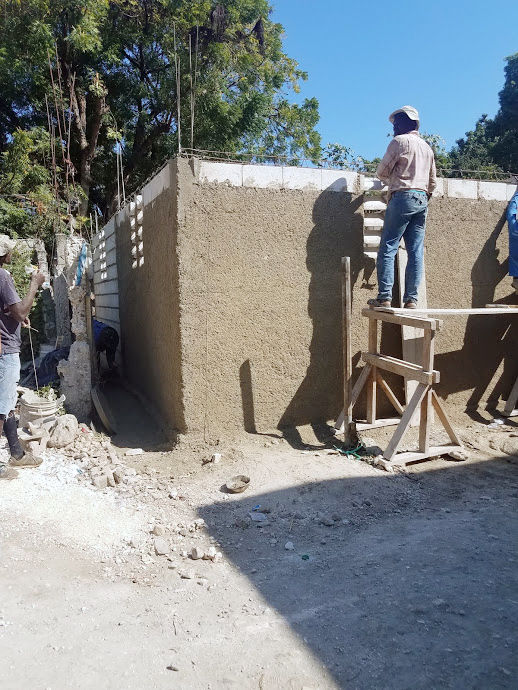
A new house for Haiti
Although it can boast of being the second republic established in the Western Hemisphere, following its 1804 independence from France, Haiti has a long-standing tradition, if you will, of governmental corruption, incompetence and downright reigns of terror: the Tontons Macoutes paramilitary force run by father-and-son presidents François and Jean-Claude Duvalier killed tens of thousands of their political opponents from 1957-86.
And situation as of early 2019 has been tenuous for President Jovenel Moise, who continues to be the subject of calls for his resignation amid a series of violent protests.
Despite Haiti’s historical baggage, Johnson and his colleagues have a sense of optimism, sparked in part by the resolve of their main Grand Goâve liaison, a man who goes by the nickname Tiga.
“He has a vision for his country, and there’s a younger generation of Haitians who are doing their best to try to deal with things differently than has been done,” Johnson said. “He actually attributes that to a lot of young Haitians going to Christian schools. Young people are learning about the right way to do things.
“That’s the hope, that for Haiti there’s a new day dawning, and that there’s a generation coming up now that’s going to be able to break that cycle of corruption in those leadership positions.”
For more information, visit www.facebook.com/haitihope2017. Donations to Houses for Haiti can be made through www.abcopad.org/Mission_Resources/Houses-4-Haiti.aspx.
Map data ©2019 Google