

The Ruins Project pays artistic tribute to coal-mining culture
Frances Borsodi Zajac/For the Observer-Reporter
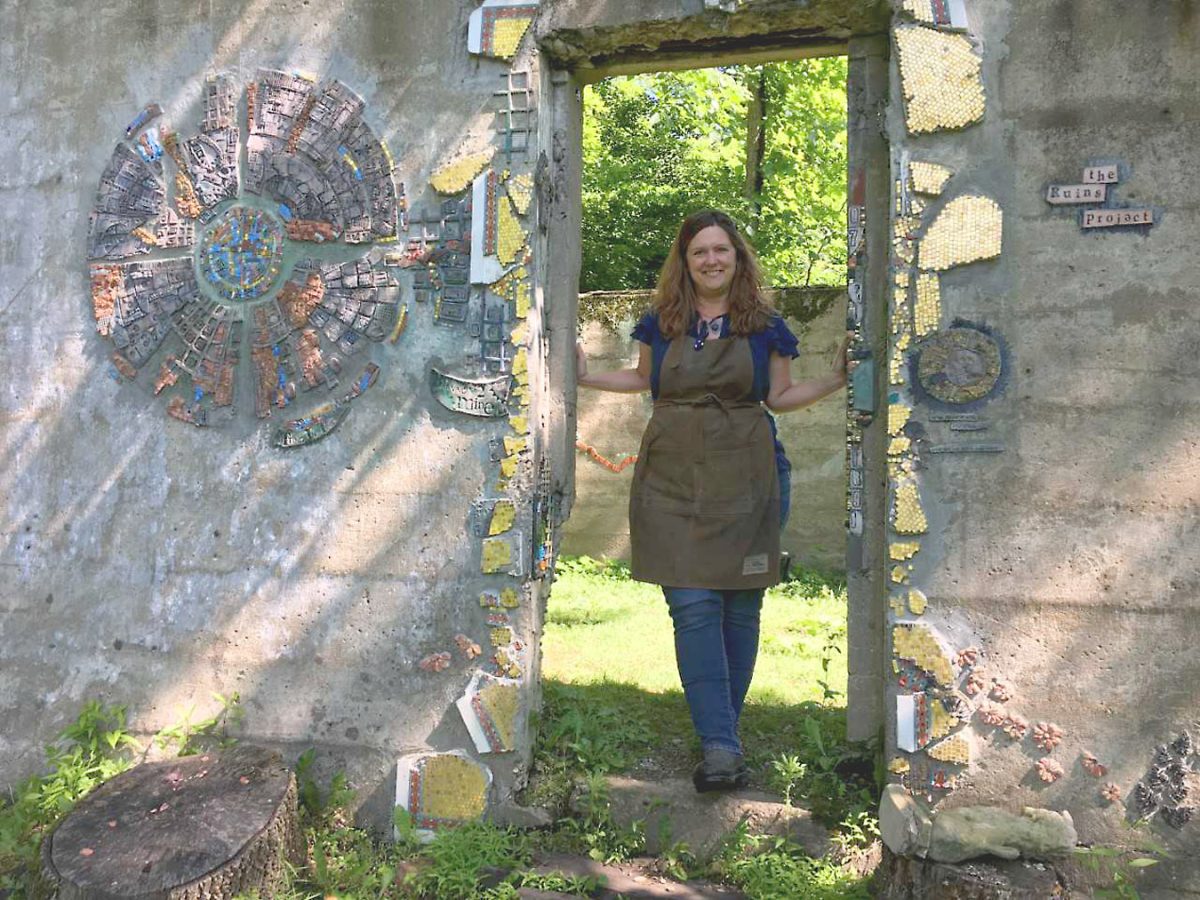
The Ruins Project in Whitsett is an outdoor mosaics museum dedicated to the coal-mining culture of Southwestern Pennsylvania on the site of the former Banning No. 2 Mine. Pictured is artist and owner Rachel Sager, standing beside “The Ruins Clock’’ by Deb Englebaugh of Mercer County. Artists from Canada, Argentina and 20 states have worked at The Ruins.
Frances Borsodi Zajac/For the Observer-Reporter
The Ruins Project in Whitsett is an outdoor mosaics museum created by artist Rachel Sager and dedicated to the coal-mining culture of Southwestern Pennsylvania on the site of the former Banning No. 2 Mine.
Frances Borsodi Zajac/For the Observer-Reporter
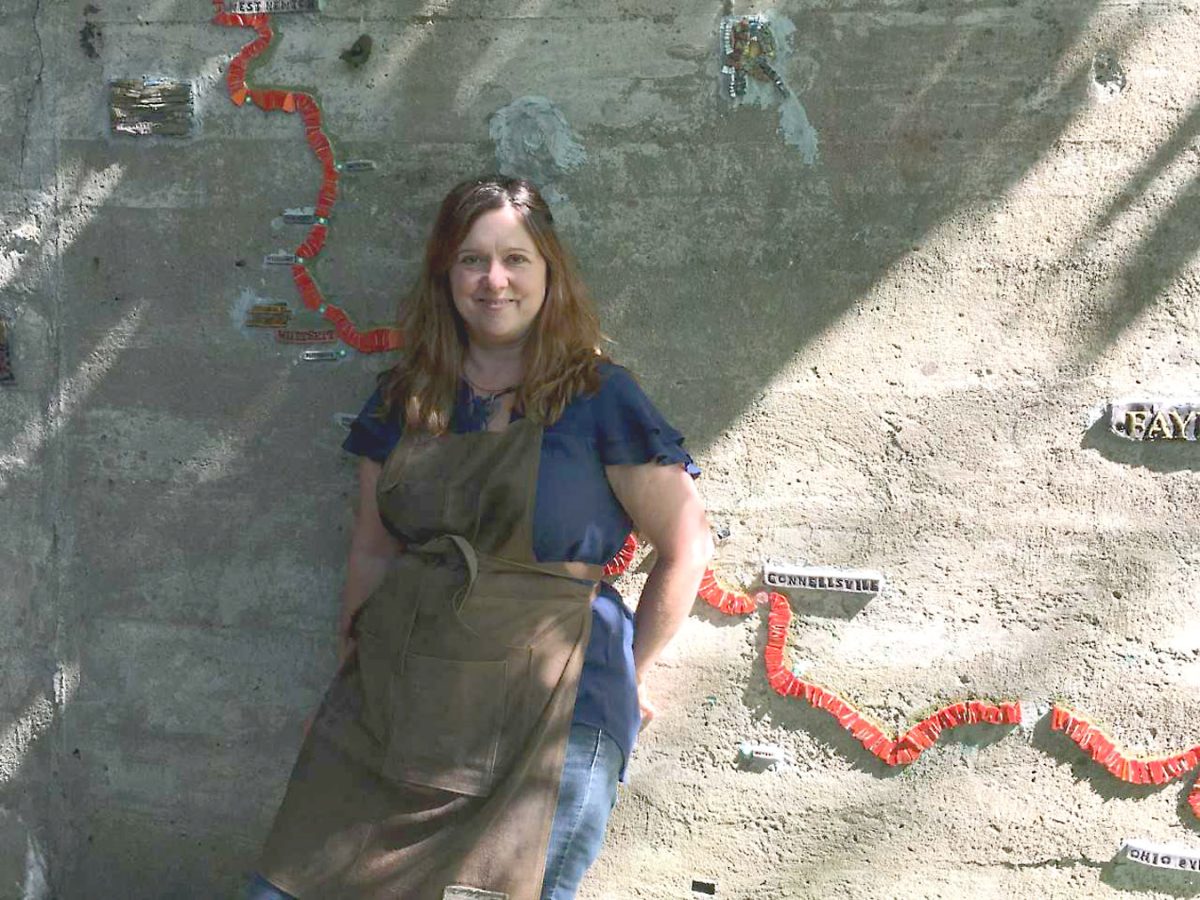
Ruins Project artist and owner Rachel Sager stands in front of her piece called, “Great Allegheny Passage,’’ which marks towns along the hike/bike trail that runs in front of her property.
Frances Borsodi Zajac/For the Observer-Reporter
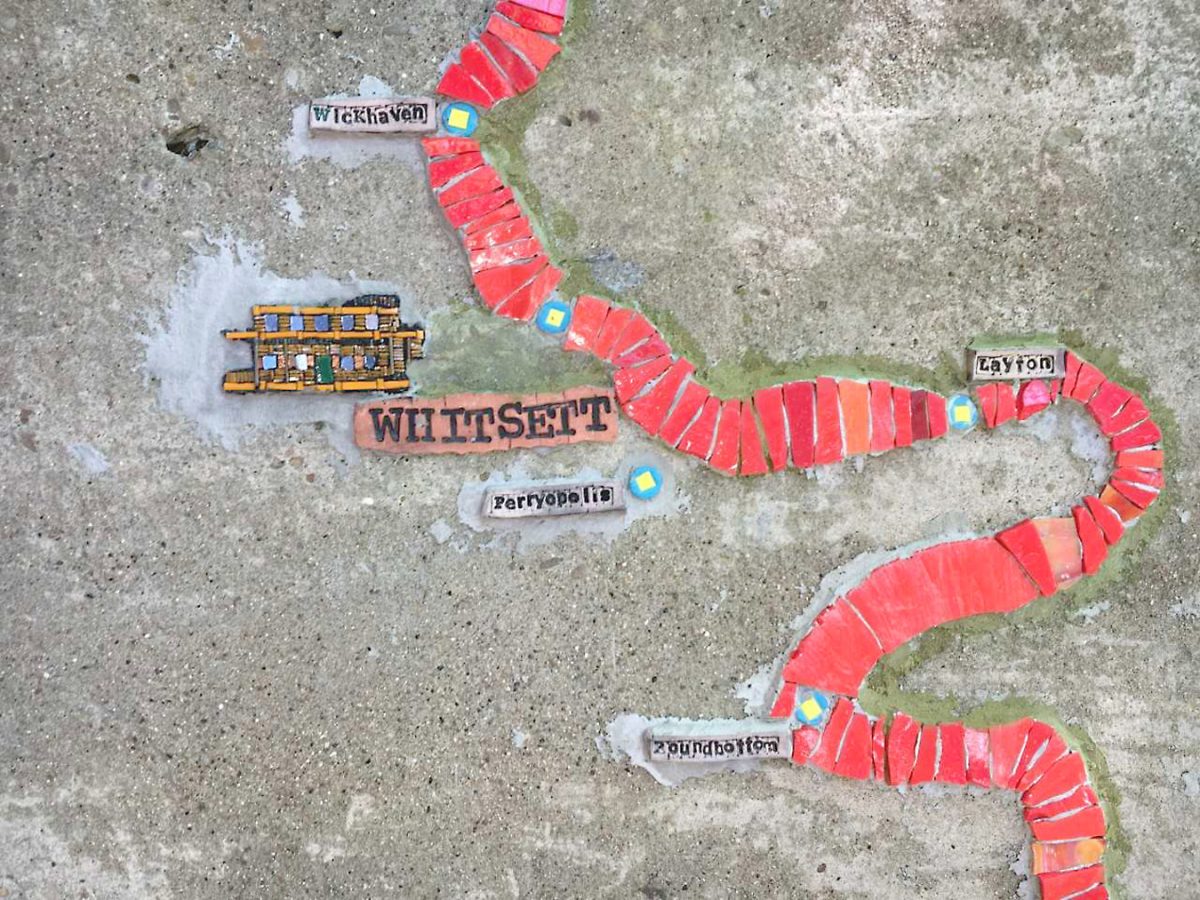
This is a close-up of a section of Ruins Project artist and owner Rachel Sager’s piece called “Great Allegheny Passage,’’ which marks towns along the hike/bike trail that runs in front of her property.
Frances Borsodi Zajac/For the Observer-Reporter
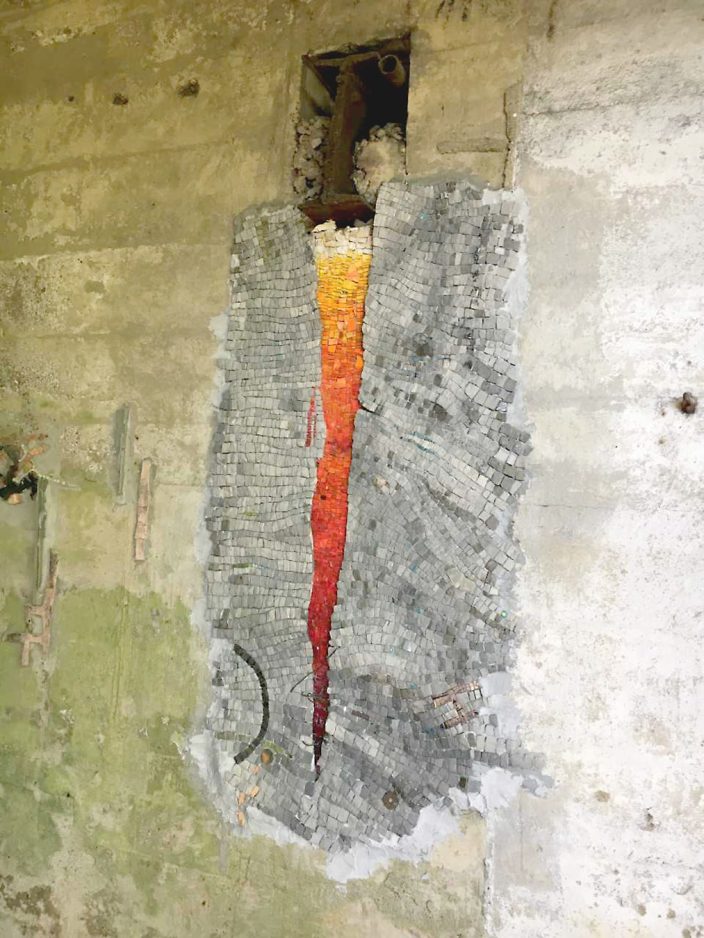
The Ruins Project in Whitsett is an outdoor mosaics museum dedicated to the coal-mining culture of Southwestern Pennsylvania on the site of the former Banning No. 2 Mine. This piece, called “East Meets West’’ by Annabelle Wewer of Philadelphia, represents the steel industry and was included in Mosaic Arts International 2019 in Nashville.
Frances Borsodi Zajac/For the O-R
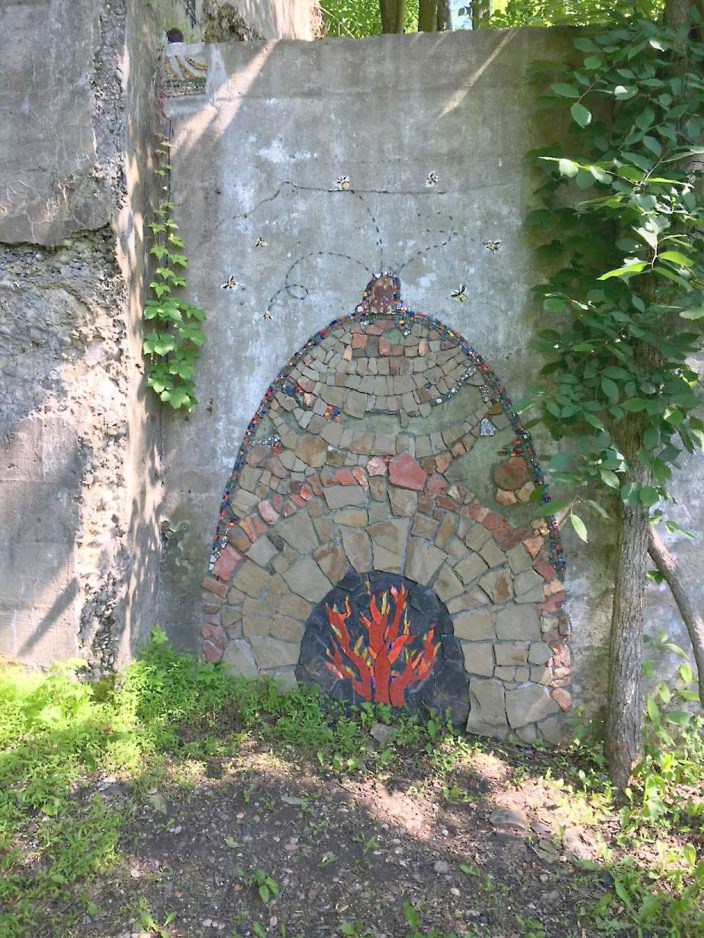
This piece at the Ruins Project is called “Beehive Coke Oven,’’ by Jennifer Case from the Poconos.
Frances Borsodi Zajac/For the Observer-Reporter
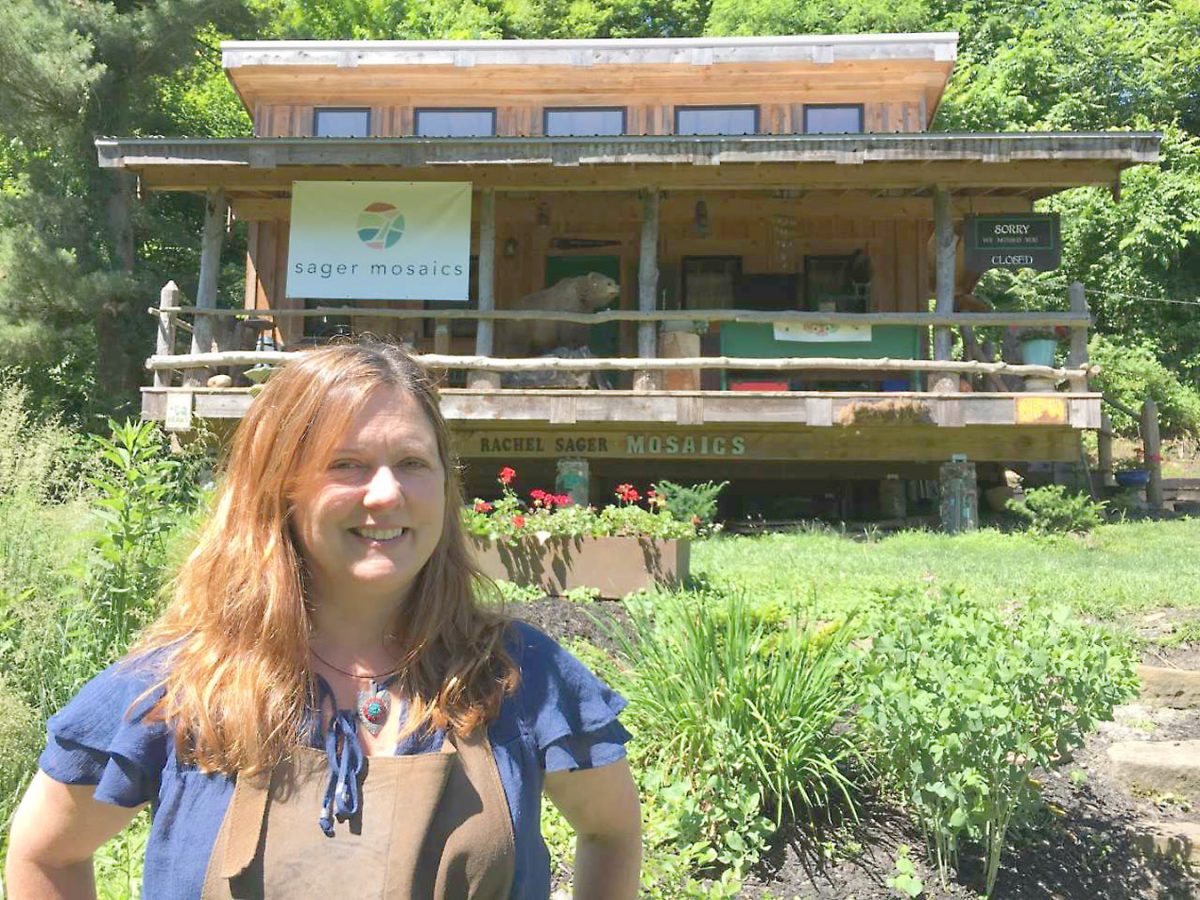
Rachel Sager, artist and owner of The Ruins Project, stands in front of her workshop and store that is located next to the museum along the Great Allegheny Passage hike/bike trail.
Frances Borsodi Zajac/For the Observer-Reporter
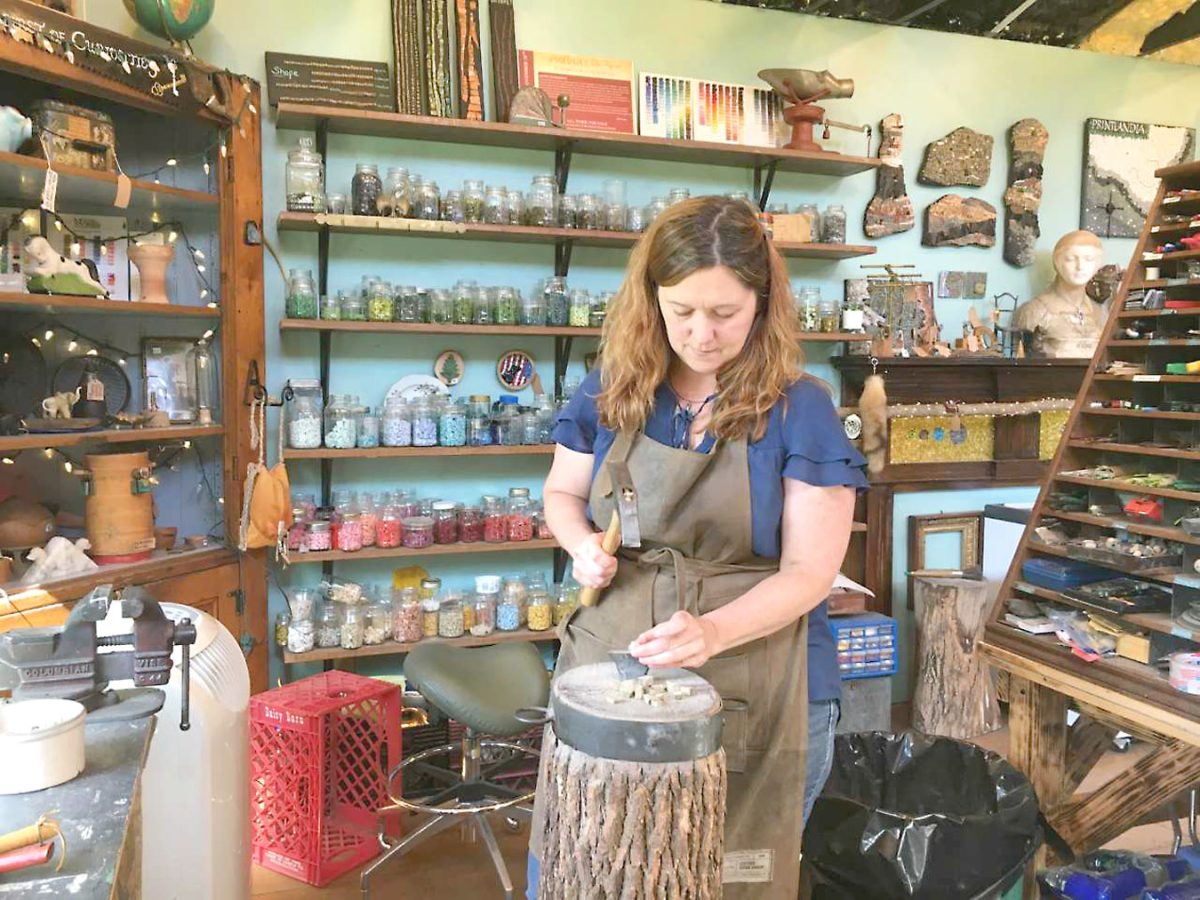
Rachel Sager, artist and owner of The Ruins Project, hammers Pennsylvania sandstone in her workshop and store that is located nest to The Ruins along the Great Allegheny Passage hike/bike trail.
The Ruins Project in Whitsett is artist Rachel Sager’s commitment to make the former Banning No. 2 Mine an artistic tribute to the coal-mining culture of Southwestern Pennsylvania.
“When this mine was open, the area was a completely different environment in every way. It was all industry,” said Sager, explaining the Pittsburgh Coal Co. mine was in operation from 1891 to 1946.
Now the site is an outdoor mosaics museum that includes works by Sager and artists from Argentina, Canada and 20 states, installed on remaining walls of the mine’s processing plant, located along the Great Allegheny Passage hike/bike trail and the Youghiogheny River.
The public can book guided tours through Sager’s website (www.sagermosaics.com) and stop by her store for art pieces and jewelry as well as ice cream sandwiches. Sager’s sister, Molly Sager, is her partner.
“We’re in the fourth year now. This is the tipping point. We’re being discovered by the bigger world,” said Sager, noting two pieces were accepted into the juried Mosaic Arts International 2019 in Nashville.
Sager, whose father, grandfather and great-grandfather were miners, grew up in Belle Vernon and is a 1989 graduate of Belle Vernon Area High School. She earned an English degree from West Virginia Wesleyan and is self-taught as an artist. Sager lived in Pittsburgh 20 years before moving to Whitsett in 2014.
“When I discovered it in the middle of winter, my mind exploded because as a mosaic artist, I saw it as this giant substrate because mosaic artists need sturdy, stable things,” said Sager. “I felt the gauntlet was being thrown at my feet. What are you going to do with this? This is it, Rachel. This is the challenge of your life. I felt God said that. I really do.”
Sager realized she wanted to bring other artists to the project. Some are her students. Sager teaches a specific kind of mosaic to advanced students.
“It’s using the classical mosaic language of the Romans and the Greeks but with local geology,” said Sager, noting they forage in the river and property for sandstone, limestone, shale, red dog and coal.
There’s diversity in the works. Sager’s pieces include “Map of the Great Allegheny Passage,” which marks Whitsett and other trail towns.
Sager is also part of “E Pluribus Unum,” included in the international show. It features two parts: a “Ragged Old Flag,” created by Deb Englebaugh of Mercer County in honor of the Johnny Cash song, and what started as an adjacent color study by Sager that evolved into 50 colors for America’s 50 states.
The other piece in the international is “East Meets West” by Annabella Wewer, of Philadelphia, an image of molten steel representing the steel industry.
Other works include “The Ruins Clock” and “The Ruins Compass Rose” by Englebaugh, “Beehive Coke Oven” by Jennifer Case of the Poconos, and a series of animals, including “Rainbow Trout” by Jim Auzins of British Columbia. Wendy Casperson, of McKeesport, is working on an American Indian arrow that will go the length of a wall.
Sager is careful to have each artist learn about Pennsylvania coal and what connection their work has to this place.
“Coal is a four-letter word now in the world we live in,” said Sager. “My argument is there are legions of people behind that four-letter word whether they’re gone or still here or the children of coal miners. There’s lots to talk about.”