

Addiction, recovery focus of event in Washington
Gideon Bradshaw/Observer-Reporter
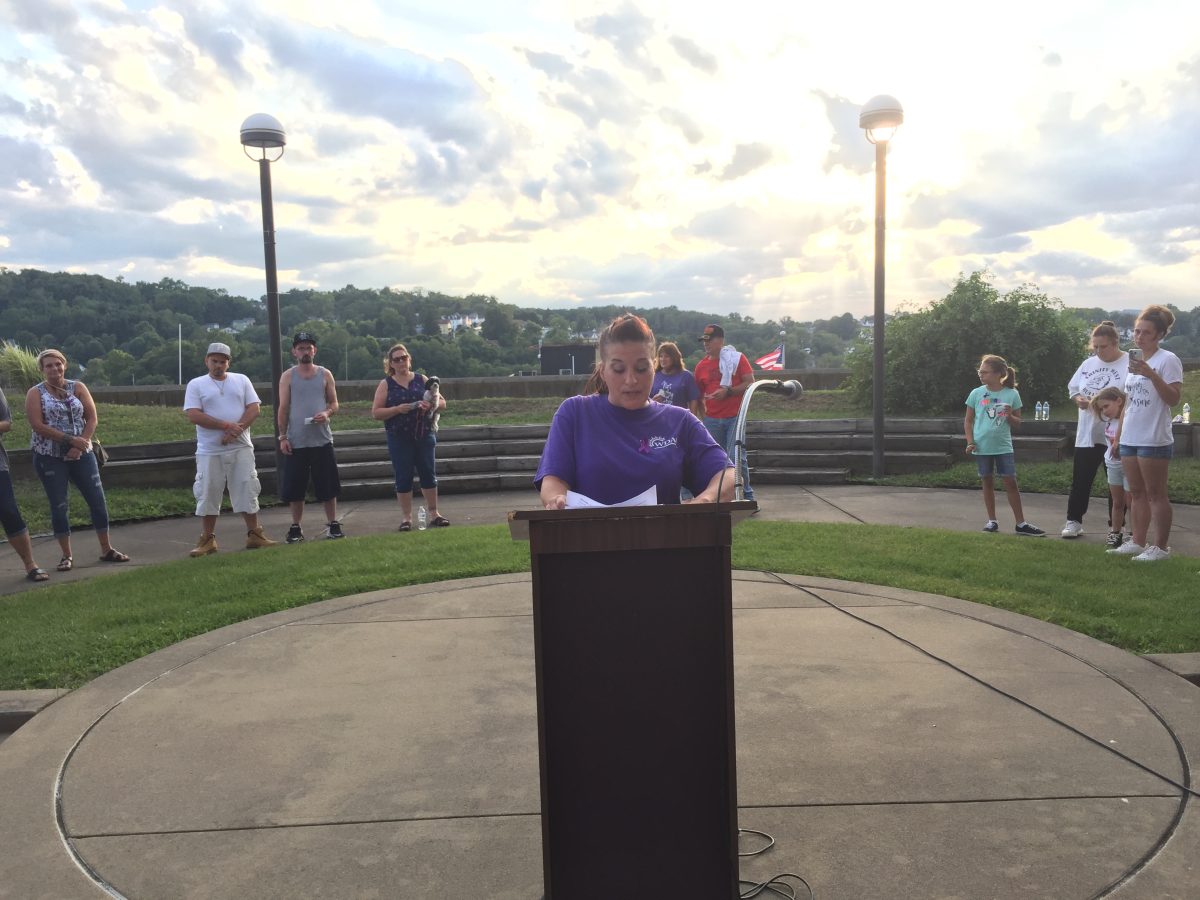
Michelle Africa of the Washington Drug and Alcohol Commission reads names of overdose victims on Friday during an event at Courthouse
Square in Washington.
Gideon Bradshaw/Staff writer/gbradshaw@observer-reporter.com
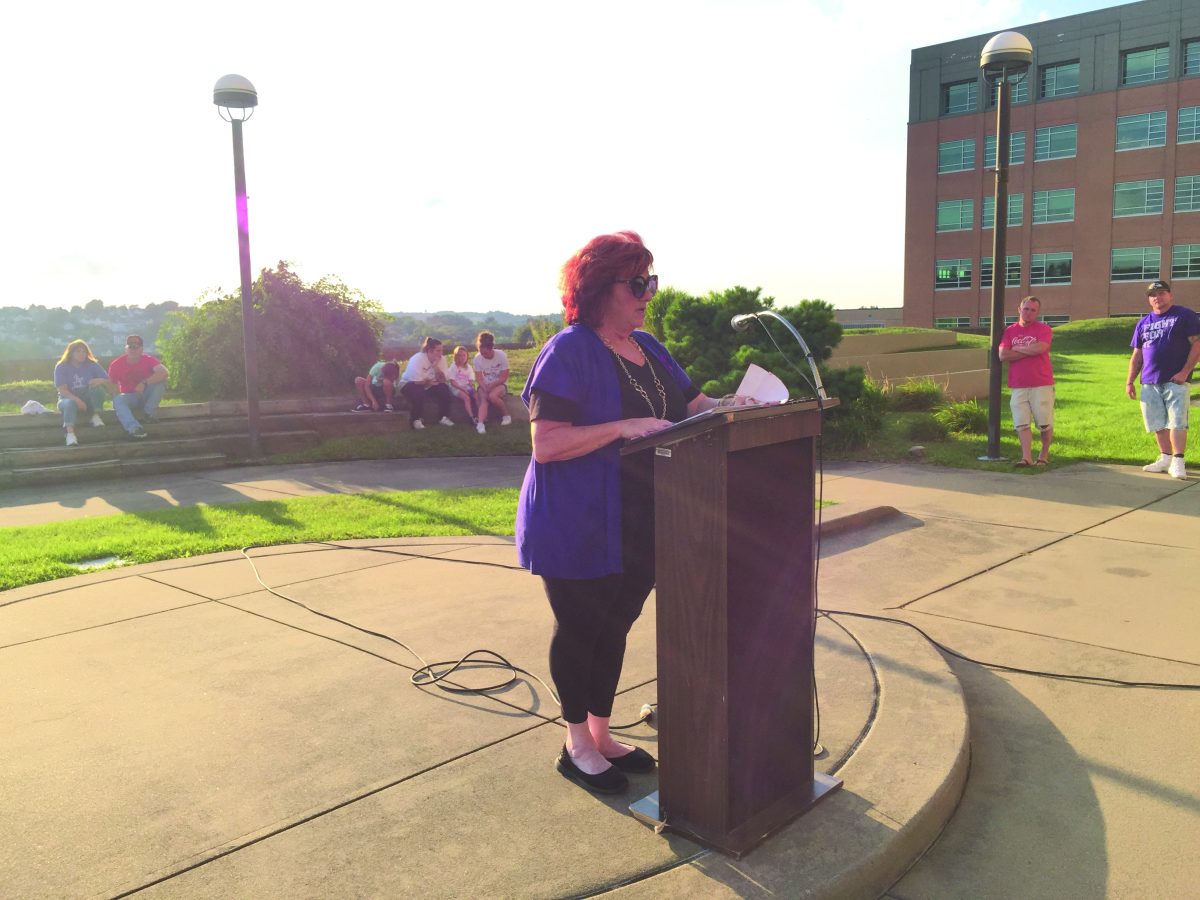
Sandy Kotwica recounts her son Carl’s struggle with{/div}
heroin addiction that ended with his passing in 2012.{/div}
{/div}
One by one, Michelle Africa read the first names and last initials of 316 people whose lives had ended because of fatal overdoses on Friday.
“It’s a community problem, not just an individual problem,” said Africa, a criminal justice case worker with the Washington Drug and Alcohol Commission, in an interview.
The second annual outdoor rally at Courthouse Square in Washington ahead of National Overdose Awareness Month in September was attended by some 60 people. Amid the nationwide epidemic of opioid use that’s taken hold since the 1990s – and which was the main driver of the roughly 75 drug overdoses in the county last year and some 40 more this year – the commission organized the rally to remember the dead, offer the living a sense of community and chip away at the stigma around addiction and treatment.
“Sometimes these families don’t get any type of help,” Africa said. “They’re just left with loss.”
Among those who spoke during the event, which culminated in a ceremonial release of monarch butterflies, was Sandy Kotwica, who recounted her son’s struggle with addiction that began with an Oxycontin for a sports injury and finally claimed his life when he overdosed on heroin in 2012. Carl, who was known by his nickname Chip, was 30.
“We have this void in our family,” said Kotwica, who told the Observer-Reporter that she began telling her family’s story as a way of educating others. “Of sadness. A longing for the one who is no longer with us. Our family will never be the same.”
Joseph Hinda – who’s been clean for more than seven years since he went to rehab just before serving a prison sentence – offered encouragement from his own experience.
“It’s nice that people are starting to recognize that, with treatment, you can beat this,” said Hinda, 35, of Canonsburg. He added that his addiction is different from other health problems he faces. “I know the disease of addiction, there’s no cure. But once you work a program, and you get clean, and you get solid, and you stay clean for one day at a time, that’s it.”