

Trinity grad shares experiences in military, security, with students
Karen Mansfield/Observer-Reporter
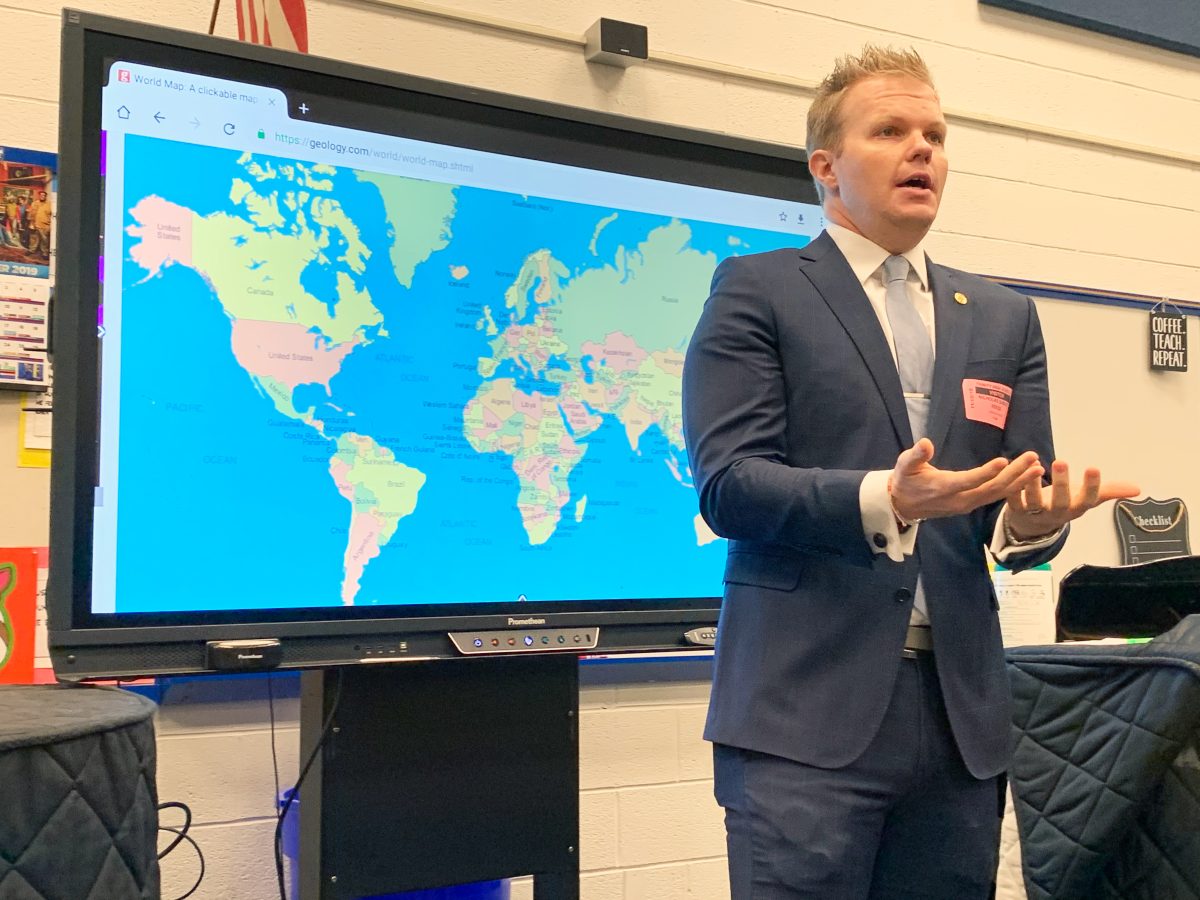
Nicholas Reese, a 2001 Trinity High School graduate, returned to Trinity recently to share his experiences in the U.S. Navy and the government during his 18-year career. Reese played a role in the rescue of Capt. Phillips, whose cargo ship, the Maersk Alabama, was hijacked by Somali pirates in 2009, and in the 2013 Boston Marathon bombing.
Courtesy of
Courtesy of
When the MV Maersk Alabama, an American merchant ship, was hijacked off the coast of Somalia on April 8, 2009, Nicholas Reese, a 2001 graduate of Trinity High School and an Operations Specialist, First Class, in the U.S. Navy, was on watch at the U.S. Fleet Forces Command Center in Norfolk, Va.
Reese’s assignment: for him and his eight-man team to come up with the initial response and plan to rescue Capt. Richard Phillips, who was being held hostage by Somali pirates.
“I was on the mission planning staff because I was on watch when the ship was taken,” said Reese, who was supervisor of the command center. “It was the top three worst days of work I’ve ever had. That wasn’t something that was fun in the moment, but what I look back fondly on is a hard problem nobody had ever really seen before, that they sit you in a room and say, ‘You and your team figure it out.'”
Reese returned to Trinity High School on Nov. 19 to talk to students about his career experiences and to encourage them to set high expectations.
His visit was sponsored by the Trinity History Club.
“I want students to know that from where they are now, they can get to these higher position jobs or these jobs you think are just in the movies,” said Reese. “I want them to know it’s possible for them, from right here, to do things they never thought they were capable of.”
The military, Reese said, has provided him with opportunities and experiences he didn’t imagine were possible for a small-town kid who rarely traveled outside of the state.
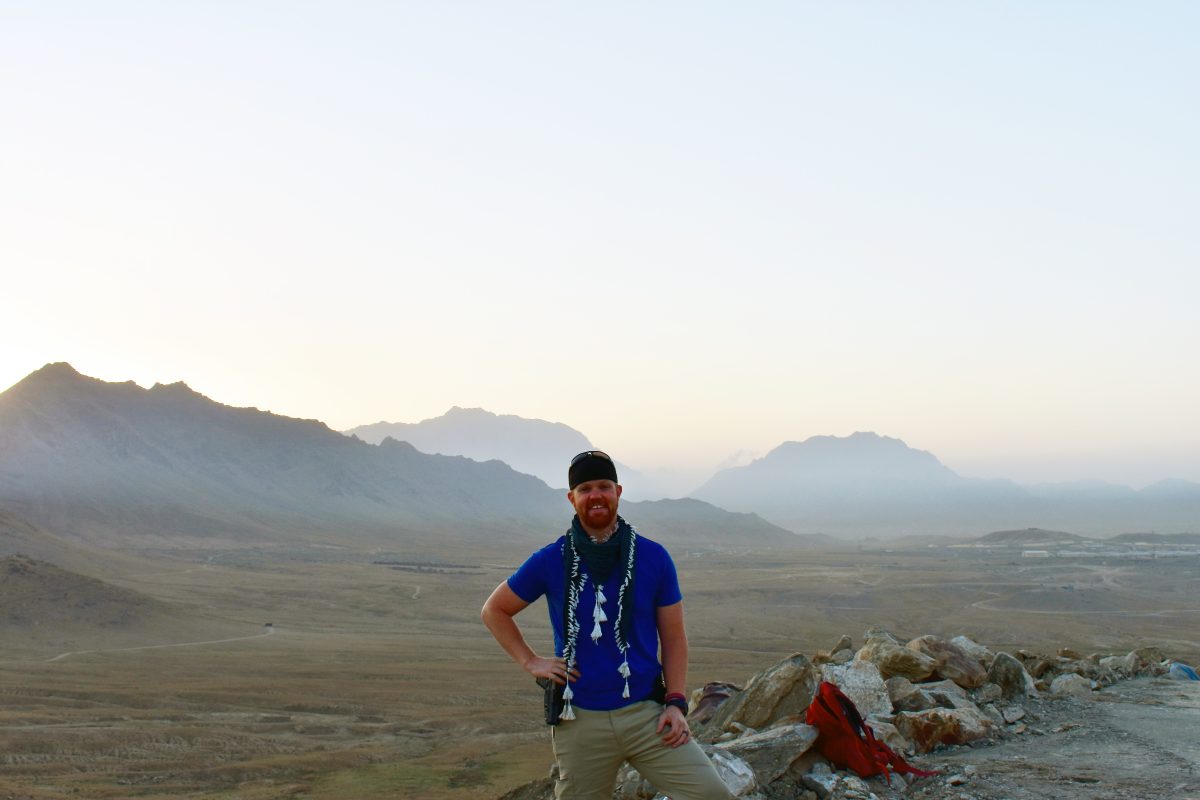
Over his nine-year military career and his subsequent career in national security, Reese, 36, has traveled to 36 countries on five continents, learned to speak Turkish fluently, and learned other languages – Spanish, Bosnian, Croatian and Dari – passably.
He has earned five college degrees, including a master’s in international relations specializing in trans-border issues.
Despite those accomplishments, Reese confessed to occasional “crisis of confidence moments.”
“Sometimes I think, should I really be in this chair, should I be the person that’s here, making these decisions, and the answer is yes,” said Reese.”I was trained for it, and the government thinks I should.”
Reese described himself as an average student at Trinity, who settled for C grades so he could play football, and didn’t have a career plan after graduating from high school.
He joined the Navy in June 2001, two weeks after graduating from high school, eager to visit exotic places around the world.
And then, Sept. 11 happened.
“Instead of going around the world to all these fun places on a boat, I went to combat twice,” said Reese.
He was deployed in support of Operation Iraqi Freedom and Operation Enduring Freedom; participated in Hurricane Katrina relief efforts; led an air defense team onboard USS Iwo Jima off the coast of Beirut, Lebanon in 2006, when there were threats of Hezbollah firing on ships at sea with land-based missiles; and, as part of Joint Task Liberia, provided humanitarian aid and combat support during the genocide in Liberia that took place under the rule of convicted war criminal and former Liberian President Charles Taylor in 2003.
Reese’s travels and experiences reinforced his interest in pursuing a college degree in international relations, so Reese enrolled at Old Dominion University, where he was accepted into the international relations program.
He worked full time at the U.S. Fleet Forces on the operations watch floor while pursuing his undergraduate degree, attending classes from 5 to 10 p.m. and then working the midnight shift.
It was while he was working with the Joint Forces Command and taking classes that the Maersk was hijacked and Phillips was captured.
From 2010 to 2012, Reese worked at Joint Forces Command as an intelligence analyst for the Defense Intelligence Agency while he earned his master’s degree. He also worked at NATO Supreme Allied Command, Transformation, during that time.
Reese also played a role during the Boston Marathon bombing on April 15, 2013, when a bomber detonated two homemade bombs near the finish line of the race, killing three people and injuring several hundred others.
He was working as a consultant at the National Counterterrorism Center when the bombing happened, and was tasked with ensuring none of the bomber’s family members in the United States could fly out and that no relatives living outside of the country could get into the United States.
“It was a stressful time, but to me there’s something about being involved. You’re not on the sidelines – you’re in it,” said Reese.
He spent six years working as a U.S. intelligence official, until taking his current position as a senior policy analyst for the Department of Homeland Security, Office of Policy for Cyber.
Reese told Trinity students the military isn’t for everyone – Life aboard the USS Iwo Jima wasn’t easy, and his work has often been dangerous, he cautioned.
His career also has required trust and patience with his relationships, especially his parents and his wife.
While Reese served in the military, his parents often did not know where he was going until he had left, and when he worked in intelligence, he rarely provided details about his work.
His overseas travel also meant extended absences from his wife, and his travel to dangerous hot spots around the world was stressful for her.
But, his parents and wife have supported his career and trusted his decisions.
Reese encouraged students to take risks.
“America needs smart and creative people to ensure its security, and the agencies charged with that security do not care where those people come from,” he said. “There will always be a need for national security professionals who are willing to do the hard jobs and go to the dangerous places. But in order to get those jobs, you have to take a risk. Everyone I know who has achieved a high position has a story of taking a job or assignment they weren’t sure they were ready for.”