

Advocate of the airwaves
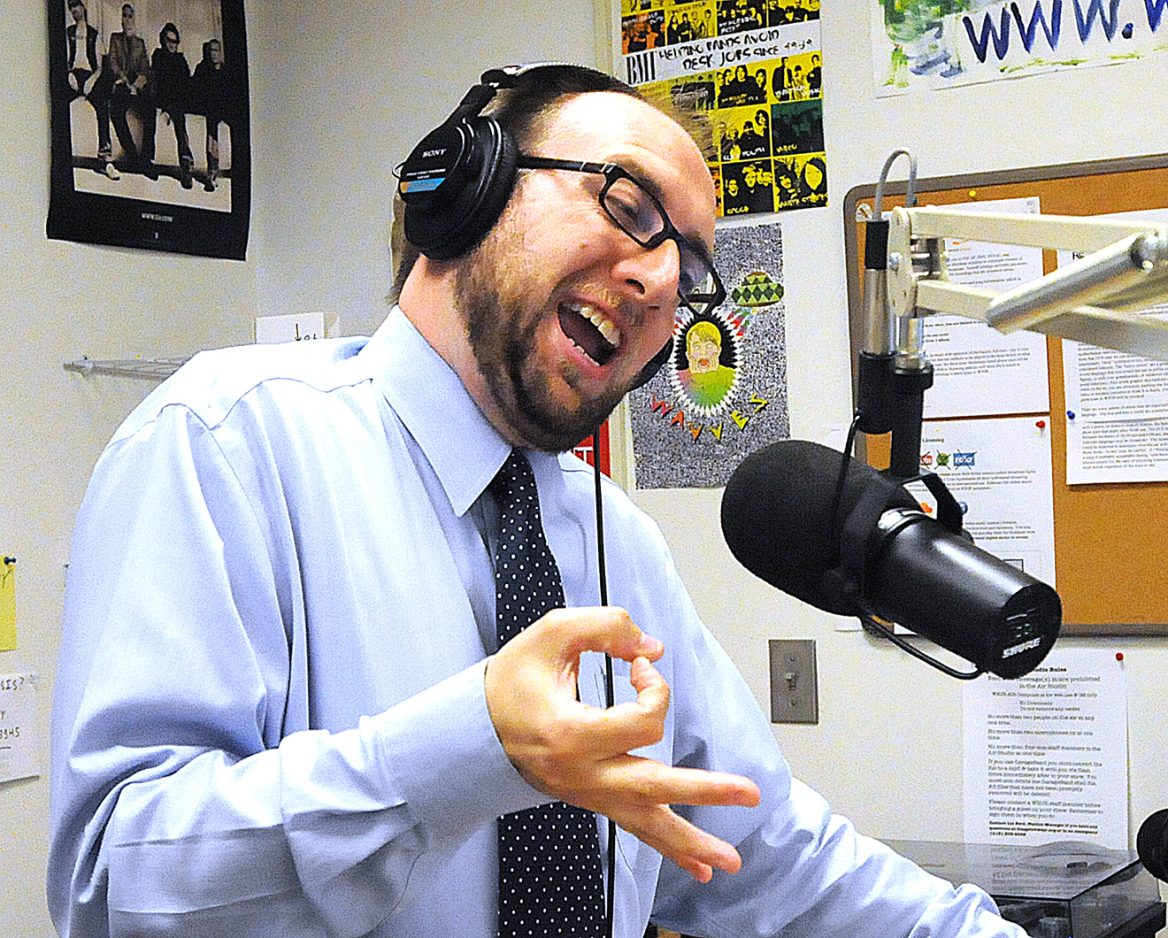
Jim McNutt/Observer-Reporter John Friedman, an assistant district attorney in Washington and Greene counties, gets animated as he does his "Johnny Morgan Show" on WNJR, Washington and Jefferson College's radio station Thursday evenings at 6PM.
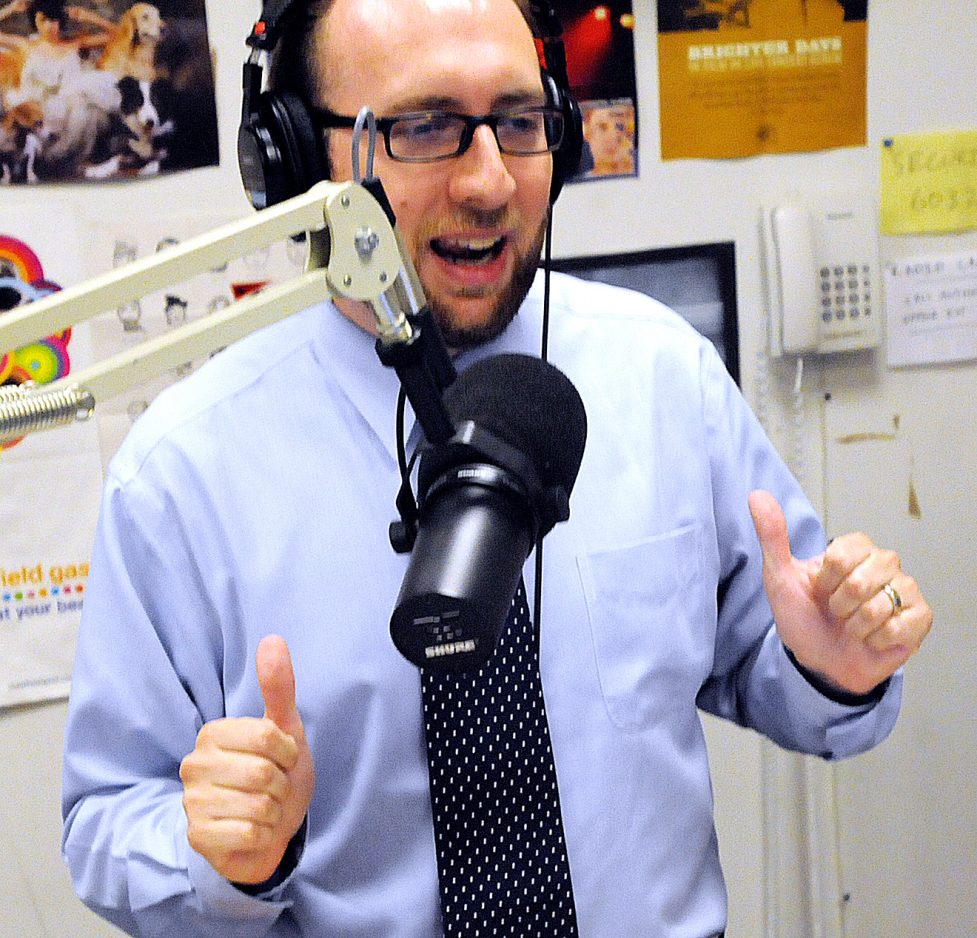
John Friedman, an assistant district attorney in Washington and Greene counties, gets animated as he does his “Johnny Morgan Show” on WNJR, Washington and Jefferson College’s radio station Thursday evenings at 6PM.
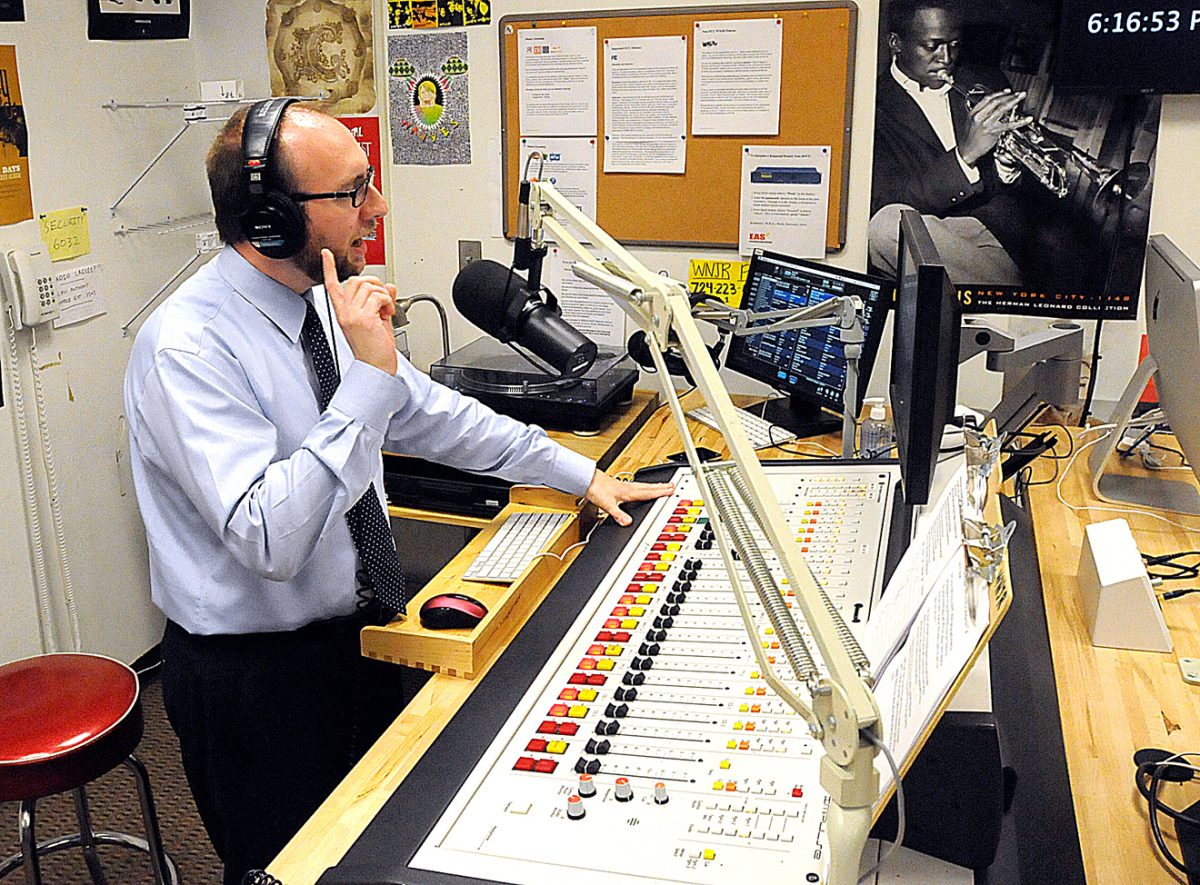
Jim McNutt/Observer-Reporter John Friedman, an assistant district attorney in Washington and Greene counties, gets animated as he does his "Johnny Morgan Show" on WNJR, Washington and Jefferson College's radio station Thursday evenings at 6PM.
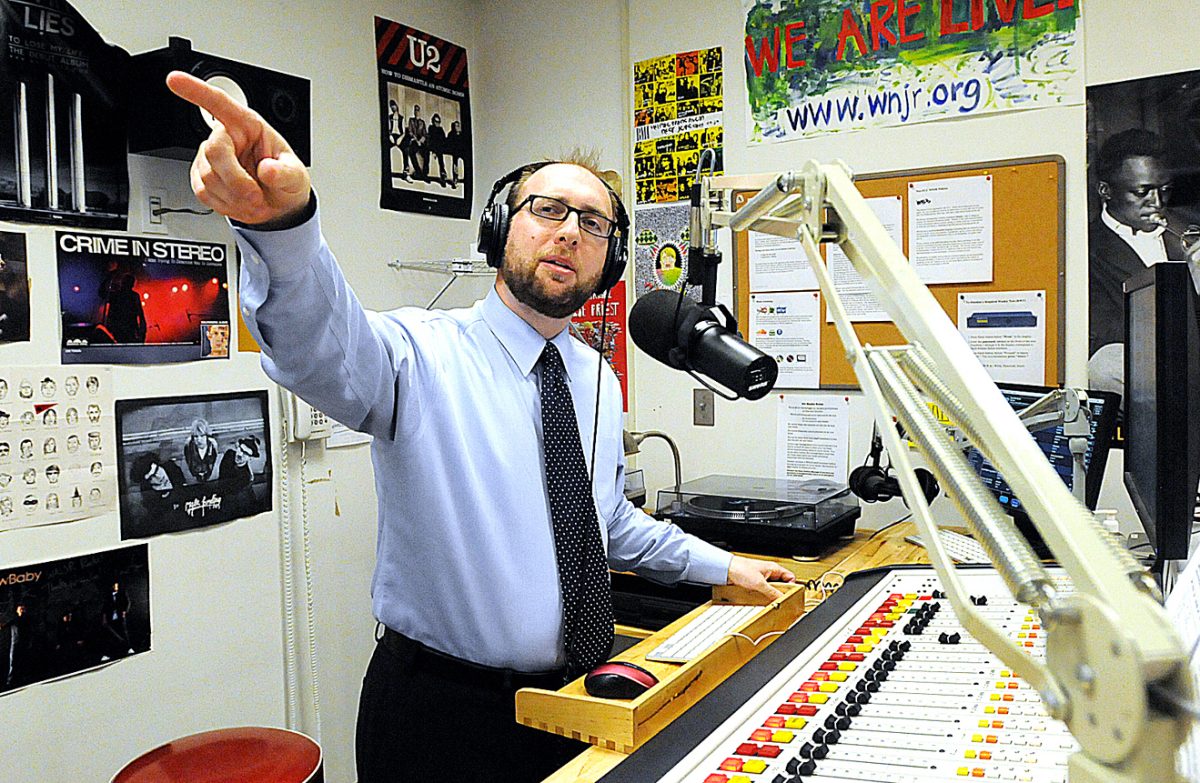
John Friedmann, an assistant district attorney in Washington and Greene counties, gets animated as he does his “Johnny Morgan Show” on WNJR, Washington & Jefferson College’s radio station, Thursday evenings at 6.
By day, John Friedmann is a mild-mannered assistant district attorney, wearing a tie and helping to put criminals behind bars in Washington and Greene counties.
By night – well, at least on Thursday nights – John Friedmann steps into the metaphorical phone booth, a la Clark Kent, and emerges as Johnny Morgan, a boisterous spinner of “the Steel City’s hits” who sounds as if he arrived straight from 1967.
“It’s my chance to decompress from everyday life,” Friedmann explained a few weeks ago, just before he clamped on the headphones and started another broadcast on WNJR, Washington & Jefferson College’s radio station. He also pointed out that, like any good workout, he usually feels exhausted by the end of his one-hour show.
In the annals of community or college radio, where inspired amateurs often rule the day, Friedmann’s “Johnny Morgan Show,” is a wholly different animal – airing most Thursdays at 6 p.m. on WNJR, which can be found at 91.7 on the FM dial, “The Johnny Morgan Show” is a polished-to-shimmering live music program done in the mode of a 1960s or early 1970s Top 40 Pittsburgh radio broadcast, replete with jingles, zingers, station identifications and patter that is exhumed from radio’s bygone days, before formats and disc jockeys became predictably corporate and cookie-cutter.
To heighten the verisimilitude, a recent edition of “The Johnny Morgan Show” featured a 1967 comedy record with a Robert Kennedy-soundalike reciting the lyrics to the Troggs’ hit “Wild Thing,” punctuated by the late senator’s trademark pauses and hesitations, nestled in between a cover of “Night and Day” by Sergio Mendes and Brasil 66 and the relatively obscure “Me Tarzan, You Jane” by the Philadelphia soul group the Intruders. The same show had a twin-spin from the Beatles and tunes by The Marvelettes, Booker T and the MG’s, the Beach Boys, the Lettermen and Johnny Rivers, among others.
Friedmann hatched the “Johnny Morgan” persona when he was a student at W&J in the late 1990s and a student volunteer at the campus radio station. A native of the Cleveland area, Friedmann grew up in a radio-savvy family, with both his mother and an uncle working in the industry. Even though it was already a decade old or better by the time he was born in 1980, Friedmann grew up with much of the music he spins on his show playing throughout his house.
“I never listened to Kurt Cobain when he was alive,” Friedmann pointed out.
After graduating from W&J and heading back to the Cleveland area in 2002 to attend law school at Cleveland State University, Friedmann brought Johnny Morgan back to W&J in 2007 when he returned to WNJR as a community volunteer. “John brings to our line-up an infectious enthusiasm, a great example for student and community hosts to learn from, and a format that really adds to the diversity of our programming,” according to Anthony Fleury, an associate professor in the Department of Theatre and Communication at W&J and the radio station’s faculty advisor.
Even though most of the students and community volunteers who work at WNJR do it strictly as a hobby while pursuing studies in some other area or holding down full-time jobs, “John really demonstrates to them how important it is to do something well for the sake of it,” Fleury added. “Good work is its own reward.”
One WNJR alumni who has gone on to a career in radio is David Singer. He works for both KDKA-AM in Pittsburgh and WJPA in Washington, is a regular listener of “The Johnny Morgan Show,” and said that “What makes John’s show special is dedication to the ‘golden age’ delivery style and ‘zingers’ … Such antiquated but intimately familiar lines as ‘the hits keep on comin’!’ and ‘the much more music station’ aren’t heard anywhere else, barring archives of radio shows from decades ago.”
According to Friedmann, he models his delivery, in part, after veteran Cleveland disc jockey Chuck Matthews, and who can still be heard on Akron, Ohio-area station WAKR, which was the first stop for legendary record-spinners Scott Muni and Alan Freed as they launched their careers in the 1950s. Disc jockeys hiding under flashy pseudonyms was a tradition of radio back in the 1960s, so how did Friedmann strike on the “Johnny Morgan” moniker?
“It has John and it still sounds radio-y,” he explained. “And I found a jingle with that name. It’s stuck since I was first at W&J, and became a joke among my fraternity brothers. I’ve used it ever since.”
Along with providing a bit of fast-paced “me time,” Friedmann said “The Johnny Morgan Show” gives him a brief, weekly opportunity “to be what I should have been if I had been born 40 years earlier. That’s a pretty good feeling when a show really comes together.”
What does he hope his listeners get out of it? “I hope they have some fun, relax, hear some great music that few places are playing anymore and some of which hasn’t been heard on the radio in 40 or 50 years … I hope they have a smile on their face when that ‘oh wow’ song comes on. If I can transport them to some happy time in their lives, it’s all worth it.”