

Emerald Mine seeks injunction against Texas Eastern
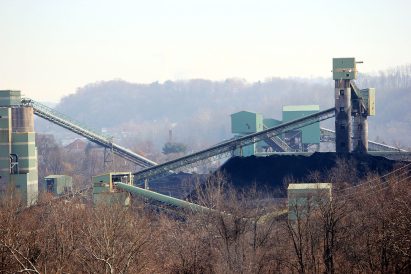
WAYNESBURG – Court testimony began Wednesday on a motion filed by Emerald Coal Resources for an injunction to force the Texas Eastern Transmission Corp. to protect its pipelines above an area where Emerald Mine hopes to begin mining in March.
Emerald filed a lawsuit against the pipeline company in 2011 seeking to have the company complete mitigation work on a 3,000-foot right of way above the mine’s “D” District, north of Waynesburg. In May, it filed for an injunction asking the court to force Texas Eastern to do the work.
The mining company maintains it has the legal right to mine the coal without interference or liability in regard to the pipelines, and if it cannot proceed with its mining plan, the result will be layoffs and staff reductions at the mine.
“Emerald needs to mine this ‘D’ District reserve to stay financially viable,” Emerald attorney John Jevicky said in his opening statement. He spoke of the consequences idling the mine would have on the mine’s 651employees, local businesses that provide services to the company and the community.
Emerald received a permit in 2010 to mine coal in the “D” District that includes a stipulation it has an agreement with the pipeline company to mitigate damage to the pipelines.
Jevicky said Emerald had sent Texas Eastern letters and updates about its plans but has received from Texas Eastern no commitment to complete the mitigation work unless Emerald agreed to pay mitigation costs.
He also said Emerald was willing to post a bond and, after the mitigation work was completed, meet with the company to determine who is responsible for the costs. He noted Texas Eastern earlier had completed mitigation work for the same four pipelines on two occasions for Consol Energy.
David Overstreet, attorney for Texas Eastern, said in his opening that the matter regarding mitigation of the lines should have been raised by Emerald before the Federal Energy Regulatory Commission, which regulates interstate pipelines.
He maintained Emerald has “exaggerated” the threat the matter poses to the mine.
“Texas Eastern has never refused to do the work,” Overstreet said. The company had sent a letter to Emerald in March asking it to confirm it intended to mine in the “D” District but the company refused to respond, he said.
Texas Eastern indicated at that time that it could have the lines mitigated by September 2014, which would represent only a five-month delay from the coal company’s current plan, Overstreet said.
Overstreet, in cross-examining Emerald’s witness, also elicited testimony regarding Emerald’s plans for the mine, which changed in late 2012 and moved up the time at which the mine planned to begin mining in the “D” District.
Douglas Conklin, general manager of the Emerald and Cumberland mines, both Alpha Natural Resources subsidiaries, testified if the mine fails to begin mining the “D” District in the first quarter of 2013 it would be not be profitable for the year.
Because of the large costs of developing a longwall mine, the mine must produce 3.9-million tons of coal just to break even, he said. If the lines are not mitigated, the company would have two choices, “neither of them good,” he said.
It could wait until the mitigation work is completed, which would involve layoffs and a reduction in staff, or cut longwall panels short to avoid the pipelines, which would impact future mining and make the mine unprofitable.
Asked why Emerald never responded to Texas Eastern’s letter in March offering to complete mitigation work by September 2014, Conklin said the letter stipulated the mining company pay for the pipeline mitigation costs. Overstreet later asked why Emerald had never attempted to negotiate the matter.
Conklin also testified about the change in the mining plan made in late 2012. Under the earlier plan, the mine would operate one longwall machine and begin mining in the “D” District in 2015.
In late 2012, however, the company re-evaluated the plan in light of market conditions and difficult mining conditions in another district of the mine. The new plan would involve operating two longwalls and would move up the date mining would begin in the “D” District to 2014.
Conklin testified Texas Eastern was made aware of the new plan during a court hearing in November 2012.
Overstreet, however, introduced documents questioning the time line for the company’s plans, including an email regarding a meeting between Emerald and Alpha officials held in March 2013 at which the plan to employ two-longwalls was only discussed as an option.
Conklin said, however, that prior to that meeting, the plans had been finalized and development work had already started in the “D” District.
Overstreet also referred to other documents showing inconsistent dates on which mining in the “D” District would begin, including a map dated March 13, 2013 that showed mining in the “D” District beginning in November 2013, five months before the company’s current start date. Another documents introduced dated April 28, 2013 indicated the start date as January 2014.
Maureen Rohanna, who completed the title work for the “D” District, and Dr. Alfred Pettinger, an engineer who testified on pipeline mitigation, also testified Wednesday.
The hearing will continue today. Judge William Nalitz, who is presiding, has scheduled the hearing for three days.