

Local runners set to compete in 127th Boston Marathon
Courtesy of Chad Settles
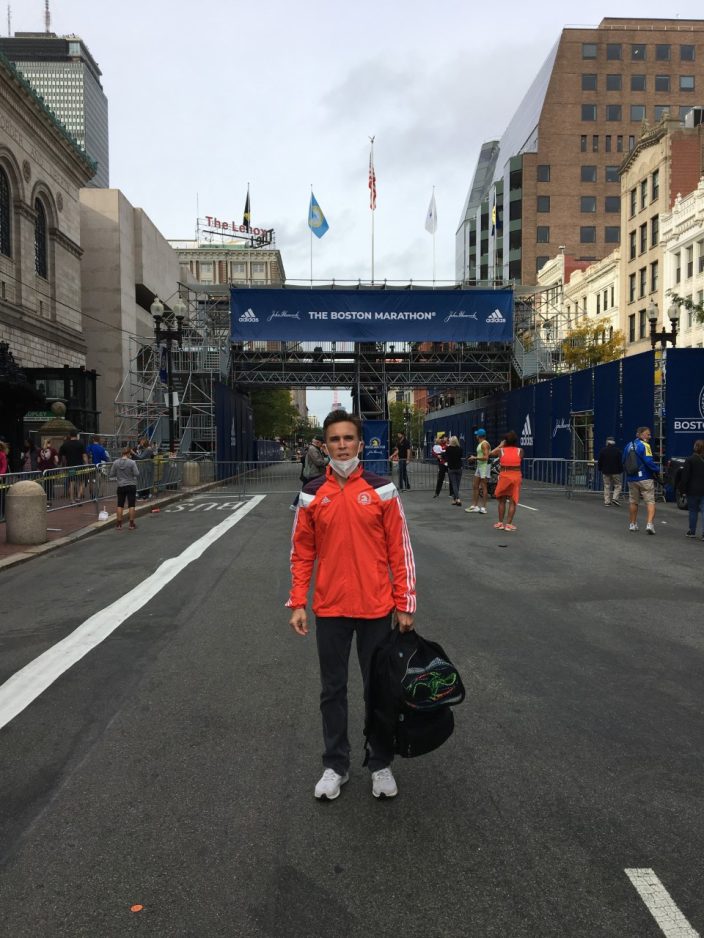
Chad Settles of Canonsburg will compete in the 127th Boston Marathon on Monday. Settles, who has completed more than 20 marathons, will run in the Boston race for the fifth time.
Courtesy of Amanda Balzer
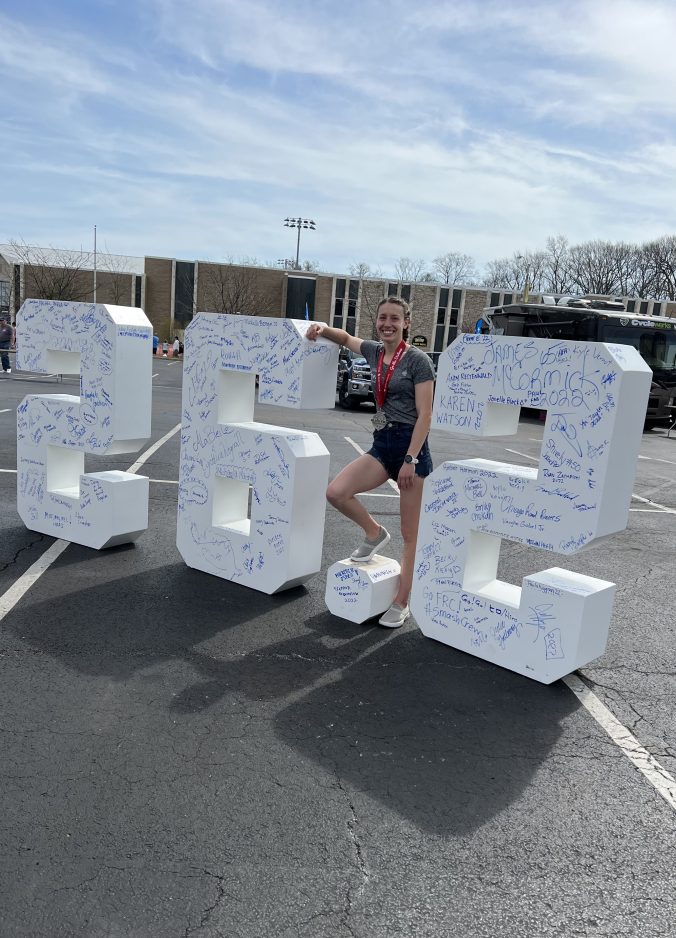
Amanda Balzer, a 2013 graduate of Chartiers-Houston High School, will participate in her first Boston Marathon on Monday, which is Patriots’ Day. Here, she is pictured at the Toledo Glass City Marathon, where she earned her qualifying time.
Courtesy of Arjun Mishra
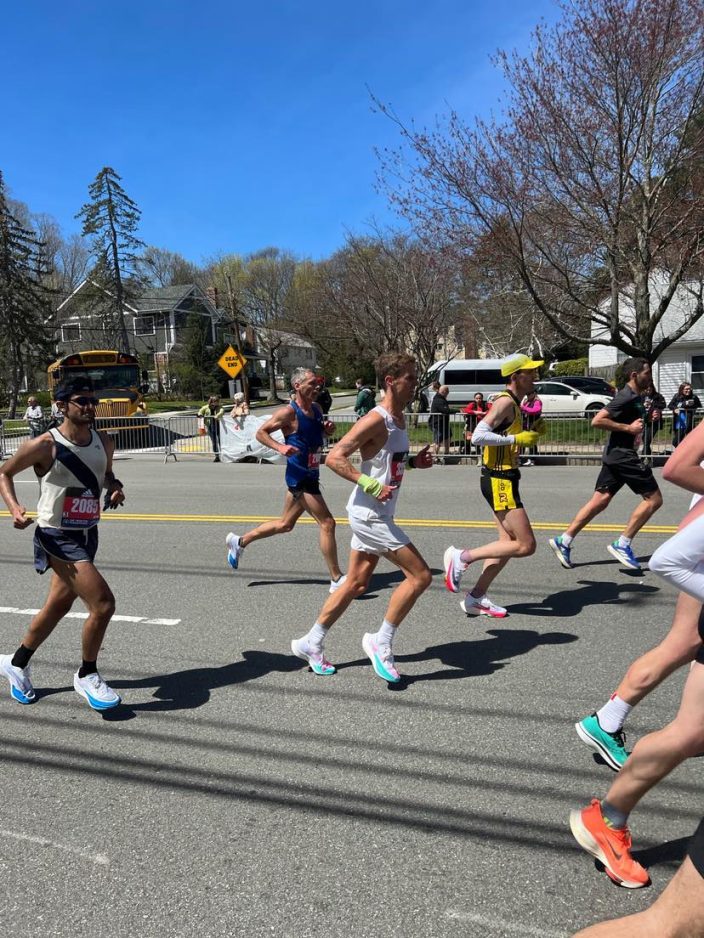
Arjun Mishra, left, of Venetia, is pictured at the 2022 Boston Marathon. Mishra has competed in about 25 marathons and qualified to run in the 127th Boston Marathon on Monday, the fifth time he will participate in the historic race.
Courtesy of Arjun Mishra
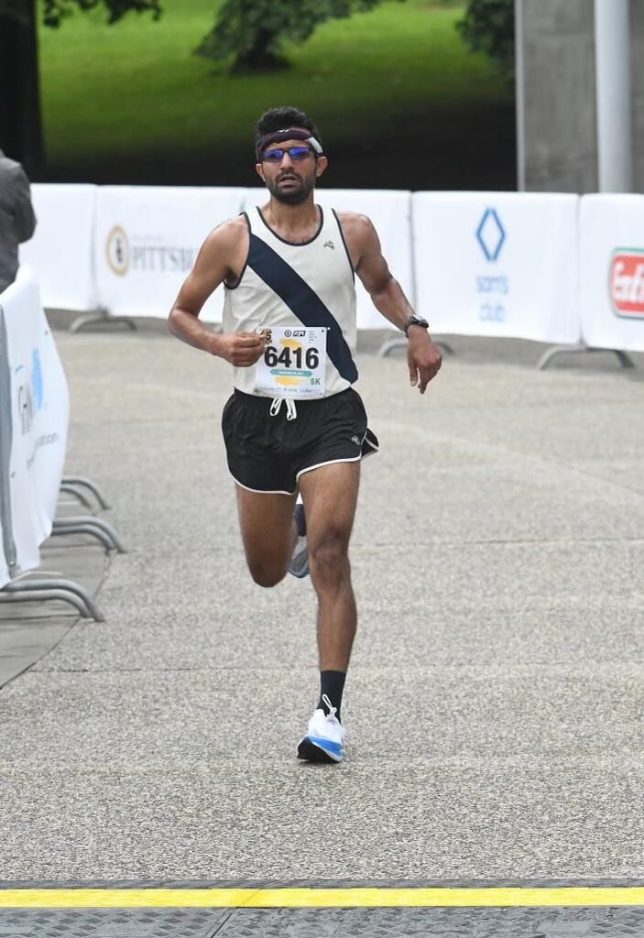
Arjun Mishra of Venetia, who will compete in Monday’s 127th Boston Marathon, is shown running in the Pittsburgh Great Race.
The 127th running of the Boston Marathon is on Monday, Patriots’ Day, as about 30,000 runners from more than 100 countries prepare for one of the world’s most prestigious and historic road races.
And among the field of runners vying to cross the finish line of the grueling, 26.2-mile course are several runners with Washington County ties.
The list includes Amanda Balzer, 28, a Chartiers-Houston graduate who lives in Bethel Park; Chad Settles, 50, of Canonsburg, and Arjun Mishra, 32, of Venetia, who qualified to take part in the event.
It will be Balzer’s first Boston Marathon, while Settles and Mishra will toe the starting line for the fifth time (both participated virtually in the 2020 event, which was canceled due to the COVID-19 pandemic).
For many marathoners – who must meet the Boston Marathon’s strict qualifying standards, or “BQ” in running lingo – running Boston is the highlight of their running careers.
“The experience at the Boston Marathon is A-plus-plus,” said Settles, who has run three of the six World Marathon Majors, which include London, Berlin, Tokyo, Chicago, and New York City (Settles also completed the Berlin and Chicago marathons). “Boston’s definitely the best of the best. It’s what you strive for when you start down the long-distance running road.”
For Balzer, the journey to compete in the world’s oldest marathon has been the biggest thrill.
“There are a lot of emotions that go into saying you’re running the Boston Marathon. I want to take it all in. The marathon is not the end goal, it’s recognizing the determination, the hard work, the dedication and training that you put into getting there,” said Balzer, who graduated from Chartiers-Houston High School in 2013.
The local runners all have taken different paths to their running careers.
Balzer was a four-year member of the C-H track and field team, and ran on the cross country team her sophomore and junior years to improve her time in the 300 hurdles. She ran track at Allegheny College, but chose not to join the cross country team.
In 2020, at the onset of the COVID-19 pandemic, gyms closed and “all you could really do was get out and run,” she said.
So Balzer, who hadn’t run in a few years, joined a Fleet Feet running club and got hooked.
“Pretty much, before I knew it, I was doing group runs five out of seven days,” she recalled.
When friends asked her to sign up for the Toledo Glass City Marathon in April 2022, Balzer, who had never run more than 13.1 miles (a half marathon), initially declined.
“Nothing about running 26.2 miles sounds appealing to me, but I give in to peer pressure quite a bit when it comes to running,” she laughed.
She surprised herself by completing the marathon in 3:16:15, meeting the Boston Marathon’s qualifying time.
“It was an unspoken goal, one I kept to myself and didn’t share in case it didn’t happen. It was the best feeling. Three months of training, with three or four or more 18- to 22-mile runs, it’s hard work. To see it come together, it was such an incredible feeling.”
In the fall, Balzer ran her second marathon, the Monumental Marathon in Indianapolis, finishing the 26.2 miles in 3:10:13.
“Marathon running is newer to me so I have a bit of ‘imposter syndrome,’ and I want to perform well on the big stage,” said Balzer.
On the other hand, Settles and Mishra have logged plenty of marathons.
Settles, a Florida native and scholastic baseball player, ran his first marathon in 2013, at age 40. In the decade since, he has competed in about 20 marathons.
“I wasn’t into running. I ran some 5Ks, played softball and other things to keep in shape, but I didn’t ever do anything close to a marathon distance,” said Settles.
While living in Richmond, Va., a decade ago, a co-worker encouraged him to run the Richmond Marathon with him.
“I caught the bug, that’s how it started. One of my goals was to qualify for Boston,” said Settles.
Settles qualified for the 2018 Boston Marathon by running the Harrisburg Marathon the previous fall, and he ran a BQ qualifying time of 3:09:56 at last year’s Boston race.
Weather conditions for Settles’ first Boston Marathon in 2018 were, to borrow Boston slang, wicked bad, but it didn’t bother him a bit.
“It was my worst experience from a weather standpoint – 40 degrees, 28-miles-an-hour wind, pouring down rain – but I enjoyed all 26.2 miles, every bit of it. It’s the experience,” he said.
Settles said the Boston run will be his last marathon.
“I think I’m stopping after this, I’m going to stop beating up my body,” he said. “I’ll lace up one last time for the journey through the streets of Boston and end on a high note. That will be a good note to end on.”
Mishra began running at age 20 while a student at Syracuse University, when a friend asked him to go on an outdoor run.
“I would run for a half-hour on a treadmill at the gym and watch football to stay in shape, and a friend asked if I wanted to run outside. The runner’s high stuff started to hit, but I fell off for about two or three years before I started to pick it up maybe nine years ago, casually, to get exercise and get healthy. I got super serious about it six years ago,” said Mishra, who has about 25 marathons under his belt.
Eight years ago, Mishra ran his first marathon, the 2015 Pittsburgh Marathon, “essentially on a dare” from the friend who had cajoled him into running outside during college.
“I remember the first half of it, but I don’t remember the second half at all. But I didn’t hate it enough not to do another one,” he said.
Initially, the Boston Marathon wasn’t on his bucket list.
“I probably was a little antagonistic. I thought a lot of people were haughty about the accomplishment, but that quickly evaporated once I qualified and went there. And actually, my girlfriend runs, too, and I went to watch her the year before I went, and my view changed. Boston is special,” said Mishra.
His fastest marathon time is 2:45:47, which he accomplished at the Richmond Marathon.
The oldest consecutively run marathon in the United States, the Boston Marathon held its first race in 1897 with 18 entrants.
To qualify for the Boston Marathon runners have to record a specific qualifying time that corresponds to their age and gender, or they can participate through a charity group.
And just because a runner hits the qualifying time for Boston doesn’t necessarily mean they will get invited to the race. If there are too many registered qualifiers, the race takes the fastest times that fill the slots, leaving some qualifiers on the outside looking in.
The course, which starts in Hopkinton and ends on Boylston Street in downtown, is not for the faint of heart. Among the four hills along the route is the infamous “Heartbreak Hill,” the flattest of the hills, but located late in the course.
Balzer, Mishra and Settles have a deep respect for the history of the Boston Marathon, and the many historic moments and achievements that have taken place.
Monday marks the 10-year anniversary of the bombing near the finish line that killed three people and injured more than 260.
And in 1967, Katherine Switzer officially completed the then all-male race after entering by using only her initials, KV Switzer.
Her gender went unnoticed by officials at the start line, but a few miles in she was attacked by an angry race official who tried to pull her off the course. She went on to finish the race.
“The history matters a lot, when you consider it started in 1897 and it’s been continuous. There are so many pioneering moments, significant moments at Boston,” said Mishra. “I’m very excited. This race is unlike any other. The people of Massachusetts get a holiday, they’re ‘well-lubricated’ and unbelievably supportive and loud, they’re appreciative that you’re there. They make you feel like a celebrity. It’s a big deal for (professional runners), but it’s a big deal for amateurs, too. It’s a big accomplishment making it there and finishing it.”