

Hamlin incident highlights importance of athletic trainers
When McKees Rocks native and Buffalo Bills safety Damar Hamlin collapsed on the football field in the middle of a game with Cincinnati in January, athletic training staff and medical professionals acted quickly to save his life using CPR. Since that dramatic moment, athletic trainers have been in the spotlight with more focus on exactly what they do and how they can help athletes at all levels in more ways than just stretching or rehabilitating from injuries.
Cardiac events can happen to young athletes as well, yet the National Athletic Trainers Association says 1 out of every 3 U.S. high school doesn’t have access to a certified athletic trainer.
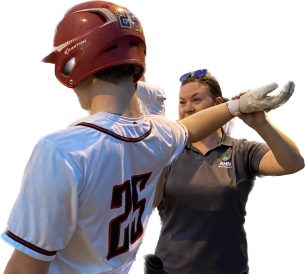
Student athletes in the Peters Township School District are fortunate to have Allegheny Health Network (AHN) Senior Athletic Trainer Amber Helphenstine providing health care for the high school and middle school programs.
“Athletic training at all levels looks quite similar,” explains Helphenstine. “In the scholastic setting, school obviously has to come first, and that’s where their main focus has to be so they are eligible to participate in athletics. My day consists of preparing for practices and being present at as many of them as possible.”
Helphenstine sees athletes daily for injury evaluation, therapeutic treatment and rehabilitation and also focuses on educating them about their injuries along with how to take care of their bodies through better nutrition, sleep and hydration. “I am communicating with coaches about practice changes and medical status of the athletes on their team,” she says. “During this unpredictable time of year, I am also monitoring weather for any practice adjustments we have to make due to cold weather or lightning.”
The spotlight shining on athletic trainers since the Hamlin incident has helped the public to understand their importance to athletes and all active people.
“They are experts at recognizing and diagnosing injuries,” says Craig Castor, Athletic Training Services Manager with AHN. In his role, Castor manages sports medicine relationships for 30 high schools, six colleges and two professional sports teams. “Statistically, an athletic trainer’s diagnosis and a physician’s diagnosis are usually the same,” he said. “Additionally, athletic trainers are experts in return to play or activity. Often people are cleared by a physician, but don’t realize there is an appropriate pathway for successful return to activity. Athletic trainers can make this return more successful.”
Making a difference
Helphenstine grew up around sports and loved being a part of competition. “Couple that with my desire to help people and it just seemed like an obvious choice,” she says. “I enjoy making a difference in the young people’s lives and instilling them with knowledge that can be applied in different walks of life as they get older.”
Castor says he pursued athletic training as a way to work full time with sports. “Sports have always been part of my life,” he said. “Athletic trainers are a vital process to successful athletic programs. They are essential to recognizing injuries, reducing the chance of athletic injury and enhancing athletic performance.”
Despite their professional title, athletic trainers don’t just work with athletes but are also increasingly working in a variety of different fields. “The emergence of athletic trainers in military and tactical settings, performance arts, and industrial and manufacturing settings has shown that employers recognize the vital services athletic trainers can provide to help keep people healthy,” Helphenstine says.
As allied health professionals, athletic trainers are required to be trained in CPR and with defibrillators (AEDs) and keep their certifications up to date. Castor says this can be a lifesaving addition to scholastic athletic programs if someone experiences a cardiac event or other medical emergency. “It is also important to have an Emergency Action Plan (EAP) that the athletic department, coaches and administrators can execute well to make these situations run smoother.”
Castor stressed the importance for local emergency staff who are assigned to game or event locations to also review that EAP regularly. “I feel that AHN does a great job with our planning process, and we are always proactive,” he adds. “We have instructors on staff to teach us the most up-to-date information and we have also donated additional AEDs to our districts.”
He said he’s seen a marked increase in CPR education for local sports coaches recently – something that could be in part due to the Hamlin incident.
“In my opinion, educating coaches to be CPR-certified is what has been ramped up recently,” Castor said. “In professional sports, there is a team of caregivers, but at the high school level, we have to rely upon coaches and administrators to be a resource in the case of an emergency.”