

Hazy hazard: Residents urged to stay indoors due to poor air quality
Katherine Mansfield/Observer-Reporter
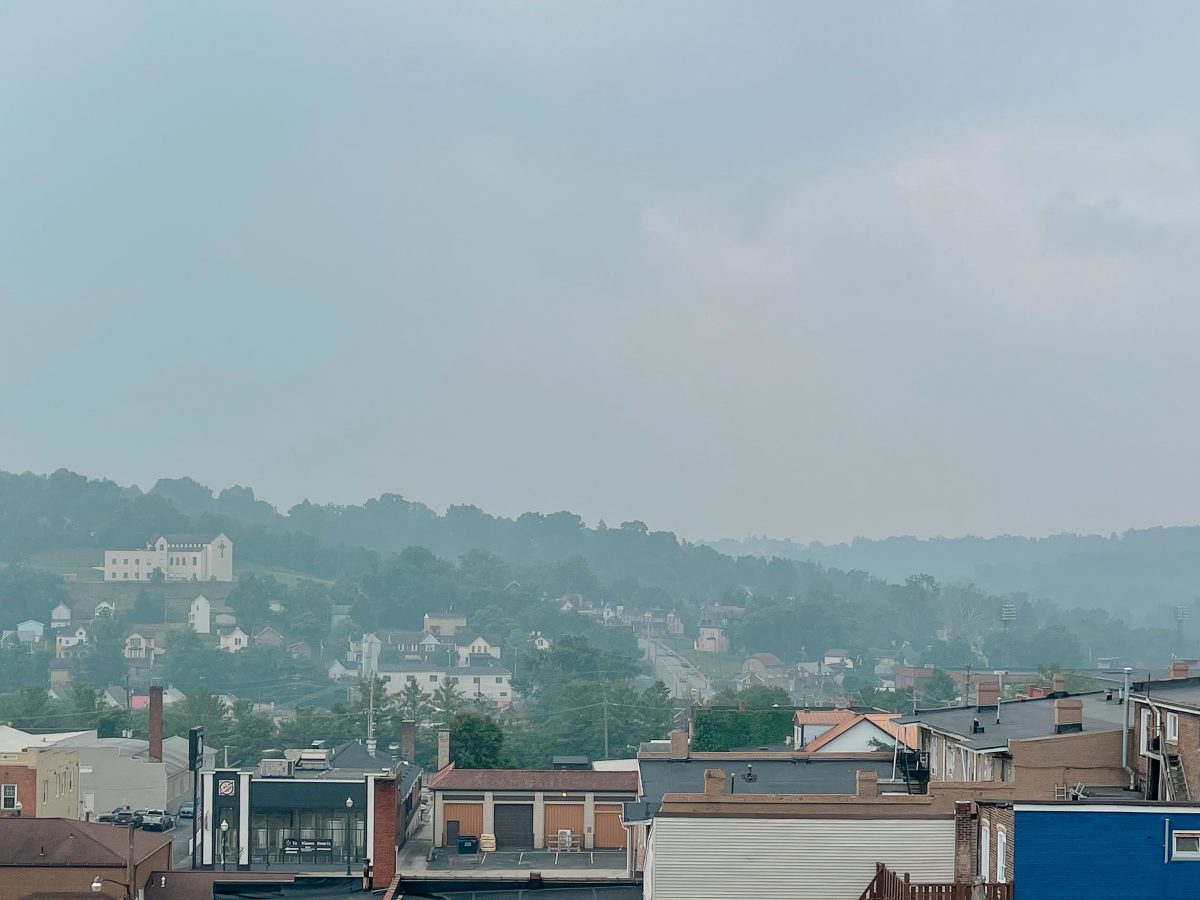
Smoke from Canadian wildfires blankets the region late Wednesday morning, creating a hazy view from downtown Washington.
Katherine Mansfield/Observer-Reporter
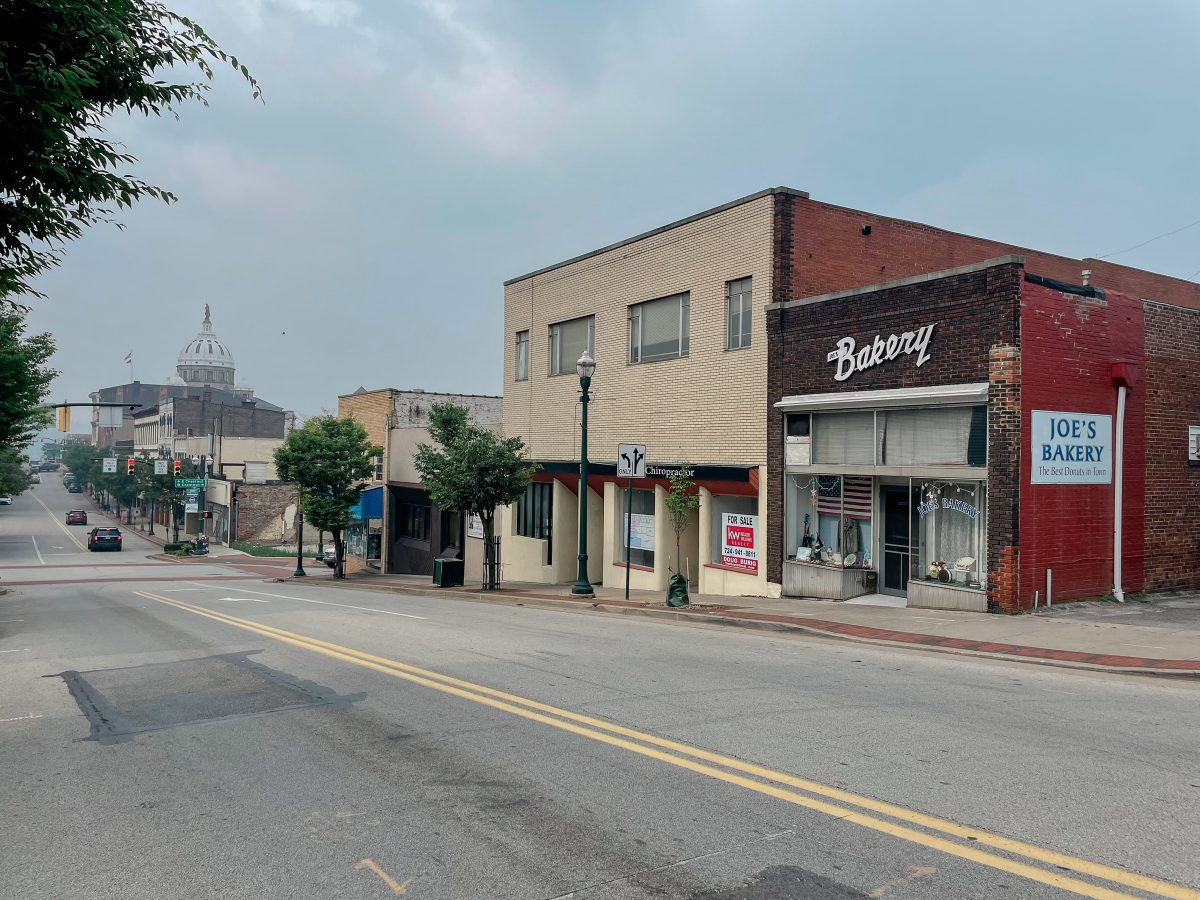
Smoke from Canadian wildfires hangs low over the city of Washington Wednesday morning. The state Department of Environmental Protection issued a code red for air quality Wednesday, and people were encouraged to remain indoors.

Katherine Mansfield/Observer-Reporter
An eerie mist covered Washington County Wednesday, as smoke from Canadian wildfires moved into the region. Wednesday morning, 20 states including Iowa, Pennsylvania and North Carolina, were under air quality alerts.
Katherine Mansfield/Observer-Reporter
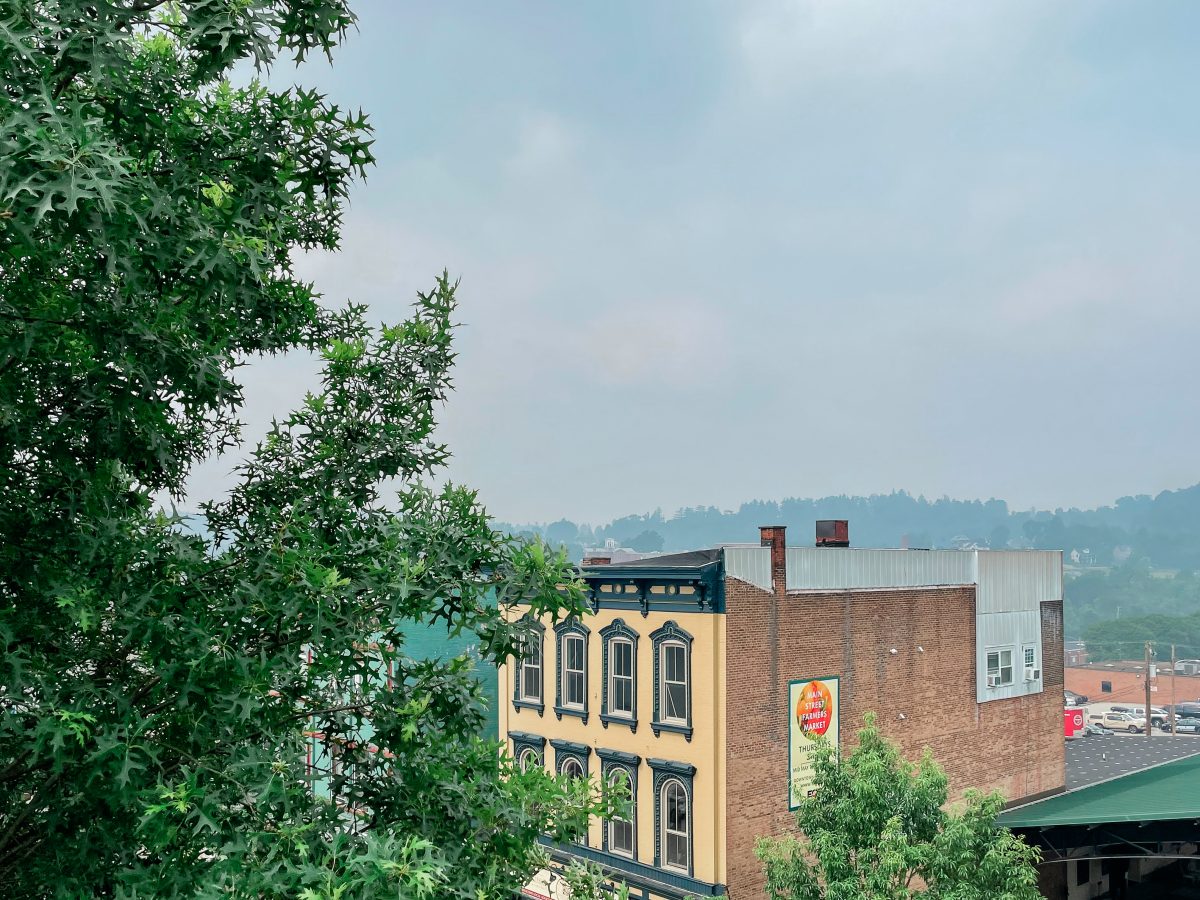
A smoky haze blankets downtown Washington Wednesday morning, after smoke from Canadian wildfires made its way to the region. Washington, Greene and Fayette counties were under an air quality code red Wednesday.
Smoke from Canadian wildfires is again blanketing Southwestern Pennsylvania, creating unhealthy air quality conditions.
A code red air quality alert was issued Wednesday by the Pennsylvania Department of Environmental Protection due to smoke drifting into Pennsylvania from the Great Lakes region.
A code red means air pollution concentrations are unhealthy for the general public.
Advice given by the DEP urged young children, the elderly, and those with respiratory problems, such as asthma, emphysema, and bronchitis, to avoid outdoor activities, and everyone else to reduce activity levels due to the air outside.
“The average Air Quality Index readings for the entire day will likely be in the Code Red range; however, local conditions could be worse throughout the day,” the DEP said in a statement.
Smoke from the wildfires is expected to impact Pennsylvania air quality through Friday, with some possible relief on Saturday, according to the DEP.
The Environmental Protection Agency’s airnow.gov website listed air quality in large parts of Washington, Greene and Fayette counties as “very unhealthy.”
Washington Park Pool closed Wednesday due to the DEP’s air quality alert.
“It’s rare for us to close, but try to stay indoors today,” Washington Park posted on its Facebook page.
As of Wednesday morning, 20 states, including Iowa, Pennsylvania, Ohio, West Virginia, and North Carolina, were under air quality alerts, as smoke blanketed large swaths of the country.
Across Canada, 480 forest fires are burning, with 251 considered to be out of control, as Canada’s worst fire season on record continues.
The Canadian Interagency Forest Fire Center reported as of Tuesday, more than 8.1 million acres of land has burned across Canada since Jan. 1.
PM2.5, a particulate matter in wildfire smoke that is 30 times smaller in diameter than a human hair, is of particular concern. The dangerous pollutants can irritate the eyes, nose and throat, and they can easily enter the nose and throat and can travel to the lungs, with some of the smallest particles even circulating in the bloodstream.
Fran DeBlasio of Peters Township likened the hazy skies to “the old steel mills.”
“This morning you could smell it. The air quality is so bad,” said DeBlasio, who noted the smoke irritated her eyes.
In North Strabane Township, public works employees finished up a tarring and chipping job mid-morning and then headed inside for the remainder of the day.
“We were done about 10 a.m. and I had the guys come in, and they stayed inside the remainder of the day for the most part,” said public works director Tom Lovell. “The guys did odds and ends at the township building. There were guys out with the street sweeper with the AC on. That’s how we took care of it today. We tried to make sure people were in air conditioning or inside the building. We try to do our best to make sure the employees’ health is looked after. It’s not easy for our profession, but we try.”
On air quality alert days, residents and businesses are encouraged to voluntarily help reduce fine particulate matter air pollution by not using gas-powered lawn and garden equipment and by avoiding the open burning of leaves, trash, and other materials.
Dr. Debra Bogen, Pennsylvania’s Acting Secretary of Health, encouraged people to limit time outside.
“Many of us really enjoy spending time outside; however, while the smoke from Canadian wildfires is affecting our air quality, we need to consider moving physical activities indoors or rescheduling them,” said Bogen.
Logan Byers of the ASPCA, who was fundraising outdoors at Trinity Pointe in Washington Wednesday afternoon, resorted to wearing a mask as smoke from the wildfires filtered into the area.
“I definitely could feel it. I kept breathing in and I thought, this is bad,” said Byers. “Visually, it looks kind of cool, that haze in the sky, but I know it’s not. I know it’s bad.”