

Notice: Undefined variable: paywall_console_msg in /usr/web/cs-washington.ogdennews.com/wp-content/themes/News_Core_2023_WashCluster/includes/single/single_post_meta_query.php on line 71
Notice: Undefined offset: 0 in /usr/web/cs-washington.ogdennews.com/wp-content/themes/News_Core_2023_WashCluster/single.php on line 18
Notice: Trying to get property 'cat_ID' of non-object in /usr/web/cs-washington.ogdennews.com/wp-content/themes/News_Core_2023_WashCluster/single.php on line 18
Surviving the homefront
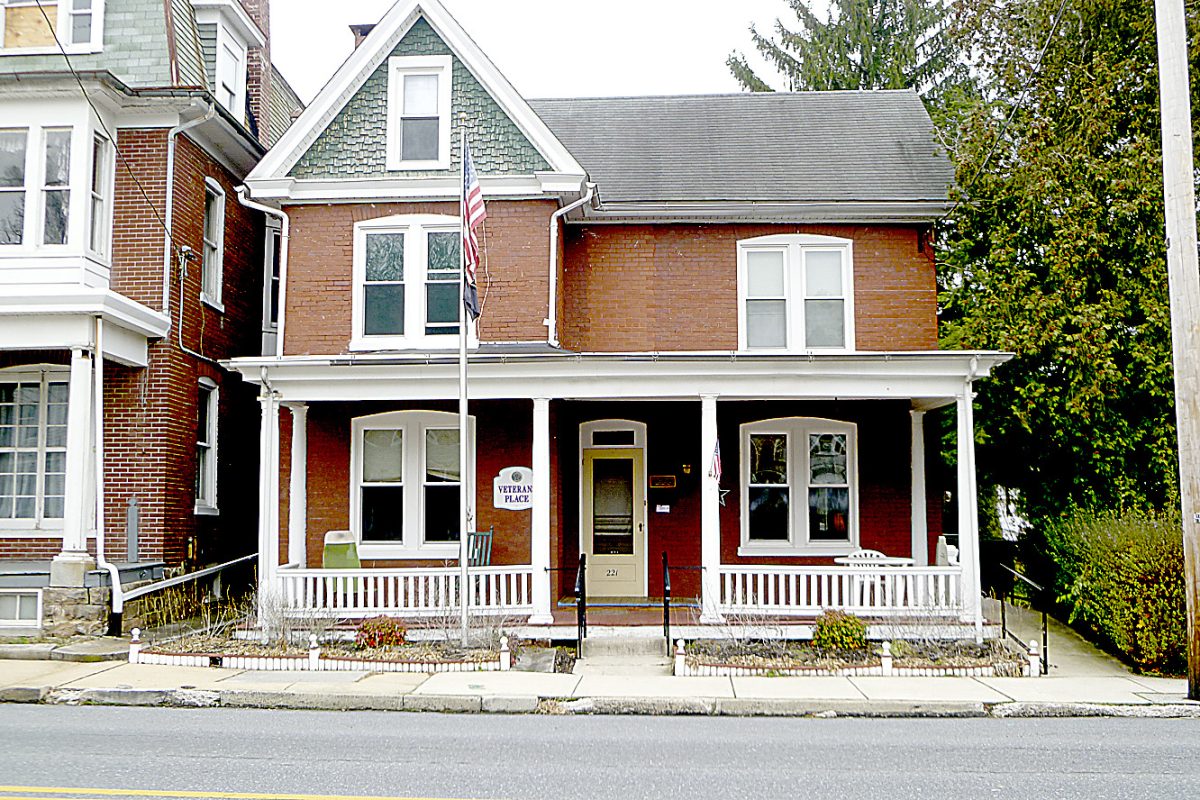
Homeless military veterans can stay rent-free for up to two years at Veteran’s Place in Ephrata while they try to secure permanent housing and a comfortable financial future.
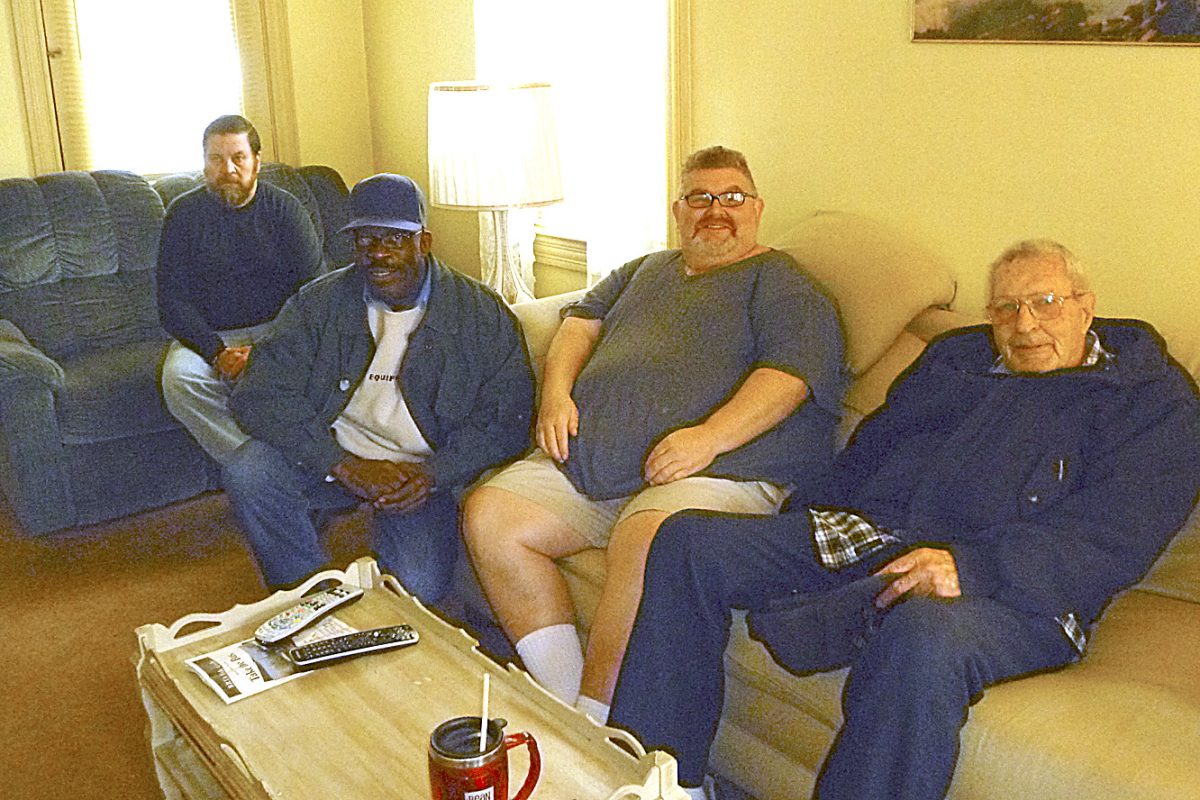
Posing in the living room of Veteran’s Place in Ephrata are four of its five residents, from left, Don Reed, 61, Henry T. Hill, 51, Phillip Kantner, 53, and Harold Besold, 80. Kantner served 13 years in the U.S. Navy; the others are U.S. Army veterans.
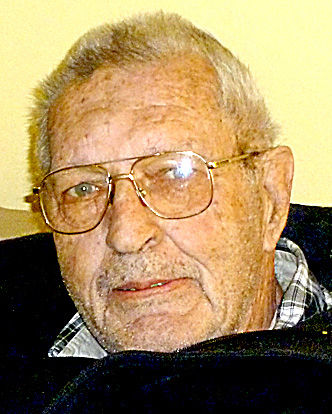
Harold Besold

Phillip Kantner
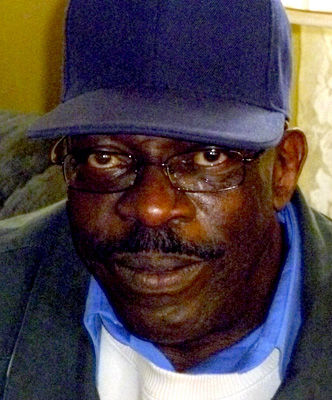
Henry T. Hill

Don Reed
Notice: Undefined offset: 0 in /usr/web/cs-washington.ogdennews.com/wp-content/themes/News_Core_2023_WashCluster/includes/single/strategically_placed_photos_article.php on line 412
Notice: Trying to get property 'term_id' of non-object in /usr/web/cs-washington.ogdennews.com/wp-content/themes/News_Core_2023_WashCluster/includes/single/strategically_placed_photos_article.php on line 412
EPHRATA – Harold Besold is an 80-year-old U.S. Army veteran, and he is homeless.
But thanks to Veteran’s Place, Besold should have a place to call his own not long after spring arrives – and he is looking forward to it.
“I want to get rid of these characters,” he jokingly said, referring to three of his four roommates who, just moments earlier, had been watching “The Steve Harvey Show” on television in the living room of their modest five-bedroom house.
Veteran’s Place is one of three residences dedicated to housing homeless military veterans in Lancaster County. All of the homes are within a 21-mile stretch between Lancaster and Ephrata, and all, despite being operated by different organizations, offer the transitional stability and support required to help homeless veterans secure permanent housing and a comfortable financial future.
Veteran’s Place, which was established in 1998, can accommodate just five veterans, but Veterans Victory House in Lancaster has 17 beds, and Beacon House in Akron can sleep eight. In their various years of operation, the programs have helped more than 550 veterans. A study by the Coalition to End Homelessness showed an average of 508 people in Lancaster County experienced homelessness from 2011-13. About 10 percent of them have been veterans.
Besold arrived in Lancaster County in April 2012 from Tomorrows Hope in Coalport, Clearfield County, a transitional housing center for veterans that Besold said resembled a “barracks.” Located in the mountains, it is isolated, and daily living there is more regimented, with residents required to sign in and out whenever they leave the premises.
At the time, however, Besold had little choice. He was broke.
“I was with a person, and she cost me a fortune,” he said.
However, Besold never lived on the streets, noting that “I always had a place to go.”
Then one day, a caseworker at Tomorrows Hope told him, “You don’t belong here.” There was a pause before she said, “There’s an opening in Ephrata.”
Besold was happy to move, and even though Ephrata isn’t far from his native Reading in nearby Berks County, “I don’t have anybody, really.”
Except, of course, the four men with whom he now shares a home. They are like a family. They work together to maintain a smooth household, and they provide plenty of comic relief for each other during some difficult times.
Veteran’s Place is located in a pleasant residential neighborhood, just three blocks from Ephrata’s downtown business district. It was purchased by the Pennsylvania American Legion Housing for Homeless Veterans Corp., which, over the years, has helped 400 veterans at its various facilities and has an 85 percent success rate. Veteran’s Place receives a grant per diem through the U.S. Department of Veterans Affairs, and also relies on monetary and material donations from the community.
Veterans can live at Veteran’s Place rent-free for up to two years as they work toward obtaining financial stability so they can secure affordable housing. That’s why Besold is looking now for a place to live. His time is up in April.
A caseworker makes a weekly visit to meet with each of the men, and the program coordinator checks on them weekly as well to make sure they are doing OK and on the right track.
Each resident also has specific chores to complete on a regular basis, and each is responsible for purchasing his own food and toiletries. Cleaning supplies are provided on an as-needed basis, and Disabled American Veterans provides transportation for residents who don’t have their own.
For 53-year-old Phillip Kantner, Veteran’s Place has been a blessing.
The 13-year U.S. Army veteran became homeless after his wife of 15 years kicked him out of the house. He lived for two months with his father before seeking shelter at Opportunity House in his hometown of Reading, a short-term, interim housing organization that provides an array of services to homeless children, adults and families.
And just like Besold, the patriarch of the Veteran’s Place bunch, Kantner was told one day, “You’re going to Ephrata.”
That was six months ago.
“It’s like starting all over,” he said. “The next step is to go out on our own. I’m getting some of my bills paid off.”
In January, he will begin another program that will significantly change his life once again. It’s called MOVE, a national weight management program that, according to the U.S. Department of Veterans Affairs, was designed by the VA National Center for Health Promotion and Disease Prevention.
Kantner has a curved foot, and he suffers from a variety of health issues, many of which have been brought on by his obesity.
“I’ve always been a big guy, but I’ve never been like this,” said Kantner, who tipped the scales at 172 when he served in the Navy.
“I’m Pennsylvania Dutch and Irish. I’m a meat-and-potatoes guy, and a junk-food junkie. I used to be on the go, but I can’t anymore.”
Kantner will continue to live at Veteran’s Place while he’s enrolled in MOVE. He will receive nutrition counseling and work with a personal trainer on an exercise program. He will be under the care of doctors at an area hospital during the six-month program.
“I’m looking forward to it,” Kantner said.
Philadelphia native Henry T. Hill, 59, was coming out of a marriage when he was laid off and couldn’t pay his mortgage. When he lost his home, he called the Veterans Administration. He was told about Opportunity House, where he lived until Aug. 2 before being transferred to Veteran’s Place.
Hill served for eight years with the U.S. Army, six years on active duty and two years in the reserves.
“I have health problems right now,” Hill said. “I have arthritis in my knee and an overactive thyroid.”
Don Reed’s journey to Veteran’s Place is similar to that of Hill. Reed, 61, served in the U.S. Army, the third generation in his family to do so.
Reed has high blood pressure, asthmatic bronchitis and other health issues. When he lost his job and unemployment was not enough to pay his mounting bills, Reed lost his apartment, too.
He turned to Catholic Charities in Pottsville, Schuylkill County.
“There was no place for vets,” Reed lamented.
He was referred to the Veterans Administration, and a few months ago, arrived at Veteran’s Place.
Richard Coccimiglio, director of veterans outreach and employment for the American Legion’s housing for homeless veterans corporation, recently told the Lancaster New Era, “What people have to remember is that these guys are honorably discharged vets. … They served their country well. This is the case where the 1 percent (of military servicemen and women) took care of the 99 percent (the civilian population.) Now we want the 99 percent to take care of the 1 percent.”
Veterans Victory House is another transitional living program in Lancaster County, and like Veteran’s Place, it, too, receives a grant per diem through the Department of Veterans Affairs, plus monetary and material donations from the community.
However, VVH is operated by Tabor Community Services, an organization established in 1968 by members of the Mennonite community in Lancaster to help low-income families find housing and manage their finances.
The goal of VVH, according to its website, “is to provide veterans experiencing homelessness with an opportunity to develop a housing plan that will enable them to obtain permanent, sustainable housing.”
Supportive services and counseling in budgeting, job referral and training are offered, with weekly visits with a liaison from the Lebanon VA Medical Center. TCS is able to access many government programs, specifically HUD’s new Veterans Affairs Supportive Housing-Section 8, to help veterans secure permanent housing.
Veterans Victory House was established Nov. 1, 2007, in a residential area, not far from Lancaster’s downtown business district, with public transportation readily available. The average length of stay is seven months, and oftentimes there is a waiting list.
Since it opened, VVH has moved 95 households representing 126 individuals, or 68 percent, into permanent housing. In the last year, 33 households, or 75 percent, have attained permanent housing.
At the Beacon House in Akron, eight residents pay $50 a week to live there, which helps cover some utilities and property costs.
Beacon House also receives financial support, household goods and material goods from VFWs, American Legions, AMVETS, churches, private citizens and businesses, with 100 percent of all donations going directly to services for homeless military veterans.
Beacon House was established by members of the Vietnam Veterans of Lancaster County and is an all-volunteer nonprofit organization that provides homeless veterans with temporary transitional housing, a safe living environment and assistance to gain employment.