

Applicants, bosses both blamed as jobs go unfilled

In this April 3 photo, Vacasa chief strategy officer Scott Breon poses for a photo at his office in Portland, Ore. Breon asked applicants for a marketing position to perform a simple task: Design a sales flier showing why they’re the best one for the job. He got three emails. After he posted the job again without the assignment, applications poured in.
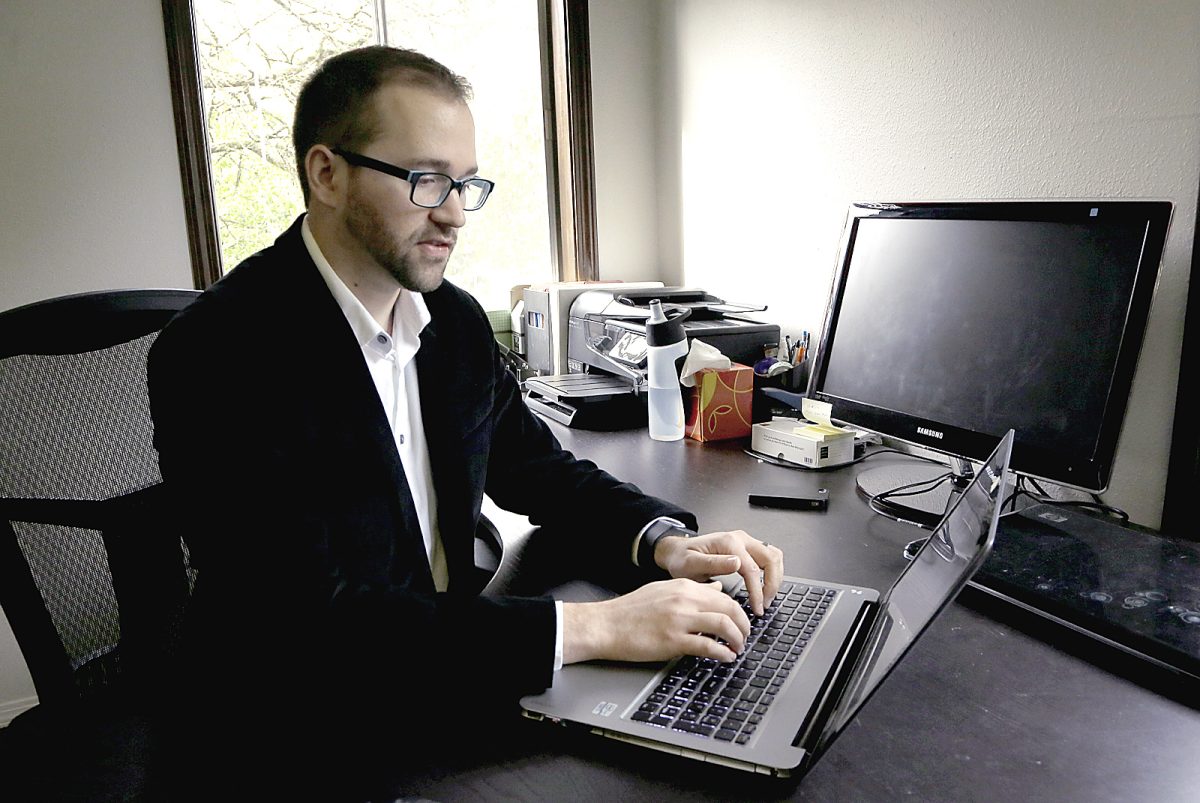
In this April 3, 2014 photo, Vacasa chief strategy officer Scott Breon poses for a photo at his office in Portland, Ore. Breon asked applicants for a marketing position to perform a simple task: Design a sales flyer showing why theyíre the best one for the job. He got three emails. After he posted the job again without the assignment, applications poured in. (AP Photo/Don Ryan)
NEW YORK – Many potential employees don’t follow directions on job postings, are no-shows at interviews or sometimes accept a job only to say, at the last moment, they’re going to work for somebody else.
It’s a situation that’s leading small business owners wading through piles of resumes to an unhappy conclusion: The job applicant pool is full of unskilled, unreliable slackers.
Many complaints are about younger workers, but human resources consultants say it’s an issue across the age spectrum and pay scale. The problem, however, isn’t just a flippant attitude on the part of job applicants. Employers have contributed to a change in job-search etiquette.
Brian Schutt is one of the frustrated bosses. His company, Homesense Heating, got about 300 applications for an administrative position, and the office manager interviewed 25 candidates.
Schutt expected to meet with a dozen people in the second round of interviews, but only one showed up. Younger applicants, in particular, seem to have a different work ethic, said Schutt, whose company is in Indianapolis.
“They just want to play and have fun and smoke,” Schutt said. “I’ve gotten a very cynical view of what I’ve seen of folks under 25 that we’ve tried to bring on board.”
The lackadaisical attitude of some applicants compounds the difficulty of finding skilled employees, an issue that owners have reported for several years. In a 2013 survey of 1,200 local employers by St. Louis Community College, 56 percent cited applicants’ poor work ethic as a problem.
In a survey last year by Seattle Jobs Initiative, a nonprofit, nearly 35 percent of employers said most applicants for entry-level positions weren’t reliable.
At Vacasa, a vacation home management company, chief strategy officer Scott Breon asked applicants for a marketing position to perform a simple task: Design a sales flier showing why they’re the best candidate for the job. He got three emails. After he posted the job again without the assignment, applications poured in.
“If you have very few requirements, you get flooded with generic responses, the same letter they sent to 100 other companies,” said Breon, chief strategy officer for the Portland, Ore.-based company.
Rob Wilson, president of a company that provides human resources services, not only hears about hiring problems from clients, he encounters them.
Chicago-based Employco got hundreds of resumes for several open positions. Wilson and his staffers winnowed that number down to 30 and began setting up interviews. Of six people scheduled, only three showed up. Because of their unprofessional attitude, those who stood up Wilson can forget about working for Employco.
“If they’re a no-show, there’s no second chance,” Wilson said.
Employers may be partly to blame for applicants’ uncaring attitudes, said James McCoy, a vice president at the staffing company Manpower. Many human resources or hiring managers never acknowledge applications, and McCoy said candidates are following their example.
Three-quarters of candidates surveyed last year said they didn’t hear from an employer after applying for a position, according to job search company CareerBuilder. Sixty percent said they went on interviews, but weren’t informed afterward they hadn’t gotten the job.
Job-seeker Becky Cole has skipped second interviews or canceled when a would-be employer wasted her time or was condescending during an initial meeting.
“How I respond depends on the person. If they have not made an effort to be a human being during the interview, I will email to cancel and let them know why I don’t plan to show up,” said Cole, who has been looking for a job as a technical writer in the St. Paul, Minn., area since January.
Applicants also may be burned out by the increasing demands and low chances of success in job searches since the recession.
A job posting for the lighting company Lumitec required applicants to write a cover letter that included five attributes that made them good candidates for a technical position. Many highly qualified candidates didn’t take the time to comply, probably because they were applying for a number of jobs at once, said John Kujawa, president of the Delray Beach, Fla.-based company.
“They had so many things to go after, and every one of those is a long shot,” he said.
Job postings probably turn off some applicants rather than inspire them to put their best foot forward, said Melissa Trocko, a managing director at human resources provider Insperity.
“All these job ads, thousands of them, say, ‘I need this skill and that skill and that many years of experience,'” Trocko said. “There’s nothing exciting in them about the job.”
But she agrees many job seekers don’t make much of an effort.
“They’re probably applying for jobs while at work, not reading the job postings, not following all the rules.”
Glenn Boehmer deals with that problem as he sifts through resumes. People apply for jobs at his printing business they’re not qualified for.
“We can get 40 responses, but rarely do I have one that’s specifically what we’re looking for,” said Boehmer, owner of Sentinel Printing in Hempstead, N.Y.
Perhaps most frustrating are candidates who accept jobs then change their minds.
One day before a new staffer was supposed to start at Erika Flora’s technology consulting company, Beyond 20, he sent an email saying he’d taken another job.
The work she’d put into the selection process, including four rounds of interviews, was wasted.
But Flora, whose company has offices in Washington, D.C., Phoenix and San Diego, is philosophical.
“I’m glad we found out. He didn’t have much integrity.”