

Courtroom interpreter requests on the rise in Washington County
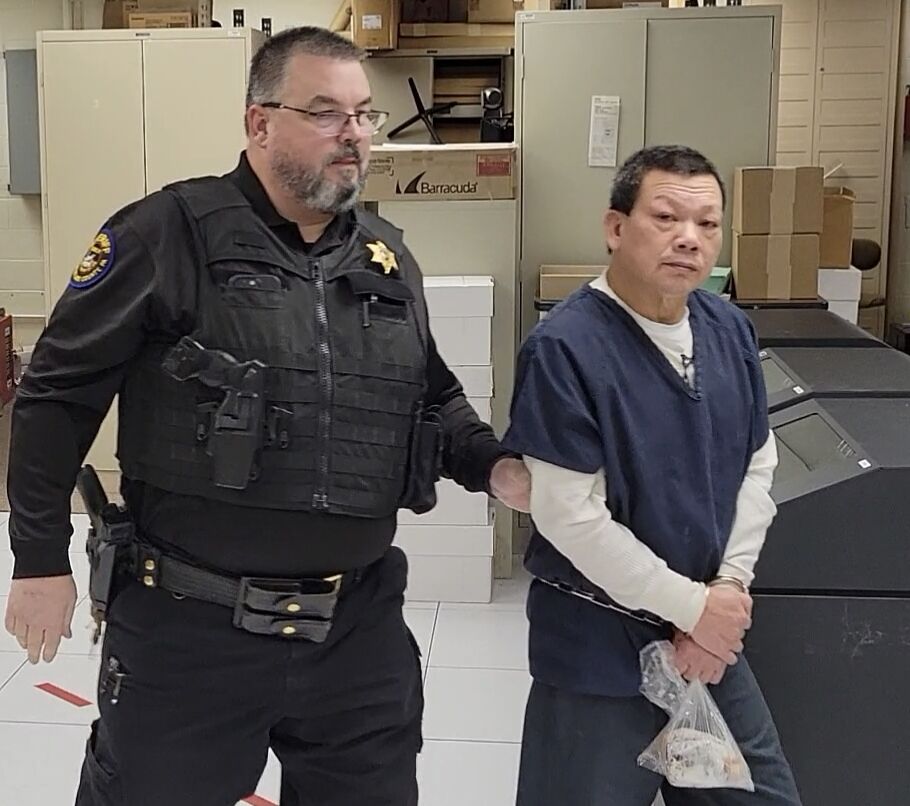
Mike Jones/ Observer-Reporter
An interpreter was necessary to conduct a preliminary hearing for Keven Van Lam, who is charged in connection with the Nov. 5, 2022 shooting death of Boyke Budiarachman in Rostraver Township.
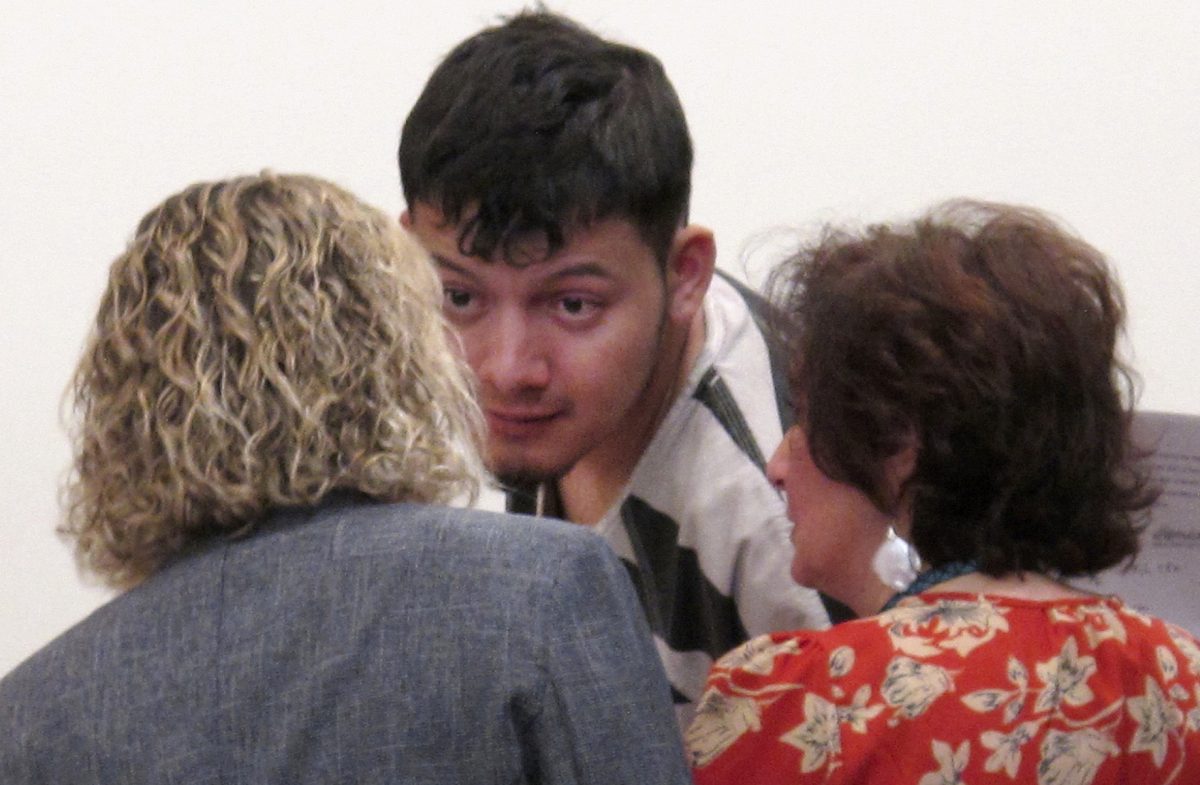
Scott Sonner
In this Jan. 24, 2019, photo, Wilber Ernesto Martinez-Guzman, of El Salvador, listens to his public defender and interpreter during his initial appearance in Carson City Justice Court, in Carson City, Nev. Over recent years, Pennsylvania’s courts have seen a rise in the need for interpreters to assist criminal defendants during court proceedings.
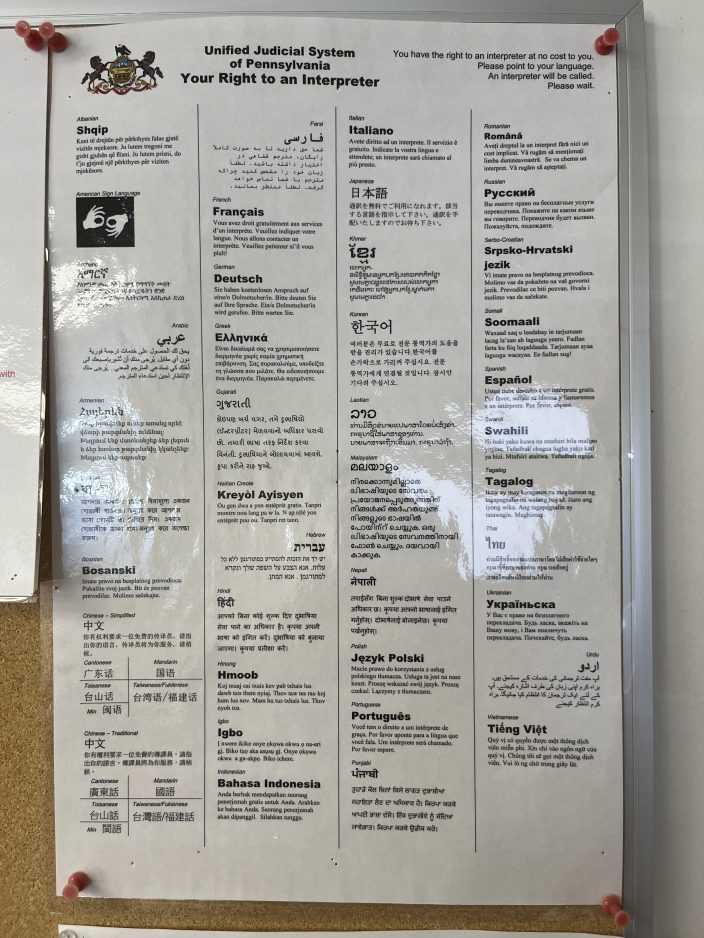
Jon Andreassi/Observer-Reporter
A sign informing people of their right to an interpreter hangs at district courts across Pennsylvania.
Requests for courtroom interpreters increased by 36% statewide last year, and Washington County has been following in line with the trend.
According to the Administrative Office of Pennsylvania Courts (AOPC), there were more than 49,000 interpreter requests across Pennsylvania in 2022. Of those cases, 194 were in Washington County.
This is nearly a 30% increase over the 137 requests in 2021. Kristin Riley, deputy court administrator, said that since the end of October there have been 169 requests so far this year.
“So, we’re averaged out to be over 200, around 205, for 2023,” Riley said.
When a request comes through, Riley explained they utilize a roster of certified interpreters provided by the AOPC. This system helps everything run smoothly even when the numbers are rising.
“Of course anytime there is an increase of that size there is some more work to be done,” said Patrick Grimm, Washington County court administrator. “There are a number of resources that help streamline that process, and help absorb any extra work that comes with it.”
Greene and Fayette counties are outliers in that they have a consistently low number of interpreter requests, and that has not changed. In Greene, it is rare the courts ever need an interpreter.
Sheila Rode, Greene County court administrator, said they had three requests in 2021, just one in 2022, and have had two this year.
“We just don’t get that many,” Rode said.
According to Fayette County Deputy Court Administrator Lori Lambie, there were 20 requests last year and this year there have been 16. Fayette averages between 20-25 interpreter requests a year.
“It stays pretty similar,” Lambie said. “We don’t have a huge fluctuation.”
The vast majority of those are Spanish or American Sign Language (ASL) interpreters, but Lambie said they do have unique cases from time to time. She recalled once they had to bring in a Punjabi interpreter from Philadelphia.
“That’s the only time we had to house somebody,” Lambie said.
An ongoing homicide case in Westmoreland County had a lengthy preliminary hearing last month due to requiring a Vietnamese interpreter. Keven Van Lam is facing several charges for his alleged involvement in the fatal shooting of Boyke Budiarachman in Rostraver Township last year.
Lam, 56, has a permanent address in Philadelphia but is originally from Vietnam. The need to translate testimony stretched the hearing to three hours.
Lam is due to appear at the Westmoreland County Courthouse Dec. 20 for arraignment.
Spanish was “by far” the top language in Washington County in 2021 with 94 requests, according to Grimm.
“The second and third languages were Chinese and Romanian. In 2022 … Russian became second, and then Haitian Creole became the third,” Grimm said.
He added that requests for Haitian Creole went from four to 24. Those requests have only continued to rise.
“We won’t get a statistic set until the end of the year, but we can say pretty confidently that Haitian Creole is going to be the number two requested language,” Grimm said.
ASL has typically not been a common request in Washington courts, but those have also seen an increase.
Grimm said that ASL is more logistically challenging to schedule because they usually need multiple interpreters.
“It’s more exhausting to do sign language than it is to do a spoken language,” Riley said, adding that during long days in court ASL interpreters are able to take a break.
On very rare occasions they will need to bring in a certified deaf interpreter (CDI). Grimm said this situation came up when they had a defendant who was deaf, and could not read or write.
Those who are CDI-certified are usually deaf themselves.
“They actually are able to communicate with the person a little differently than the way ASL is communicated,” Riley said.
The CDI will sign what the person is saying to the ASL interpreter, who in turns speaks the words to the judge.
Whatever the need is, Lambie said it is important people have access to interpreters so they can navigate a complicated legal system.
“I think it’s important that people understand the process,” Lambie said. “Even though they live here doesn’t mean they understand all of our legal goings on.”