

Notice: Undefined variable: paywall_console_msg in /usr/web/cs-washington.ogdennews.com/wp-content/themes/News_Core_2023_WashCluster/includes/single/single_post_meta_query.php on line 71
Notice: Undefined offset: 0 in /usr/web/cs-washington.ogdennews.com/wp-content/themes/News_Core_2023_WashCluster/single.php on line 18
Notice: Trying to get property 'cat_ID' of non-object in /usr/web/cs-washington.ogdennews.com/wp-content/themes/News_Core_2023_WashCluster/single.php on line 18
Cardiologists retiring after more than 30 years
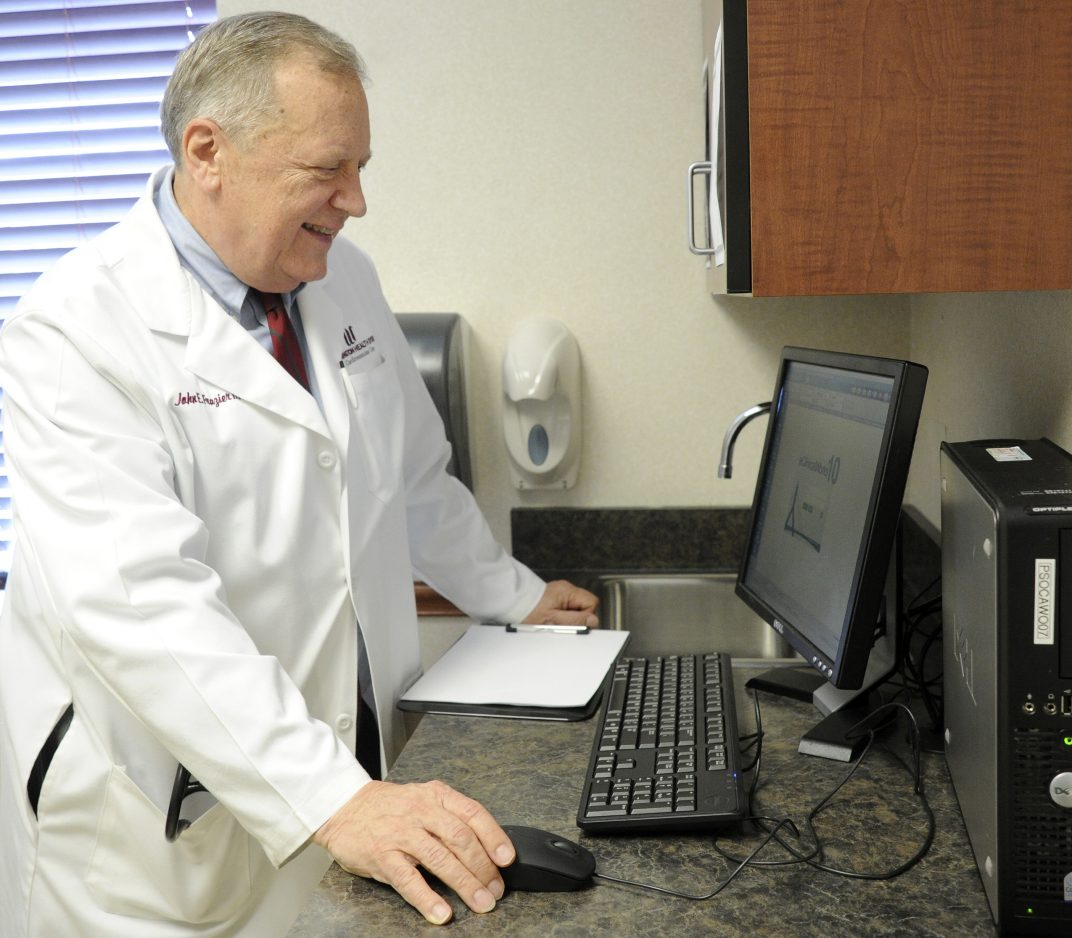
Dr. John Frazier works at his practice on Franklin Drive near Consol Energy Park in North Franklin Township. The practice, Washington Health System Cardiovascular Care, sees 32,000 patients annually.
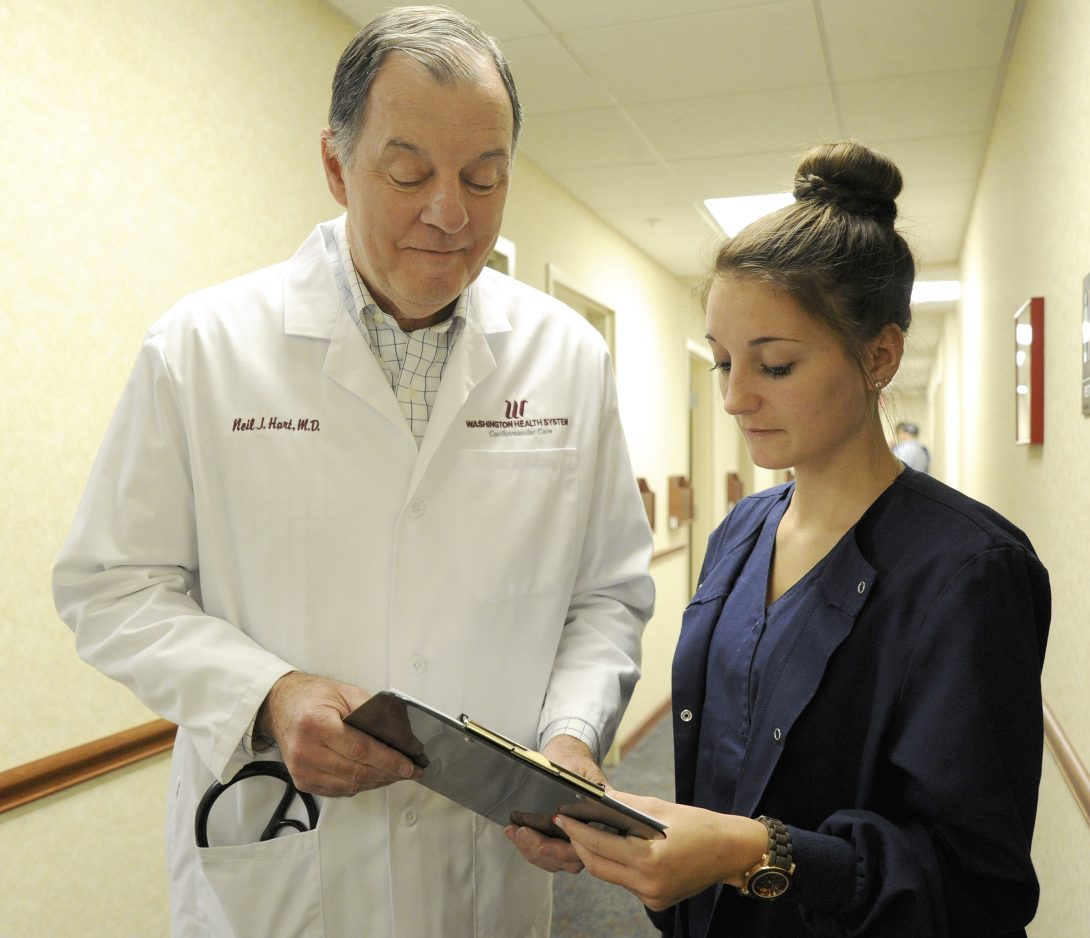
Dr. Neil Hart goes over reports with medical assistant Tiffany Huxley at his practice. Hart and business partner Dr. John E. Frazier are retiring after working together for more than 30 years.
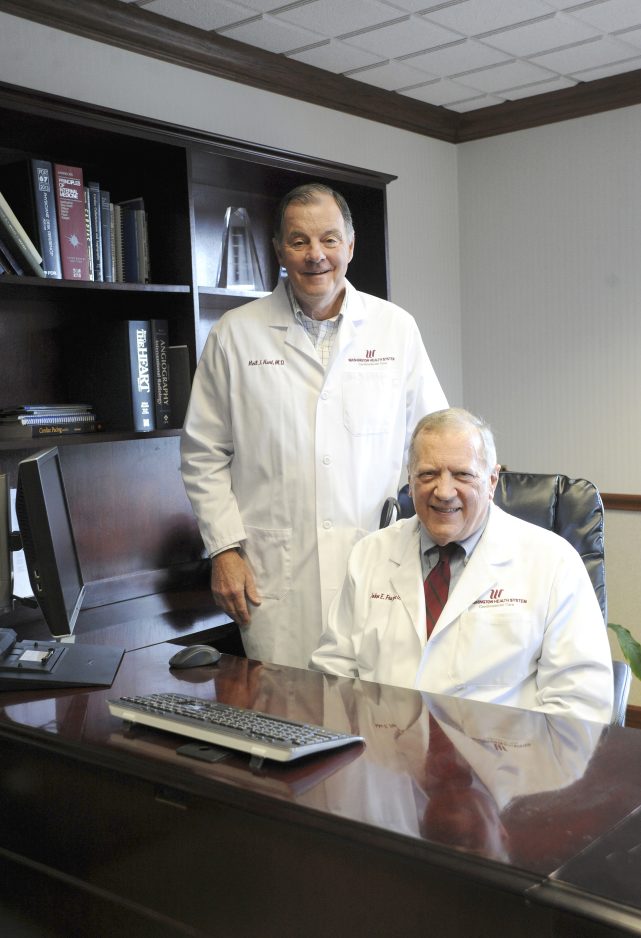
Dr. Neil Hart and Dr. John Frazier met on the first day of Frazier’s cardiology fellowship at Atlanta’s Emory University School of Medicine in 1971. The pair have been friends for more than 40 years and in practice together for more than 30.
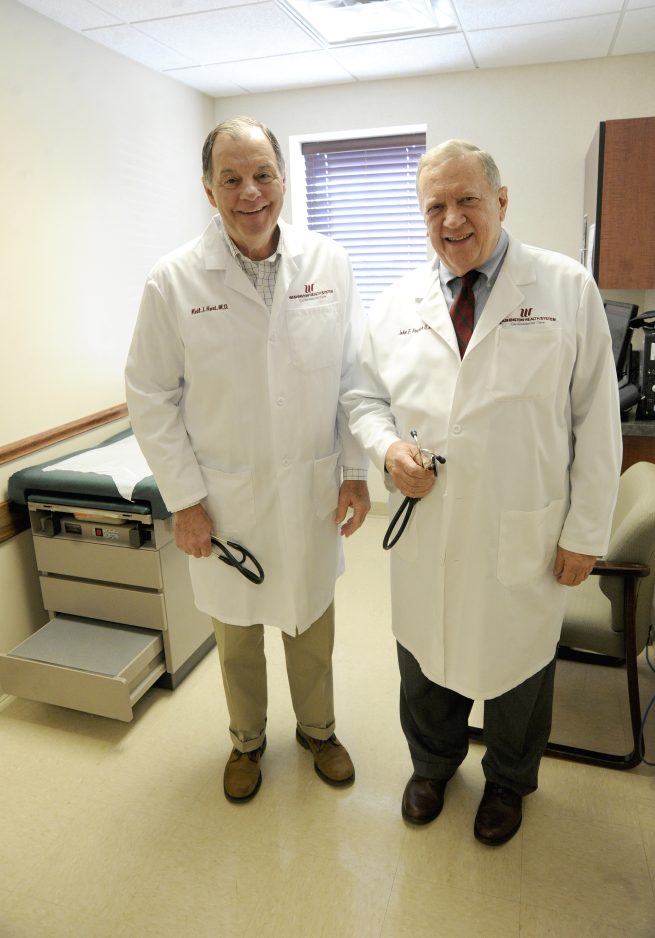
Dr. Neil Hart and Dr. John Frazier are looking forward to retirement to spend time with family, travel and get in a few naps. The business partners are retiring from their cardiovascular practice after more than 30 years of working together.
Notice: Undefined offset: 0 in /usr/web/cs-washington.ogdennews.com/wp-content/themes/News_Core_2023_WashCluster/includes/single/strategically_placed_photos_article.php on line 412
Notice: Trying to get property 'term_id' of non-object in /usr/web/cs-washington.ogdennews.com/wp-content/themes/News_Core_2023_WashCluster/includes/single/strategically_placed_photos_article.php on line 412
O n the first day of his cardiology fellowship at Atlanta’s Emory University School of Medicine, John Frazier spoke to another man as they walked in the door. The year was 1971.
That encounter would result in a 43-year friendship. That friendship would translate into a thriving medical practice and the establishment of a cardiovascular program at Washington Hospital that would make the difference in thousands of lives.
Today, the practice Drs. John E. Frazier and Neil J. Hart began in 1982 as Frazier-Hart is flourishing as Washington Health System Cardiovascular Care with a professional staff of nine cardiologists and eight nurse practitioners. Both men, now in their 70s, are retiring this month.
They announced their intentions to retire several years ago, giving the practice time to hire a physician and begin transferring patients to other cardiologists, said Kurt Segeleon, office manager. The practice, located at 125 N. Franklin Drive near Consol Energy Park, sees 32,000 patients annually.
The doctors’ retirement has not been without some mixed feelings.
“It’s been very emotional,” said Marjorie Fischer, a medical assistant, who earlier that day witnessed a patient tearfully saying goodbye to Hart.
Fischer understands the emotions. She began her work at the practice in 1982, just one month before Hart joined his friend in the Washington Trust Building. Frazier had started his Washington practice in 1975 and talked Hart, a native of Cleveland, into joining him.
“I knew one person in Washington County and just on faith alone I came down,” Hart said.
“Talk about the odd couple,” he added. “I had six kids and another on the way and John wasn’t even engaged.”
A typical physician’s office in the 1980s was much different than today. Forget computers; there wasn’t even an office fax machine noted Fischer, and an electric typewriter with erasable tape was something of an electronic miracle.
And Frazier recalled times when the building’s elevator failed to work, necessitating the need for heart patients to climb 10 flights of stairs to their office.
It was also a time when heart disease was treated much differently. A person who had suffered a heart attack would likely be sedated and kept quiet to allow the heart muscle to heal.
Today that same patient would be flown to a hospital and immediately taken into a catheterization lab to unblock an artery in hopes of preserving as much heart muscle as possible.
There have been great advances in cardiac care during the years the men have practiced.
Heart bypass surgery and angioplasty became commonplace in the 1980s. In this region, heart bypass surgery was being performed at only Allegheny General or Shadyside hospitals in Pittsburgh. As a result, Frazier-Hart sent a steady stream of ambulances there.
The cardiac intensive care unit at Washington Hospital was founded in 1970 by Dr. Bernard Berman. The need for greater cardiac treatment led Frazier and former Washington Hospital president and chief executive officer Eugene Strosser to testify before the state Department of Health under the Certificate of Need law, which was enacted to reduce health care costs. Although lobbyists and lawyers for a Pittsburgh hospital fought the effort, Washington Hospital was successful and began performing heart catheterizations in 1991. Frazier said Washington was the first county regional hospital authorized to do so.
In November 1992, the Department of Health gave its approval for Washington Hospital to perform open heart surgery. The first heart bypass surgery was performed on 54-year-old Patti Trusler in 1993. Trusler, a patient of Frazier’s who lived close to the hospital, opted for the local surgery since it would be more convenient than in Pittsburgh.
The hospital was well-prepared for Trusler’s surgery, having spent $1.6 million on equipment and other upgrades and training a staff of 40 people led by surgeon Dr. Ronald Pellegrini and nurse Marsha Knapik.
Their first candidate, a young man with blockage in one artery who was given a 95 percent chance of success, had decided he didn’t want to be their first patient.
“I don’t think we’ve had anyone refuse since that day,” Frazier said with a chuckle.
Today, thanks to the doctors’ work with the hospital, 90 percent of heart-related issues patients have can be handled at Washington Hospital. More than 3,800 procedures annually are performed in the catheterization labs.
The labs, named for Berman, offer full-spectrum cardiology care, including electrophysiology testing and heart rhythm management treatment including pacemaker and ICD implantation as well as cardiac ablations. As advances are made in interventional cardiology, the need for heart bypass surgery has fallen dramatically across the nation. In Washington it peaked at 440 patients in 1998.
Gary Weinstein, president and chief executive officer of Washington Health System said WHS and the entire community “are grateful for the leadership of Drs. Frazier and Hart in establishing a community-based cardiology program that has saved thousands of lives and improved the quality of life of countless others.”
That effort was not without sacrifice and much of what Frazier and Hart recall from those days are the long, long hours.
“We walked into the hospital together and walked out together, usually at night,” Hart said. But he put it best when he recalled one night arriving home, feeling incredibly tired and telling his wife, Ann, how he felt. Recognizing her work in the home, he quickly added, “and you work really hard too, raising these five kids,”
“Neil,” she is said to have replied, “we have seven.”
Frazier married too and he and his wife, Nicole, have two children, now both students at the University of Pittsburgh.
As heart disease continues to be the No. 1 killer of American men and women, both doctors said the key to most heart health is diet, exercise and not smoking.
“With heart disease if you diet and exercise and know your family history and watch risk factors, you can help yourself,” Hart said.
Advances in preventative medications, such as statins and the greater use of aspirin, have helped the treatment in cardiovascular care. The doctors expect gene therapy and development of biodegradable stents to grow and with emphasis to continue on preventative care.
While patients have taken time to thank the men, Frazier and Hart in turn expressed their appreciation for the Washington community and the trust people have put in them for nearly 40 years.
“The people here are so nice. We’ve been all over and the people in Washington County are the nicest,” said Frazier.
They are especially comfortable because they believe they are leaving the community in good hands with the cardiologists who have joined their practice. Any of them, they said, would be a plus to someone needing such a doctor.
As they plan their retirement, both men are looking forward to time with children and grandchildren, travel, and an occasional afternoon nap.
One aspect that will continue will be their friendship that began that first day.
“It’s been a wonderful career. We’ve loved it,” Frazier said, turning to nod to his colleague.
“I wouldn’t change a thing,” a smiling Hart replied.