

Jobless aid applications drop to five-year low
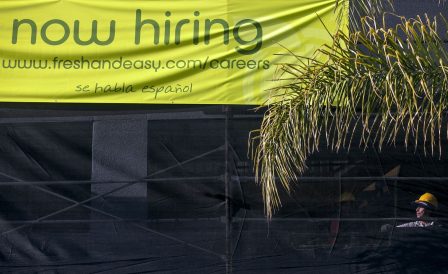
WASHINGTON — The average number of people seeking U.S. unemployment benefits over the past month fell to the lowest level since March 2008, a sign that the job market is healing.
The Labor Department said Thursday that weekly applications dropped 12,000 to a seasonally adjusted 350,000 in the week that ended Saturday. The four-week average, a less volatile measure, fell to a nearly five-year low of 356,750.
Still, the Christmas holiday may have distorted the figures. A department spokesman said many state unemployment offices were closed Monday and Tuesday and could not provide exact figures. That forced the government to rely on estimates. Normally, the government might estimate application data for one or two states. Last week, it had to use estimates for 19.
The estimates usually are fairly accurate, the spokesman said. The government will likely revise the figures next week.
Weekly applications are a proxy for layoffs. They have mostly fluctuated this year between 360,000 and 390,000. At the same time, employers added an average of 151,000 jobs a month in the first 11 months of 2012, enough to slowly reduce the unemployment rate.
The decline in unemployment benefit applications suggests companies are not yet slashing jobs because of concerns over the “fiscal cliff.” That’s the name for sharp tax increases and spending cuts that are scheduled to take effect next week unless the Obama administration and Congress can reach a deal before then.
Still, unemployment remains high and companies are reluctant to ramp up hiring. The unemployment rate fell to 7.7 percent in November from 7.9 percent in October mostly because many of the unemployed stopped looking for jobs. The government counts people as unemployed only if they are actively searching for work.
Negotiations between President Barack Obama and House Republican leaders on a package to avoid the fiscal cliff stalemated last week. Obama and congressional lawmakers return to Washington today with just days to go before the deadline.
The total number of people receiving benefits rose 73,000 to 5.48 million in the week that ended Dec. 8, the latest data available.
That includes about 2.1 million people who have been out of work for at least six months and are receiving extended benefits paid by the federal government. The program is ending at the end of the year. That means those recipients will receive their final checks next week, unless an extension is granted.
Obama wants an extension included in the budget deal. Republicans have yet to agree to that.
There are signs the economy is improving. The once-battered housing market is recovering, which should lead to more construction jobs in the coming months. Companies ordered more long-lasting manufactured goods in November, a sign they are investing more in equipment and software. And Americans spent more in November. Consumer spending drives nearly 70 percent of economic growth.
While a short fall over the cliff wouldn’t push the economy into recession, most economists expect some tax increases to take effect next year. That could slow growth.
Consumers are starting to worry about higher taxes. A measure of consumer confidence fell to a five-month low this month, a survey released Friday found. And reports show the holiday shopping season was the weakest since 2008, when the country was in a deep recession.