

Cost of breakfast threatening to break consumers’ bank
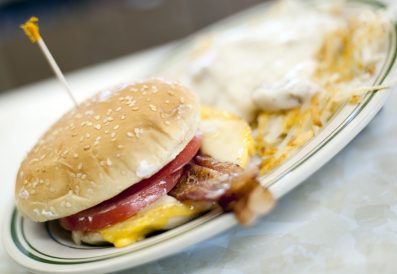
NEW YORK – Breakfast is now being served with a side of sticker shock.
The price of bacon is surging and the cost of other morning staples, such as coffee and orange juice, is set to rise because of global supply problems, from drought in Brazil to disease on U.S. pig farms.
And it’s not just the first meal of the day that’s being affected. The cost of meats, fish and eggs led the biggest increase in U.S. food prices in nearly two years last month, according to government data.
An index that tracks those foods rose 1.2 percent in February and has climbed 4 percent over the past 12 months.
While overall inflation remains low, the increases in food prices are forcing shoppers to search out deals.
Denise Gauthier, 54, a screenwriter in North Hollywood, Calif., calls the rising prices “shocking and outrageous.” To cope, she has become more frugal.
“I will look for things that are on sale and adjust my menu for that,” said Gauthier, who now stocks up on her favorite coffee when it goes on sale for $4.99.
Even though food companies use a range of cost-cutting methods to limit the effect of higher food costs, consumers will likely feel the “ripple effects” of rising commodity prices, according to the Grocery Manufacturers Association.
Bringing home the bacon is costing more.
The price of lean pork in the futures market is at record levels and is up 52 percent since the start of the year, to $1.31 a pound. Traders are concerned about a deadly virus in the U.S. hog population.
That could further boost bacon prices, which were already rising after farmers cut pig production because of higher feed costs. Those costs climbed after a drought in 2012.
The average price of a pound of sliced bacon in U.S. cities was $5.46 in February, up from $4.83 a year earlier and $3.62 five years ago, government data shows.
The retail price of pork is projected to climb by 2.5 to 3 percent this year, according to government forecasts.
“You should expect to see very high prices for your ground beef, your other meat cuts, all the pork cuts will be higher this year,” Donnie Smith, chief executive officer of Tyson Foods, said in an interview with CNBC March 12.
U.S. pig herds have been hit by a virus called porcine epidemic diarrhea, or PED, which causes vomiting and diarrhea in the animals. After the first case in the U.S. was confirmed in May, the virus spread through hog herds during the cold winter.
While the disease doesn’t affect people and is not a food safety concern, it can lead to mortality rates of 80 to 100 percent in newborn piglets. That’s raising concerns of thinner herds as the U.S. heads toward the summer grilling season, when demand typically picks up.
You need your morning brew, and you’ll likely pay more for it, at least at the supermarket.
Coffee futures have surged 57 percent this year, and this month rose above $2 a pound for the first time in two years. Coffee-growing regions of southern Brazil, the world’s largest coffee producer, have been hit by drought. Analysts are forecasting that Brazil’s crop could shrink by about 20 percent this year.
Shoppers should be prepared to pay more at grocery stores, if the current trend continues for more than a month, said Dan Cox, president of Coffee Analysts, a company that tests coffee quality for retailers.
“Whether it’s by the can or the bag, consumers should probably expect to pay 50 cents per pound more fairly soon,” Cox said.
The average price of coffee for U.S. cities was $5 a pound in February, although that was little changed from a month earlier, according to government data.
Caroline Krajewski, a spokeswoman for Kraft, which owns the Maxwell House coffee brand, declined to comment on the company’s pricing plans.
The price impact will be less noticeable at coffee stores. That’s because the cost of beans makes up only a fraction of the final price, compared with other costs such as rent and staff wages, said Alon Kazdan, 40, owner of Cafe Noi, a small chain of coffee shops in New York.
Orange juice futures are up 12 percent this year, and climbed as high as $1.57 a pound March 6, their highest price in two years.
To be sure, moves in retail food prices won’t match the wild jumps in commodities markets, said David Garfield, a consultant at AlixPartners who advises food-makers.
The reason: food companies worry about losing market share and will absorb some of the higher costs rather than risk losing customers.
“People would be up in arms, if every time they went to the grocery store the prices of their preferred items were jumping up and down,” Garfield said.
The price of a 12-ounce can of frozen orange juice edged up in February to $2.43 from $2.41 in January, according to government data.
A series of problems are driving the increases. Florida’s orange crop is forecast to be the worst in almost a quarter of a century. A citrus greening disease, transmitted by tiny insects that feed on the leaves of oranges, is damaging the harvest. Infected trees start to produce bitter green fruit.
The problem was first detected in the U.S. in September 2005 and the Florida orange juice crop is down by almost one-fourth since then.