

Sales of existing homes plunge
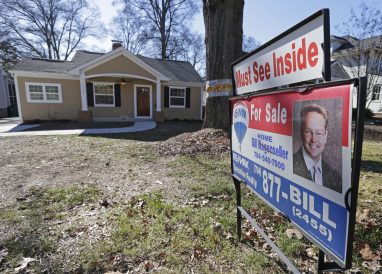
WASHINGTON – Home sales plunged sharply in November, as buyers faced rising prices and new regulations that might have delayed some closings.
The National Association of Realtors said Tuesday sales of existing homes collapsed 10.5 percent to a seasonally adjusted annual rate of 4.76 million. It was the weakest pace in 19 months.
The setback followed solid gains in real estate for much of 2015. Sales of existing homes are on track to rise roughly 5 percent for the entire year.
But the introduction of a new disclosure form in October likely prevented many homebuyers from closing on sales in November. Home values also are rising at more than double the pace of wages.
The median home sales price was $220,300 in November, a 6.3 percent annual increase from a year ago. Sales fell in all major geographic regions, including the Northeast, Midwest, South and West.
The new rules introduced by the Consumer Financial Protection Bureau to inform homebuyers about interest rates and fees may have delayed the completion of sales last month. It took 41 days to close a sale in November, compared with 36 days a year ago. The extended time frame means some sales were pushed back into December.
“The effect should be a one-time hit to the data and we expect the uptrend in sales to get back on track next month,” said Jim O’Sullivan, chief U.S. economist at High Frequency Economics.
Still, an improving job market and relatively low mortgage rates encouraged home-buying for this year. Unemployment at a healthy 5 percent endowed more people with a sense of financial certainty.
But tight inventories and rising prices curbed further gains. Sales cooled after accelerating to a rate of 5.58 million in July. Relatively few properties are on the market as the economic expansion has crossed the six-year mark, with many homeowners still recovering equity lost during the Great Recession and the bursting of the housing bubble.
The number of listings on the market dropped 1.9 percent from a year ago, a shortage that restricted options for buyers and fueled escalating prices. As a result, more people have no choice but to rent. The share of homeowners slipped to 63.7 percent from a high of 69.2 percent in 2004.
Low mortgage rates minimized some of the financial pressure. Still, rates are higher than a year ago. The Federal Reserve hiked a key short-term rate last week, the first increase of its kind in nearly a decade as the economy appears solid enough to manage higher borrowing costs.
The average 30-year fixed mortgage rate rose to 3.97 percent from 3.8 percent a year ago, according to mortgage buyer Freddie Mac.