

Cocktail of change New liquor code not entirely pleasing to business owners’ palates
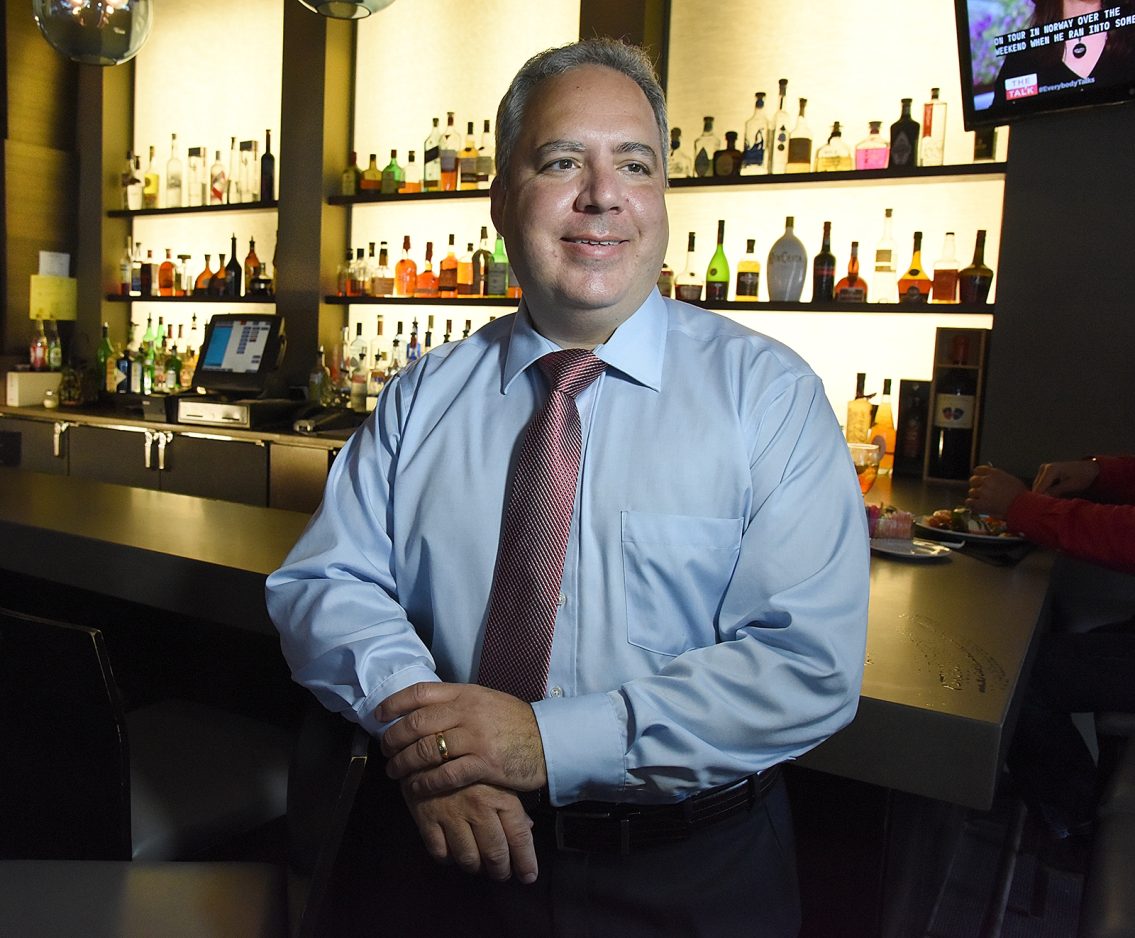
Joe D’Amico, owner of Franco’s Trattoria in Peters Township, inside the bar portion of the restaurant
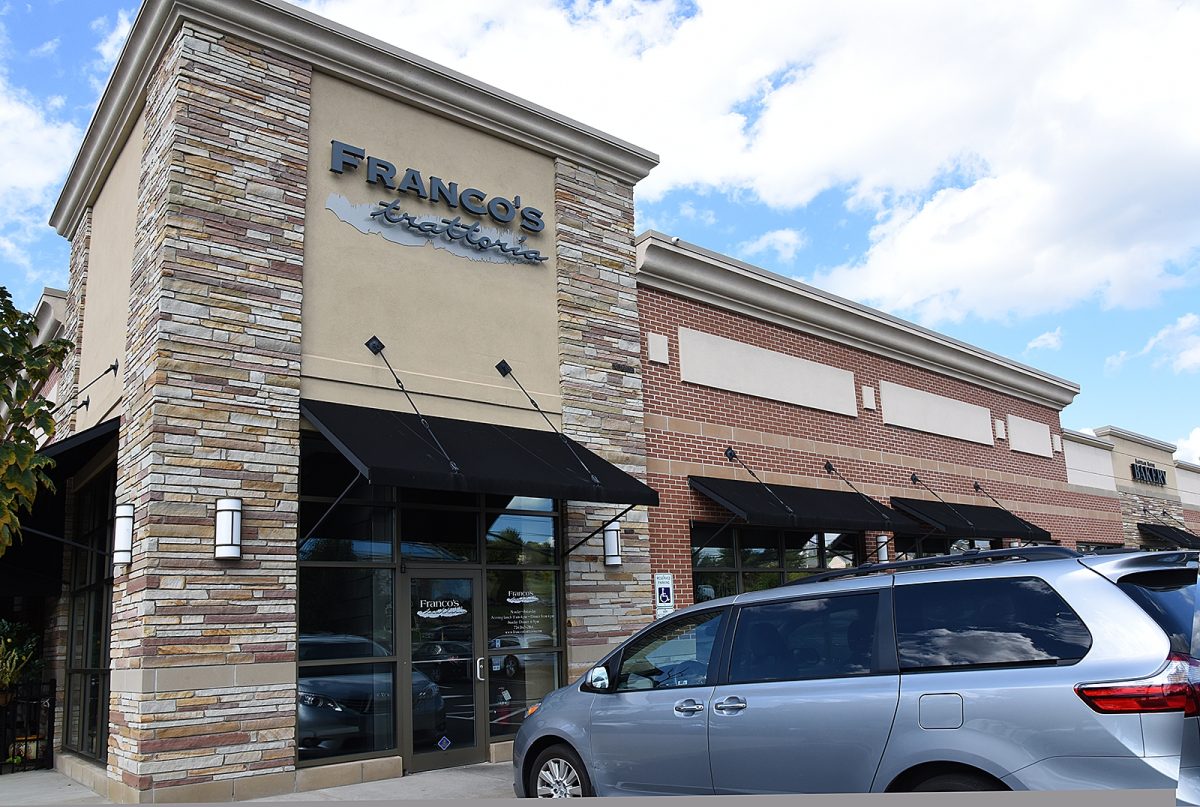
Exterior of Franco’s Trattoria in Peters Township.
Joe D’Amico owns Franco’s Trattoria, a Peters Township restaurant specializing in pasta. When Act 39, creating changes in the Pennsylvania liquor code, became law in June, D’Amico had to use his noodle.
He had to drink in the changes and analyze them.
The most celebrated change, of course, was the introduction of wine sales in grocery stores. Possessors of restaurant and hotel liquor licenses also were afforded the opportunity to sell up to four bottles of wine to a customer. That second addition to the liquor code, on the surface, appeared to be a potential benefit to restaurateurs and hoteliers and a convenience to consumers.
Maybe not. In addition to paying for a liquor license, holders have to pony up $2,000 for a permit to sell that wine. They then have to charge at least the state store rate for a particular bottle, and although they have no ceiling on what they can charge for said bottle, how many customers would be willing to pay an inflated price when they could get a better deal at a state store or grocery?
Franco’s, D’Amico lamented, is in close proximity to a state store and a Giant Eagle that plans to someday sell wine.
Then to replenish their wine stocks, restaurants and hotels must buy from the Pennsylvania Liquor Control Board. The additional $2,000 permit has dashed the grape expectations a number of restaurant and hotel license holders may have had about wine sales. D’Amico is not selling wine to take home.
“To recoup the $2,000 (fee), I would have to sell 2,000 bottles of wine,” he said. “For a restaurant like ours, where we are, this does not make sense.”
He has company on that. A number of independent restaurant owners interviewed by the Observer-Reporter expressed dissatisfaction with the wine policy, and other aspects of Act 39, which went into effect in early August.
They don’t consider some of the changes to be cost-effective to indies, and some to be downright cost-prohibitive.
Michael Passalacqua, owner of Angelo’s Restaurant in North Franklin Township, did not buy a wine permit.
“You have to pay $2,000 for an additional license, which I find totally unfair,” he said. “I already have a license. You can never sell enough bottles to justify that license.
“For some restaurants, like the Carlton in Pittsburgh, being able to sell bottles of wine out the door is really, really beneficial to them. They do wine dinners. But while it works for some people, it’s not a good fit for my business.”
Joe Pintola did not even consider a wine permit for Hungry Jose’s, the bar/restaurant he owns in downtown Washington.
“That’s a lot of inventory to take on. How do you keep that inventory?” Pintola said, citing security concerns. Hungry Jose’s hosts private parties in the evening and, starting today, will have a Mexican lunch buffet from 11 a.m. to 2 p.m. Monday through Friday.
Pintola also owns Julian’s Catering & Banquet Facility in Washington and is past president of the Washington-Greene-Fayette Tavern Owners Association.
The changes, he added, “would have no effect for 95 percent of (the liquor) licensees. Changes are good. There were no changes for years and years and years. (The LCB) is hurting for money, so it is making changes.”
The so-called “wine-to-go” permits appear to be a boost for supermarkets, partly because that spirit draws customers who are purchasing other items. An estimated 80-plus groceries are selling bottles statewide.
Giant Eagle, which started selling beer in 2009, is offering bottled wine at the Robinson Market District and Cranberry stores. The Robinson location in mid-August became the first non-state store to sell wine in Pennsylvania since Prohibition.
The grocery chain plans to eventually sell wine at other Pennsylvania stores, including South Strabane Township and Donaldson’s Crossroads and the Market District Express in Peters. (Those three Washington County locations sell beer. The Express store, on Washington Road, serves wine by the glass to diners.)
Dick Roberts, spokesman for Giant Eagle, said in an email that beer sales at 40 Giant Eagle and GetGo stores statewide have gone well, and that wine sales at Robinson and Cranberry have been promising.
D’Amico said he understands the grocery chains’ zeal to stock wine by the bottle, especially popular brands, but isn’t sure the outcome will be lucrative.
“This is a benefit for the customers because it gives them outlets for the most common items they are looking for,” he said. “Right now, only the people are benefiting. Will the grocery store benefit? Yes. Will they make a lot of money on it? Probably not.”
The $2,000 permit isn’t the only change that rankles independent business owners. Having a liquor license in “safekeeping” has doubled in cost.
D’Amico operated Franco’s at two locations for a number of years. The restaurant was in Dormont for 14 years before closing in 2014, and opened in Peters in 2007. He still owns the license and building at the shuttered location on West Liberty Avenue. Liquor licenses cannot be transferred outside the county in which they originated.
He paid $5,000 to maintain control of the Dormont license for three years, then $600 every year to renew it. Under the new code, after two years, a license holder has to pay $10,000 to keep the license. That’s what D’Amico will be charged after May 31, 2017 – unless he sells the license beforehand.
Some licensees put licenses in safekeeping until they can be sold, sometimes for a lofty price. They can fetch around $500,000 in certain counties, serving as a retirement tool. But under the new code, if the holder does not renew after two years, the license would go to an auction with the bidding to start at $25,000. The winning bid likely won’t be near $500,000.
“That makes your heart skip a beat. Sometimes this license is an owner’s retirement,” said Amy Christie, spokeswoman for the Pennsylvania Licensed Beverage and Tavern Association. “This is the one part of the bill that our association is extremely unhappy with.”
The LCB instituted auctions to revive the large number of expired and revoked licenses that exist in Pennsylvania. One license from Washington County will be available, according to the LCB website. Sealed bids are due Oct. 27.
The term “liquor license” appeared in an Observer-Reporter classified advertisement last week – along with “discount.” The ad read: “Liquor license for sale in Washington County discounted $10,000 for quick sale, includes Cabaret license and asking $45,000.”
Passalacqua of Angelo’s is still getting acclimated to the new liquor code. And as a longtime restaurateur, owner of a family business for 24 of its 77 years, he doesn’t have to get acclimated to many things. But he isn’t enamored of what he does know about the liquor code changes, and does not see a benefit for himself or peers in his industry.
“The win,” he said, “is mostly for consumers.”