

Researchers study wastewater treatment
Rick Shrum/Observer-Reporter
Rick Shrum/Observer-Reporter
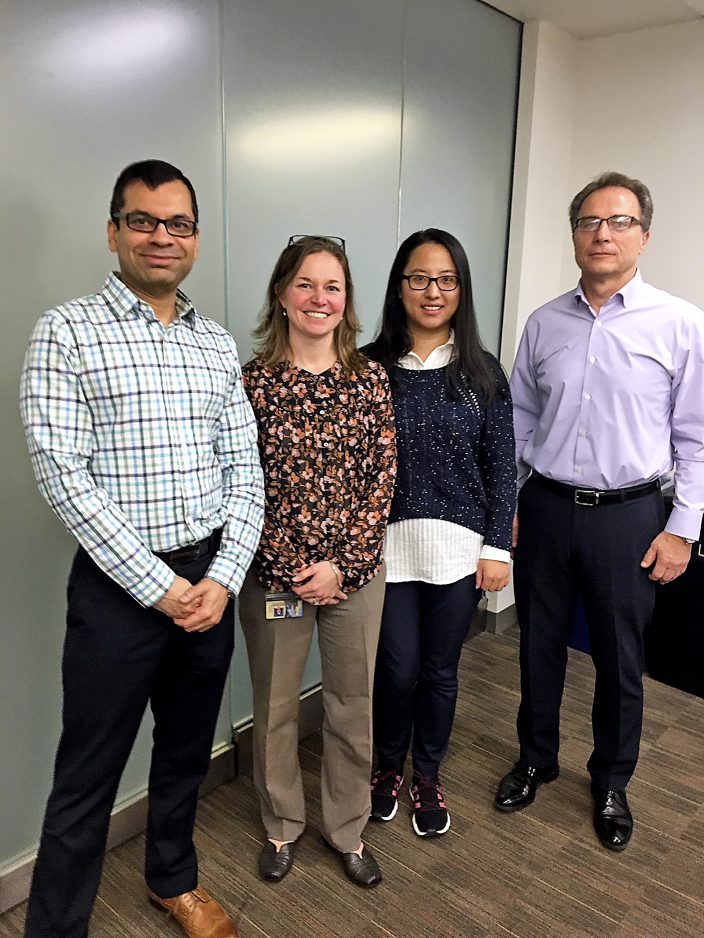
A study on co-treating wastewater from acid mine drainage and shale fracking was conducted by Pitt researchers, from left, Vikas Khanna, Leanne Gilbertson, Yan Wang and Radisav Vidic.
PITTSBURGH – Pennsylvania’s legacy of fossil fuels usage has been long term and endures to this day. Processing these resources has been beneficial to consumers, of course, but has resulted in a horrific byproduct: contaminated water and lots of it.
Acid mine drainage, from abandoned coal mines, has been prevalent throughout the state and, especially, the southwestern corner of it. And the clean water used in hydraulic fracturing – or fracking – of natural gas is no longer pure following that process.
In an effort to remediate the so-called AMD and the “produced water,” a group of researchers from the University of Pittsburgh’s Swanson School of Engineering waded – in a metaphorical sense – into a study of cleaning these fluids together. Supported by a $20,000 grant, they spent two years looking into the possibility of co-treating these forms of wastewater.
The Pennsylvania Water Research Center grant was funded by the U.S. Geological Survey and distributed by Penn State University.
Researchers focused on a five-county area where AMD and fracking have been common: Washington, Greene, Fayette, Westmoreland and Allegheny. They worked with the state Department of Environmental Protection on securing data.
They found that co-treatment not only might resolve two environmental challenges at once, but reduce environmental impacts, limit the impact of transporting these fluids – taking them together to one co-treatment site – and possibly reduce costs.
Remediating AMD and produced water is an expensive endeavor. Federal law prohibits produced water from being transported to municipal water treatment plants.
“If you mix them, the bad actors from both waters come out (with co-treating),” said Radisav Vidic, professor and department chair of civil and environmental engineering.
He and the majority of the research team gathered Monday to discuss an article published about their work, “Life Cycle Impact and Benefit Tradeoffs of a Produced Water and Abandoned Mine Drainage Co-Treatment Process.”
Leanne Gilbertson, assistant professor of civil and environmental engineering, was the principal research investigator who worked with Vidic and three others: associate professor Vikas Khanna; graduate student Yan Wang, the author; and Sakineh Tavalkoli.
Among the topics considered is whether to build a co-treatment site or a number of them, and whether the site or sites should be at a fixed or mobile location.
“The cost of building a treatment plant for both waters is important,” Vidic said, “and (determining) if you can make money.”
Although it could not be determined whether similar studies have been conducted, Vidic added: “I’m not sure anyone else is looking at co-treating. We may be pioneers.”