

Officials stress need to reduce emissions at W&J webinar

Courtesy of W&J
Max Goff

Courtesy of W&J
Karen Marsh
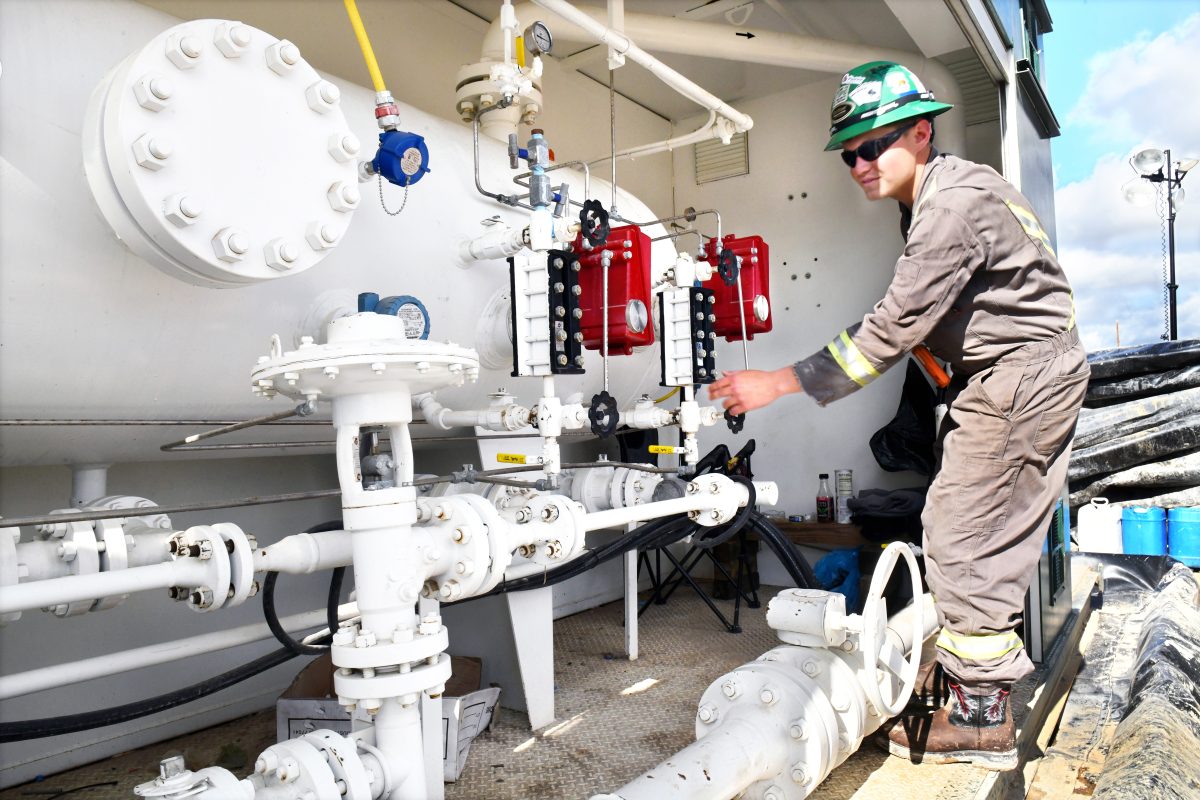
Mark Marietta/For the Observer-Reporter
A worker monitors the gas processing unit at the CNX Corp. well site in Richhill Township in this file photo from 2019.
The heat is on. Global warming is a worldwide conundrum, thanks largely to methane emissions – the second-leading cause of warming today.
“Greenhouse gases trap heat in the atmosphere, and the effect is like glass in a greenhouse,” said Karen Marsh of the U.S. Environmental Protection Agency. “People have produced greenhouse gases many times over by burning fossil fuels and through other activities.”
Production of oil and natural gas, sources that heat countless homes, is a major contributor to those emissions.
“We are expelling them faster than we can remove them,” said Marsh, an engineer in EPA’s Office of Air Quality Planning and Standards. “The result is our climate is changing.”
Marsh was one of two speakers Wednesday morning in the latest installment of the Energy Lecture Series, coordinated by the Center for Energy Policy and Management at Washington & Jefferson College. She and Max Goff, director of certifications for Project Canary, a Denver-based environmental organization, gave separate presentations during the hour-long virtual webinar.
Marsh, a technical lead for developing regulations with EPA, presented first. She said methane has been in the Earth’s atmosphere “for hundreds of thousands of years. Methane is a greenhouse gas that traps at least 25 times as much heat as carbon dioxide.”
She added that the oil and gas sector “also emits other harmful pollutants, like smog-forming VOCs (volatile organic compounds), and toxic chemicals like benzene.”
EPA has developed a proposal to slash methane emissions from the oil and gas industry. It is a new rule to be added to the Clean Air Act, and would include reductions from existing sources. The proposal, according to Marsh, covers equipment and processes at locations such as on-shore well sites, storage tank batteries, compressor stations and natural gas processing plants.
Marsh said the proposal would result in $4.5 billion in climate benefits a year, totaling $48 billion to $49 billion from 2023 to 2035.
“It also would increase recovery of natural gas that otherwise would go to waste,” Marsh said.
A number of gas producers nationwide have done their due diligence and responded to the urgency to cut emissions. In doing so, some producers in the region are working with Project Canary, which – among its duties – is overseeing Environmental, Social and Governance (ESG) certification of responsible operations.
Project Canary provides measurement-based emission profiles, which result from continuous monitoring technology at gas wells and midstream sites.
“We are looking at much more than emissions. We are looking at operators, how they can improve over time, and interacting with the community,” said Goff, a former Chesapeake Energy employee.
Operations are monitored via sensors that have been deployed at each location. Satellite imagery also is used. “We perform an environmental assessment of each location,” Goff said. “It’s an onerous process, but it’s most robust.”
During a question-and-answer period afterward, Goff was asked whether Project Canary’s operations could be considered a conflict of interest. He said flatly: “Yes, we’re paid by operators, but there are standards we have put forth that are set in stone. We’re not a pay to play organization.”
CEPM will present its final webinar of the academic year on April 20. The focus will be hydrogen as the fuel of the future, an oft-discussed topic in recent months. Registration will open soon and be available on CEPM website, wjenergy.org.