

Fayette establishes CASA volunteer program
Above: Courtesy of CASA of Fayette
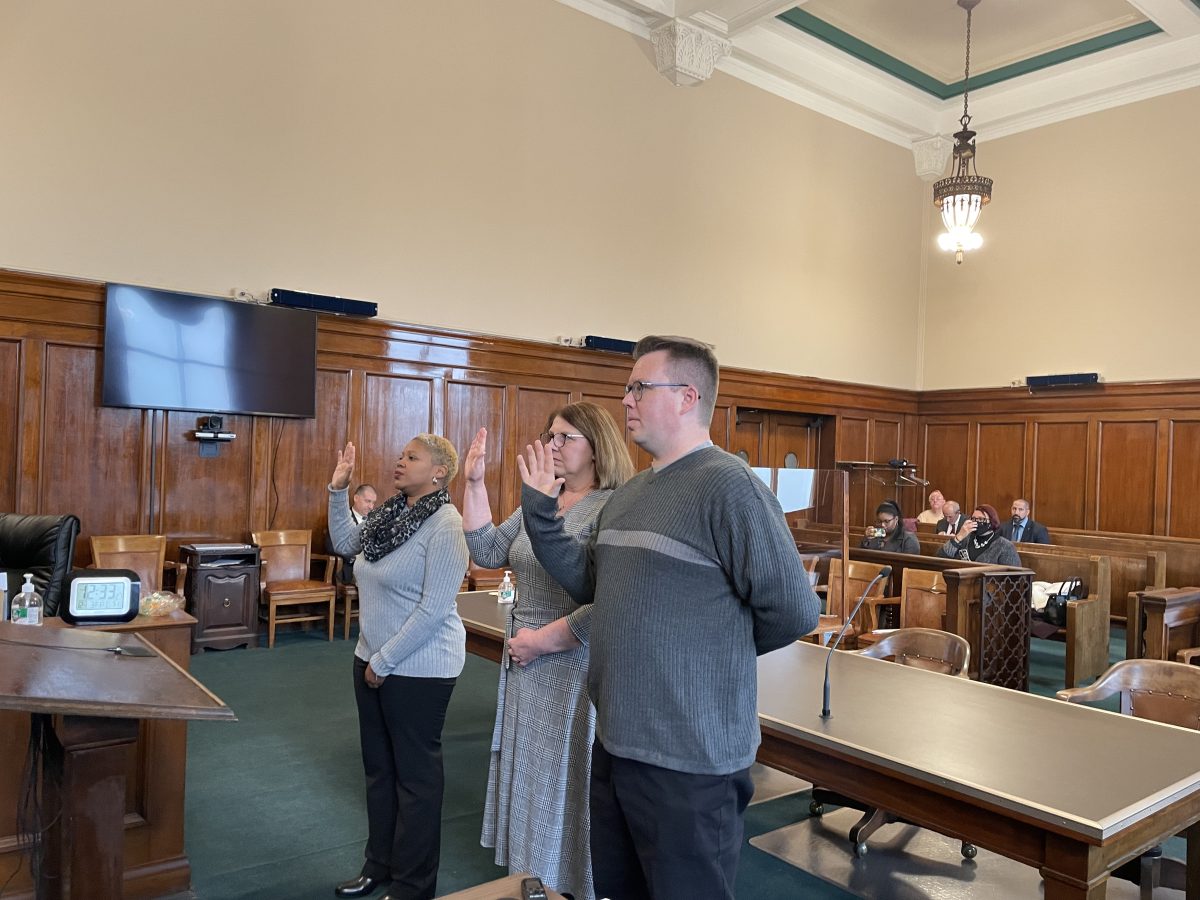
CASA advocates being sworn in during a ceremony in Fayette County. Courtesy of CASA of Fayette
Fayette County is the latest southwestern Pennsylvania county to establish a nonprofit Court Appointed Special Advocate volunteer program to advocate for children who have been neglected or abused.
Who are CASA volunteers? Individuals who come from all walks of life, from young professionals to retirees and everything in between, according to Mitch Samich, program director for the new Fayette County Program that started in May 2021.
CASA volunteers are trained using the National CASA model and work under the supervision of local CASA staff to serve as an independent extra set of “eyes and ears” for the court. Pennsylvania has a state CASA program that provides support to the local CASA programs.
Volunteers must be 21 but are not required to have a background in human services. “It’s a unique program that allows individuals without a background in human services to make a difference in a child’s life,” said Samich, who will eventually transition back to his original location in Westmoreland County, stepping into the role of executive director there.
Once a volunteer passes the application process and background checks, a 30-hour training program follows, covering child development, cultural awareness, mental health, substance abuse and other topics in the human services field. Volunteers then swear an oath before a judge to fulfill their role as court-appointed special advocates.
Volunteers work with only one case, or child, at a time and remain until there is a permanent outcome for the child, which could be guardianship, adoption or placement with the biological parents. “That’s so the volunteers are a consistent person in the child’s life and can focus all of their attention on that specific case,” Samich said.
On average, volunteers spend between 8 and 10 hours on their case. Although they are appointed by the court to serve, the volunteer works collaboratively with the other professionals on the team, including case workers, therapists, foster parents, biological parents, teachers and others, in order to gather information and make recommendations to the judge regarding what actions are in the best interest for the child.
The CASA volunteers submit their own report to the court, attend court hearings and make independent fact-based recommendations regarding the case.
Erin Shelton of Morgantown, W.VA., said she reached out to Samich a little over a year ago while working with the Fayette County Drug and Alcohol Commission as a project coordinator in one of the county’s middle schools. She was among the first CASA volunteers to be trained in the county. Now an outreach worker with a nonprofit free health clinic in Morgantown, she continues to volunteer in Fayette County because it is a newer program.
“There’s just so much to be done when it comes to child welfare. I think that having a volunteer who has only one case at a time can be really helpful because it can bridge that gap that sometimes occurs between health services and the families that are involved in child service, and that makes it feel like it’s not one side against the other, but everyone working for the best for the kids involved. I feel it can really help cases to come to the solutions that are best for the kids,” Shelton said.
The national CASA program, CASA/GAL, is based in Seattle and was started by Judge David W. Soukup in 1977. Judge Soukup felt he needed more information when making a life-changing decision in a three-year-old’s life. He proposed appointing an independent person to report to the court on the child’s behalf. Today there are more than 900 CASA state and local programs in 49 states with more than 97,000 volunteers.
In July, the Pennsylvania CASA Program announced it will receive funding in the state budget for the first time, and this funding can filter down to the local CASA programs. With the program’s creation in Fayette, all southwestern counties in Pennsylvania have local CASA programs to serve children.
The most significant need continues to be for advocates. “We are constantly recruiting. Numbers for child welfare depend on the county. Fayette has approximately 350 children a year. We strive to provide a CASA for every case someday,” Samich said. He would like to see the Fayette CASA nearly double in the next year. Currently, Fayette has 14 advocates. Since May 2021, they have served approximately 30 children in total. To date, nine children have achieved permanent outcomes, Samich said. For 2023, he’d like to double the advocate base to 25 to 30 advocates to double their impact.
CASA looks for speaking opportunities and ways to engage with the public. Many volunteers are found simply through word of mouth.
Who might be a CASA volunteer? Samich said, in his opinion, someone who “has a really big heart; someone who has empathy because you are working with sensitive issues and individuals, sometimes who have substance abuse or mental illness. Someone who can remain objective and someone who genuinely cares and wants to make a difference. I always tell people it can be very rewarding. It can be frustrating at times, but being involved in a case and seeing a permanent outcome and knowing that you’ve had a hand in helping someone achieve that, it’s a very rewarding experience.”