

Time for NASCAR to rethink restrictor plates
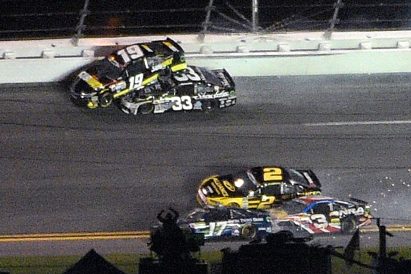
When the ugly accident unfolded early Monday morning and two-thirds of Austin Dillon’s Chevrolet was spewed over Turn 2 of the Daytona 500 racetrack, the first thought most people had in their mind was this: Did he survive?
Miraculously, Dillon, whose car was shredded in a multi-car pileup in the final moments of the Coke Zero 400 race, walked away from the crash.
It’s only a matter of time before the next accident occurs and maybe that driver won’t be as fortunate.
Chalk this survival up to good luck.
While NASCAR officials were lauding about the safety of the cars and how good a job the retaining wall was at keeping most of the debris from seriously injuring the fans who stayed for the weather-delayed race, the real issue had to do with something that is unsafe.
Restrictor plates.
NASCAR stock cars weigh 3,500 pounds and can reach speeds of up to 200 mph. Keeping them right-side up has to be a priority and to do that, NASCAR must rethink the restrictor plates. The plates are used at the intake of an engine to reduce its power. It brings speed down but also bunches the cars.
Crashes might be breath-taking to see for fans and a fascinating part of the sport, as long as everyone walks away in one piece, but the last thing NASCAR needs is another death on the track.
Maybe the most well-known came at the same track and very close to where Dale Earnhardt Sr. was killed after his car slammed into the wall in the 2001 Daytona 500 race. Earnhardt was the last driver killed on the track in a Sprint Cup race.
Today, with the restrictor plates causing stock cars to bunch together because it limits maximum speed, there is more of a logjam on the track. Check out the grouping before this crash on YouTube and then remember that the average speed of the race winner – which, ironically, was Dale Earnhardt Jr. – was nearly 135 mph, and that the slightest bump can cause a chain reaction. It’s easy to see this situation happening again.
Earnhardt Jr., maybe with the memories of his father’s death rising again in his memory after seeing the crash, was obviously shaken up after the race. Maybe it was in part because Dillon had the same number on his car that Earnhardt Sr. did: 3.
“That scared the hell out of me, I will be honest with you,” Earnhardt said. “I saw the whole thing happen. … That was terrifying to watch.”
Other drivers, such as Ryan Newman, were disgusted.
“NASCAR got what they wanted. That’s the end of it,” Newman told USA TODAY Sports of restrictor plates in racing. “Cars getting airborne, unsafe drivers, same old stuff. They just don’t listen.”
There has always been a current of wildness to racing. Some drives, such as Earnhardt Sr., made a reputation of scraping paint, getting into the back of competitors and sometimes going a bit too far.
As always, it was brushed off as “Just racin’,” by those in the sport.
Speeds are higher without restrictor plates but there is better spacing, giving drivers at least an opportunity to react when something goes wrong.
NASCAR deserves credit for improving the safety of their cars and tracks, but the decision to stay with restrictor plate racing means more scary accidents such as this one will happen again.
And maybe next time without a happy ending.
Assistant sports editor Joe Tuscano can be reached at jtuscano@observer-reporter.com